
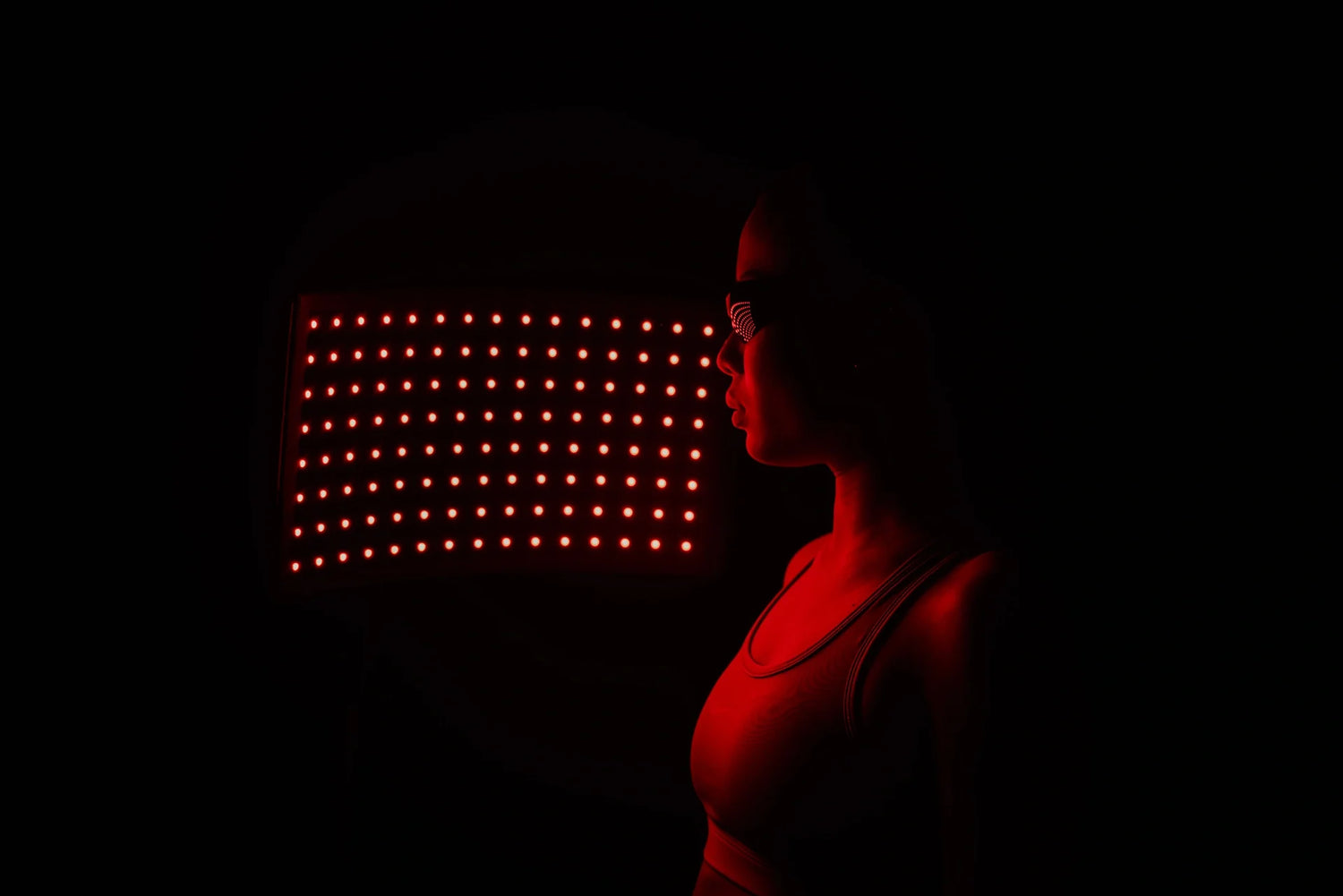
In Kumo Balance's technological recovery proposal, LED light fits in as a supportive household habit.
Yes, LED light can help. Sagging skin on the face and body doesn't magically disappear, but red and near-infrared light photobiomodulation can provide real improvements in firmness, texture, and wrinkles when used consistently and with correct expectations. American Dermatology describes it as a non-invasive option for signs of aging, and clinical trials on the face have shown measurable changes in skin elasticity and appearance. (aad.org)
Red & infrared light
Recover faster, at home
★★★★★ 4,8/5 · rated by verified customers
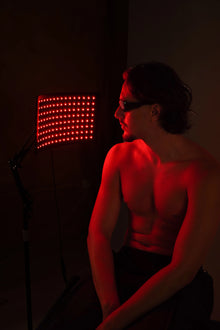
The KumoLux panel supports muscle recovery with full-body red and infrared light.
- 660 nm red + 850 nm infrared light
- Full-body muscle recovery
- Clinically validated biohacking protocols
€399,00€499,00
−10% on your 1st order when you subscribe to the newsletter

If you first want to understand the origin of loss of firmness, you can read the guide to facial sagging and key exercises; here we will focus the answer on what LED light can and cannot do. (pubmed.ncbi.nlm.nih.gov)
Why sagging appears
Firmness depends on collagen and elastin
Skin becomes more lax when the dermal matrix loses quality. Firmness largely depends on the elastin network and collagen; in human abdominal skin, a 2025 study found that aging is associated with a less organized elastin architecture and lower mechanical firmness. Additionally, UV radiation accelerates the decline in type I procollagen synthesis, a central mechanism of photoaging. (pubmed.ncbi.nlm.nih.gov)
Personalized protocol · included with your purchase
Want us to tell you how to use it in your case?
With your purchase, our experts set up your red and infrared light sessions for your sport and goal.
Message us on WhatsAppOur experts reply · no obligation
Therefore, the face and body share the same underlying problem, although they manifest differently: on the face, it is usually seen earlier as wrinkles, sagging, or loss of definition, while on the body it appears on the neck, arms, abdomen, or jawline. LED light does not erase this biology, but it can support the visual quality of the skin when sagging is mild or moderate. (aad.org)
How LED light helps
Photobiomodulation: what it really does
LED therapy uses red or near-infrared light and, in dermatology, is usually integrated as a complement to other care. The AAD clinical guide to red light therapy describes it as a non-invasive treatment that can be part of a plan with creams, microneedling, or peels, especially when the goal is to improve wrinkles and texture. (aad.org)
In a randomized, double-blind trial with 76 patients, groups treated with 633 nm, 830 nm, or both wavelengths showed fewer wrinkles and more elasticity, with a maximum wrinkle reduction of 36% and a maximum elasticity increase of 19% in the treated area. Another home study with 24 subjects and 637/854 nm also found improved elasticity at 6 and 8 weeks and reported no adverse reactions. (pubmed.ncbi.nlm.nih.gov)
on your first order when you join the newsletter
We send you the code instantly. No spam.
Short-term safety seems good: a study on human fibroblasts with 633 nm did not detect DNA damage, and the AAD notes that the most common side effects are mild, such as temporary irritation or minimal pain. (pubmed.ncbi.nlm.nih.gov)
"In the short term, it appears safe."
This does not mean it is for everyone: if you have photosensitivity, lupus, or take medications that increase light sensitivity, it is advisable to exercise extreme caution. Device quality also matters, because the AAD emphasizes that "FDA-cleared" indicates low risk, not guaranteed results. (aad.org)
What can realistically be expected
The realistic expectation is skin that is somewhat smoother, with better texture and a progressive feeling of firmness, not a facelift. The AAD insists that therapy requires regular use and that not everyone sees results; in the cited trials, changes appeared between 4 and 8 weeks, depending on the device and protocol. (aad.org)
For significant sagging, especially when there is substantial excess skin, LED can be an aesthetic support, but it does not replace more intensive procedures. This conclusion is a prudent inference based on the magnitude of the published results and the AAD's own message about realistic expectations. (aad.org)
Wavelengths and formats most commonly used
The most studied ranges in skin rejuvenation are visible red light at 633-660 nm and near-infrared light at 830-854 nm. In available clinical trials, red light usually works better on the surface and texture, while near-infrared is used for its greater tissue penetration. There is no magic wavelength; the complete protocol matters more than an isolated number. (pubmed.ncbi.nlm.nih.gov)
Quick reference table
| Wavelength | Common use | What it can contribute to sagging |
|---|---|---|
| 633-660 nm | Visible red light | Improved texture, appearance of fine wrinkles, and superficial skin quality. |
| 830-854 nm | Near-infrared | Support for tissue recovery and the sensation of firmness in deeper layers. |
| Combined | Red + near-infrared | In several trials, this is the formula that best summarizes the work on wrinkles and elasticity. |
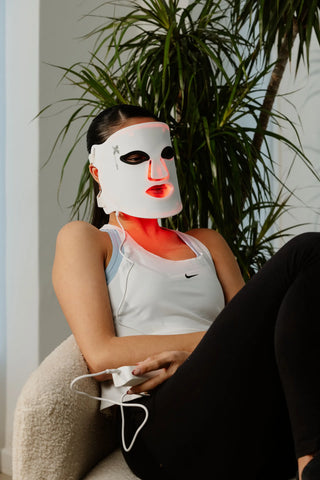
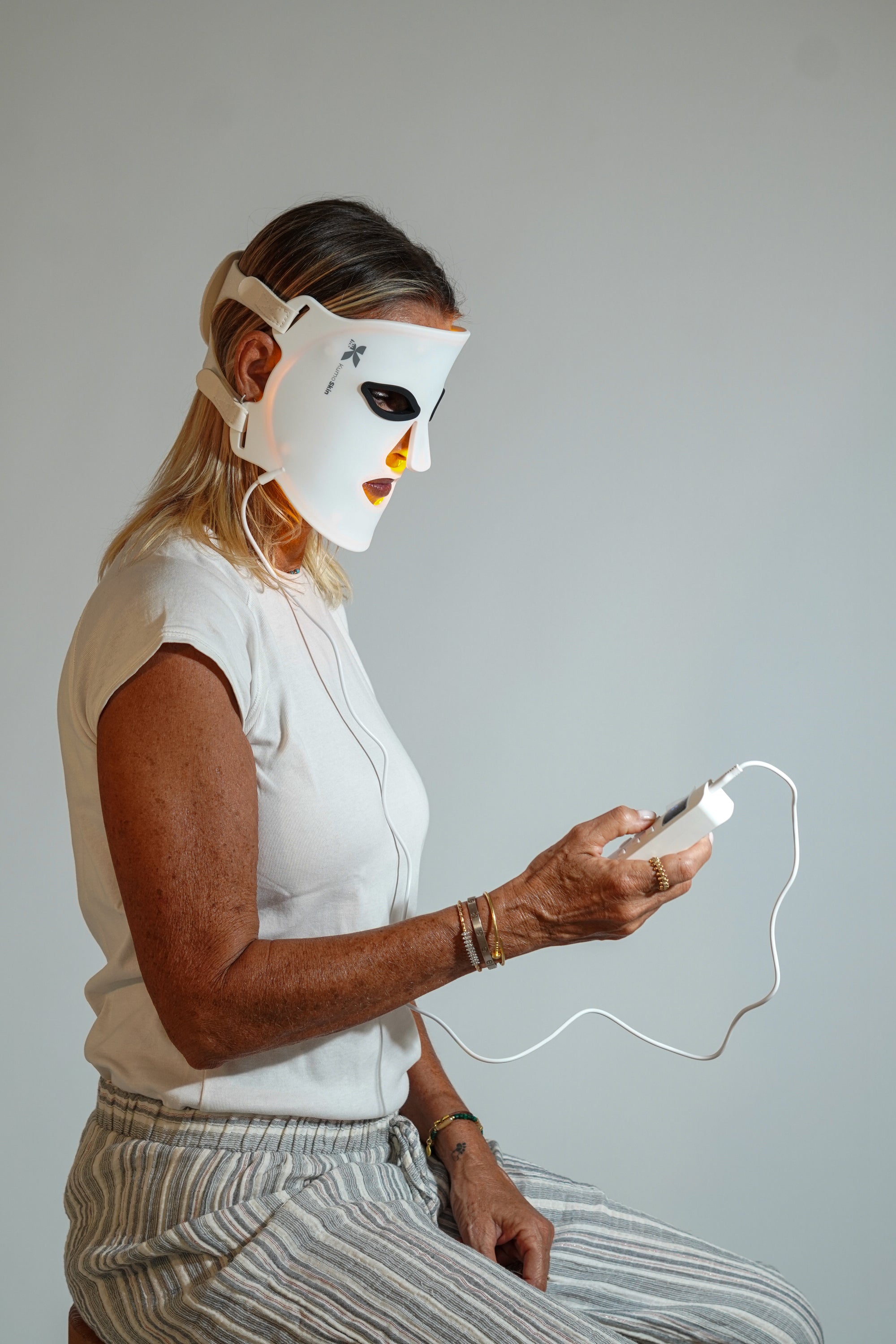
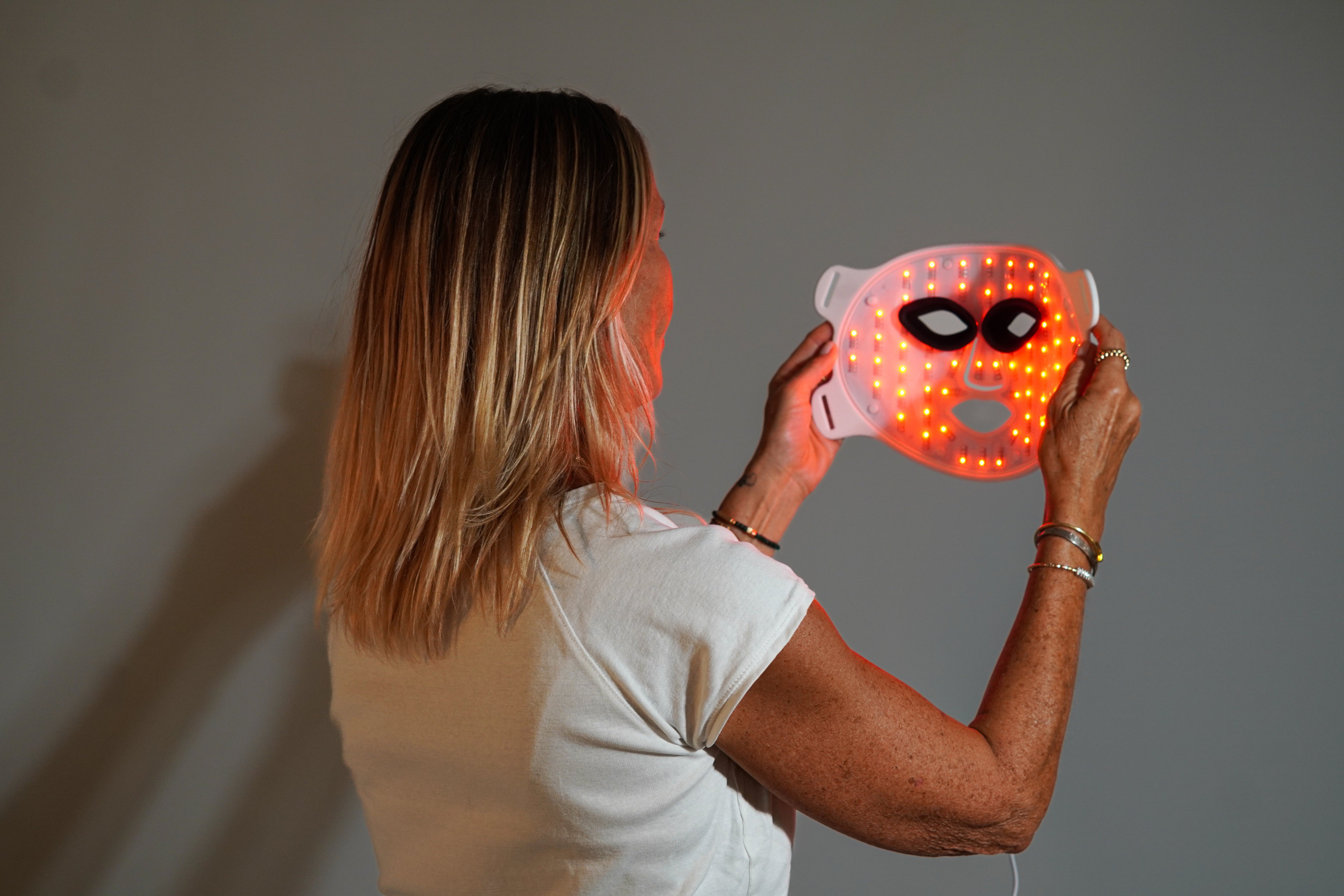
In practice, this means that a good facial or body device should be chosen based on the area and consistency of use, not just the aesthetics of the device. If you are looking for a home option focused on the face, the KumoSkin Mask fits this logic; if you prefer to review the set of options, advanced LED light therapy at home encompasses the general approach to home use. (aad.org)
How to integrate it into a realistic routine
If you're starting at home, think of a simple and sustainable routine. A facial mask makes sense for the face and neck; a panel is more practical when you want to cover large areas of the body. Along these lines, the KumoLux Panel can be useful when the goal is to treat several areas with a single setting. (aad.org)
- Use the device as directed by the manufacturer and do not extend sessions intuitively. (aad.org)
- Prioritize consistency for several weeks, because LED works better as a habit than as sporadic use. (aad.org)
- Keep skin clean and dry, and avoid combining the session with irritants if your device or professional advises against it. (aad.org)
- Use eye protection if the manual requires it and do not substitute appropriate eyewear for sunglasses. (aad.org)
- Avoid therapy or consult first if you take photosensitizing drugs, have lupus, or another light-sensitive condition. (aad.org)
Face and body: when it makes the most sense
There is more direct evidence for the face, which is why the response tends to be more predictable for wrinkles, texture, and slight loss of firmness. On the body, sagging depends heavily on elastin architecture and tissue thickness; the 2025 study on human abdominal skin reinforces that body firmness changes with age, but specific LED evidence for body tightening is still less abundant than for the face. This difference suggests that the best body use is for support, not as a promise of dramatic change. (pubmed.ncbi.nlm.nih.gov)
Therefore, if your goal is the face and neck, an LED mask can make a lot of sense; if you are looking for wider areas, a panel is usually more practical. The key is to choose a format that you can use repeatedly without friction, because consistency outweighs the "intensity" of the device. (aad.org)
Frequently asked questions
Does LED light therapy for sagging skin really work and how long does it take to see results?
Yes, it can work, but gradually and realistically. In the 76-patient trial with 633/830 nm, improvements in wrinkles and elasticity were observed after 4 weeks of treatment; in the home study with 637/854 nm, the clearest changes appeared between 6 and 8 weeks. The AAD reminds us that it is not a single session or an immediate effect, and that not all users respond equally. (pubmed.ncbi.nlm.nih.gov)
Can LED light improve sagging skin on the face and body without the need for surgery?
Yes, it can improve mild to moderate sagging without surgery, but it does not replace a facelift when there is significant excess skin. LED therapy is best understood as a support that improves texture, radiance, and some firmness, especially when combined with a well-executed routine. The AAD itself presents it as a complement to other treatments, not as a sole solution. (aad.org)
Which LED light wavelengths are most effective for tightening skin and combating facial sagging?
The most studied wavelengths for the face are visible red light around 633-660 nm and near-infrared light around 830-854 nm. In clinical studies, these bands have been used alone or in combination, and there is no universally "best" wavelength for all cases. The most important thing is that the protocol has consistent dosage, good tolerance, and consistent use. (pubmed.ncbi.nlm.nih.gov)
Is it safe to use LED masks at home to treat sagging skin on the face and neck?
Yes, in general they appear safe if the device is appropriate and used as directed by the manufacturer. The AAD points out that many home devices are LED, that side effects are usually mild, and that eye protection should be used when the manual requires it. Furthermore, 633 nm red light showed no detectable damage to human fibroblasts in a study published in 2022. Even so, if you have photosensitivity or take light-sensitive medication, it is advisable to consult first. (aad.org)
What real results can be expected with LED phototherapy for sagging skin and what evidence supports these expectations?
The most reasonable expectation is skin that is somewhat smoother, with better texture and a progressive feeling of firmness, not a surgical change. The strongest evidence is concentrated on the face, with trials showing improvements in wrinkles and elasticity; in the body, the biological rationale exists, but direct data for body tightening is more limited. Therefore, LED should be seen as a useful tool, but not a total solution. (pubmed.ncbi.nlm.nih.gov)
What now?
If you want to put this into practice, start by choosing the format that best suits your goal: for the face and neck, the KumoSkin Mask; for larger areas, the KumoLux Panel. If you are still defining how to fit light into your routine, review the collection of at-home LED light therapy and, if you need context on facial firmness, return to the guide on facial sagging and key exercises. (aad.org) To delve deeper, consult Kumo.

Red & infrared light
KumoLux Panel – Red and Infrared LED Panel
★★★★★ 4,8/5 · rated by verified customers
- 660 nm red + 850 nm infrared light
- Full-body muscle recovery
- Clinically validated biohacking protocols
€399,00€499,00· pay in installments with seQura or Klarna