Yes, red light can help. When used properly at home, photobiomodulation fits into a skincare and recovery routine like the one offered by the Kumo Balance wellness and recovery platform; if you want to understand the technical basis, the explanation of how red light therapy works provides the context. (fda.gov)
What Red Light Does to Collagen
Red light doesn't "create" collagen out of nothing, but it can promote a more favorable biological environment for the dermis. A review on LLLT in skin and an in vitro study with 660 nm describe increased collagen and reduced matrix degradation under specific conditions. (pmc.ncbi.nlm.nih.gov)
Red & infrared light
Recover faster, at home
★★★★★ 4,8/5 · rated by verified customers
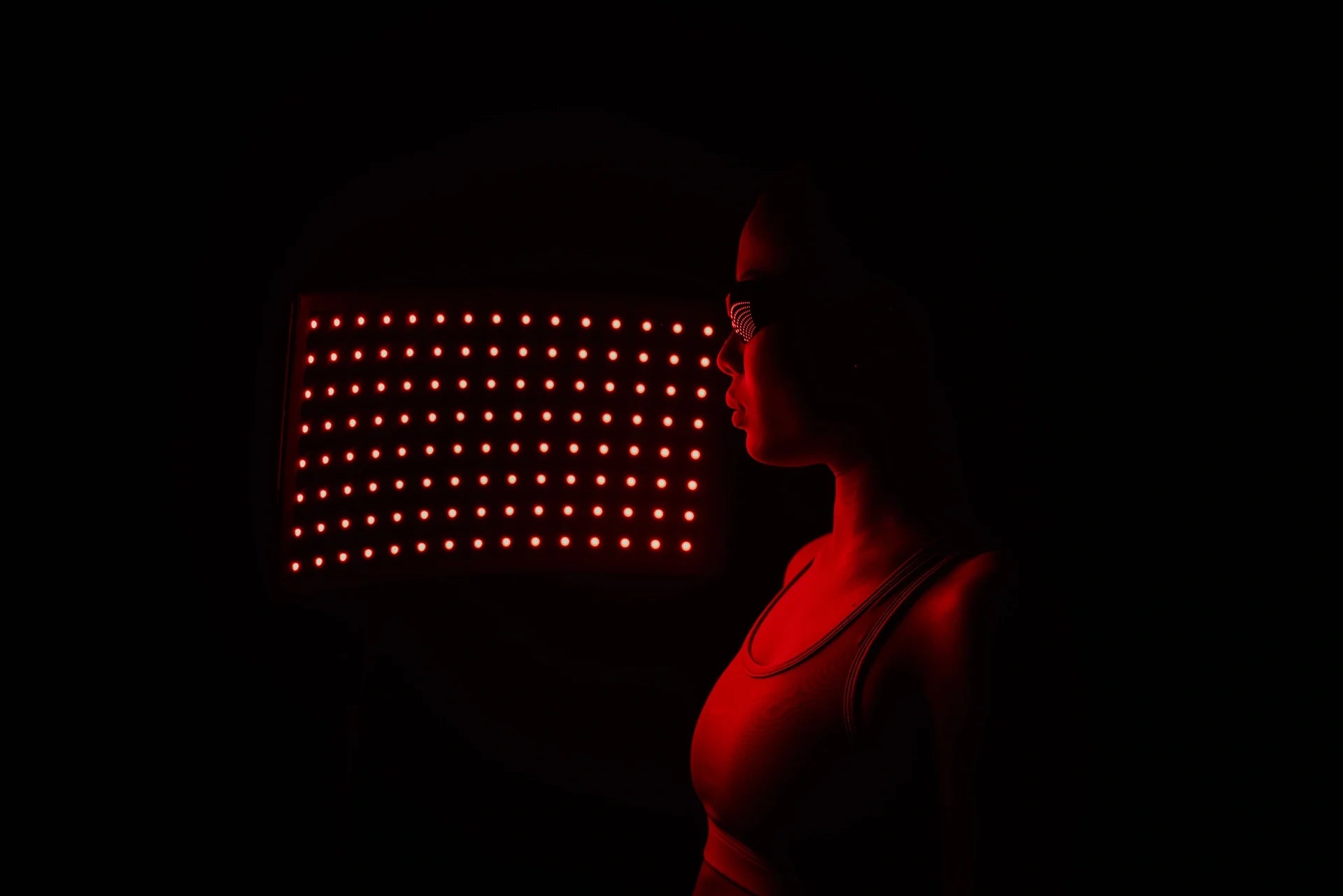
The KumoLux panel supports muscle recovery with full-body red and infrared light.
- 660 nm red + 850 nm infrared light
- Full-body muscle recovery
- Clinically validated biohacking protocols
€399,00€499,00
−10% on your 1st order when you subscribe to the newsletter

At the cellular level, changes in ATP, ROS, and pathways like TGF-β and MMP-1 have been described, which helps explain why some protocols improve texture and firmness over time. If you want a broader overview, the guide to key benefits and uses summarizes its common applications. (pubmed.ncbi.nlm.nih.gov)
A useful session is one that respects a low dose, avoids overheating, and is repeated regularly. (fda.gov)
Personalized protocol · included with your purchase
Want us to tell you how to use it in your case?
With your purchase, our experts set up your red and infrared light sessions for your sport and goal.
Message us on WhatsAppOur experts reply · no obligation
How to stimulate collagen at home step-by-step
1. Choose a useful wavelength
To stimulate collagen at home, prioritize devices that clearly state the wavelength. For photoaged skin, combinations such as 633 and 830 nm have been studied, showing clinical improvement and thicker collagen fibers; therefore, if you are comparing ranges, the practical difference between 660 nm and 850 nm deserves attention. (pubmed.ncbi.nlm.nih.gov)
2. Apply consistent sessions
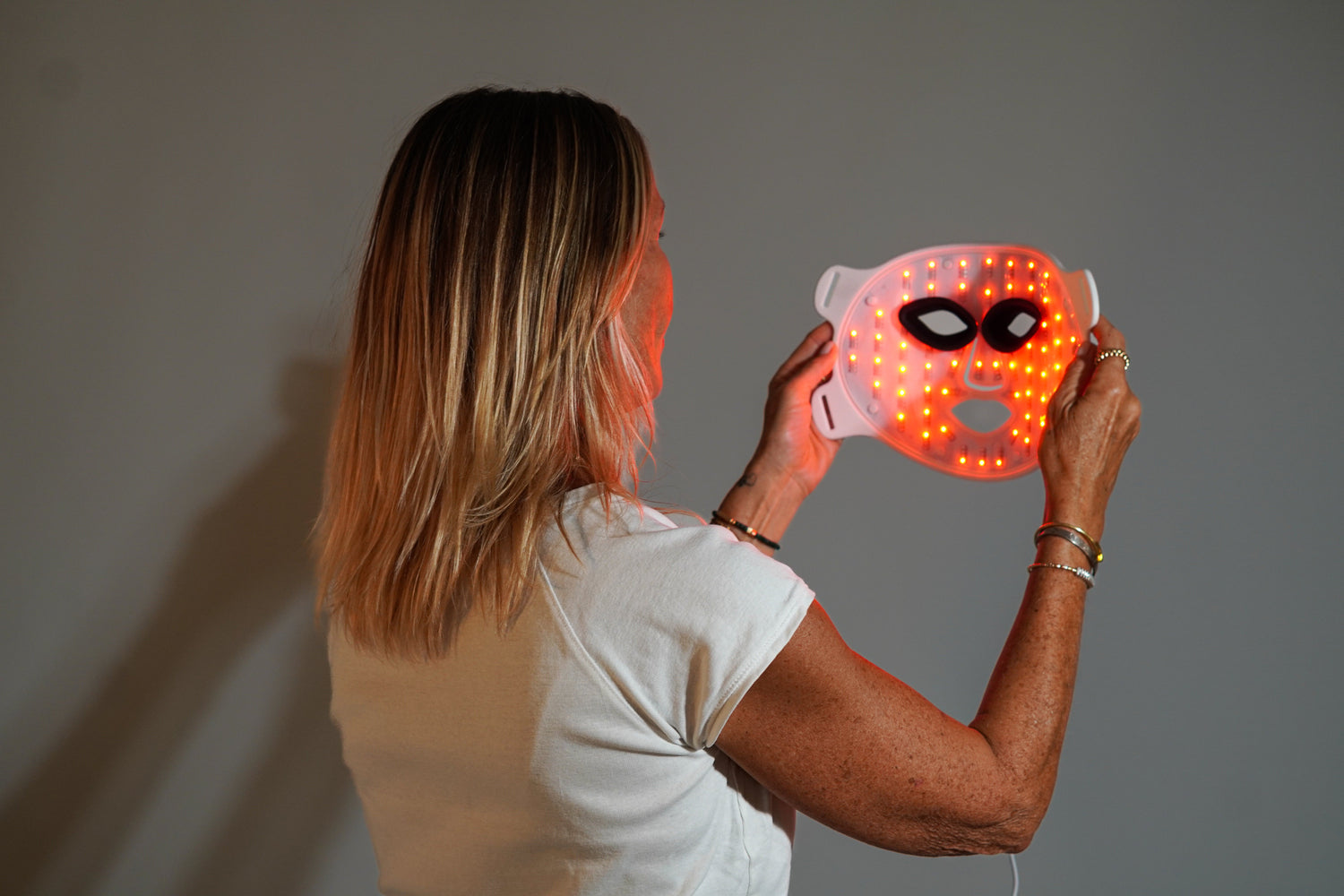
There is no universal protocol, but positive evidence usually measures changes after several weeks. A classic trial used 9 sessions over 5 weeks; a study of an LED mask for home use observed improvements at 6 weeks; and another multicenter study showed changes between 8 and 16 weeks. (pubmed.ncbi.nlm.nih.gov)
- Cleanse your skin and thoroughly dry your face before the session to avoid adding unnecessary barriers.
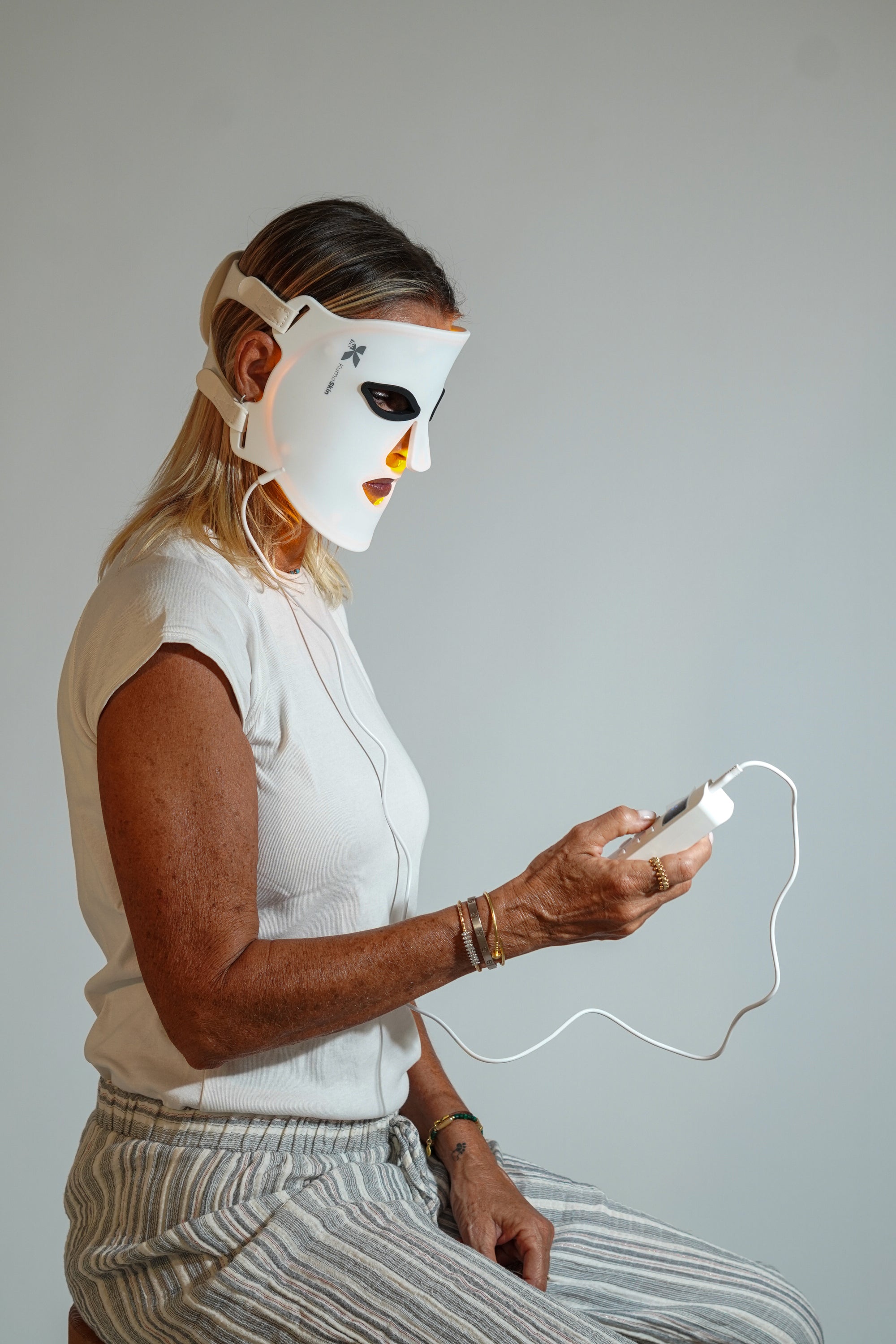
- Use eye protection if the device recommends it or if the light gets close to your eyes, because the FDA warns that light can damage vision. (fda.gov)
- Start with the minimum time recommended in the manual and only increase if you don't notice irritation or persistent redness. (accessdata.fda.gov)
- Take photographs in the same lighting every two weeks to more objectively assess texture, radiance, and fine lines.
3. Add habits that protect the dermal matrix
LED therapy usually works best as part of a simple routine: gentle cleansing, hydration, daily sun protection, and sufficient rest. If your goal is to improve wrinkles and firmness, consistency at home matters as much as the type of device, which is why combining red light with a realistic facial care plan makes sense. You can delve into the relationship between wrinkles and collagen to better align your routine. (pubmed.ncbi.nlm.nih.gov)
on your first order when you join the newsletter
We send you the code instantly. No spam.
What results you can realistically expect
If your goal is to smooth wrinkles and improve collagen, expect gradual changes, not instant ones. The best way to evaluate is to compare texture, radiance, and fine lines after a complete cycle, not after a single session. At that point, it makes sense to review whether your routine aligns with the logic of red light for wrinkles and collagen. (pubmed.ncbi.nlm.nih.gov)
At home, it's reasonable to think in terms of weeks. A study of an LED mask for home use reported improvements after 6 weeks, while other clinical studies evaluate results between 8 and 16 weeks. This doesn't mean everyone will respond the same, but it does mean that consistency outweighs an isolated session. (pubmed.ncbi.nlm.nih.gov)
What to look for in a home device
Practical summary in a table
| Aspect | What to look for | Why it matters |
|---|---|---|
| Wavelength | Visible red around 633-660 nm and, if the device includes it, near-infrared around 830-850 nm. | These are the most studied ranges for skin and dermal repair. (pubmed.ncbi.nlm.nih.gov) |
| Home Use | Clear instructions for home use, with time and distance specified by the manufacturer. | Safety and efficacy depend on the device being designed for this context. (accessdata.fda.gov) |
| Eye Protection | Design that does not require direct eye contact with the light or includes adequate protection. | The FDA reminds that light procedures can damage the eyes. (fda.gov) |
| Consistency | A plan that you can repeat for several weeks. | Trials with positive results typically evaluate programs of 5 to 16 weeks. (pubmed.ncbi.nlm.nih.gov) |
If you already have a mask or a panel, the key is not to do more, but to do better. A well-documented device, a simple routine, and honest observation of changes usually yield better results than an improvised strategy. (pubmed.ncbi.nlm.nih.gov)
When not to use it
Photobiomodulation is generally well-tolerated, but it is not for everyone. The official FDA guide on photobiomodulation indicates that it is not recommended in cases of photosensitivity, pregnancy or planning, active implants, skin cancer or history in the area, photosensitizing drugs, and active lesions or infections; it also emphasizes eye protection. (fda.gov)
- Photosensitivity disorders or use of photosensitizing drugs. (fda.gov)
- Pregnancy or planning pregnancy. (fda.gov)
- Pacemakers, implantable defibrillators, or other active implants. (fda.gov)
- Skin cancer or history of cancer in the treated area. (fda.gov)
- Infection, open wound, or active lesion in the area to be treated. (fda.gov)
If any of these situations apply, it is sensible to seek professional guidance before starting with a home device. (fda.gov)
Frequently Asked Questions
What wavelength is best for stimulating collagen at home?
There is no single "magic" wavelength, but the most studied range for skin is usually between 633 and 660 nm in visible red and around 830-850 nm in near-infrared. In trials with 633 and 830 nm, clinical improvements and thicker collagen fibers were observed, while in vitro studies with 660 nm also showed pro-collagen signals. If you buy a device, the most important thing is that it clearly states its wavelengths and intended use. (pubmed.ncbi.nlm.nih.gov)
How long does it take for red light to show results on the skin?
It's usually measured in weeks, not a single session. Clinical literature includes programs of 5 weeks, 6 weeks, and follow-ups of 8 to 16 weeks, with improvements in wrinkles, texture, or firmness at different times. Therefore, the most honest approach is to evaluate the change after a complete cycle and with comparable photos. If you expect to see an immediate effect, it's easy to underestimate the process. (pubmed.ncbi.nlm.nih.gov)
Can I use red light therapy every day at home?
It depends on the device and the manual. Clinical evidence does not show a single universal protocol: some studies work with several weekly sessions and others with longer programs. At home, it is prudent to start with the manufacturer's most conservative frequency and time, observe skin tolerance, and avoid the idea that "more" is always better. Consistency usually matters more than intensity. (pubmed.ncbi.nlm.nih.gov)
Is it safe for sensitive skin or skin with blemishes?
In general, low-intensity photobiomodulation is considered non-aggressive, but it is not suitable for all situations. The FDA does not recommend it if there is photosensitivity, pregnancy, active implants, skin cancer or an active lesion in the area, or if you are taking photosensitizing drugs. If your skin reacts easily, start only with well-documented devices, protect your eyes, and stop use if you notice persistent irritation. (fda.gov)
What now?
If you want to start with a simple routine, explore advanced LED therapy at home and refer back to the guide for home use to adjust the frequency and type of device to your goal. With a clear and consistent approach, red light can become a useful habit within your skin routine. To learn more, visit Kumo.

Red & infrared light
KumoLux Panel – Red and Infrared LED Panel
★★★★★ 4,8/5 · rated by verified customers
- 660 nm red + 850 nm infrared light
- Full-body muscle recovery
- Clinically validated biohacking protocols
€399,00€499,00· pay in installments with seQura or Klarna