Yes, muscle soreness (DOMS) can be relieved faster. It usually appears between 24 and 72 hours after a new or more intense-than-usual exertion and generally improves on its own within a few days.
The best strategy is not to punish the muscle, but to combine relative rest, gentle movement, and, depending on what you feel, cold, heat, or massage. This combination aligns better with available evidence than remaining immobile or trying to "break" the pain with more intensity.
Pressotherapy at home
End the day with light legs
★★★★★ 4,8/5 · rated by verified customers
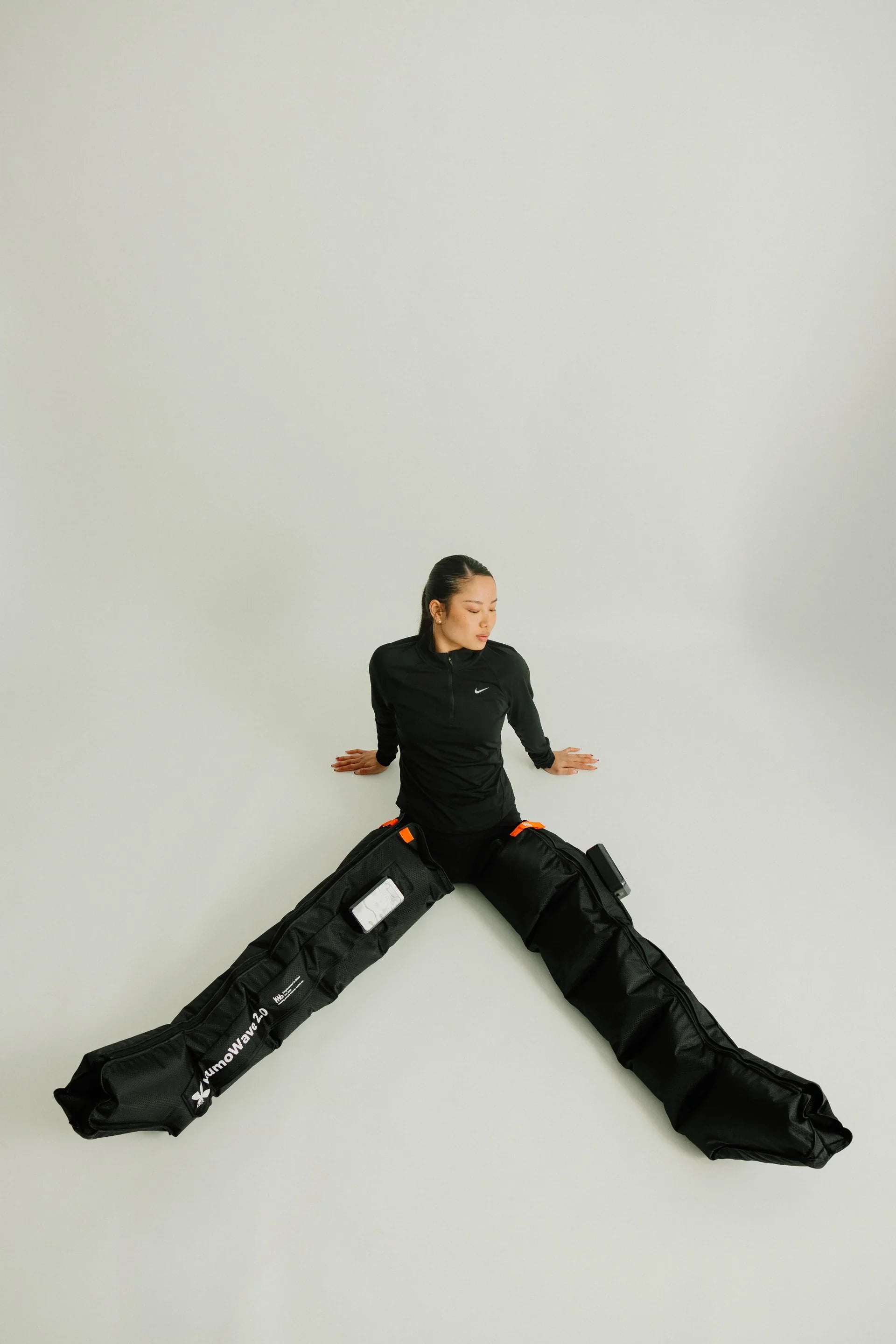
KumoWave pressotherapy boosts circulation and helps drain fluid with sequential compression, in 20-minute sessions at home.
- Boosts circulation and helps drain fluid
- Chamber-based compression, adjustable to you
- Sequential compression that mimics manual drainage
€799,00€999,00
−10% on your 1st order when you subscribe to the newsletter

What is muscle soreness and why does it occur?
Muscle soreness, also called DOMS or delayed-onset muscle soreness, is a common response after new, harder-than-usual, or highly eccentric exercises. Cleveland Clinic explains that the pain does not appear during the session, but hours or days later, and that it usually subsides gradually. Cleveland Clinic's clinical explanation is a good reference for distinguishing it from an injury.
In practice, the important thing is to understand that DOMS doesn't necessarily mean you did "something wrong." It does indicate that the muscle received a stimulus to which it was not yet fully adapted. Therefore, the goal is not to eliminate all discomfort in an hour, but to shorten the recovery time without completely stopping movement.
Personalized protocol · included with your purchase
Want us to tell you how to use it in your case?
With your purchase, our experts prepare a personalized usage protocol for your case: sport, circulation, fluid retention, pregnancy or lipedema.
Message us on WhatsAppOur experts reply · no obligation
How to relieve muscle soreness faster
When seeking quick relief, the key idea is simple: reduce the load, improve local circulation, and avoid adding more damage to the muscle. A 2021 systematic review found favorable effects of active activity, massage, and compression compared to control for DOMS management, although the overall quality of evidence was low.
Slow down, but don't immobilize yourself
Relative rest helps, but the muscle usually appreciates a little movement. Cleveland Clinic notes that gentle movement can relieve stiffness and that DOMS usually improves within a few days. In practice, gentle walking, very light cycling, or pain-free joint movement is usually better than staying completely still.
If you find it difficult to organize your return to training, you can rely on a home recovery protocol so you don't have to improvise when the muscle is still sensitive.
on your first order when you join the newsletter
We send you the code instantly. No spam.
Use cold or heat judiciously
Cold and heat are not chosen in the same way. A 2021 systematic review and meta-analysis of 32 trials concluded that applying them within the first hour after exercise could reduce DOMS pain for 24 hours; this review highlighted cold water immersion and hot packs. The 2021 review on heat and cold for DOMS supports this approach with nuances. Cleveland Clinic adds that cold generally works better when you feel pain or inflammation, and heat when stiffness predominates.
Massage and self-massage: useful, but no miracles
Gentle massage or self-massage with a foam roller can help. A meta-analysis found that massage reduces the sensation of muscle soreness after intense exertion, and Cleveland Clinic includes it among useful home options for managing stiffness. The meta-analysis on massage and DOMS is a good reference if you want to delve deeper.
There's no need to seek an aggressive session. The idea is to relax the area, not cause more pain. If self-massage increases discomfort too much, reduce pressure or change strategy.
Stretching yes, but don't expect it to be the main solution
Stretching can provide subjective relief and improve mobility, but it's not the most powerful tool for erasing pain. Mayo Clinic indicates that studies on stretching and DOMS have mixed results and some do not show a clear reduction in post-exercise discomfort. The Mayo Clinic guide on stretching explains this in detail. (mayoclinic.org)
If you stretch, do it gently, without bouncing, and with warm muscles. The goal is to maintain range of motion, not to "force" it to hurt less.
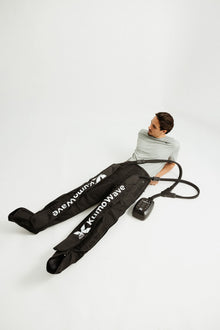
Compression can help with heavy legs
When discomfort is concentrated in heavy legs, compression can help as support within a recovery routine. A 2021 systematic review found positive effects of compression compared to control in DOMS management, along with active exercise and massage, although the overall evidence quality was low. The review on physiotherapy and DOMS is the basis of this idea.
If you want to better understand the circulatory approach, you can read what lymphatic drainage is and how it works and how pressotherapy and lymphatic drainage complement each other.
If you prefer to apply it at home, how to use pressotherapy at home step by step helps you integrate it without complications.
Quick summary: what helps most and what helps less
| Strategy | What it provides | Practical idea |
|---|---|---|
| Gentle movement | Helps reduce stiffness and keeps the muscle active without re-loading it heavily. | Use it when pain is bothersome, but you can still move comfortably. |
| Cold or heat | Can reduce short-term pain; cold is usually better if you notice inflammation, and heat if stiffness dominates. | Choose based on the dominant sensation, not by habit. |
| Massage or self-massage | Can lower pain perception and muscle tension. | It should be gentle; if it worsens, reduce intensity. |
| Gentle stretching | Improves mobility, but its effect on DOMS is limited. | Do it without bouncing and without seeking pain. |
| Compression | Can be useful support, especially for heavy legs, as a complement. | Use it as part of a routine, not as the sole solution. |
What to avoid to prevent prolonged pain
If atypical signs appear, don't treat it as normal DOMS. Cleveland Clinic recommends consulting if the pain lasts more than a week, is sharp and constant, there is significant swelling, or you notice dark urine; MedlinePlus adds that a strain can cause pain, difficulty moving the area, and bruising.
- Do not train the same muscle group hard: if the pain changes your technique or forces you to compensate, reduce the load and let the muscle recover.
- Do not do aggressive stretches: bouncing and pain do not help them disappear faster.
- Do not ignore swelling, bruising, or sharp pain: these are more indicative of an injury than typical DOMS. (medlineplus.gov)
- Do not expect an instant solution: it is normal for the pain to gradually subside over a few days.
How to prevent severe muscle soreness next time
The best prevention is gradual progression. Cleveland Clinic recommends warming up, starting slowly, and cooling down; Mayo Clinic adds that warming up can help prepare the body and somewhat reduce muscle discomfort, while cooling down alone does not seem to significantly reduce stiffness. The Mayo Clinic guide on warm-up and cool-down is a useful reference.
- Warm up progressively: prepares the muscle and reduces a sudden jump in intensity.
- Increase the load gradually: suddenly returning to a very hard session usually worsens discomfort.
- Hydrate well: Cleveland Clinic notes that adequate hydration aids general muscle recovery.
- Finish with a gentle cool-down: helps transition from exertion to rest and better restore baseline state.
If heaviness appears mainly in the legs after walking a lot, running, or standing for hours, you can read pressotherapy at home for tired legs as supplementary reading.
And if you want to see it with more practical context, how to use pressotherapy at home step by step can help you integrate it without complications.
Frequently asked questions about muscle soreness
How long does muscle soreness last and what can be done to speed up recovery?
It usually improves within a few days: Cleveland Clinic notes that it typically lasts several days and rarely more than five. To speed up recovery, combine relative rest with gentle movement, cold or heat depending on what you feel, and massage if it provides relief. If the pain lasts more than a week, is very sharp, or dark urine appears, stop treating it as normal DOMS and seek evaluation.
Does stretching help with muscle soreness?
It helps more with mobility than with pain relief. Mayo Clinic indicates that studies on stretching and DOMS are mixed and some do not show a clear reduction in post-exercise muscle discomfort. If you decide to stretch, do it gently, without bouncing, and with warm muscles. The goal is to feel looser, not to cause pain to "loosen up" faster.
Is heat, cold, or massage better?
It depends on what predominates. Cold generally works better if you notice inflammation or sharper pain, and heat if the area is stiff or "heavy." A 2021 review found that applying cold or heat within the first hour after exercise can reduce pain for 24 hours; massage and compression also appear as useful options. In short: choose the tool that best fits your actual sensation.
Can I train if I still have muscle soreness?
Yes, but with caution. Cleveland Clinic recommends moving and using the muscle lightly while it recovers, avoiding high intensity until the discomfort subsides. If you do a light session, make sure it doesn't change your technique or increase the pain. If the exercise forces you to compensate or you feel sharp pain, it is better to stop and allow more recovery time.
When can muscle soreness be an injury?
When the pain does not fit with normal muscle discomfort: if it is very localized, sharp, constant, there is swelling, bruising, difficulty moving the muscle, or it lasts more than a week. MedlinePlus describes a strain as a partial tear of the muscle and recommends consulting if you cannot move it or if the pain does not subside. Cleveland Clinic adds that dark urine is a warning sign.
What now?
If you want to move from theory to a simple routine, start with home pressotherapy and return to the Kumo Balance homepage to see how to fit recovery into your daily life.
KumoWave pressotherapy
Choose your at-home pressotherapy
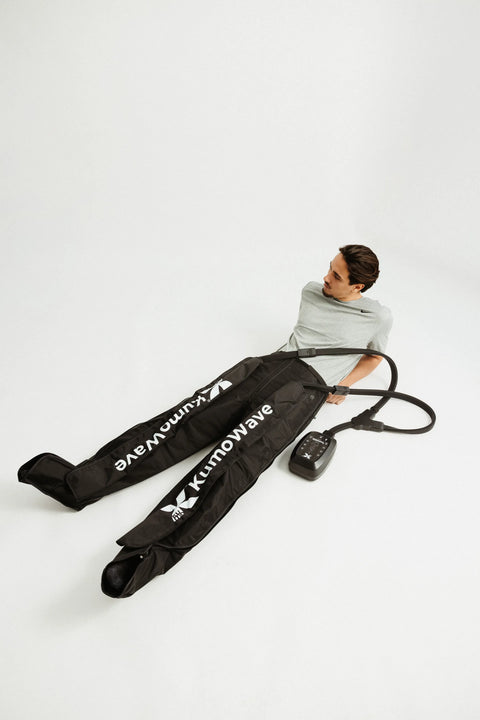
KumoWave Elite – Pressotherapy Pants
Full-coverage trousers. Ideal for lipedema, fluid retention and intensive use.
€799,00 €999,00
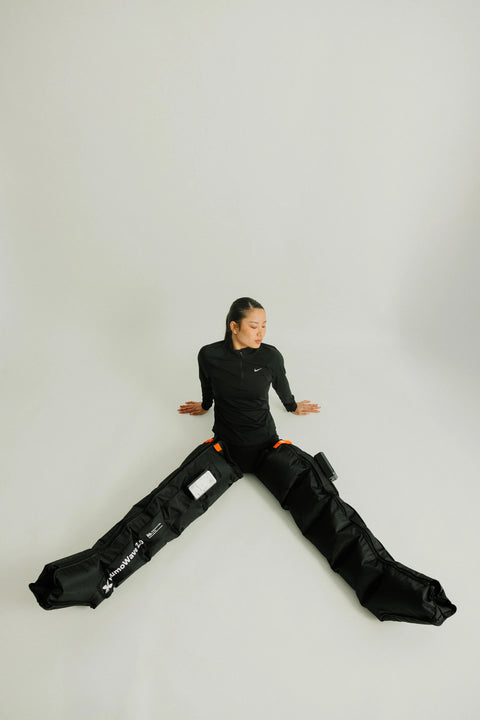
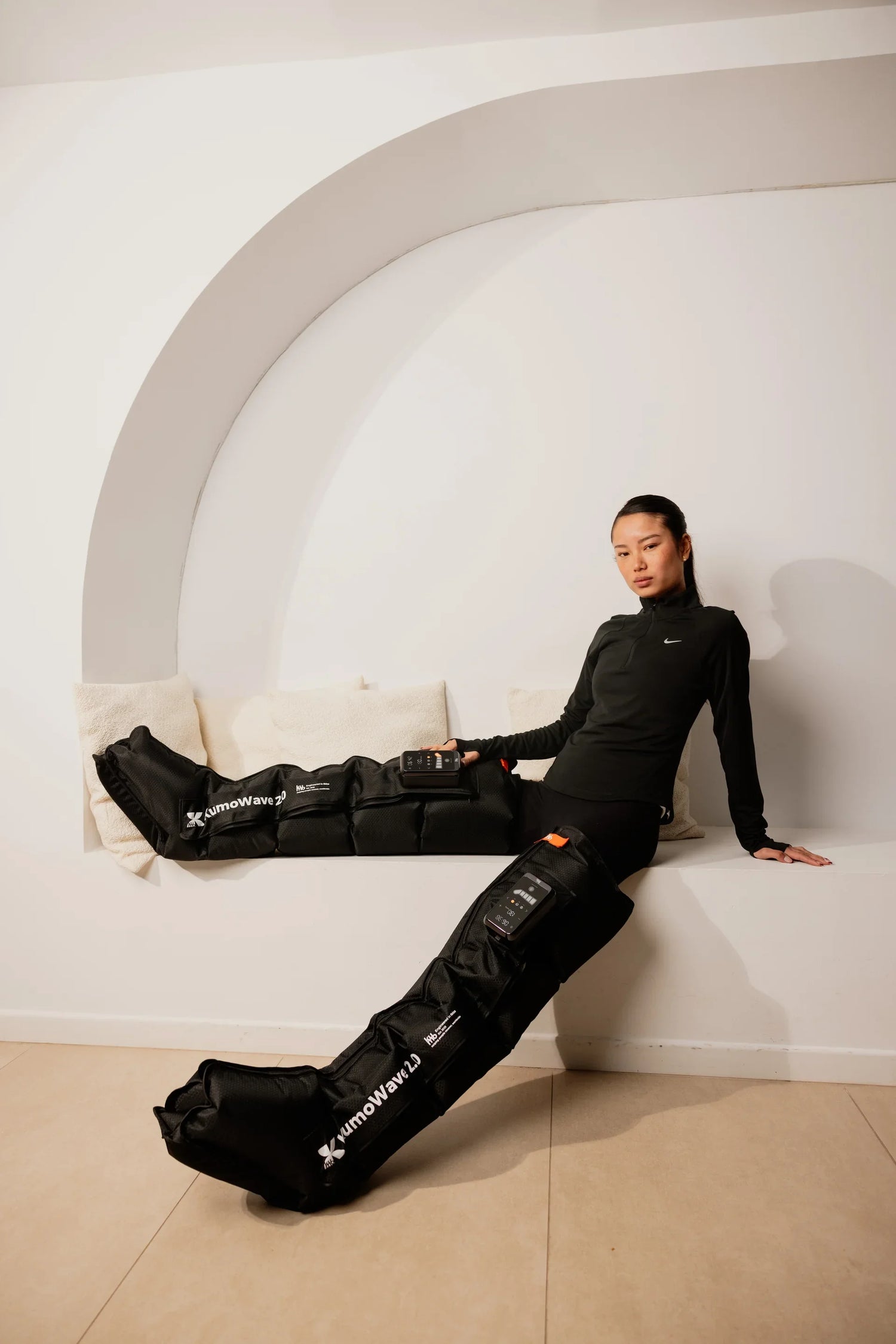
KumoWave 2.0 - Wireless Pressotherapy
Wireless, lightweight boots. Perfect for daily use and recovery.
€499,00 €599,00