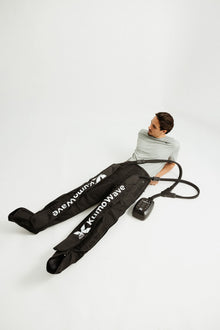

Home pressotherapy: a step-by-step guide. If you want to improve circulation, relieve tired legs, and speed up your recovery without leaving home, here's the method, parameters, and precautions to get it right from day one.
Pressotherapy (intermittent pneumatic compression) uses air chambers that inflate and deflate sequentially to promote venous and lymphatic return. Below you will find a clear roadmap: what equipment you need, how to put on the boots, what pressure and time to choose according to your goal, and key safety guidelines endorsed by clinical practice and experts.
Pressotherapy at home
End the day with light legs
★★★★★ 4,8/5 · rated by verified customers
KumoWave pressotherapy boosts circulation and helps drain fluid with sequential compression, in 20-minute sessions at home.
- Boosts circulation and helps drain fluid
- Chamber-based compression, adjustable to you
- Sequential compression that mimics manual drainage
€799,00€999,00
−10% on your 1st order when you subscribe to the newsletter

In a little while
- Choose the sequential program, start with low pressure and 20–30 minute sessions.
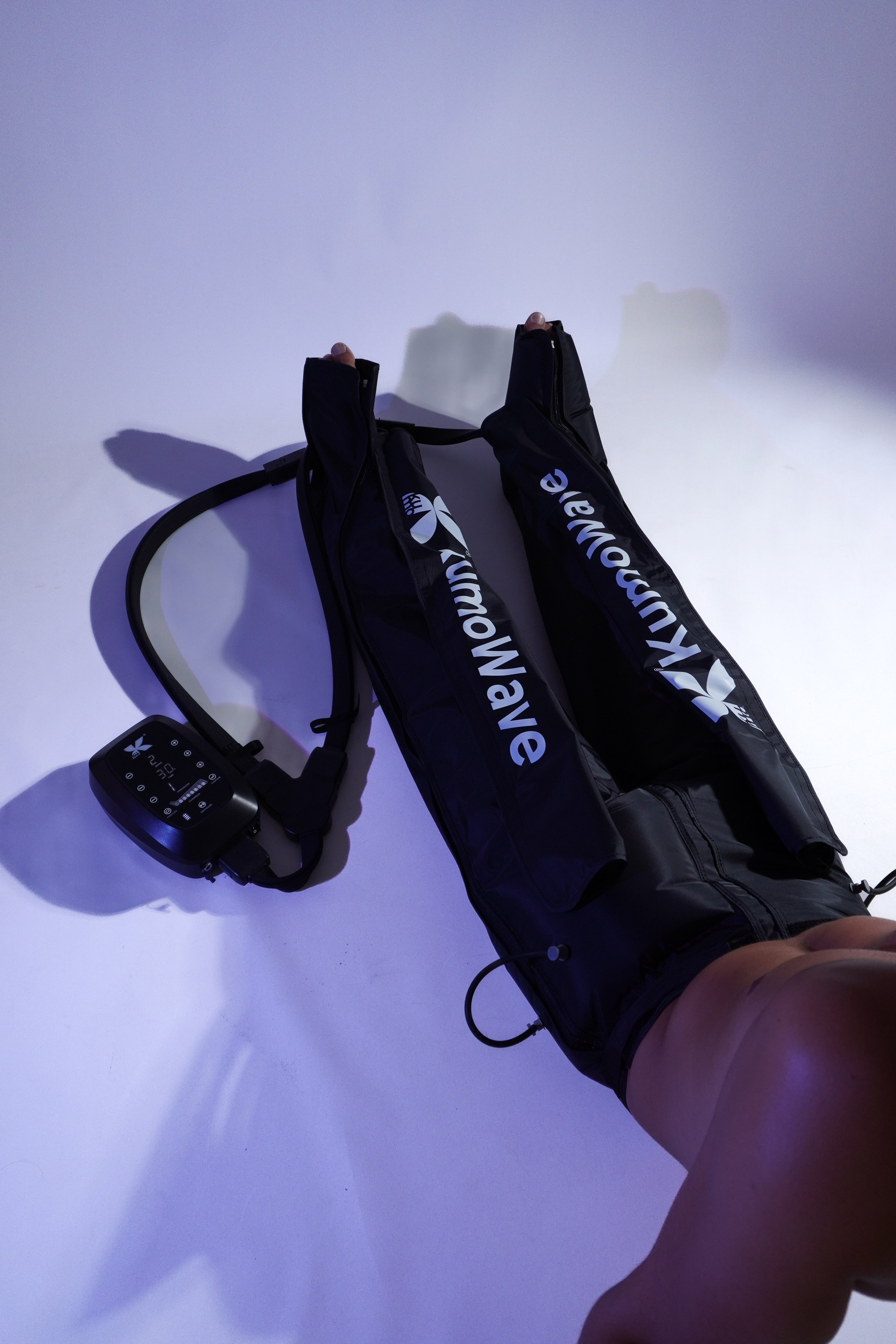
- Put the boots on from the foot upwards, without folds and with thin clothing.
- Take a deep breath, stay hydrated, and don't feel pain: just "comfortable pressure".
- 3-5 times per week is usually enough; adjust according to how you feel.
- Avoid if you have active DVT, severe congestive heart failure, or infection; consult your doctor first.
What is pressotherapy and how does it work?
Intermittent pneumatic compression applies pressure waves that travel along the leg from distal to proximal. This mechanical "push" helps mobilize fluids, improve venous return, and stimulate the lymphatic system, reducing the feeling of heaviness and promoting recovery after exertion.
- Mechanism: inflation and deflation cycles that compress in segments to propel blood and lymph towards the heart.
- Expected effects: less swelling, relief from tired legs, more comfortable post-exercise recovery.
To learn more about the mechanism and clinical uses:
Personalized protocol · included with your purchase
Want us to tell you how to use it in your case?
With your purchase, our experts prepare a personalized usage protocol for your case: sport, circulation, fluid retention, pregnancy or lipedema.
Message us on WhatsAppOur experts reply · no obligation
- General information about Cleveland Clinic sequential compression devices: Sequential Compression Device (SCD)
- NICE recommendations on pneumatic compression for thrombosis prevention in selected patients: NICE guidance
- International Lymphoedema Framework: Compression Therapy – ILF Good Practices Framework
Home pressotherapy is a tool for wellness and recovery. It does not replace medical advice or treatment for medical conditions.
Practical benefits and when to use it
- After training: it helps to "decongest" and provides a feeling of lighter legs after intense sessions or high mileage.
- Long days spent standing or sitting: reduces heaviness and swelling in the ankles in the evening.
- Long journeys: as part of a wellness routine before or after long trips (journeys longer than 4 hours increase the risk of venous stasis). Reference: CDC – Travel and DVT .
- Accumulated load days: accelerates the perception of recovery between sessions without adding fatigue.
To learn about warning signs of DVT and when to seek medical advice: Mayo Clinic – Deep Vein Thrombosis .
How to use pressotherapy at home step by step
1) Before starting: quick checklist
- Stay hydrated and empty your bladder.
- Check for open wounds, skin infections, or sharp pain in the leg.
- Wear thin, seamless clothing (ultra-thin socks, technical tights).
- If it's your first time or you have a medical condition, consult a professional.
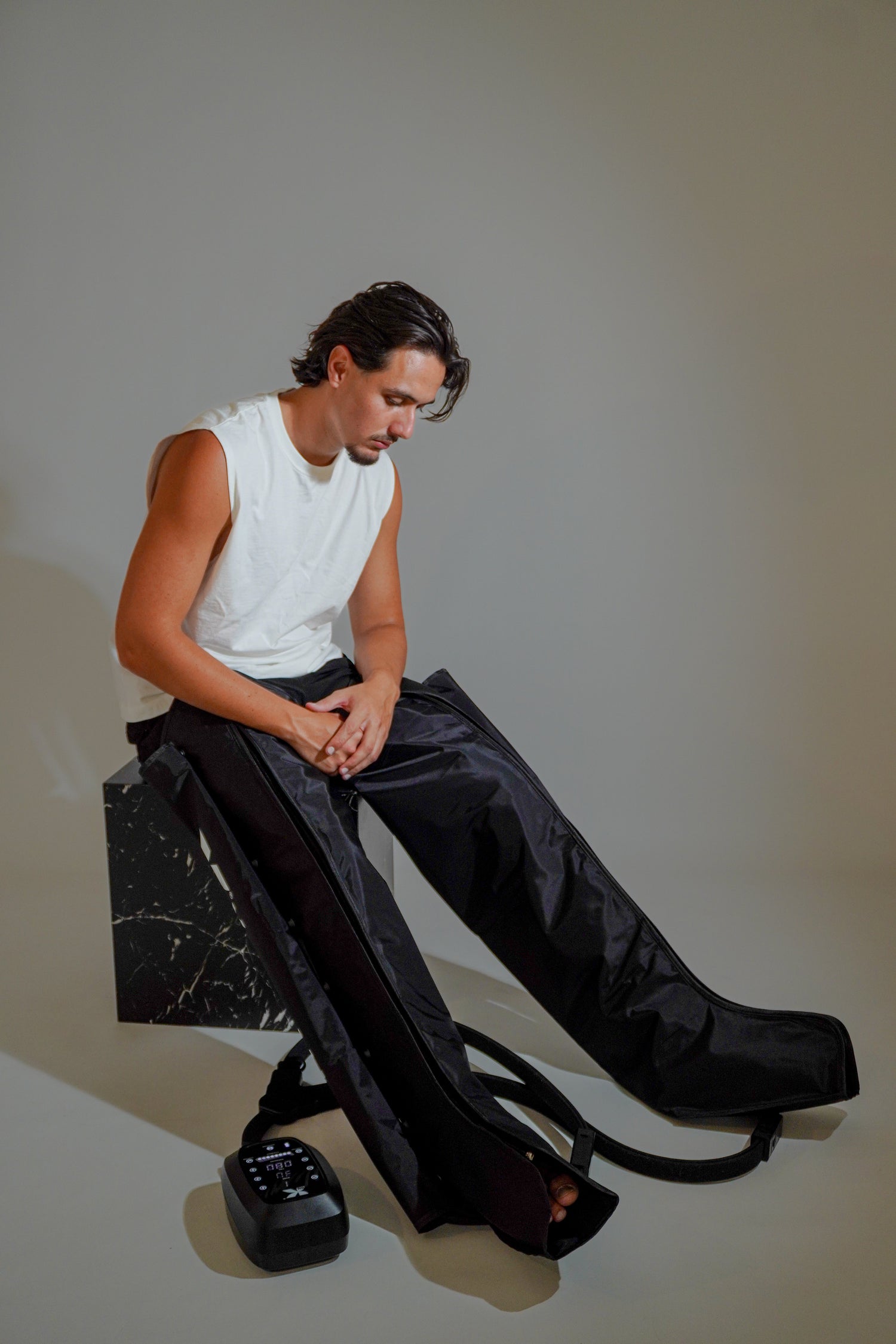
2) Correct placement of the boots
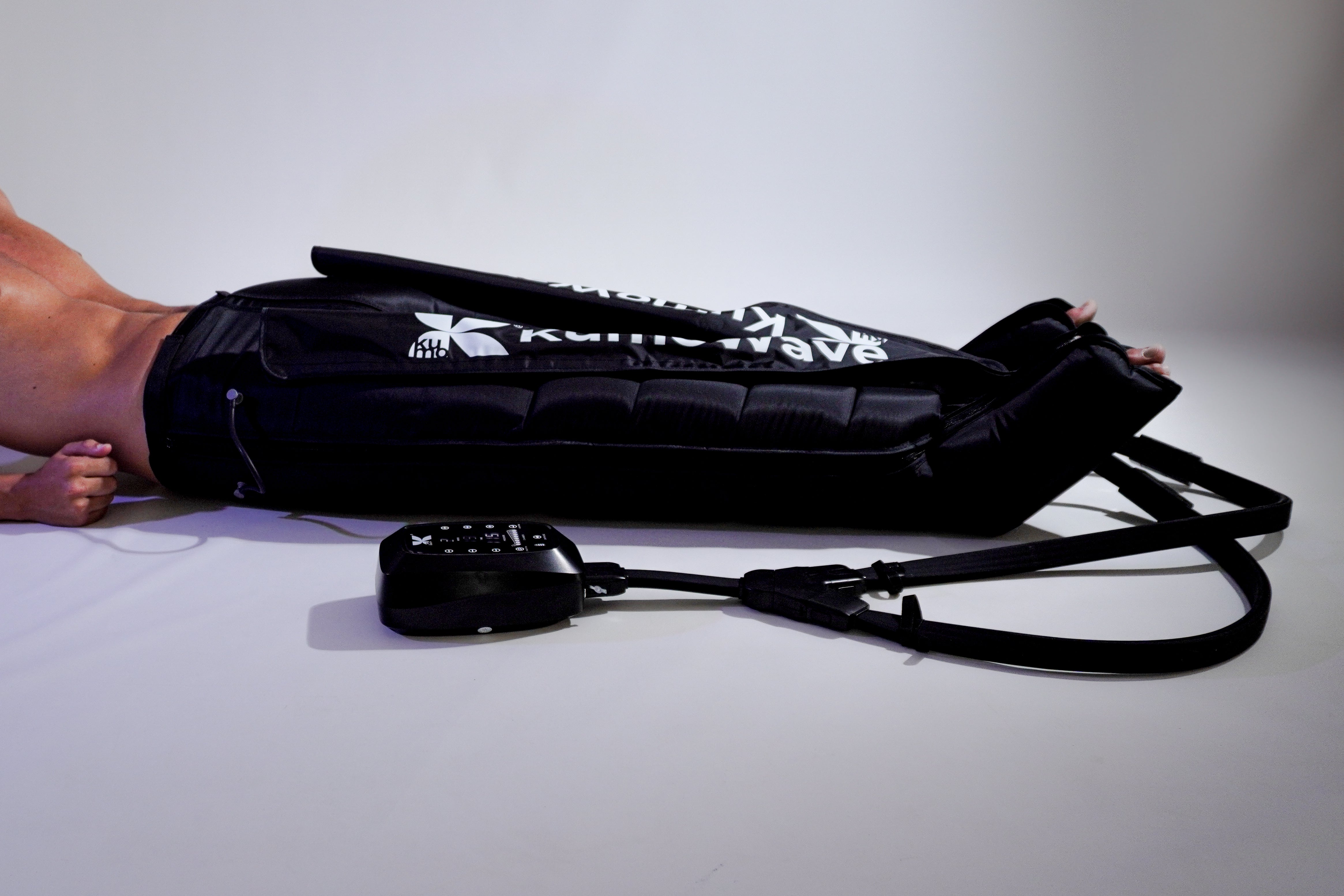
- Sit or lie down with your legs raised 10–15 cm.
- Insert your foot and calf, ensuring that the chambers are aligned and without folds.
- Close zippers/velcros without overtightening; you should be able to fit a finger between the boot and your skin.
- Connect the hoses and make sure they are not clogged.
3) Parameter adjustment: pressure, time and program
- Program: choose sequential/peristaltic (distal to proximal).
- Pressure: Start low and gradually increase. The sensation should be firm but comfortable, without pain or tingling.
- Duration: 20–30 minutes per session to start; extend up to 45 depending on tolerance.
- Frequency: 3–5 days/week is sufficient for most; at peak sports load, 1 session/day.
Golden rule: “Start gently, assess sensations, increase gradually.”
−10%on your first order when you join the newsletter
We send you the code instantly. No spam.
4) During the session
- Breathe deeply and slowly; avoid crossing your legs.
- If pain, numbness, or discoloration occurs, stop the session and reduce the parameters.
- Stay warm but don't overheat; avoid positions that fold your hips excessively.
5) After the session
- Drink water and perform 2–3 minutes of ankle and hip mobility exercises.
- Mild, temporary redness is normal; it disappears within minutes. If it persists, consult a doctor.
Guide to parameters for domestic use
| Aim | Suggested pressure (mmHg) | Duration | Frequency | Recommended program | Grades |
|---|---|---|---|---|---|
| Well-being and tired legs | 30–50 | 20–30 min | 3–5/week | Standard sequential | Prioritize comfort; increase gradually. |
| Post-training recovery | 40–70 | 25–45 min | 4–7/week (depending on workload) | Sequential with segment compression | Add light mobility after the session. |
| Mild swelling due to sedentary lifestyle | 30–45 | 20–30 min | 3–5/week | Soft sequential | Lift your legs at the end. |
| Daily maintenance | 30–40 | 15–25 min | 3–4/week | Sequential | Constant micro-sessions are better than long, sporadic sessions. |
Table title: Guidelines for home pressotherapy (always adjust to your tolerance and your equipment's manual)
Note: The above ranges are guidelines for well-being and non-clinical recovery. In the presence of pathology (lymphedema, venous ulcers, etc.), the regimen should be individualized by a healthcare professional. Review of best practices: International Lymphoedema Framework .
Safety, contraindications and precautions
Avoid pressotherapy and consult your doctor if you experience:
- Deep vein thrombosis (DVT) or suspected DVT.
- Decompensated congestive heart failure.
- Severe peripheral arterial disease.
- Active skin infections, open wounds, or cellulitis.
- Severe peripheral neuropathy with loss of sensation.
Useful resources:
- General safety and clinical use information: Cleveland Clinic – SCD
- Treatment and compression therapy in lymphedema (clinical context): NHS – Lymphoedema treatment
- Travel and prolonged venous stasis: CDC – DVT in travelers
Routines according to objective
Sports recovery (strength, running, cycling)
- After intense sessions, apply 25–45 min in sequential mode.
- Start 30–45 min after training to allow for cool-down.
- Add 5–10 minutes of movement and 1–2 glasses of water to optimize the effect.
- Physiological basis and compression recommendations in exercise: consult the evidence and safety framework of clinical guidelines such as NICE .
Tired legs from sedentary work or standing for long periods
- 20–30 min at the end of the day with low-medium pressure.
- Next, raise your legs and perform 20–30 ankle flexion-extensions.
- Consider taking active breaks of 2–3 minutes every hour during the workday.
Long trips and flights
- Short session (15–25 min) the day before and/or after the trip.
- Stay hydrated, move your ankles, and walk every 1–2 hours when possible. Learn more: CDC – DVT and Travel .
Drainage and daily well-being
- Micro-sessions of 15–25 min, 3–4 times/week.
- Low-medium pressure and focus on sustained comfort.
How to choose and care for your equipment
- Sizes: Adjust the boot length to your height so that the cameras match your foot, calf, and thigh.
- Programs: prioritizes sequential modes with deflation between cycles and fine pressure adjustment.
- Maintenance: Clean the covers according to the manual, ventilate after each use, and check hoses and zippers.
- Warranty and support: choose brands with after-sales service and available spare parts.
If you want to turn recovery into an elegant and effective habit, discover KUMO's wellness technologies: premium recovery solutions .
FAQ
How many times a week is it recommended to use pressotherapy at home?
For most people seeking wellness and non-clinical recovery, 3–5 sessions per week of 20–30 minutes each work well. During periods of high athletic intensity, you can increase the frequency to one session per day for 3–5 days, always prioritizing the comfort and response of your legs. Signs of overdoing it include pain, tingling, or a feeling of "numbness in the leg"; if these occur, reduce the pressure and duration. As a general rule, less frequent sessions are better than very long, isolated sessions.
What pressure is safe to start with if I've never used it before?
Start with a low to medium pressure that feels firm but not painful or numb. For home use focused on well-being, the goal is comfort and a feeling of relief, not maximum pressure. Gradually increase the pressure between sessions according to tolerance and perceived effect. If you have symptomatic varicose veins, vascular problems, diabetes with neuropathy, or any other condition, ask a healthcare professional for a personalized treatment plan and follow your device's instructions.
Is it better to use it before or after training?
If the goal is recovery, most people use it after exercise, once the cool-down is complete (30–45 minutes after the session). On days with two sessions or competition, a short morning session can also help to "wake up" circulation. The important thing is that it doesn't replace an active warm-up or cool-down, and that you adjust the pressure and duration to avoid causing additional discomfort.
Can it be used during pregnancy?
During pregnancy, circulatory changes occur, and there is a greater tendency for leg swelling. Some women find relief with gentle compression and leg elevation. However, before using pressotherapy or any pneumatic compression device at home, consult your obstetrician or midwife to assess your individual case, especially if there are risk factors for thrombosis or significant varicose veins. Always prioritize comfort and avoid excessive pressure.
Does pressotherapy replace compression stockings?
No. Compression stockings exert constant pressure throughout the day and are indicated for specific situations under medical supervision. Pressotherapy provides intermittent compression in time-limited sessions focused on recovery and well-being. Both tools can be complementary, but they are not interchangeable. If you wear stockings as prescribed by a doctor, continue wearing them and use pressotherapy as a supplement, unless contraindicated.
To take you home
- Start with low pressure and 20–30 minute sessions; progress according to how you feel.
- Put on and adjust the boots properly: no creases, firm comfort, easy breathing.
- 3-5 weekly sessions are enough for well-being and light legs.
- Avoid use with DVT, severe heart failure, infection, or open wounds.
- Combine with hydration, mobility, and rest for consistent results.
- Ready to make recovery a habit? Explore KUMO's solutions and take the next step in your well-being: KUMO .
KumoWave pressotherapy
Choose your at-home pressotherapy
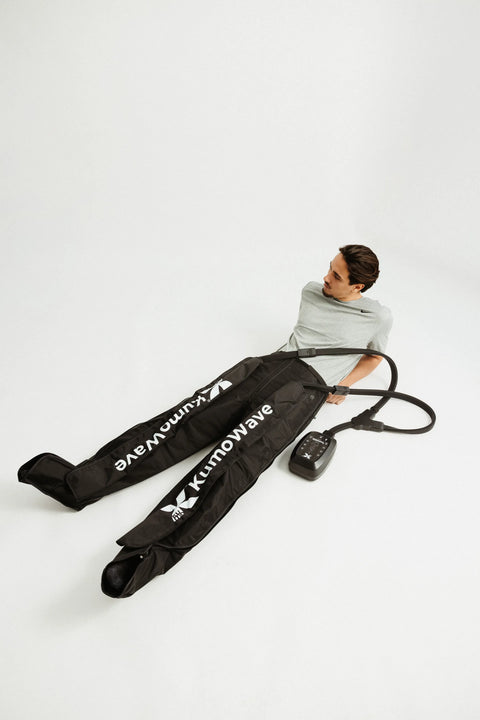
KumoWave Elite – Pressotherapy Pants
Full-coverage trousers. Ideal for lipedema, fluid retention and intensive use.
€799,00 €999,00
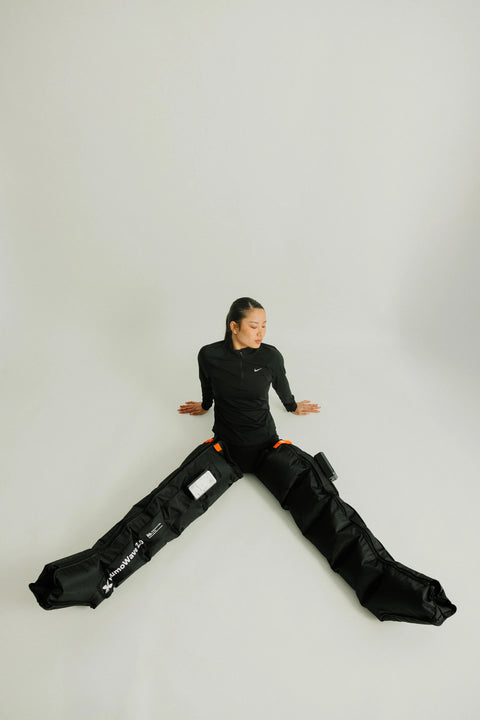
KumoWave 2.0 - Wireless Pressotherapy
Wireless, lightweight boots. Perfect for daily use and recovery.
€499,00 €599,00