Red light therapy has arrived at your home.
In this article you will see how to turn it into a simple daily routine to improve your skin, support muscle recovery and promote better sleep, without leaving your living room.
Red light therapy (also called photobiomodulation) uses red and near-infrared wavelengths to stimulate cellular function. Today, it can be done at home with LED masks and panels designed for domestic use, provided safety guidelines and consistency are followed. Below, you'll see how it works and how to set up a realistic daily routine.
Red & infrared light
Recover faster, at home
★★★★★ 4,8/5 · rated by verified customers
The KumoLux panel supports muscle recovery with full-body red and infrared light.
- 660 nm red + 850 nm infrared light
- Full-body muscle recovery
- Clinically validated biohacking protocols
€399,00€499,00
−10% on your 1st order when you subscribe to the newsletter

What is red light therapy (photobiomodulation)?
Red light therapy involves exposing areas of the body to low-intensity red LED and/or near-infrared light that produces no noticeable heat. Unlike ultraviolet (UV) radiation, it does not tan or burn the skin and is used for wellness and recovery purposes. ( my.clevelandclinic.org )
At the cellular level, light is absorbed by the mitochondria (the cell's "powerhouse"), which can increase energy (ATP) production, modulate inflammation, and improve microcirculation. ( my.clevelandclinic.org )
Personalized protocol · included with your purchase
Want us to tell you how to use it in your case?
With your purchase, our experts set up your red and infrared light sessions for your sport and goal.
Message us on WhatsAppOur experts reply · no obligation
Simply put: red light doesn't "fill" or "stretch" anything from the outside, but it gives a little boost to your cells' metabolism so they can do their job better.
The scientific evidence is promising but still developing : there are clinical trials showing benefits in skin, pain, and muscle recovery, although many studies are small and more high-quality research is needed. ( my.clevelandclinic.org )
Potential benefits in your daily life
Skin care and facial rejuvenation
Several medical centers indicate that red light can help improve the appearance of fine lines, skin texture, redness, and scars by stimulating collagen production and reducing inflammation. ( my.clevelandclinic.org )
on your first order when you join the newsletter
We send you the code instantly. No spam.
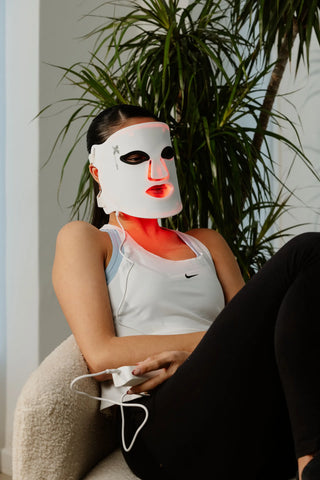
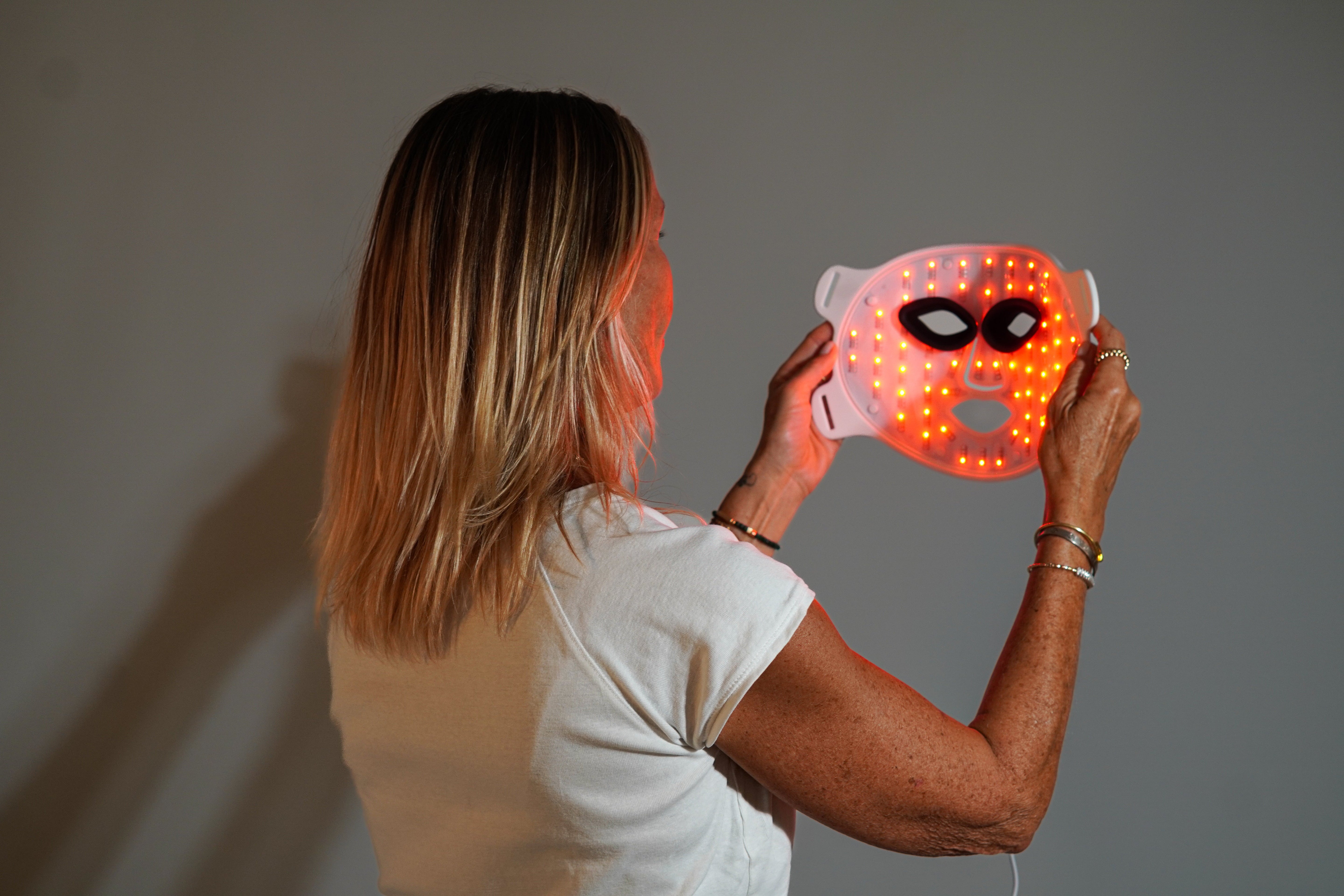
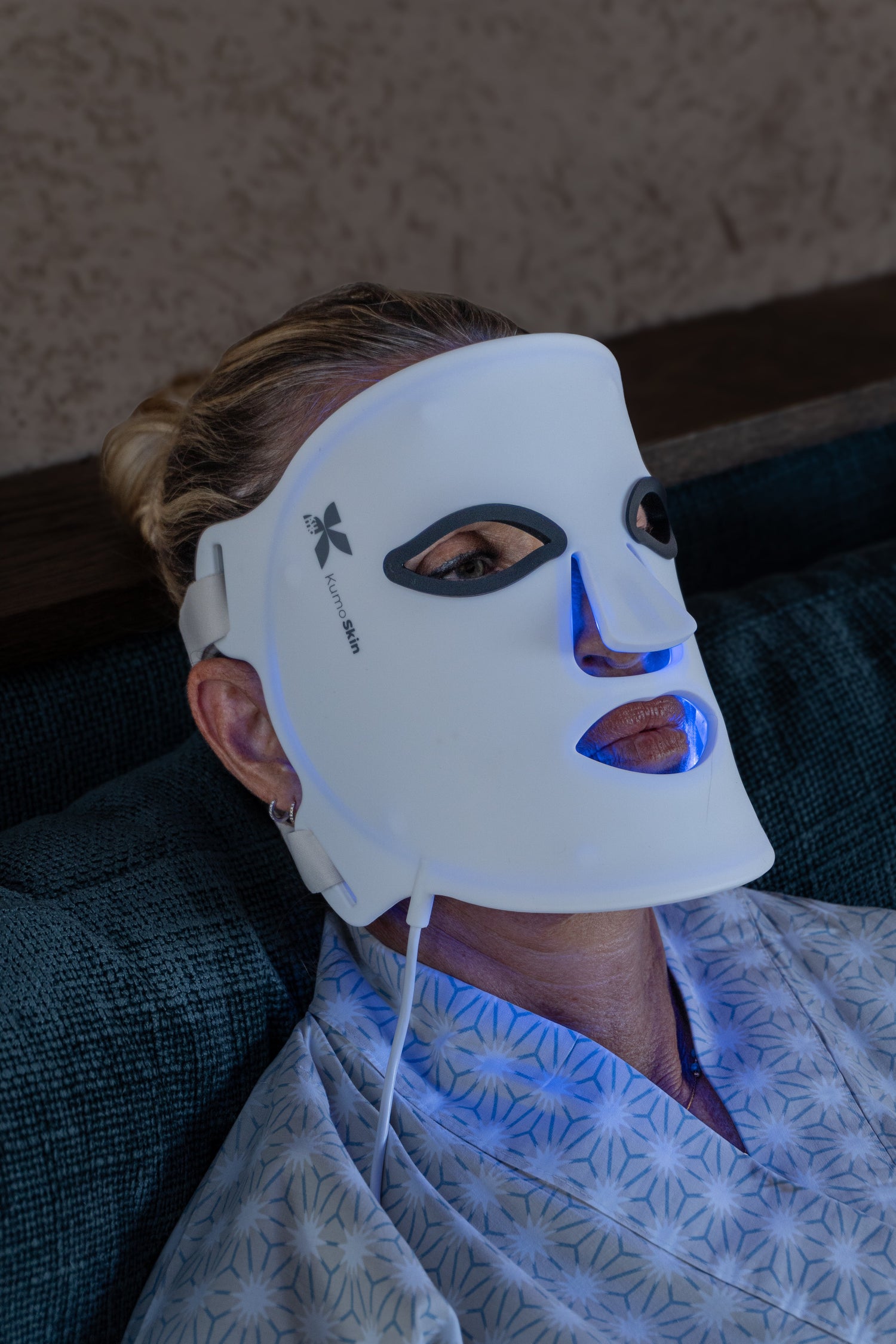
For the face, the most comfortable devices are LED masks that fit snugly and distribute light evenly. With consistent use, many people report brighter, more even skin after a few weeks. The key is regularity: several short sessions per week are usually more effective than very long, sporadic sessions.
If you want to integrate this into your facial care routine, at KUMO you will find masks and panels specifically for home use in the LED light therapy collection .
Muscle recovery and physical performance
In sports and physical activity, the term muscle photobiomodulation is often used. Recent meta-analyses of controlled trials suggest that, when applied before or after exercise, red light can:
- Moderately improve muscle endurance .
- Promote the recovery of strength after intense exertion.
- Reducing blood markers of muscle damage such as creatine kinase in some profiles of athletes and sedentary people. (pubmed.ncbi.nlm.nih.gov)
This does not replace rest or good training planning, but it can be a useful tool for:
- Runners, cyclists, or people who do strength training several times a week.
- Those who feel their legs are especially heavy at the end of the day.
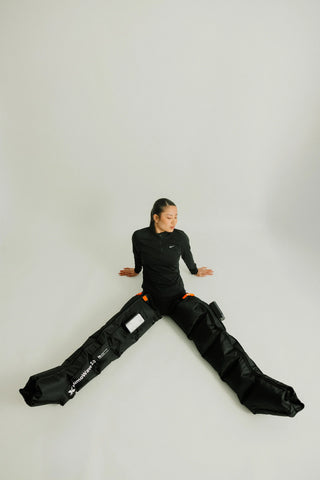
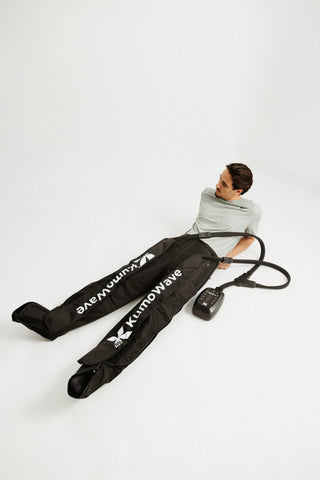
- Users who already use pressotherapy or massage and seek to add recovery stimuli.
Sleep, circadian rhythm, and relaxation
The color of light influences the internal clock. Blue light (screens, cool lights) is the most likely to suppress melatonin and makes it harder to fall asleep if used at night, while red light has less of an impact on this hormone. ( sleepfoundation.org )
However, sleep experts remind us that any bright light at night can disrupt sleep . The wisest approach is to use red light therapy before bed, for 60–90 minutes prior, and then keep the bedroom as dark as possible. ( sleepfoundation.org )
Many people incorporate a short evening sleep session as a "ritual to unwind": dim lighting, deep breathing, and no screens. It's not a magic cure for insomnia, but it can fit into a good sleep hygiene routine.
Before you begin: Basic safety in red light therapy
Most medical sources agree that red light therapy is safe in the short term when used as directed , especially with devices approved for home use. ( my.clevelandclinic.org )
Even so, it's worth keeping in mind:
- Always protect your eyes (wear the goggles included with the device or keep your eyes closed, as directed by the manufacturer).
- Do not use the light on areas with open wounds, recent burns, or active infections without professional supervision.
- If you have eye disease, photosensitive epilepsy , or are taking photosensitizing medication , consult your doctor first. ( webmd.com )
- Avoid excessively long sessions or sessions too close to the skin if the device does not indicate it: more is not necessarily better.
- During pregnancy, the available evidence is limited; many specialists recommend caution and discussing it with a gynecologist. ( webmd.com )
Important: This guide is for informational purposes only and does not replace individualized medical advice. If you have a medical condition or safety concerns, consult a healthcare professional.
How to design a daily red light therapy routine at home
The best routine is the one you can stick to . Below is a general outline that you can adapt to the type of device, your available time, and your goals (skin, muscles, sleep, or a combination).
Morning routine: activate skin and energy
Objective: to care for the skin, gently "awaken" the body and, if you train, prepare the muscles.
Suggested proposal:
-
After washing your face
- Place the mask or panel at the distance indicated in the manual.
- 5–10 minutes of red light on the face, with eyes protected.
- Continue with your usual cosmetic routine (moisturizer, sunscreen). -
If you're going to train in the morning
- Apply red light to the main muscle groups you are going to work (for example, quadriceps and glutes if you are doing leg exercises).
- 5–10 minutes per area, adjusting according to the device's power and the manufacturer's recommendations. (pubmed.ncbi.nlm.nih.gov) - Accompany with hydration and a light breakfast if needed; light therapy does not require fasting or anything similar.
Afternoon routine: recovery after exercise or the day
Objective: to reduce the feeling of muscle strain and facilitate recovery between training sessions or days of intense standing work.
- After exercise or upon arriving home
- Shower or light washing to remove sweat.
- A 10–15 minute session per fatigued muscle group (legs, back, shoulders…), without using the light at maximum power if you feel heat or discomfort. (pubmed.ncbi.nlm.nih.gov)
- If your device allows it, alternate areas while resting the ones already treated.
- You can combine this session with gentle 5–10 minute stretches or joint mobility exercises.
Nighttime routine: preparing body and mind for sleep
Objective: to slow down, take care of your skin and support a good night's sleep.
Between 60 and 90 minutes before the time you want to sleep:
-
Brief facial or localized session
- 5–10 minutes of red light on the face or on an area with discomfort (for example, cervical or lumbar).
- Keep ambient lighting low and warm during the session. -
Digital disconnection
- Turn off bright screens (mobile phone, tablet, computer, television) after your session, or use blue light filters if you can't avoid them. ( sleepfoundation.org ) -
Dark bedroom
- When you go to bed, try to make the room as dark as possible; if you need a nightlight, choose a very dim and warm one. ( verywellhealth.com )
If you notice that nighttime sessions energize you instead of relaxing you (this happens to some people), try moving them to the afternoon or reducing their duration.
Example of a daily routine with red light therapy at home
Below is a table to guide you on a typical day. It's not a rigid protocol, but a guide that you can adapt to your specific situation and your device's manual.
Sample daily routine chart
| Time of day | Main objective | Application area | Suggested duration* | Weekly frequency | Key comments |
|---|---|---|---|---|---|
| Tomorrow | Skin care | Face (mask/panel) | 5–10 min | 5–7 days | Eyes protected, skin clean, distance according to manufacturer. |
| Tomorrow | Prepare the training | Legs / muscle group | 5–10 min/zone | 2–4 days | Useful before intense sessions; does not replace warm-up. |
| Late | Muscle recovery | Trained or fatigued zones | 10–15 min/zone | 3–5 days | You can combine it with gentle stretching or pressotherapy. |
| Evening | Relaxation and sleep ritual | Face or painful area | 5–10 min | 3–5 days | Finish 60–90 min before going to sleep; afterwards, make the bedroom as dark as possible. |
*Durations are approximate and should always be adjusted to the power and recommendations of the device.
Integrate red light therapy with other recovery tools
Red light fits very well within a global recovery ecosystem like the one proposed by KUMO , where different technologies are combined to care for skin, muscles and circulation.
Some ideas for synergies:
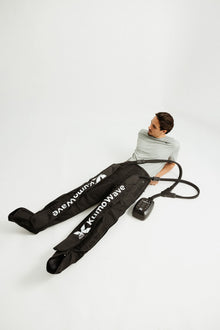
- Red light + pressotherapy for tired legs
- First, apply red light to your quadriceps, calves, and glutes.
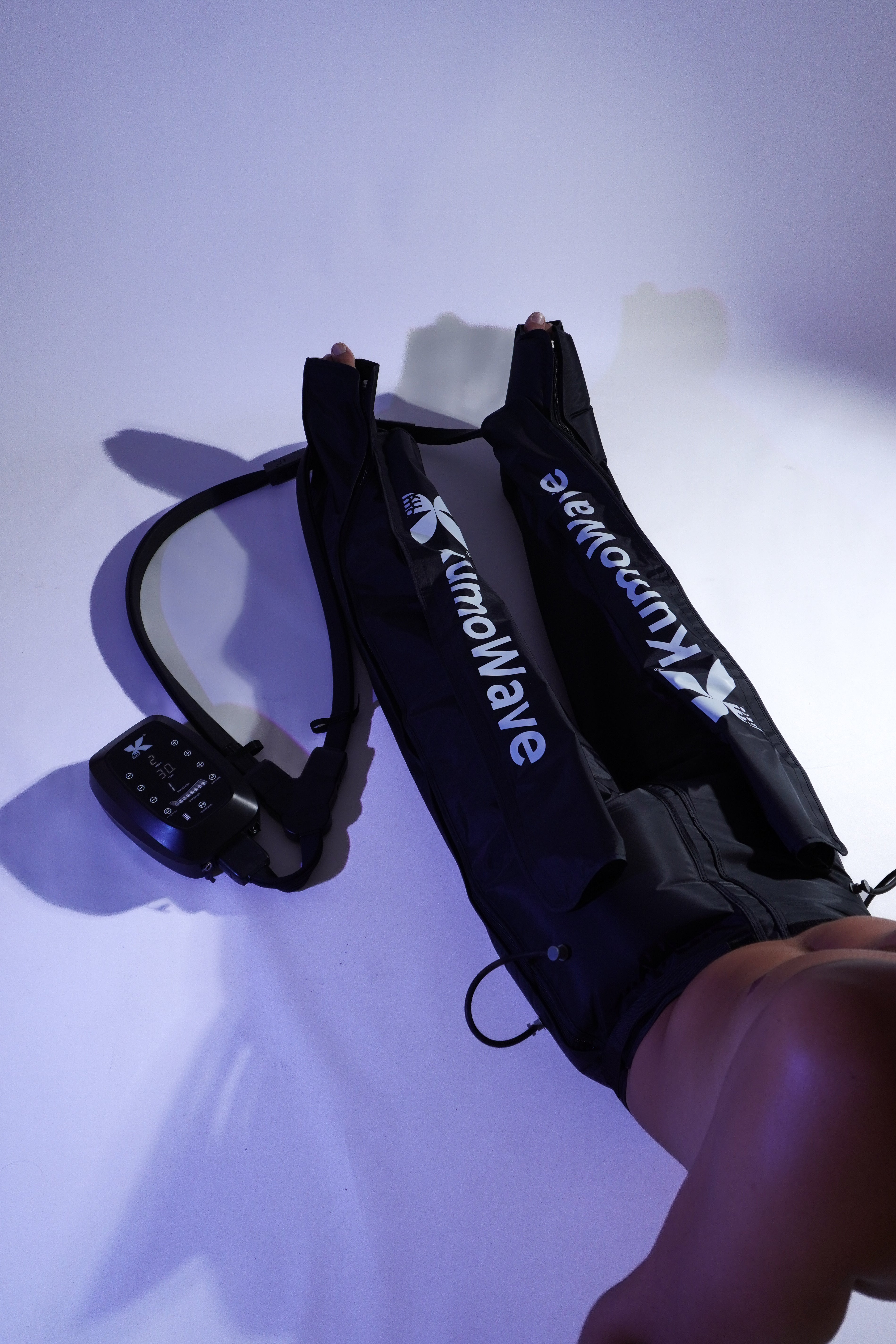
- Afterwards, perform a session with pressotherapy boots to promote venous return and a feeling of lightness in the legs.
- Ideal after running, cycling or long days on your feet.
- Red light + percussion massage
- Use a KUMOPulse Air massage gun to relax trigger points and mild muscle tension.
- Next, illuminate the area with red light to support muscle repair processes.
- Very useful for upper back, trapezius muscles or heavy glutes.
- Red light + wellness habits
- Combine your sessions with breathing exercises, mindfulness, or stretching, so that your brain associates the red light with a moment of complete self-care.
Practical tips for maintaining consistency
- Start slowly : 5 minutes per area, 3 days a week, and increase if you feel good.
- Choose fixed times (for example, always after washing your face in the morning or after your afternoon shower).
- Record changes with monthly photos of your skin or a diary of muscle sensations and sleep.
- If you experience discomfort (prolonged redness, pain, worsening sleep), reduce the intensity or duration , and if it persists, consult a professional. ( my.clevelandclinic.org )
- Avoid changing too many things at once (new creams, new supplements and red light at the same time), so you can identify what works best for you.
Frequently asked questions about red light therapy at home
How long does it take for red light therapy to show results on the skin?
It depends on the individual, the power of the device, and consistency. Many clinical skin protocols use several weekly sessions for 8–12 weeks before assessing visible changes in texture, tone, and fine lines. ( my.clevelandclinic.org )
At home, with less powerful devices, it's realistic to expect gradual improvement, not a radical "before and after." It's advisable to take monthly photos under the same lighting and angle to assess whether your skin appears more even, with less redness, or more radiant.
Is it safe to use red light therapy every day?
Reviews from medical entities indicate that red light therapy is generally safe in the short term when the manufacturer's instructions are followed and the eyes are protected. ( my.clevelandclinic.org )
That doesn't mean more is better. Each device is designed for a maximum usage time per area. Exceeding this limit could cause irritation or excessive redness. A typical guideline is to use it between 3 and 7 days a week, with short sessions per area. If you have a chronic condition or are taking photosensitizing medication, always consult your doctor first.
Can I combine red light therapy with physical exercise?
Yes. In fact, several studies have investigated photobiomodulation applied before or after exercise and have observed moderate improvements in endurance and muscle recovery in certain groups of athletes and sedentary individuals. (pubmed.ncbi.nlm.nih.gov)
The most common practice is to use the red light:
- Before training , focus on the muscles you're going to work, as part of your warm-up.
- After exercise , focus on the most stressed areas, along with stretching and good hydration.
Remember that it is still a supplement: it does not replace rest, proper nutrition, or a well-designed training program.
Does red light really help you sleep better?
Sleep experts note that red light interferes less with melatonin than blue light, and may be a gentler option in the pre-sleep period. ( sleepfoundation.org )
However, the most important factor is reducing exposure to bright light and screens at night and sleeping in complete darkness. Some people find that a brief red light session in the early afternoon or early evening is part of a good relaxation routine; others, however, feel more energized and prefer to limit its use to the morning. Ideally, try short sessions and adjust according to your response.
Which areas of the body are best treated with red light at home?
It depends on your goals:
- Face and neck skin : to work on texture, luminosity and small wrinkles.
- Legs and glutes : if you suffer from heaviness or train for running and cycling.
- Back, shoulders and neck : typical areas of tension due to sedentary work.
- Specific joints (knees, elbows) with mild discomfort, provided there is no acute inflammation or serious undiagnosed injury. ( mdanderson.org )
In all cases, respect the distances and times recommended by the manufacturer and consult a healthcare professional if you have intense or persistent pain.
So what now?
If you want to make red light therapy at home a real recovery habit, the next step is to choose a suitable device and fit it into your morning or evening routine. At KUMO, you'll find complementary technologies—LED masks, pressotherapy, massage guns—designed to make recovery a part of your lifestyle.
If you have any questions about which solution best suits you, you can write to us through the contact form and receive personalized advice to design your own wellness routine.

Red & infrared light
KumoLux Panel – Red and Infrared LED Panel
★★★★★ 4,8/5 · rated by verified customers
- 660 nm red + 850 nm infrared light
- Full-body muscle recovery
- Clinically validated biohacking protocols
€399,00€499,00· pay in installments with seQura or Klarna