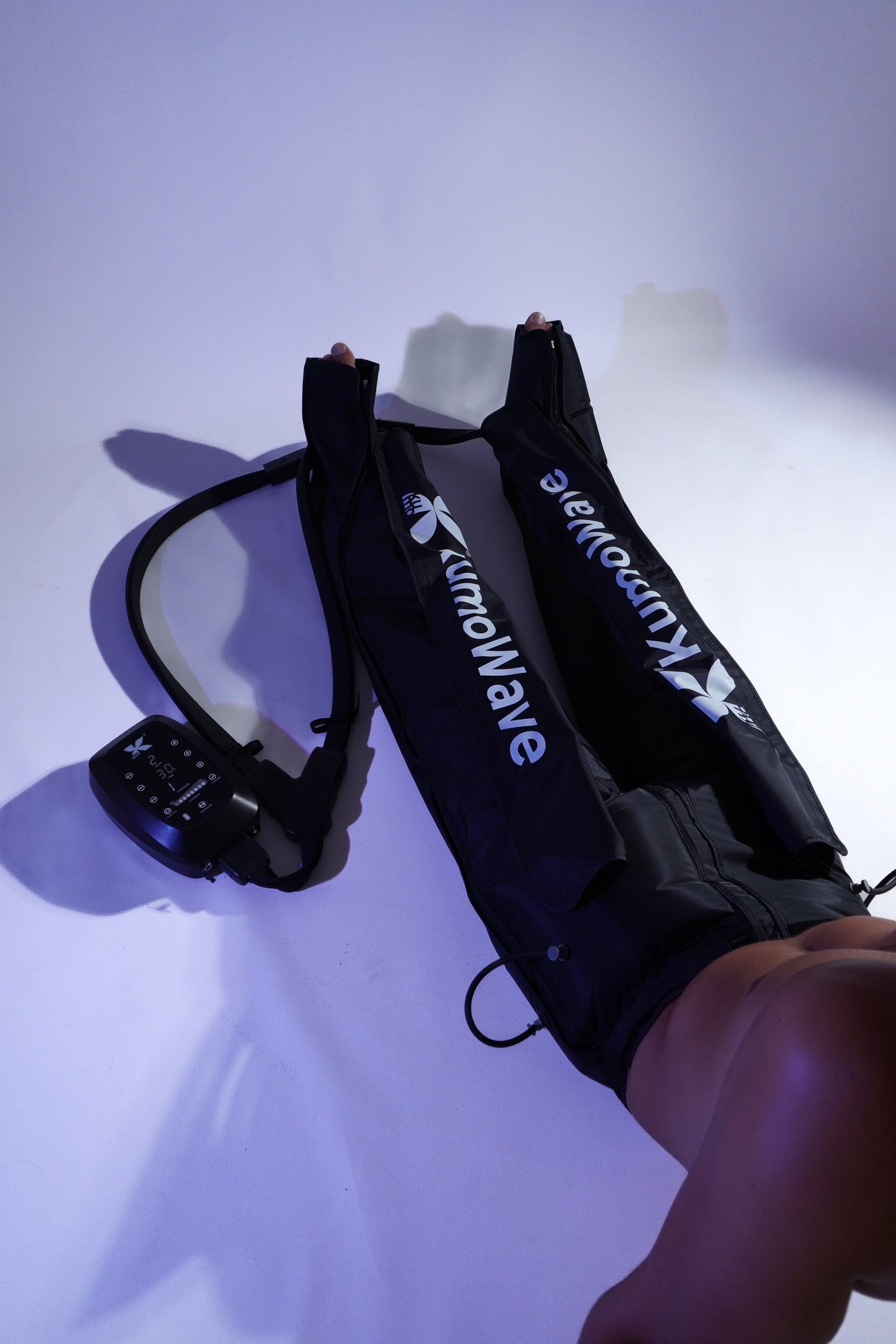
Pressotherapy is no longer just for clinics. Today, pressotherapy boots allow you to improve leg circulation, relieve heaviness, and support muscle recovery without leaving home, always as a complement to medical advice and an active lifestyle.
In this article, you'll understand what these boots actually do for your circulatory system , how to use them safely, what benefits you can expect, and when you need the express approval of a healthcare professional. We'll also see how to integrate them with other recovery technologies to make leg care a simple and enjoyable habit.
Pressotherapy at home
End the day with light legs
★★★★★ 4,8/5 · rated by verified customers
KumoWave pressotherapy boosts circulation and helps drain fluid with sequential compression, in 20-minute sessions at home.
- Boosts circulation and helps drain fluid
- Chamber-based compression, adjustable to you
- Sequential compression that mimics manual drainage
€799,00€999,00
−10% on your 1st order when you subscribe to the newsletter

What are compression boots and how do they work?
From the clinic to the living room
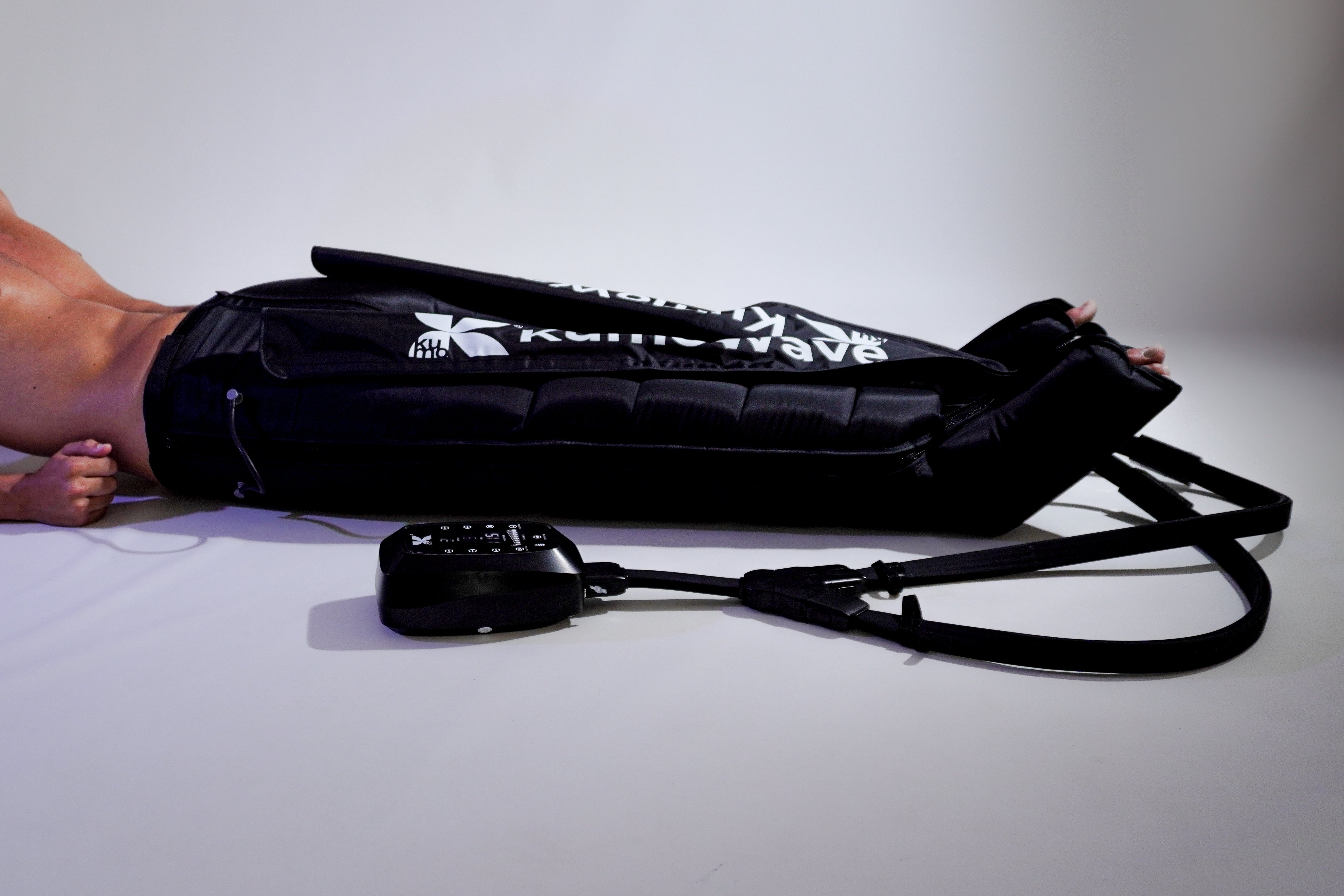
Compression boots are intermittent pneumatic compression devices: sleeves that cover the legs and inflate and deflate following controlled pressure cycles. They originated in the hospital setting, where they have been used for decades to improve venous return and prevent blood clots in immobile or recently operated patients. ( hopkinsmedicine.org )
With the evolution of technology, these systems have become more compact and quieter, allowing their domestic use as a tool for well-being and recovery , always differentiating medical (prescribed) use from comfort and performance use.
Personalized protocol · included with your purchase
Want us to tell you how to use it in your case?
With your purchase, our experts prepare a personalized usage protocol for your case: sport, circulation, fluid retention, pregnancy or lipedema.
Message us on WhatsAppOur experts reply · no obligation
Mechanism of action step by step
In simple terms, compression therapy boots:
- They are inflated by chambers (from the foot to the thigh, depending on the model), applying progressive pressure.
- This pressure gently compresses the tissues and veins, pushing blood and lymph upwards towards the heart. ( en.wikipedia.org )
- After a few seconds, they deflate and allow blood to refill the veins, repeating the cycle.
- This pattern mimics the action of the calf muscle's "pump," which normally maintains circulation when we walk. ( pubmed.ncbi.nlm.nih.gov )
Several studies have shown that intermittent pneumatic compression can significantly increase venous flow velocity and improve leg hemodynamics, reducing blood pooling in deep veins. ( pubmed.ncbi.nlm.nih.gov )
Effects of pressotherapy on circulation
Venous return and prevention of stasis
The main objective of compression boots is to stimulate venous return . By applying pressure pulses to the foot, calf, and, in some devices, the thigh, the following is achieved:
on your first order when you join the newsletter
We send you the code instantly. No spam.
- Increase the speed of blood flow in deep veins such as the femoral or popliteal veins.
- Reducing venous pressure in the legs by partially “emptying” the veins during each cycle. ( pubmed.ncbi.nlm.nih.gov )
- Reducing the periods in which blood remains stagnant is a key factor in the formation of blood clots.
In the hospital setting, these devices have been used successfully as part of deep vein thrombosis (DVT) prophylaxis , particularly after orthopedic surgery and in immobile patients. ( jamanetwork.com )
Pressotherapy boots do not replace prescribed medical treatment for venous problems, but they can be a complementary aid to keep legs more active and lighter, always under supervision in case of pathology.
Lymphatic drainage and edema reduction
In addition to blood, lymph circulates in the legs, a fluid that can accumulate and cause swelling. Sequential compression:
- It promotes lymphatic drainage , helping to mobilize retained fluids.
- It may help reduce edema in certain individuals, especially when combined with exercise, proper posture, and, in a clinical setting, other treatments. ( en.wikipedia.org )
In cases of lymphedema or advanced venous insufficiency , the use of pressotherapy must necessarily be supervised by a specialist, who will define the appropriate protocol, pressure and frequency.
Practical benefits for your legs and your performance
Tired legs, early varicose veins and heaviness
Many people with heavy legs , small varicose veins, or reticular veins experience subjective relief when using compression boots:
- Less bloating at the end of the day .
- Reduction of tension and tingling after hours of standing or sitting.
- Perception of lighter legs after the session.
Studies in women with varicose veins have shown that sequential pneumatic compression can increase venous flow velocity, reduce pain, and improve quality of life when combined with leg exercises. ( pmc.ncbi.nlm.nih.gov )
It is important to remember that this does not replace an evaluation by an angiologist or vascular surgeon if there are marked varicose veins, skin changes, or a history of thrombosis.
Muscle recovery and sport
The improved blood flow achieved by compression boots is also of interest in the sports context:
- During and after exercise, intermittent compression increases arterial and venous blood flow to the muscles involved , promoting oxygen delivery and the removal of fatigue metabolites. ( pubmed.ncbi.nlm.nih.gov )
- This often translates into a feeling of faster recovery , less stiffness, and better preparation for the next session.
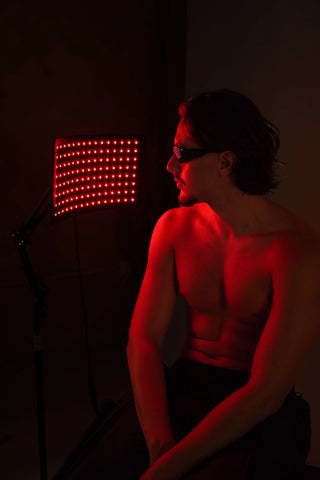
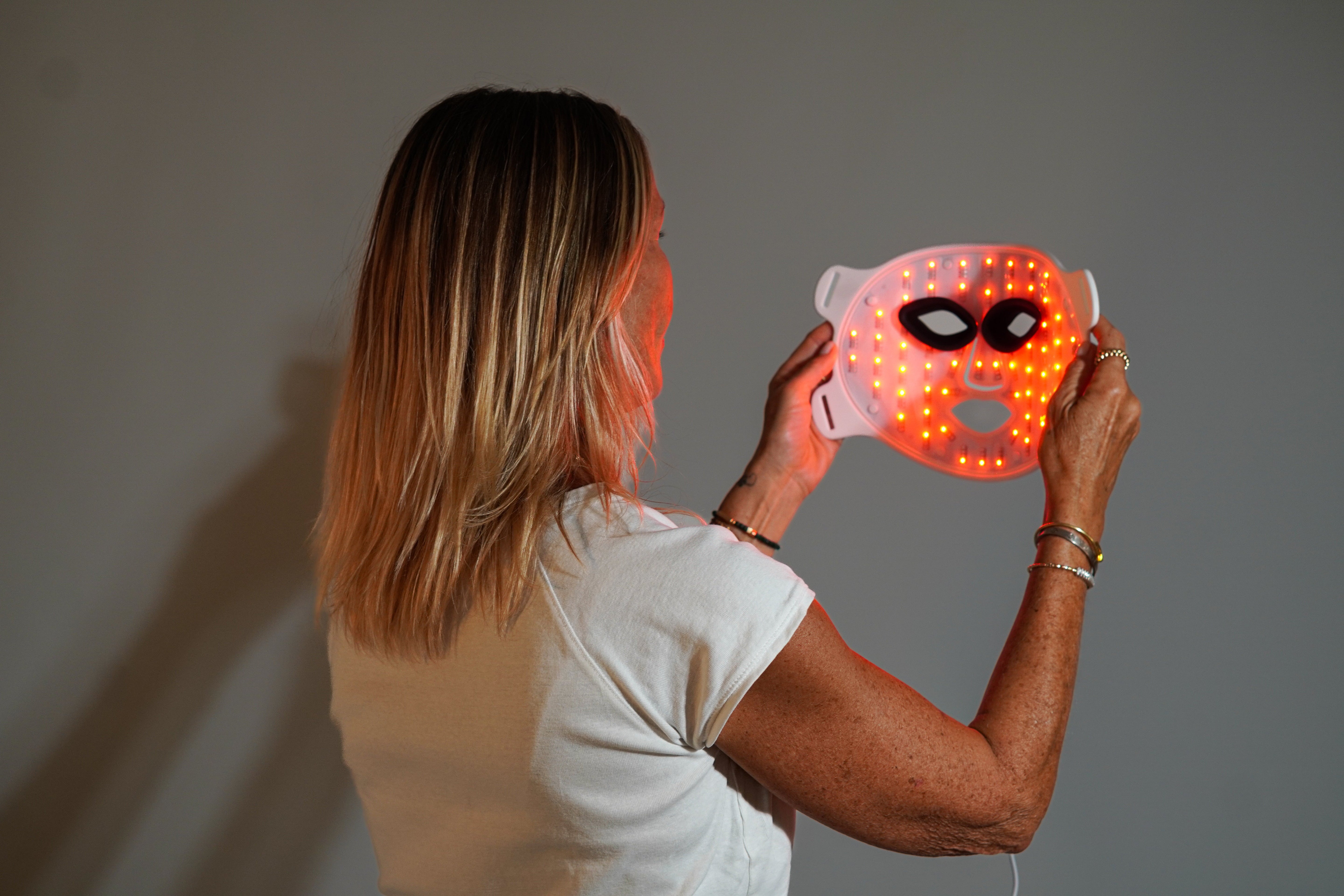
Pressotherapy can be combined with other recovery technologies such as red/LED light therapy , which has meta-analyses supporting its role in muscle performance and post-exercise recovery, especially when applied around training. ( pubmed.ncbi.nlm.nih.gov )
At KUMO, this comprehensive vision of recovery is embodied in products such as LED light therapy and massage guns, designed to work in synergy with pressotherapy.
Sedentary lifestyle, long journeys and teleworking
Those who spend hours sitting in front of a computer, travel frequently, or alternate long shifts standing up can benefit from:
- Regular pressotherapy sessions after work to reactivate circulation.
- Reduction of the feeling of stiff and heavy legs .
- Inclusion of pressotherapy as a self-care “reminder” when daily movement falls short.
Although nothing replaces walking and moving, consciously using compression boots can be an additional ally to take care of your legs in contexts of forced sedentary behavior .
Summary of the effects of compression boots
Table: How circulatory effects translate into daily sensations
| Main physiological effect | What does it mean for your legs? | When is it usually noticeable?* |
|---|---|---|
| Increased venous return | Less stagnation, lower risk of swelling | After the first sessions |
| Improved lymphatic drainage | Gradual decrease in the sensation of "full legs" | Over several weeks of regular use |
| Transient reduction of distal venous pressure | Greater lightness at the end of the day | Immediately after the session |
| Increased muscle blood flow post-exercise | Less stiffness and a perceived faster recovery | 24–48 hours after intense training |
| Encouraging self-care habits and active rest | More consistent wellness routine | As it becomes integrated into your daily life |
*These times are guidelines and can vary greatly between individuals; they do not replace medical follow-up.
Who can use compression therapy boots at home?
In a context of well-being and performance, compression boots can be of interest for:
- People who experience heaviness or tiredness in their legs at the end of the day.
- Athletes seeking to optimize recovery after demanding training sessions.
- Professionals who spend many hours sitting or standing (healthcare, hospitality, office, etc.).
- People who want to add an active rest and circulatory care routine at home.
However, if you have:
- History of deep vein thrombosis or pulmonary embolism .
- Advanced chronic venous insufficiency with ulcers or significant skin changes.
- Heart disease , especially heart failure.
- Diabetes with neuropathy or peripheral arterial disease .
- Previous vascular surgeries on the legs.
…it is essential to consult with your doctor beforehand to assess whether pressotherapy is appropriate and under what conditions.
How to integrate pressotherapy into your routine
Indicative frequency and duration
The protocols vary depending on the device and the objective, but, in terms of well-being:
- Many people opt for 20–30 minute sessions , 3 to 5 times per week.
- In some cases (for example, intense sports recovery) more frequent sessions are carried out, always respecting the body's sensations.
- It is essential to follow the manufacturer's instructions and not exceed the recommended pressures.
If you have a diagnosed venous or lymphatic condition, the referring professional (angiologist, specialized physiotherapist, rehabilitation doctor) should adjust the guideline.
Basic preparation and use
Before each session:
- Lightly moisturize the skin and make sure there are no open wounds or infections.
- Place the boots over thin clothing (tights, light socks) for more comfort.
- Adjust the zippers or Velcro properly so that no creases are left.
During the session:
- The pressure should feel firm but not painful .
- If you experience sharp pain, intense tingling, unusual color changes, or difficulty breathing, stop the session and consult a doctor .
Upon completion:
- Get up slowly, move your legs and, if possible, walk for a few minutes to take advantage of the effect of the pneumatic massage.
Combination with other recovery technologies
A very effective strategy involves combining:
- Pressotherapy boots to promote venous and lymphatic return.
- Red/LED light to support muscle recovery and tissue regeneration, such as that available in KUMO LED light therapy . ( pubmed.ncbi.nlm.nih.gov )
- Percussive massage to release specific tension points with tools such as the KUMOPULSE Air massage gun .
Integrating these tools intelligently allows you to build a phased recovery routine : first you mobilize fluids, then you work on the muscles, and finally you promote rest and sleep.
Safety, contraindications and good practices
Although compression is a cornerstone of treatment for many venous and lymphatic diseases, it also has clear contraindications that must be respected. Guidelines on medical compression list the following as the main contraindications: ( phlebolymphology.org )
- Severe peripheral arterial disease (very low ankle-brachial index).
- Advanced heart failure (especially NYHA class IV).
- Acute skin infections , untreated ulcers, or extensive cellulitis under the compression area.
- Severe diabetic neuropathy with significant loss of sensation.
- Known allergy to compression materials.
General safety recommendations:
- Do not sleep with your boots on unless specifically advised by a professional.
- Avoid adjusting maximum pressures if you are not supervised by a specialist.
- Check your skin regularly for chafing, blisters, or reddened areas .
- Stop use and consult a doctor immediately if you notice severe pain, sudden swelling, or shortness of breath , signs that may indicate an acute vascular problem.
If in doubt, always consult your doctor, not the device or subjective feeling.
Frequently asked questions about compression therapy boots
How long does it take to see improvement with compression therapy boots?
It largely depends on the starting point and the goal. Some people notice lighter, less swollen legs after the first few sessions, especially if they've been sitting or standing for long periods. For issues like chronic heaviness or fatigue at the end of the day, improvement is usually noticeable over several weeks of regular use . If a venous disease has been diagnosed, follow-up should be done by a specialist, who will assess progress based on clinical criteria, not just on how it feels.
Can compression boots be used every day?
In healthy individuals with no contraindications and using home devices designed for wellness, it's common to use them daily or almost daily , adjusting the duration and pressure to individual tolerance. However, more isn't always better: it's advisable to listen to your body and avoid excessively long or intense sessions. If you experience persistent discomfort, tingling, or unusual changes in skin color, reduce the intensity or frequency, and if these symptoms persist, consult a healthcare professional before continuing.
Do compression boots help prevent blood clots?
In the hospital setting, intermittent pneumatic compression is used as part of a strategy to reduce the risk of deep vein thrombosis in immobile patients or after surgery, demonstrating effectiveness when applied with specific medical protocols. ( hopkinsmedicine.org ) However, this does not mean that any old compression boot can replace the prophylaxis prescribed by your doctor (heparin, compression stockings, early mobilization, etc.). If you have a high risk of blood clots, do not self-prescribe compression therapy : talk to your specialist first.
What is the difference between compression boots and compression stockings?
Compression stockings exert static and constant pressure throughout the day, while compression boots apply dynamic and intermittent compression , in chambers and cycles. Stockings are very useful for the continuous management of venous insufficiency and as daily support, while boots are usually used in specific recovery sessions or as complementary treatment. Often, both strategies are combined in clinical settings, but the choice and order depend on the diagnosis and should be determined in consultation with the medical team.
Can I use pressotherapy if I'm pregnant?
Pregnancy involves significant changes in circulation and increases the risk of edema and venous problems , so the temptation to use pressotherapy is understandable. However, the risk of thrombosis also increases, and other conditions may coexist (pronounced varicose veins, hypertension, obstetric complications). Therefore, it is not recommended to start pressotherapy during pregnancy without the explicit authorization of your gynecologist or angiologist . In many cases, measures such as compression stockings, gentle exercise, and postural changes are preferred first.
So what now?
If you want to make leg recovery and care a way of life , you can explore KUMO's range of solutions, from compression boots in the compression collection to LED light therapy and the KUMOPULSE Air massage gun . On the homepage , you'll find a comprehensive overview of the recovery ecosystem, and if you need personalized guidance, you can contact us through the contact section so we can help you design a routine tailored to your goals and health.
KumoWave pressotherapy
Choose your at-home pressotherapy
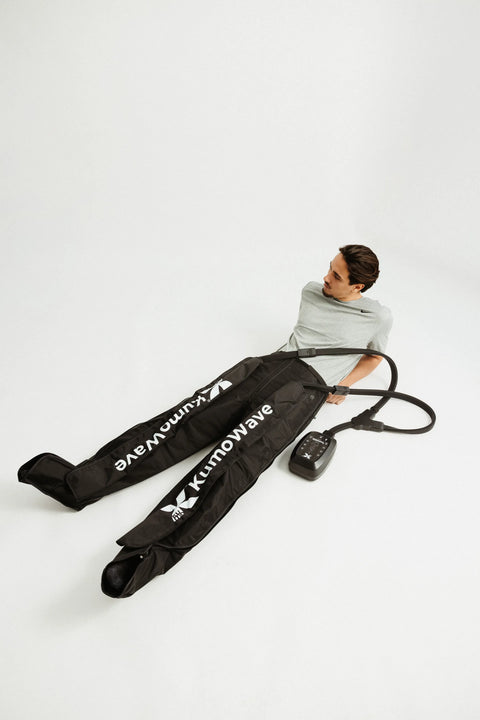
KumoWave Elite – Pressotherapy Pants
Full-coverage trousers. Ideal for lipedema, fluid retention and intensive use.
€799,00 €999,00
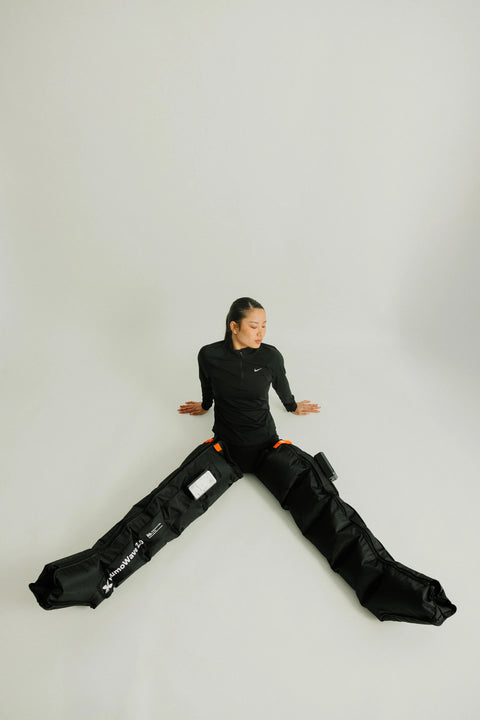
KumoWave 2.0 - Wireless Pressotherapy
Wireless, lightweight boots. Perfect for daily use and recovery.
€499,00 €599,00