
Red light works best when the dosage is well-adjusted. In photobiomodulation, the response depends on irradiance, exposure time, and distance from the device; hence, there is no universal magic number. (sciencedirect.com)
It's not about "using more," but about using it better. Recent literature emphasizes that protocols are highly heterogeneous and that excessive exposure can diminish benefits; therefore, consistency over several weeks usually matters more than extending a session by intuition.
Red & infrared light
Recover faster, at home
★★★★★ 4,8/5 · rated by verified customers
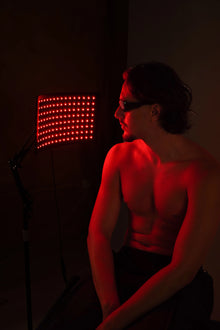
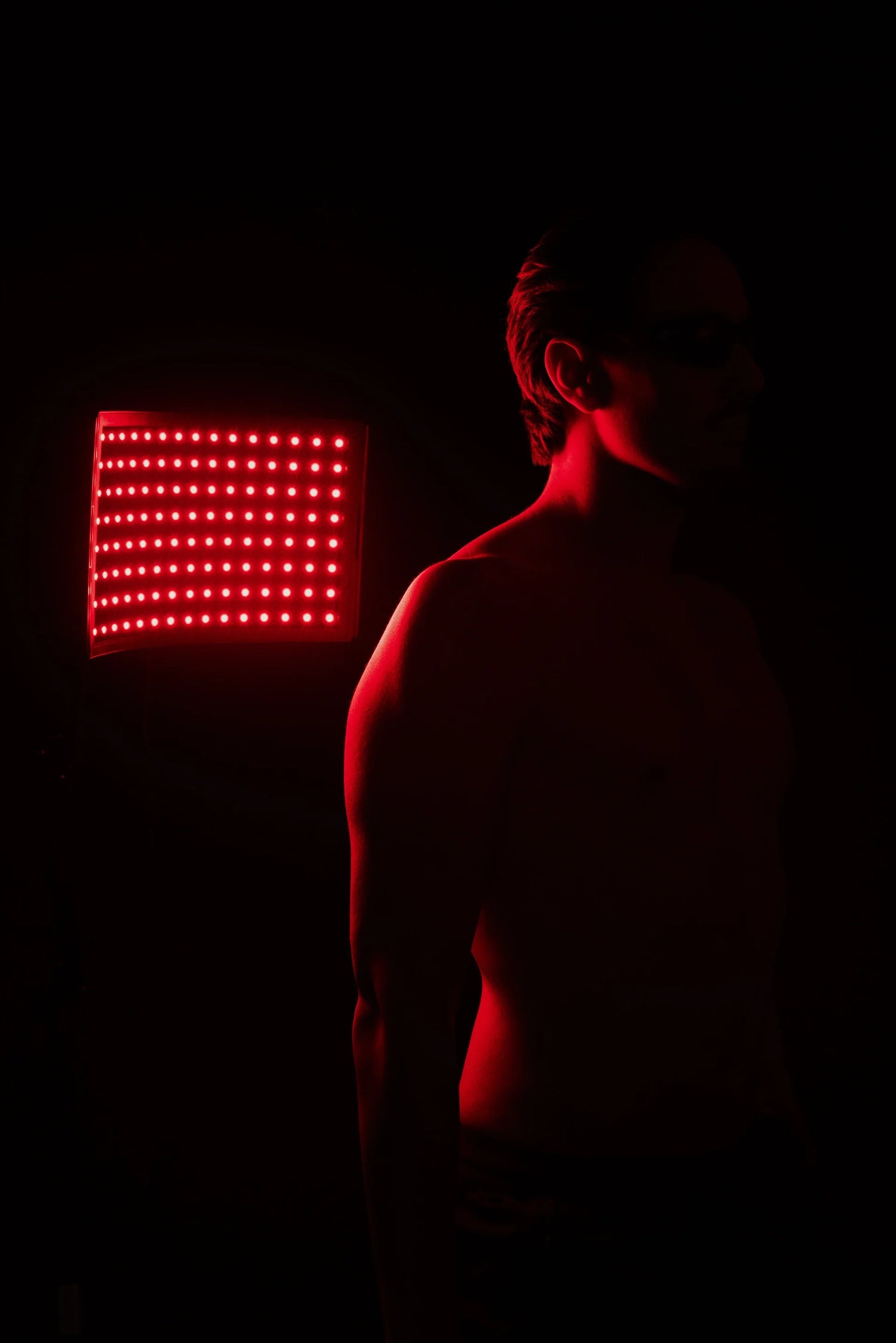
The KumoLux panel supports muscle recovery with full-body red and infrared light.
- 660 nm red + 850 nm infrared light
- Full-body muscle recovery
- Clinically validated biohacking protocols
€399,00€499,00
−10% on your 1st order when you subscribe to the newsletter

If you want to better position yourself before adjusting your sessions, reviewing what red light therapy is and how it works and the practical differences between 660 nm and 850 nm will provide you with context to interpret any protocol.
The technical basis that truly matters
Photobiomodulation uses red light, usually in the 620 to 700 nm range, and near-infrared light, from 700 to 1440 nm. Its effectiveness depends on the source, wavelength, energy density, and duration of application. This combination explains why two similar devices may require different adjustments.
Personalized protocol · included with your purchase
Want us to tell you how to use it in your case?
With your purchase, our experts set up your red and infrared light sessions for your sport and goal.
Message us on WhatsAppOur experts reply · no obligation
Distance: why there isn't a single figure
Distance changes the irradiance that reaches the skin. In a recent characterization of panels, measurements were taken at 4 cm, and in a clinical application with red LED, work was done at about 15-20 cm from the tissue; this shows that distance is not a fixed data point, but a way to adjust the dose. As a domestic criterion, a mid-range of about 15-30 cm can be a reasonable starting point for many panels, but this figure is a practical inference, not a universal law. The device manual still takes precedence. (pmc.ncbi.nlm.nih.gov)
If you want to turn this idea into a simple routine, this guide on how to adjust distance and time in red light therapy to improve your at-home sessions will help you move from theory to actual use.
Time: why longer sessions don't always improve results
Time is also not fixed. In photobiomodulation, there is a biphasic response: if the dose is too low, you don't reach the useful threshold; if it's too high or too long, you can lose some of the benefit. That's why prolonging the session doesn't guarantee better results. (pmc.ncbi.nlm.nih.gov)
on your first order when you join the newsletter
We send you the code instantly. No spam.
Frequency: how to organize a real routine
For home use, recent dermatology emphasizes consistency: several sessions per week for 8-12 weeks are usually necessary to notice skin benefits. The literature also shows protocols of two and three weekly sessions, and even more frequent uses in certain studies, so the correct frequency depends on the objective and the device. (staging.aad.org)
If you want a more structured approach, this guide on red light therapy at home: steps and frequency along with red light therapy: how to use it at home will also be helpful, as they help you turn theory into an easy-to-maintain routine.
Real-world examples of time and frequency in studies
| Objective | Time per session | Frequency used in studies | When to assess results |
|---|---|---|---|
| Facial rejuvenation and skin | One facial trial used 21-minute sessions; another study cited by the AAD completed 8 treatments over 4 weeks. (pubmed.ncbi.nlm.nih.gov) | 2 to 3 times per week, or an intensive 4-week block depending on the protocol. | 4 to 8 weeks, because skin changes usually require repetition. (aad.org) |
| Mild to moderate acne | 15 minutes in a trial with portable red light. (pubmed.ncbi.nlm.nih.gov) | Twice a day for 8 weeks in that study; another trial with red LED used 3 sessions per week for 8 weeks. | Usually 8 weeks, which is when many trials compare the actual change. |
| Muscle recovery and fatigue | Protocols are variable and, in sports practice, are usually short and tied to training. (pubmed.ncbi.nlm.nih.gov) | Depends on the training schedule; the evidence is more consistent for reducing pain or fatigue than for clearly increasing strength. | Assess the change after several weeks and with specific metrics like pain, muscle soreness, or feeling of recovery. |
Note: the table shows examples from research, not a universal prescription. If your equipment has different irradiance or the manufacturer specifies a different distance, that indication outweighs any generic example.
What real results can you expect?
For skin, some studies cited by the AAD found perceived improvements after 4 weeks and 8 treatments; for acne, trials usually evaluate change at 8 weeks; and in sports, the evidence points more to less fatigue or less delayed muscle soreness than to significant jumps in strength or performance, with mixed results depending on the protocol.
If your main goal is to understand why this technology is used in aesthetics, rest, or recovery, this reading about the benefits of red light therapy and how it works in 2025 will give you a broader view without losing the practical focus.
Safety and common mistakes
In the short term, red light appears safe, but long-term safety is not fully defined. The most common adverse effects are mild irritation or transient redness, and dermatology recommends caution in people with lupus, porphyria, photosensitizing medication, or a tendency to hyperpigmentation.
- Check the manufacturer's recommended distance before each session and maintain that stable reference for several weeks. (health.clevelandclinic.org)
- Do not extend exposure thinking you will get more benefit, because the response to light does not increase linearly.
- Discontinue if you notice persistent irritation, pain, new hyperpigmentation, or unusual photosensitivity. (staging.aad.org)
- If you are taking photosensitizing medication or have a photosensitive condition, seek medical guidance before starting. (staging.aad.org)
To distill all this into an easy-to-follow routine, you should review the basic explanation of red light therapy and, if you train, also when to use red light before or after training.
Frequently asked questions about red light
How often should red light therapy be used for real results?
There is no single valid figure for all goals. For skin, recent dermatology refers to several sessions per week for 8-12 weeks, while some trials use protocols of 2 or 3 times per week. At home, the best frequency is what you can consistently maintain without exceeding the dose allowed by your device. The important thing is to measure change in weeks, not days, because the response is usually cumulative. (staging.aad.org)
How far from the body should the red light lamp be placed to work?
The correct distance is one that gives you adequate irradiance on the skin. Since intensity decreases with distance, there is no universal figure. In practice, you will see everything from very close setups, such as 4 cm in laboratory measurements, to clinical applications at 15-20 cm. As a domestic starting point, an average distance is usually reasonable, but the equipment manual and the feeling of comfortable warmth remain the primary reference.
How long does each red light therapy session last to see results?
It depends on the objective and the actual power of the device. In photobiomodulation, more time does not always mean better results: there is a biphasic curve, and if you overdo it, you can lose effectiveness. In facial studies, 21-minute sessions have been used, for acne 15 minutes, and for sports recovery, short applications tied to training are often used. The correct time is what allows you to achieve the useful dose without exceeding it.
How many sessions per week are recommended to notice improvements with red light?
For home use, a practical reference is to work several times a week for several weeks. The AAD indicates that many home devices require consistent use, usually several weekly sessions for 8-12 weeks, to see skin benefits. Trials also show protocols of 2 and 3 sessions per week, so the exact number changes depending on the indication. If you are starting, the smartest thing is to choose a pattern you can maintain and evaluate after at least a month. (staging.aad.org)
Is red light safe and what real results can be expected and in what time frame?
In the short term, it appears safe, and the most common effects are usually mild, such as irritation or transient redness. For skin, some studies show noticeable changes as early as 4 weeks; for acne, it is usual to evaluate at 8 weeks; and in muscle recovery, the response is more variable, with a clearer signal in reducing fatigue or pain than in a definitive increase in strength. If you have photosensitivity, take photosensitizing medication, or notice worsening, it is advisable to stop and seek guidance.
What now?
If you want to move from theory to a simple routine, start with Kumo Balance's homepage and continue with the guide to steps and frequency for using red light at home. If your focus is performance, when to apply it before or after training will also help you get more out of each session.

Red & infrared light
KumoLux Panel – Red and Infrared LED Panel
★★★★★ 4,8/5 · rated by verified customers
- 660 nm red + 850 nm infrared light
- Full-body muscle recovery
- Clinically validated biohacking protocols
€399,00€499,00· pay in installments with seQura or Klarna