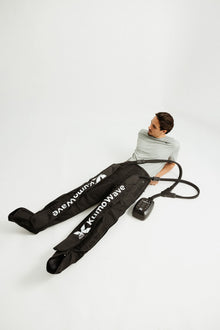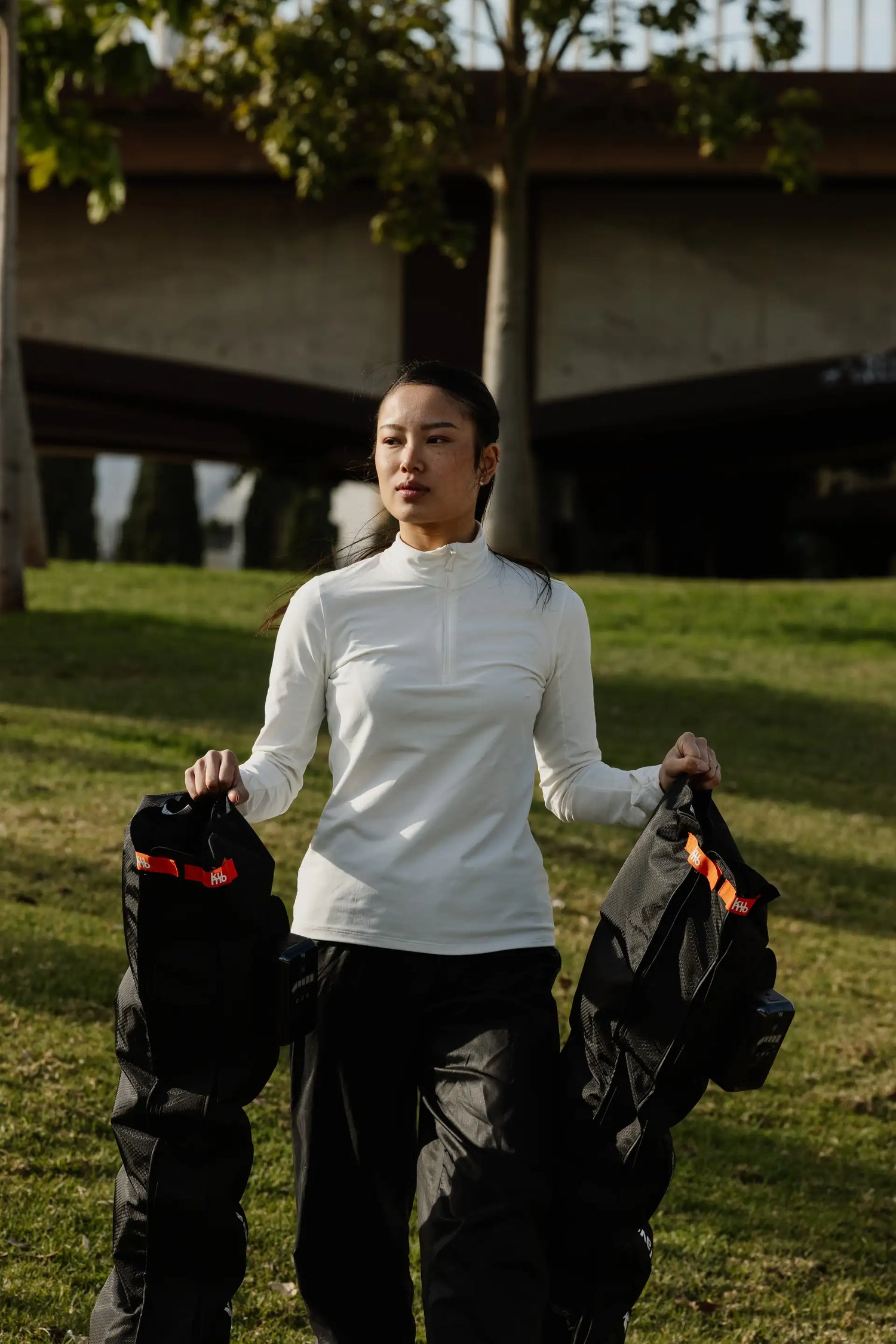
Your legs also need a day-end routine.
If you spend many hours on your feet, a well-executed nighttime routine can reduce the feeling of heaviness, decrease swelling, and help you sleep more comfortably. Furthermore, at night, it's advisable to reduce bright light and intense stimuli: the NHLBI explains that exposure to strong artificial light in the late evening can delay melatonin and disrupt sleep. (nhlbi.nih.gov)
Pressotherapy at home
End the day with light legs
★★★★★ 4,8/5 · rated by verified customers
KumoWave pressotherapy boosts circulation and helps drain fluid with sequential compression, in 20-minute sessions at home.
- Boosts circulation and helps drain fluid
- Chamber-based compression, adjustable to you
- Sequential compression that mimics manual drainage
€799,00€999,00
−10% on your 1st order when you subscribe to the newsletter

Why your legs get so tired after a day on your feet
When you stand for a long time, gravity causes fluid to accumulate in your feet and ankles. Mayo Clinic notes that swelling can occur from sitting or standing for too long, and the NHS reminds us that venous symptoms often worsen after long hours in the same posture. The CDC, for its part, warns that prolonged standing is associated with several negative health effects in the workplace. (mayoclinic.org)
In practice, this feels like "heavy" feet, socks leaving marks, tightness in the calf, or a warm sensation at the end of the day. When the day involves hours of immobility, the nighttime goal is not to "punish" the area further, but to help the body regain mobility, drainage, and rest. (mayoclinic.org)
Personalized protocol · included with your purchase
Want us to tell you how to use it in your case?
With your purchase, our experts prepare a personalized usage protocol for your case: sport, circulation, fluid retention, pregnancy or lipedema.
Message us on WhatsAppOur experts reply · no obligation
A simple and repeatable nighttime routine
The best routine is one you can repeat almost without thinking. Before looking for complex solutions, it's good to combine three basic actions: move, decompress, and reduce stimuli. The order matters, because first it's advisable to reactivate circulation with gentle movements, then facilitate venous return with elevation or compression, and finally prepare the brain for sleep with less light and less mental noise. (nhsinform.scot)
Practical summary of the routine
| Step | What you do | What it's for |
|---|---|---|
| 1. Initial decompression | Take off tight footwear, walk for a few minutes, and mobilize your feet and ankles. | Helps to break immobility and reactivate the muscular pump in the leg. |
| 2. Legs elevated | Sit or lie down with your legs elevated for a while. | Promotes the reduction of swelling and relieves the feeling of heaviness. (gloshospitals.nhs.uk) |
| 3. Compression or pressotherapy | Use a compression system if it fits your case and your sensations. | Can support venous and lymphatic return in recovery routines. (pubmed.ncbi.nlm.nih.gov) |
| 4. Transition to sleep | Lower the intensity of light and reduce screen time before bed. | Helps avoid interfering with melatonin and the sleep-wake cycle. |
The basis of this sequence relies on very simple recommendations: stay active, elevate the leg when there's swelling, and use compression as a regular tool in certain cases of venous or lymphatic edema. For the end of the day, light hygiene also counts, because a night that is too bright can disrupt sleep.
First action: breaking out of "on your feet all day" mode
Before thinking about any device, it's good to break the pattern of immobility. The NHS indicates that gentle exercise helps recovery and relieves pain, and several self-care guides for ankle and foot recommend moving instead of staying still for long periods. A short walk around the house, some ankle movements, and changes in support can make a difference when the day has been long.
on your first order when you join the newsletter
We send you the code instantly. No spam.
If you want to better understand the role of compression in this process, the explanation of how pressotherapy works helps you place it within a broader home routine. And if you already know it, the guide on how to adjust the pressure in mmHg without overdoing it is useful for starting wisely.
Second action: elevate to decompress
When you lie down or sit with your legs elevated, you give your body a very specific aid to reduce the feeling of burden. The NHS explains that venous symptoms often improve by resting with legs elevated, and self-care sheets for edema precisely recommend elevating the limb when possible. There's no need to turn it into a long, rigid session; the important thing is that it's an easy habit to maintain. (nhs.uk)
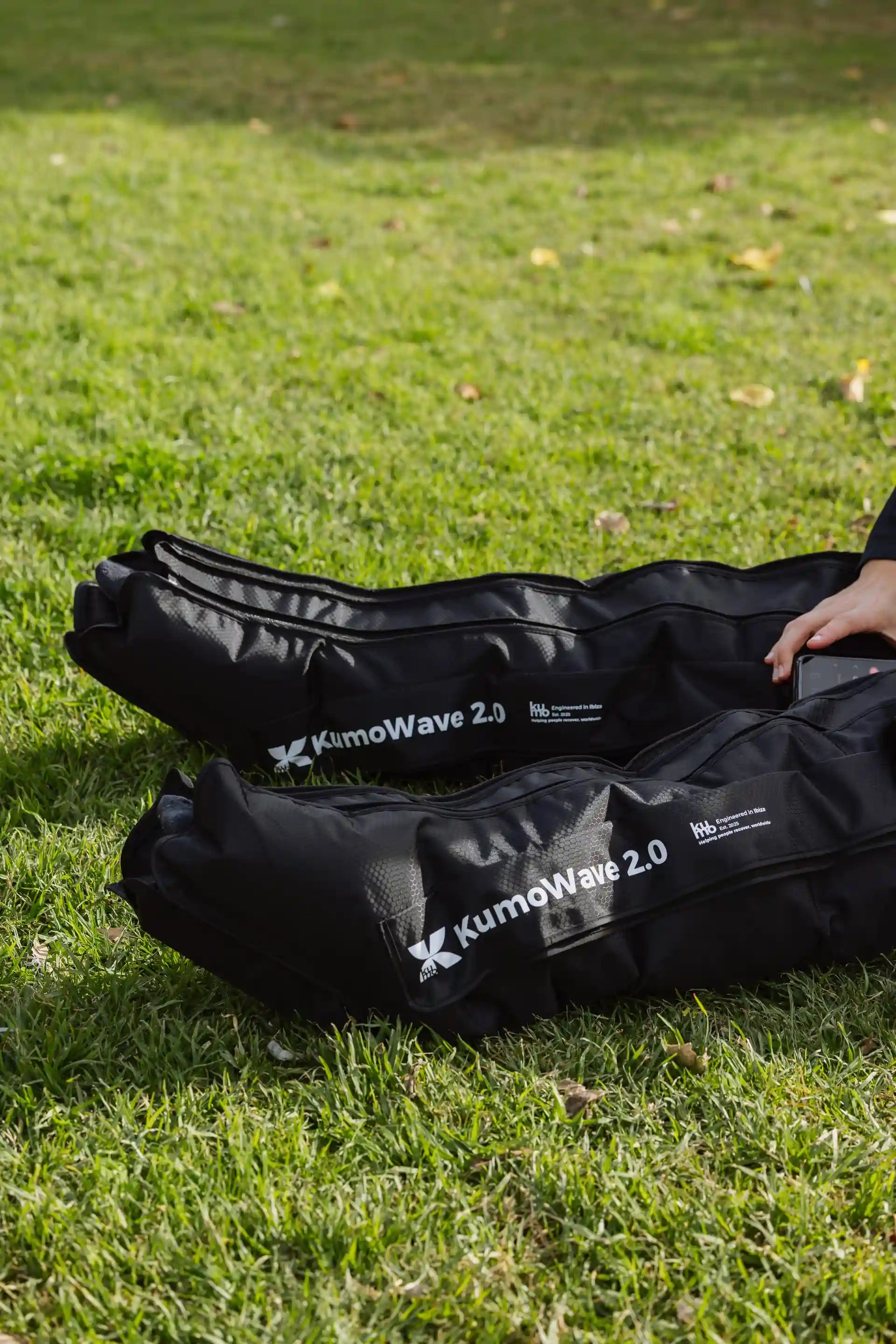
If you notice that at night the discomfort is concentrated mainly in your ankles and calves, a nighttime ritual with pressotherapy boots can fit as a mechanical end to the day. Within the Kumo Balance approach, domestic recovery relies precisely on pressotherapy and LED therapy as part of the same home wellness approach. (kumobalance.com)
Third action: well-used compression, not more pressure by intuition
Therapeutic compression is not a trend: it is one of the classic bases for managing venous edema and lymphatic disorders. PubMed summarizes that compression therapy reduces volume and venous pressure, and that intermittent pneumatic compression is used both in edema management and to positively influence venous and arterial circulation. The idea is not to squeeze just for the sake of it, but to support fluid return with appropriate stimulation.
If you integrate this step into your night, choose a comfortable sensation, follow the equipment manual, and avoid using it as if higher pressure automatically equated to better results. If it helps to have a more relaxing visual reference, the proposal of red light and relaxation to recover better at night fits well with a less stimulating and more consistent end to the day.
Fourth action: dim the lights for sleep to do its job
The last part of the routine isn't about legs, but about the brain. The NHLBI explains that establishing fixed activities at night helps reset the biological clock and that bright light in the evening and night can delay sleep. That's why it's advisable to switch from strong lighting to warm, low light, put your phone out of focus, and repeat the same sequence every night. (nhlbi.nih.gov)
In summary: first decompress, then elevate, then compress if it suits you, and finally reduce stimulation. Consistency is worth more than trying to do a perfect routine just once.
When it's not "just tiredness"
If the heaviness is accompanied by unusual signs, it's advisable to stop and not attribute everything to a long day on your feet. The NHS indicates that swelling without a clear cause in a single leg, or the presence of chest tightness, requires urgent attention. It's also important to watch for a warm, red, or very painful calf. (nhs.uk)
- Swelling in only one foot, ankle, or leg without a clear explanation.
- Calf that is warm, red, tense, or increasingly painful.
- Tightness, pain, or a feeling of pressure in the chest.
- Rapid worsening of swelling, especially if it appears suddenly.
If you notice any of these signs, the self-care routine does not replace professional assessment.
FAQ: common questions
What can I do as soon as I get home if I've been on my feet for many hours?
The most useful thing is to break the inertia of the day: take off tight footwear, walk around the house for a few minutes, and move your ankles and feet to reactivate your muscles. Then, elevate your legs for a while to help relieve the feeling of heaviness. The NHS insists that staying active and avoiding spending too much time still helps, and that elevation can relieve swelling.
Can home pressotherapy help if I have heavy legs?
It can fit as part of a recovery routine, as long as you use it wisely and without overdoing it. Medical evidence recognizes compression as a pillar for venous and lymphatic edema, and intermittent pneumatic compression is used to promote circulation and drainage. The important thing is not to think of it as a substitute for rest, but as support within a well-structured nightly routine.
Does light from mobile phones or TV really affect sleep?
Yes. The NHLBI explains that bright light in the evening and night can delay melatonin and disrupt the internal clock. That's why it helps a lot to reduce screen time, dim the lighting, and always repeat the same sequence before sleep. A complicated routine is not necessary: something short, predictable, and calm often works better than a perfect attempt that you never repeat.
When does swelling no longer seem like just tiredness?
When swelling appears only in one leg, worsens rapidly, is accompanied by warmth or pain in the calf, or comes with chest tightness, it should no longer be treated as a normal discomfort at the end of the day. The NHS recommends seeking urgent attention in those situations. If the heaviness changes pattern or becomes persistent, it deserves a clinical evaluation to rule out other causes.
Does it make sense to create a different routine if I always end up with swollen ankles?
Yes, because regularity is usually what helps most. If you repeat the same steps every night—move, elevate, decompress, and dim the lights—you give your body a clear signal for recovery. The NHS and NHLBI agree on two very simple ideas: stay active with gentle movements and maintain a stable nighttime routine. This alone doesn't eliminate a medical cause, but it can greatly improve how you get to rest.
What now?
If you want to turn this routine into a habit, start with what's easiest to maintain: a short, repeatable, friction-free sequence. You can explore the home pressotherapy collection to see how this type of recovery fits into your daily life, and return to the Kumo Balance homepage when you want to place the entire ritual within a broader home wellness proposal.
KumoWave pressotherapy
Choose your at-home pressotherapy
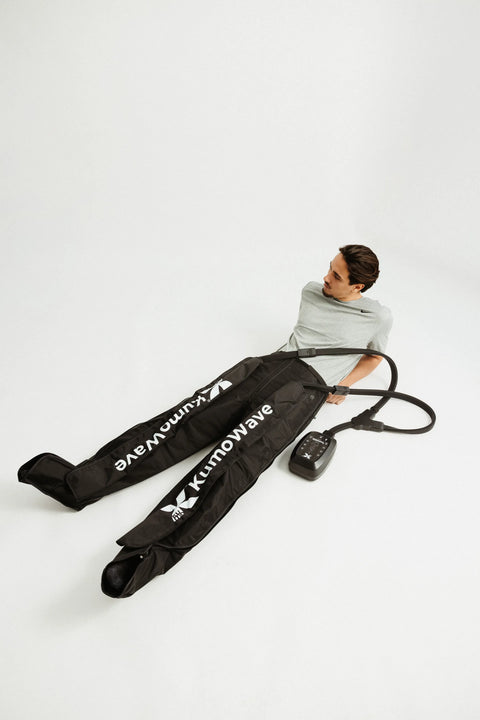
KumoWave Elite – Pressotherapy Pants
Full-coverage trousers. Ideal for lipedema, fluid retention and intensive use.
€799,00 €999,00
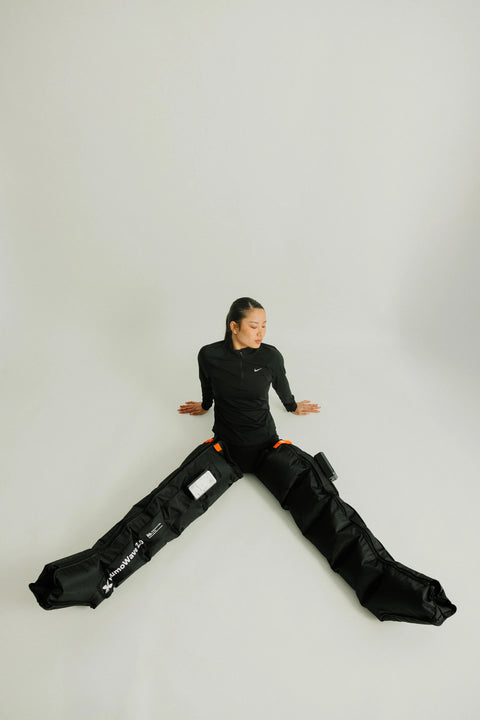
KumoWave 2.0 - Wireless Pressotherapy
Wireless, lightweight boots. Perfect for daily use and recovery.
€499,00 €599,00