Jumping takes its toll.
In basketball and volleyball, the knee works much harder than it seems: landings, braking, changes of direction and repeated jumps concentrate load on the front of the knee and on the patellar tendon. When load rises too quickly, what usually fails is not just strength but the balance between volume, intensity and recovery. (orthoinfo.aaos.org)
Pressotherapy at home
End the day with light legs
★★★★★ 4,8/5 · rated by verified customers
KumoWave pressotherapy boosts circulation and helps drain fluid with sequential compression, in 20-minute sessions at home.
- Boosts circulation and helps drain fluid
- Chamber-based compression, adjustable to you
- Sequential compression that mimics manual drainage
€799,00€999,00
−10% on your 1st order when you subscribe to the newsletter

Why knees hurt so much in these sports
The pain often shows up around the kneecap when going down stairs, squatting, running or jumping repeatedly. The AAOS guide on patellofemoral pain notes that sudden changes in activity, overuse and certain alignment issues can help irritate the knee, especially in active people.
A 2024 review on patellofemoral instability and pain in athletes highlights that sports with jumping, twisting and pivoting, such as basketball and volleyball, are a typical setting for this kind of discomfort. In other words, the problem is rarely a single movement but the sum of many impacts and landings. (pubmed.ncbi.nlm.nih.gov)
Personalized protocol · included with your purchase
Want us to tell you how to use it in your case?
With your purchase, our experts prepare a personalized usage protocol for your case: sport, circulation, fluid retention, pregnancy or lipedema.
Message us on WhatsAppOur experts reply · no obligation
What usually gets irritated first
In practice, two patterns tend to appear: pain around the kneecap, more related to the patellofemoral joint, and pain just below the kneecap, more consistent with patellar tendon overload. Both are common when training changes too quickly or when there are no real breaks between demanding sessions.
What to do when the first discomfort appears
If an exercise makes the pain worse, stop it. That is the core idea repeated in conservative recommendations: do not push through on an irritable knee, and instead adjust the load so the tissue tolerates the work better. (orthoinfo.aaos.org)
If a session clearly drives the pain up, it is time to lower the load before carrying on.
−10%on your first order when you join the newsletter
We send you the code instantly. No spam.
- Temporarily cut back on jumps, changes of direction and deep squats if the discomfort increases with them.
- Keep up your strength without significant pain, especially in the quads, hips and core, because education plus therapeutic exercise is the foundation of conservative management. (pubmed.ncbi.nlm.nih.gov)
- Watch how you respond the next day, since a knee that wakes up worse usually means the session was too demanding. (pubmed.ncbi.nlm.nih.gov)
- Avoid stacking games or hard training sessions without a clear drop in load in between.
If you find it hard to tell whether you are on the right track, the guide on practical metrics to know whether you are recovering well helps you make sense of signals like fatigue and how you feel the next day.
Practical one-week restart table
As a rough guide, and as a practical inference from the 2024 guidelines on therapeutic exercise and load management, this one-week restart can serve as a starting point. If you see no clinically meaningful change in patellofemoral pain after 6 weeks, or in patellar tendinopathy after 12 weeks, it is worth reviewing the plan with a professional. (pubmed.ncbi.nlm.nih.gov)
| Phase | What to do | Goal |
|---|---|---|
| Days 1 to 2 | Drop jumps, sprints and explosive sets, and keep only what does not increase the pain. (pubmed.ncbi.nlm.nih.gov) | Reduce irritation and rebuild load tolerance. (pubmed.ncbi.nlm.nih.gov) |
| Days 3 to 4 | Bring back controlled strength work, in comfortable ranges and without the discomfort getting worse by the end of the day. (pubmed.ncbi.nlm.nih.gov) | Maintain fitness without reigniting the pain. (pubmed.ncbi.nlm.nih.gov) |
| Days 5 to 6 | Try soft landings or low jumps only if the knee responds well the next day. (pubmed.ncbi.nlm.nih.gov) | Reintroduce impact gradually. (pubmed.ncbi.nlm.nih.gov) |
| Back to games | Only when climbing stairs, squatting and jumping no longer trigger symptoms. | Return with a lower risk of relapse. (pubmed.ncbi.nlm.nih.gov) |
Recovery at home: what each tool can add
Once load is better organized, some wellness tools can support day-to-day recovery. If you want to fine-tune timing, the articles on when to use red light therapy after training and the weekly red light therapy protocol for athletes work as a framework.
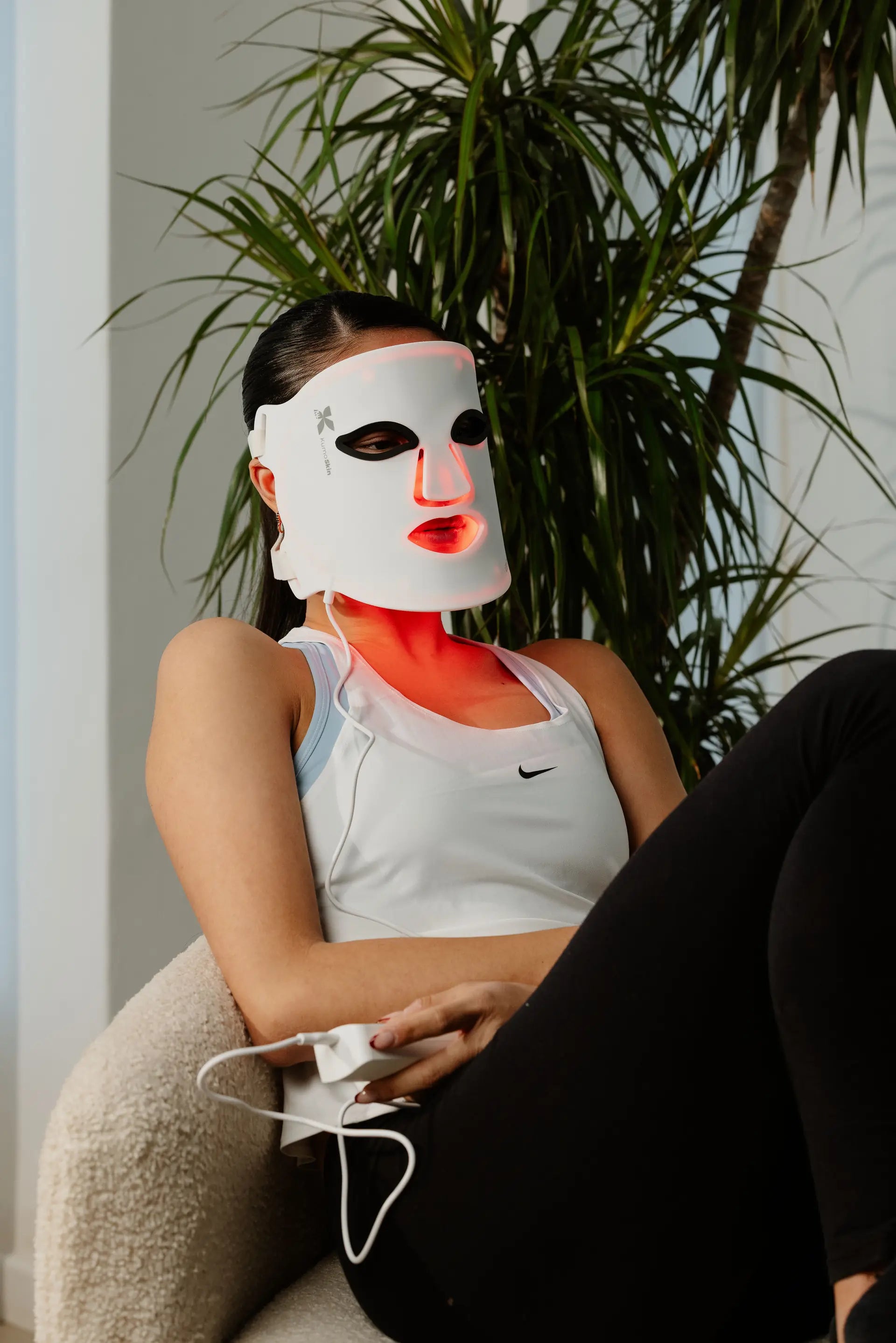
Red light therapy and photobiomodulation
Red and near-infrared light are used to support wellness and recovery, but the evidence in sport still varies with protocol, dose and goal. In a 2024 review of injured athletes, photobiomodulation showed promising results for pain and return to activity, although the studies were very heterogeneous. Use it as a complement, not a substitute for strength work, education and load progression. (pubmed.ncbi.nlm.nih.gov)
To fine-tune your session, you can also use how to adjust distance and time in red light therapy and a home recovery routine with pressotherapy, red light therapy and percussive massage.
If you have a history of skin cancer or certain inherited eye conditions, check how to use it beforehand and protect your eyes well during the session. (my.clevelandclinic.org)
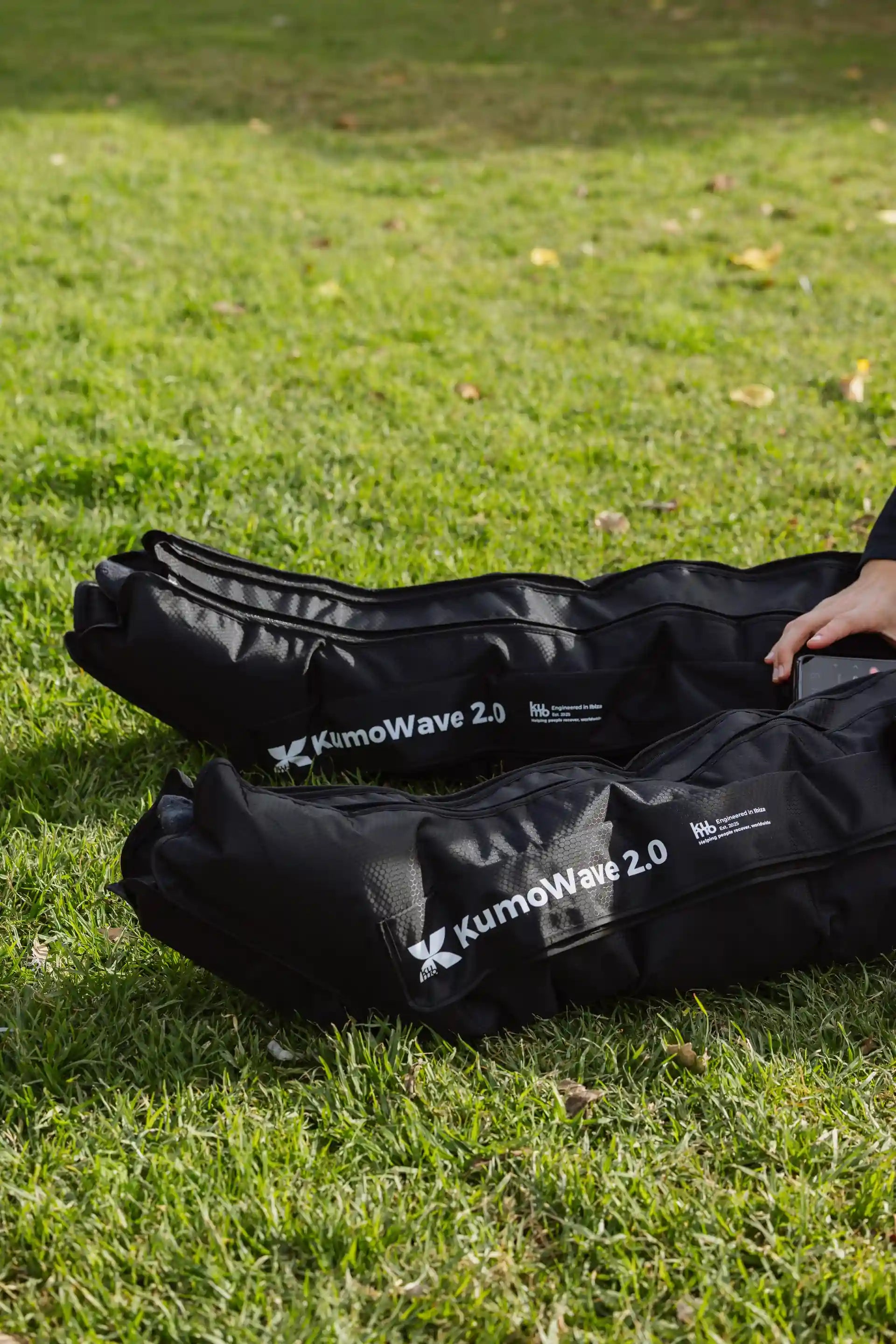
Pressotherapy
Pressotherapy can be part of a wellness routine when what you notice is heaviness or loaded legs, especially after a lot of jumping or long days on your feet. Even so, it is not meant to mask undiagnosed pain. The literature on compression reminds us to respect contraindications and risks, such as decompensated heart failure, active infections and certain vascular or skin conditions. If you suspect a thrombotic problem or a pulmonary embolism, medical assessment comes first. (pmc.ncbi.nlm.nih.gov)
If you are looking for a more specific plan for heavy legs, this at-home routine to ease swelling and heaviness may help.
Percussive massage
Sports massage can help reduce the feeling of DOMS and improve flexibility in the short term. In a 2020 review and meta-analysis of 29 studies and 1,012 participants, massage showed favorable effects on delayed onset muscle soreness and perceived recovery. Apply it to loaded muscles, not to an inflamed knee or to acute pain that has not been assessed. (pubmed.ncbi.nlm.nih.gov)
When to see a doctor: signs that need medical assessment
Get medical advice if the pain started after a hard blow, if there is marked swelling, deformity, inability to bear weight, a feeling of instability, fever, redness or warmth, or if you heard a pop and the knee then locked or gave way. It is also worth seeing a doctor if the discomfort does not improve when you reduce load or if it interferes with daily life. These signs help tell ordinary overload apart from a problem that needs examining. (mayoclinic.org)
- Severe pain after an injury, with inability to bear weight or visible deformity.
- Sudden swelling, redness, warmth or fever.
- Locking, instability or a feeling that the knee gives way. (nhs.uk)
- Pain that does not improve despite cutting back on jumps and games.
Caution applies to wellness devices too. Avoid pressotherapy if there is a serious medical concern that has not been assessed, decompensated heart failure or an active infection, and wear eye protection during red light therapy, especially if you have a history of eye or skin conditions.
Frequently asked questions
Why does my knee hurt when I jump and land?
It is usually due to overload at the front of the knee or in the patellar tendon, especially when you increase games, jump sets or intense sessions too quickly. In basketball and volleyball, repeated landing, braking and pivoting concentrate a lot of demand. If the pain also appears when going down stairs, squatting or running, it fits very typical patterns of patellofemoral pain. The key is to lower the load and review your progression, not to push on out of habit.
Can I keep training if the discomfort is mild?
If the discomfort is mild, you do not always need to stop everything, but you do need to adjust. Guidelines emphasize therapeutic exercise and education, and removing whatever makes symptoms worse. That means fewer jumps, controlled volume and watching how the knee responds the next day. If every session leaves more pain, more stiffness or more insecurity, the plan is moving too fast. Small, stable discomfort is different from pain that keeps growing. (pubmed.ncbi.nlm.nih.gov)
Does red light therapy help recovery after volleyball or basketball?
It can support sports recovery, but it is not a magic fix. The evidence in athletes is promising, although protocols vary a lot between studies, which limits how certain the results are. In practice, it makes more sense to use it alongside strength work, rest and load management, not instead of them. If you have eye sensitivity or a history of certain skin or eye conditions, check how to use it beforehand. (pubmed.ncbi.nlm.nih.gov)
When should I see a doctor about knee pain?
See a doctor if there is sudden swelling, deformity, fever, inability to bear weight, a knee that locks or feels unstable, or if the pain began after a serious blow. It is also worth an assessment if the discomfort does not improve when you reduce load or if it interferes with daily life. These signs help tell ordinary overload apart from a problem that needs examining.
What now?
If you want to move from theory to a simple routine, start with how to build a home recovery routine with pressotherapy, red light therapy and percussive massage and, if you feel like organizing your recovery week further, head to Kumo Balance.
KumoWave pressotherapy
Choose your at-home pressotherapy
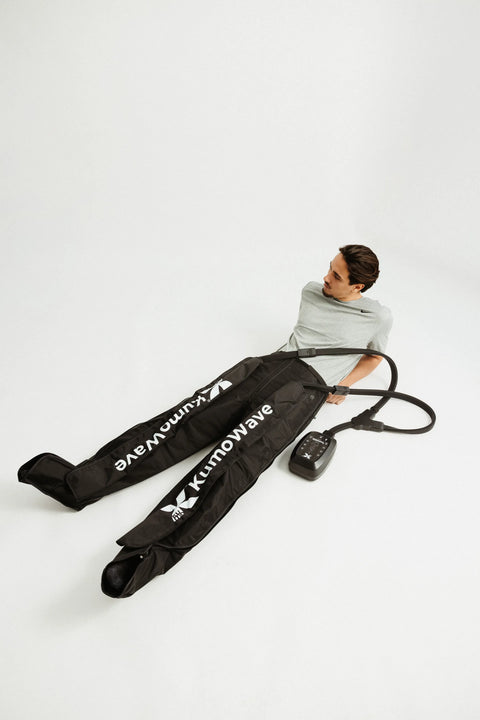
KumoWave Elite – Pressotherapy Pants
Full-coverage trousers. Ideal for lipedema, fluid retention and intensive use.
€799,00 €999,00

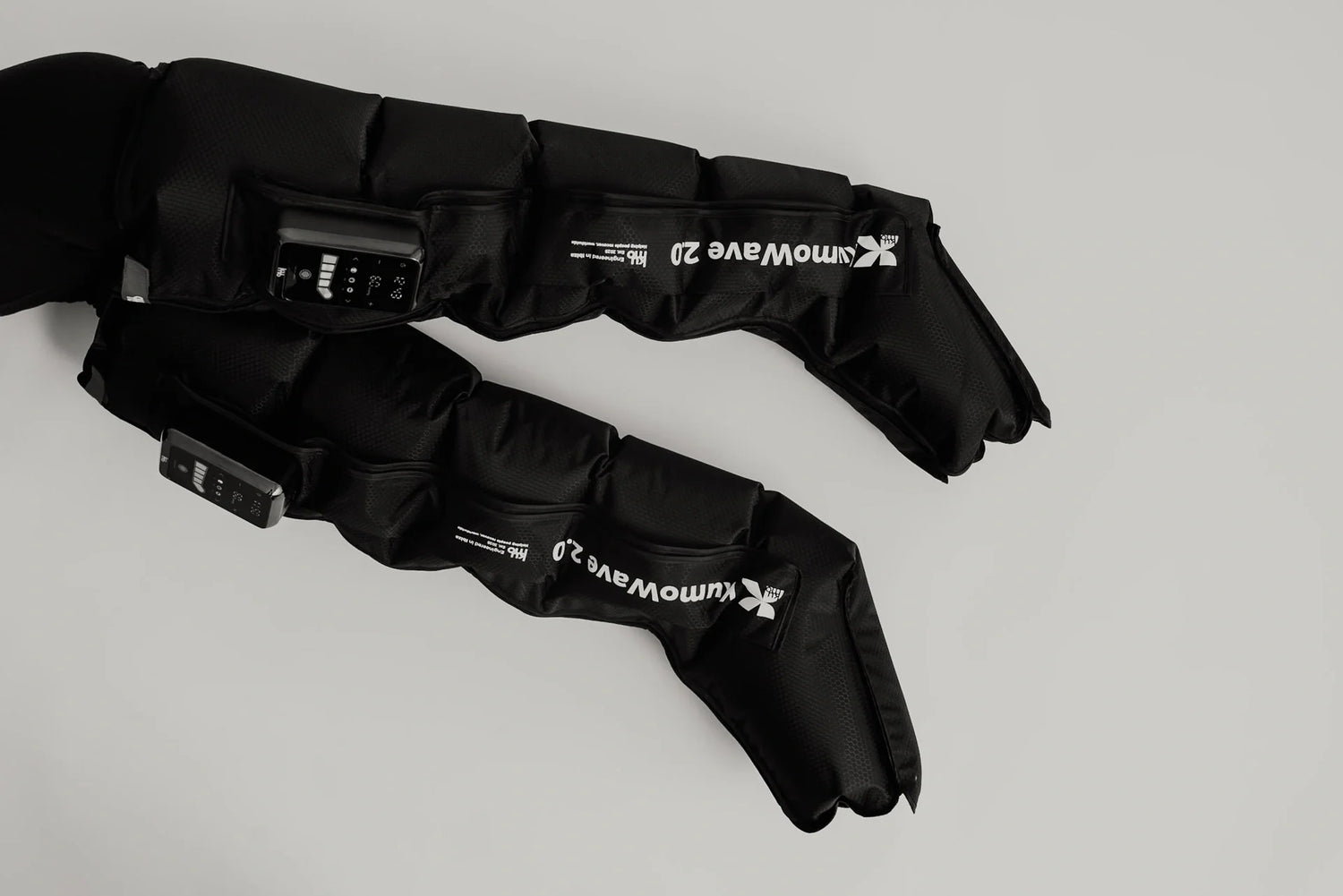
KumoWave 2.0 - Wireless Pressotherapy
Wireless, lightweight boots. Perfect for daily use and recovery.
€499,00 €599,00