Why is lymphatic drainage in the legs key in 2026?
Lymphatic drainage in the legs can relieve heaviness, swelling, and fatigue without leaving home.
We spend more time sitting than ever before, which hinders venous and lymphatic return. The World Health Organization (WHO) reminds us that adults should engage in 150 to 300 minutes of moderate-intensity physical activity per week to maintain their cardiovascular health and reduce the impact of a sedentary lifestyle. ( who.int ) When this doesn't happen, it's common to experience tired legs, swollen ankles, and a feeling of congestion at the end of the day.
Pressotherapy at home
End the day with light legs
★★★★★ 4,8/5 · rated by verified customers
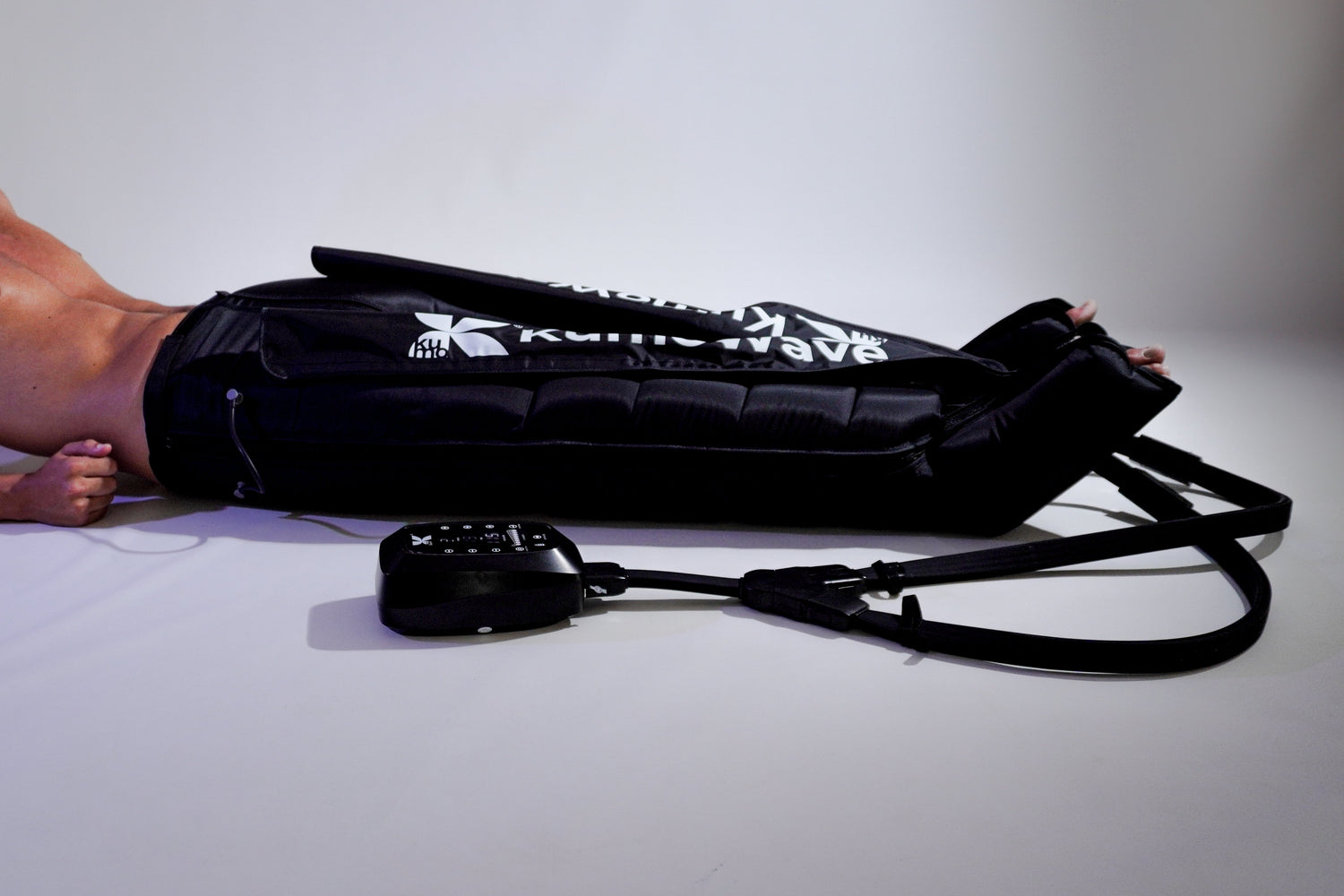
KumoWave pressotherapy boosts circulation and helps drain fluid with sequential compression, in 20-minute sessions at home.
- Boosts circulation and helps drain fluid
- Chamber-based compression, adjustable to you
- Sequential compression that mimics manual drainage
€799,00€999,00
−10% on your 1st order when you subscribe to the newsletter

Lymphatic drainage of the legs is a gentle technique that supports lymph circulation and can be a great ally for:
- Feeling of light legs
- Mild edema related to sedentary lifestyle or long periods of standing
- Recovery after exercise
- General well-being and relaxation
In this 2026 guide you will learn a step-by-step lymphatic drainage routine at home , how to combine it with movement and how to enhance it with recovery technologies such as pressotherapy, LED light and percussive massage , without ever replacing medical assessment when necessary.
Personalized protocol · included with your purchase
Want us to tell you how to use it in your case?
With your purchase, our experts prepare a personalized usage protocol for your case: sport, circulation, fluid retention, pregnancy or lipedema.
Message us on WhatsAppOur experts reply · no obligation
What is lymphatic drainage of the legs (and what it is not)
The lymphatic system is a network of vessels and nodes that collects excess fluid and waste products from the body and returns them to the bloodstream. When this system slows down due to a sedentary lifestyle, heat, hormones, or certain medical conditions, fluid retention and increased leg volume can occur.
Manual lymphatic drainage (MLD) is a very gentle type of massage, with slow, rhythmic movements, designed to promote the movement of lymph toward the lymph nodes. Studies in people with chronic venous insufficiency and lymphedema show that a series of drainage sessions can reduce limb volume, the sensation of heaviness, and improve quality of life. ( pubmed.ncbi.nlm.nih.gov )
Not to be confused with:
on your first order when you join the newsletter
We send you the code instantly. No spam.
- Strong or painful massages (not lymphatic drainage)
- High-intensity “anti-cellulite massages”
- Miracle solutions for weight loss
Lymphatic drainage is a supportive care tool, not a complete medical treatment for conditions such as advanced lymphedema, severe venous insufficiency, or thrombosis. In those cases, you should always refer your specialist.
Benefits of lymphatic drainage in the legs
Scientific evidence on lymphatic drainage has focused mainly on people with specific problems (lymphedema, venous insufficiency, post-operative), but its effects guide us on what it can contribute to daily life when practiced properly.
-
Reduction of mild edema and leg contour
In patients with secondary lymphedema and lower limb edema, manual lymphatic drainage and intermittent compression programs have shown measurable reductions in leg volume and calf circumference. ( pubmed.ncbi.nlm.nih.gov ) -
Less feeling of heaviness and fatigue
Trials with people with chronic venous insufficiency have observed that series of 10 lymphatic drainage sessions improve symptoms such as tiredness, heaviness, or tightness in the legs. ( pubmed.ncbi.nlm.nih.gov ) -
Support for muscle recovery
Gentle drainage, movement, and pneumatic compression can increase blood flow and promote the elimination of metabolites after intense exercise, contributing to a more comfortable recovery. ( pubmed.ncbi.nlm.nih.gov ) -
General well-being and relaxation
Gentle touch, deep breathing, and a self-care routine activate the parasympathetic nervous system, which is associated with relaxation and improved sleep.
Remember: If you have severe pain, local heat, redness, shortness of breath, a history of thrombosis or heart disease , you need medical evaluation before applying any drainage technique.
Before you begin: safety and contraindications
When NOT to do home lymphatic drainage on the legs
Avoid lymphatic drainage without professional supervision in these situations (non-exhaustive list):
- Deep vein thrombosis (actual or suspected)
- Decompensated heart failure
- Acute skin infections (cellulitis, erysipelas) or significant open wounds
- Active cancer without medical team approval
- Fever, systemic infection, or significant general malaise
- High-risk pregnancy or obstetric pathologies without medical authorization
If you have been diagnosed with lymphedema , always follow the protocol prescribed by a physiotherapist specializing in lymphology.
General safety recommendations
- The pressure should be very gentle , without pain or marks on the skin.
- The skin should be healthy or have minor, non-serious alterations (consult if you have any doubts).
- It always works in the direction of the heart , from more distant areas towards nearby lymph nodes.
- Stop the session if you experience dizziness, palpitations, pain, or difficulty breathing.
Keys to good lymphatic drainage of legs at home
Diaphragmatic breathing: the “engine” of the lymphatic system
The diaphragm acts as a natural pump for lymph. Before and during lymphatic drainage, spend 2–3 minutes doing the following:
- Lie on your back with your knees slightly bent.
- Place one hand on your abdomen and the other on your chest.
- Inhale through your nose, inflating your abdomen (not your chest) for 4 seconds.
- Exhale through your mouth for 6–8 seconds, letting your abdomen drop.
Repeat 8 to 10 deep breaths, without forcing it. This activation facilitates venous and lymphatic return from the legs to the torso.
Ideal posture for lymphatic drainage of the legs
To work comfortably:
- Lie on your back on a firm but comfortable surface (mat, hard bed).
- Slightly elevate your legs by resting them on cushions or against the wall (about 20–30 cm above the heart).
- Keep your muscles as relaxed as possible.
Pressure and rhythm: less is more
Home lymphatic drainage should mimic the gentle nature of professional manual lymphatic drainage (MLD):
- Pressure: light, as if you were moving the skin without sinking into the muscle.
- Rhythm: slow and continuous, without abrupt movements.
- Duration: between 10 and 20 minutes per leg, depending on your time and tolerance.
2026 Lymphatic Drainage Routine for Legs at Home (Step by Step)
The following routine is designed for tired legs or those with mild edema of functional origin (sedentary lifestyle, standing for long periods, long journeys, etc.). It does not replace a clinical protocol for lymphedema or other conditions.
1. Preparation (2–3 minutes)
- Perform 8–10 deep diaphragmatic breaths.
- Drink a glass of water (about 200 ml) to promote hydration.
- Apply a small amount of oil or neutral cream to facilitate the gliding of your hands.
2. Activation of inguinal lymph nodes (groin area)
The lymph nodes in the groin are a "central station" for leg drainage.
- Place your fingertips right in the groin area, where the thigh ends and the torso begins.
- Perform gentle pumping movements, pushing very lightly inwards and upwards, without pain.
- Do 10–15 repetitions per side, at a slow and relaxed pace.
3. Thigh drainage
- Place both hands around your thigh, near your knee.
- Slowly slide your hands towards the groin, with light pressure that "pushes" the fluid upwards.
- When you reach the groin, loosen the pressure and return to the starting point.
- Repeat 10 to 15 times on each side of the thigh (front, back and side), without forcing the posture.
4. Calf drainage
- Place your hands around your calf (calf muscles), near your ankle.
- Slide towards the knee, always with a slow, rhythmic and pain-free movement.
- Imagine you are gently “pumping” the liquid upwards.
- Perform 15–20 passes on each calf.
5. Drainage of ankles and feet
- Encircle your ankle with your hands and make small, gentle, upward circular movements.
- On the top of the foot, make light passes from the toes towards the ankle.
- Finish with 5–8 very gentle pumps over the instep and ankle, directing the fluid towards the leg.
6. Final integration into English
To “close the loop”:
- Repeat 5–10 calf-to-knee passes.
- Then 5–10 knee-to-groin passes.
- Finish with 10 gentle pumps over the inguinal lymph nodes.
7. Recommended duration and frequency
- Duration: 15–30 minutes total (both legs).
- Frequency: 3–5 days per week during periods of higher workload (many hours standing, heat, travel).
- Combine it with short daily walks or ankle exercises (flexion-extension) to strengthen venous return. ( who.int )
Summary table: Daily leg lymphatic drainage routine
| Phase | Approximate duration | Intensity | Ideal time of day | Helpful supports or tools |
|---|---|---|---|---|
| Diaphragmatic breathing | 2–3 min | Very soft | Start of the routine | Mat, cushion under knees |
| Inguinal lymph nodes | 2–3 min | Light pressure | After breathing | Lumbar support towel |
| Thighs | 5–8 min | Smooth, rhythmic | Afternoon or evening | neutral oil/cream |
| Calves | 5–8 min | Gentle | After standing for many hours | Optional: compression boots in soft mode |
| Ankles and feet | 3–5 min | Very soft | At the end of the routine | Small roller or hands |
| Final integration | 3–5 min | Gentle | Just before going to sleep | Relaxed atmosphere, soft lighting |
How to boost lymphatic drainage in legs with daily movement
While manual lymphatic drainage helps, the foundation for light legs in 2026 remains regular movement . The WHO estimates that around 31% of adults do not meet the minimum recommended levels of physical activity, increasing their risk of chronic diseases and circulatory problems. ( who.int )
Microhabits to activate the calf muscle pump
- Get up for at least 2–3 minutes every hour if you work sitting down.
- Do 15–20 repetitions of heel raises (on your toes) several times a day.
- Take the stairs instead of using the elevator whenever possible.
- Walk for 10–15 minutes after long periods of sitting or standing.
Gentle exercises compatible with lymphatic drainage
- Walk at a comfortable pace for 20–30 minutes.
- Gentle stationary bike (10–20 minutes).
- Joint mobility of ankles, knees and hips.
- Yoga or gentle Pilates with emphasis on breathing and elevated legs.
Recovery technologies that support lymphatic drainage of the legs
In addition to self-massage and movement, we now have technologies that can complement circulation care and muscle recovery . KUMO specializes in this line of high-performance solutions, integrating aesthetics and technology to make recovery a daily habit (you can discover the brand on the official KUMO website ).
Pressotherapy: pneumatic compression to activate circulation
Compression therapy uses inflatable boots that apply sequential compression from the foot to the thigh. Clinical trials in people with lower limb edema and reduced mobility have shown that intermittent pneumatic compression can reduce leg volume, improve ankle range of motion, and improve quality of life. ( pubmed.ncbi.nlm.nih.gov )
At home, compression boots can be an interesting complement for:
- People who spend many hours standing or sitting
- Athletes seeking to accelerate the feeling of recovery
- Users with a tendency towards mild functional edema (provided their doctor authorizes it)
It is important to always follow the manufacturer's instructions and consult a healthcare professional if you have vascular or cardiac conditions.
Red light and LED therapy: supporting muscle recovery
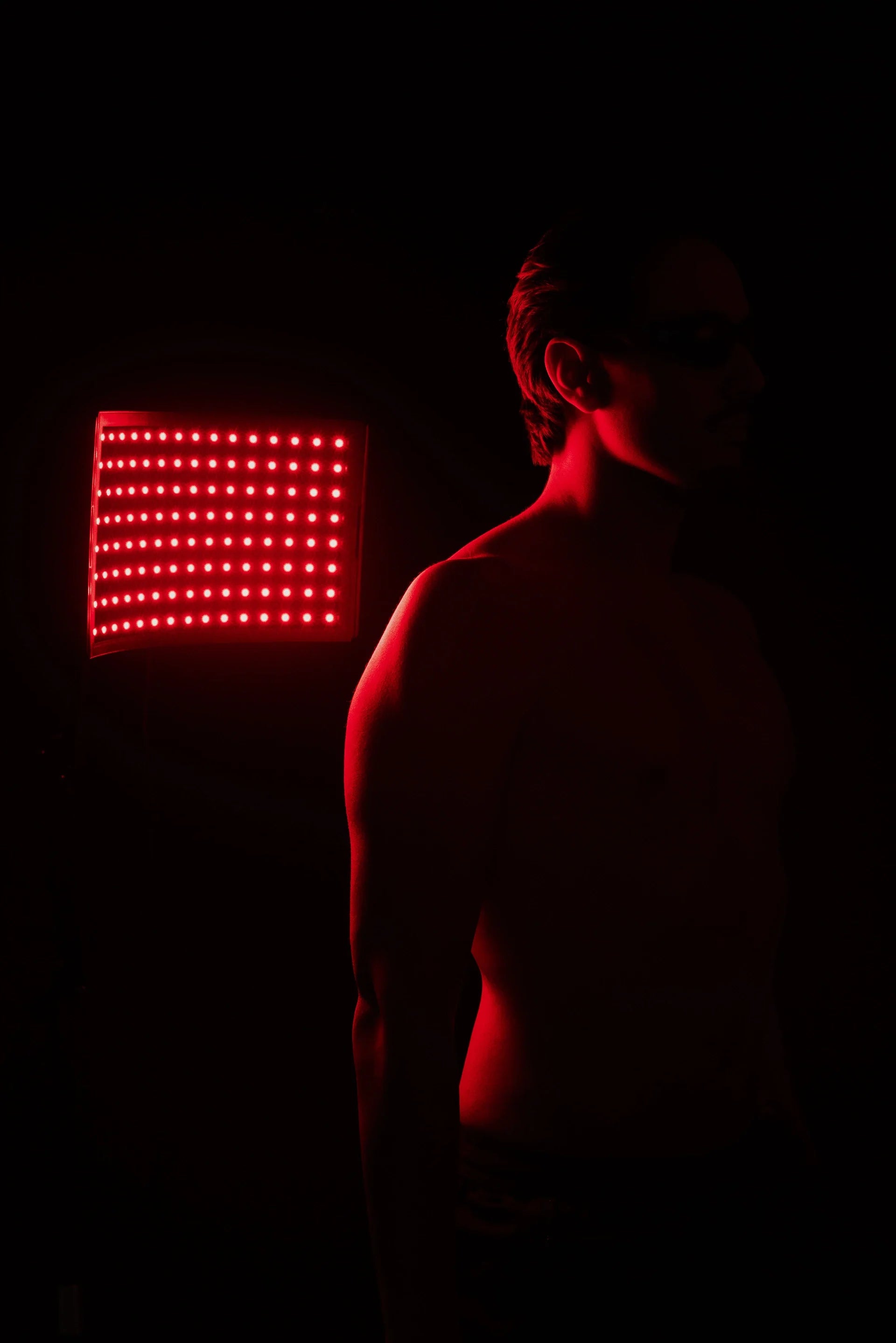
Photobiomodulation with red and/or infrared light (PBMT) has shown, in various controlled trials, positive effects on muscle recovery after high-intensity exercise, improving strength indicators and reducing certain markers of muscle damage compared to placebo. ( pubmed.ncbi.nlm.nih.gov )
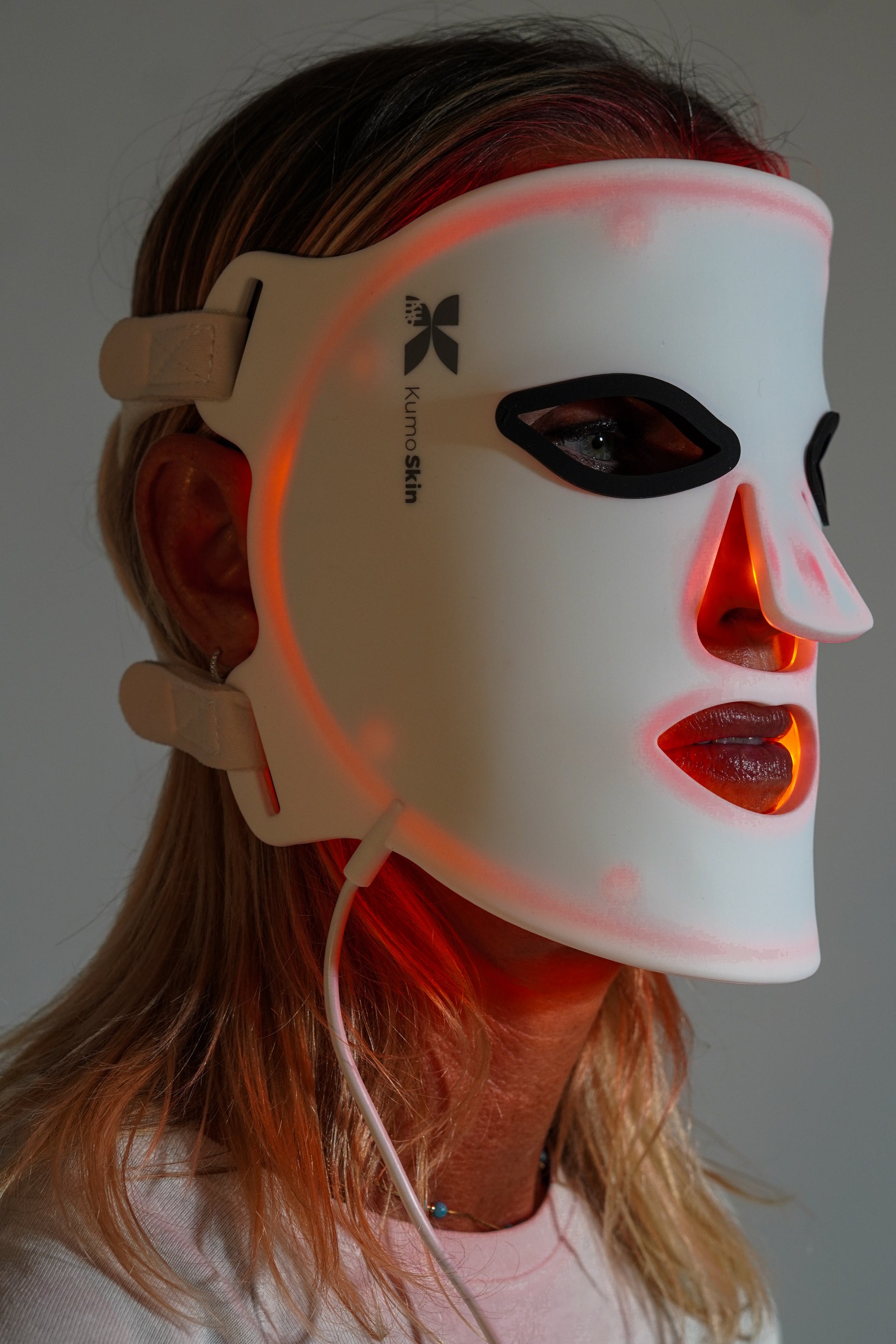
LED light therapy solutions like those offered by KUMO fit into this trend, seeking to:
- Promote muscle recovery after demanding workouts
- Support rest and relaxation through short red light sessions
- To aesthetically integrate into the wellness routine at home
Evidence on PBMT continues to grow, and although clinical protocols are very specific, these technologies are emerging as an interesting ally in overall recovery, always as a complement and not a substitute for physical activity and rest.
Massage guns: when and how to use them on heavy legs
Massage guns or percussion massage devices generate rapid vibrations on muscle tissue. Some recent trials suggest that sufficiently long sessions of percussion massage may aid in the recovery from delayed onset muscle soreness (DOMS) compared to methods such as static stretching, although the results are not uniform across studies. ( pubmed.ncbi.nlm.nih.gov )
The KumoPulse Air massage gun can be used as a complement to your leg lymphatic drainage routine if:
- You use gentle modes and heads suitable for calves and thighs.
- Avoid areas with prominent varicose veins, acute inflammation, or intense pain.
- You apply it after manual drainage, as a form of light muscle relaxation.
In cases of diagnosed lymphedema or relevant vascular disease , always consult your specialist before using percussive massage.
Common mistakes when doing lymphatic drainage of legs at home
- Applying too much pressure: the drainage should not hurt or leave bruises.
- Forgetting to breathe: the diaphragm is a key lymphatic pump.
- Avoid making quick or disordered movements: the key is slowness and direction towards the lymph nodes.
- Neglecting daily movement: without muscle activation, the effect is limited.
- Using advanced technologies without supervision in cases of pathology: pressotherapy or percussive massage require caution in people with vascular problems.
How to integrate your leg lymphatic drainage routine into your daily life
For lymphatic drainage to have a real impact, it must become a sustainable habit , not an isolated effort.
- Nighttime macro-habit: 15–20 minutes of drainage + 10 minutes of gentle pressotherapy after showering.
- Active micro-breaks: every hour, 1–2 minutes of heel raises and short walks.
- Weekly full recovery session: self-massage, mobility, red light and deep breathing.
If you would like more personalized guidance on how to combine drainage, movement, and recovery technologies, you can contact the KUMO team through the contact page .
Frequently asked questions about lymphatic drainage in the legs
How many times a week is it recommended to do lymphatic drainage on the legs at home?
For legs tired from a sedentary lifestyle or long periods of standing, a frequency of 3 to 5 times per week is usually reasonable, always with gentle sessions of 15–30 minutes. If it's your first time, start with 2–3 sessions per week and observe how your body responds. In people with specific conditions (lymphedema, significant venous insufficiency, post-operative recovery), the frequency should be determined in consultation with a physiotherapist or doctor. Home lymphatic drainage can be combined with professional sessions and, if indicated, medical compression or pressotherapy.
Does lymphatic drainage help with fluid retention and swollen legs?
In cases of mild fluid retention associated with sedentary lifestyles, heat, or prolonged periods of standing or sitting, gentle lymphatic drainage, combined with movement and leg elevation, can help reduce the sensation of swelling and heaviness. Evidence in lymphedema and edema due to low mobility shows measurable reductions in leg volume with intermittent pneumatic compression and drainage programs. ( pubmed.ncbi.nlm.nih.gov ) However, if the swelling appears suddenly, is highly asymmetrical, painful, or is accompanied by other symptoms (shortness of breath, chest pain, fever), it is a warning sign that requires immediate medical attention.
Can I have lymphatic drainage of my legs if I'm pregnant?
During pregnancy, it's common to experience heavy legs and swollen ankles , and gentle techniques can provide comfort. However, lymphatic drainage at this stage should be approached with caution. The WHO and other guidelines recommend moderate physical activity during pregnancy, but specific treatments (such as intensive drainage, compression therapy, or deep tissue massage) should be approved by your healthcare provider. ( paho.org ) If your pregnancy is low-risk, a physiotherapist specializing in perinatal health can teach you safe techniques tailored to your needs. If you have any questions, always consult your obstetrician.
How long does it take to notice the effects of lymphatic drainage on the legs?
Many people describe an immediate feeling of lightness after the session, especially if they combine lymphatic drainage with leg elevation and deep breathing. Visible changes in volume (calf and ankle contours) usually require consistency: in studies of lymphedema and functional edema, 3–4 week programs with frequent sessions show the clearest reductions. ( pubmed.ncbi.nlm.nih.gov ) For at-home wellness use, you can assess your sensations after 2–3 weeks of regular routine; if you don't notice improvement or if the edema worsens, it's advisable to see a doctor to rule out underlying causes.
Does lymphatic drainage help with cellulite or slimming the legs?
Lymphatic drainage is not a weight-loss treatment or a direct solution for cellulite. Its main function is to facilitate the movement of lymph and interstitial fluid, which can improve the feeling of congestion and, in some cases, subtly smooth the skin's appearance by reducing swelling. However, the reduction of body fat and structural changes in cellulite depend primarily on factors such as diet, regular exercise, rest, and genetics. Consider lymphatic drainage as a wellness complement that can make your legs feel lighter, not as a substitute for healthy habits.
So what now? Integrate lymphatic drainage of the legs into your KUMO routine
If you've made it this far, you already know the basics of lymphatic drainage for your legs at home and how to combine it with movement and rest to care for your circulation. The next step is to turn it into a wellness ritual tailored to your lifestyle: a few minutes of self-massage, short daily walks, elevating your legs, and, if you wish, the support of recovery technologies such as compression boots , LED light therapy , or the KumoPulse Air massage gun .
Explore KUMO's recovery universe on the homepage , and if you'd like guidance in choosing the solution that best fits your routine and goals, contact the team through the contact form . Your legs—and your daily performance—will thank you for every move.
KumoWave pressotherapy
Choose your at-home pressotherapy
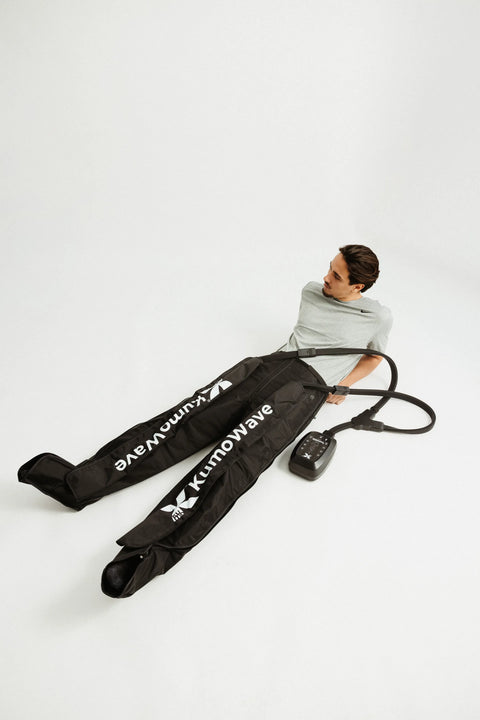
KumoWave Elite – Pressotherapy Pants
Full-coverage trousers. Ideal for lipedema, fluid retention and intensive use.
€799,00 €999,00

KumoWave 2.0 - Wireless Pressotherapy
Wireless, lightweight boots. Perfect for daily use and recovery.
€499,00 €599,00