
Heat can make you swell more than usual. When the temperature and humidity rise, the body redistributes blood flow, sweats more, and fluid tends to accumulate more easily in the feet, ankles, legs, and hands, especially if you spend many hours standing or sitting. (health.harvard.edu)
It's not always just an aesthetic nuisance. If the swelling appears suddenly, affects only one leg, or is accompanied by pain, redness, localized heat, or shortness of breath, medical evaluation is advisable. (mayoclinic.org)
Pressotherapy at home
End the day with light legs
★★★★★ 4,8/5 · rated by verified customers
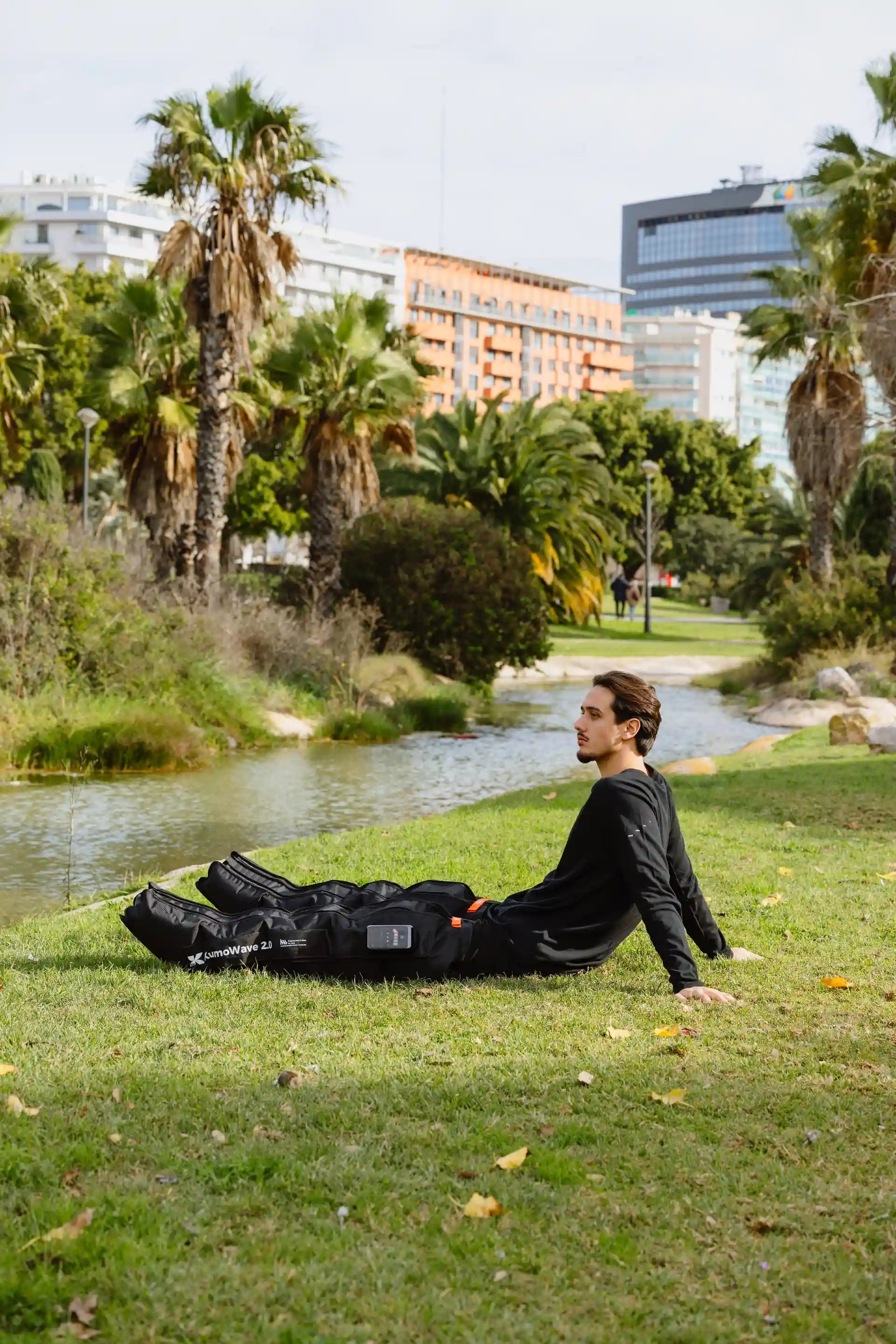
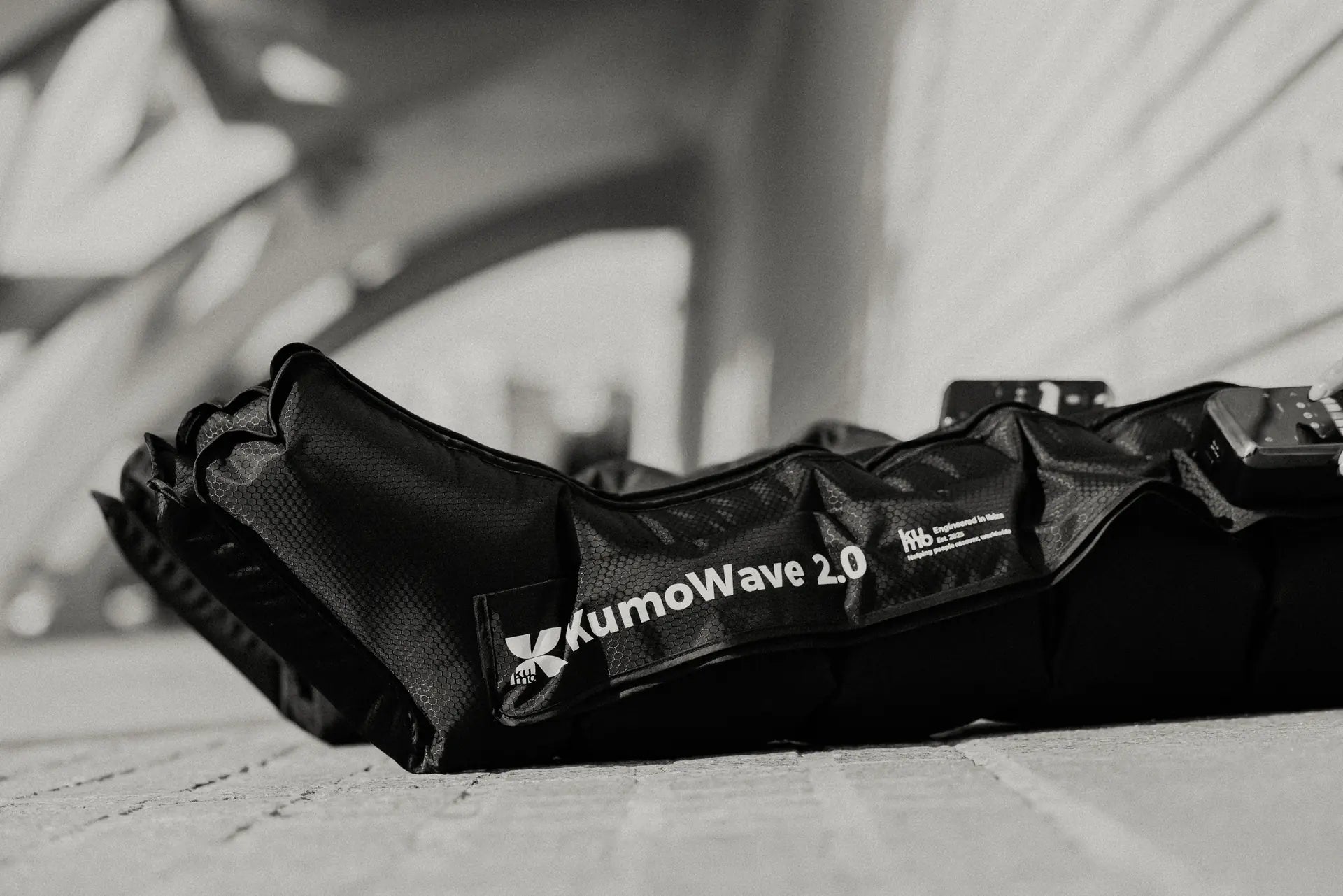
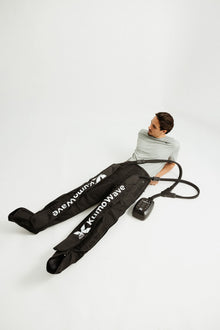
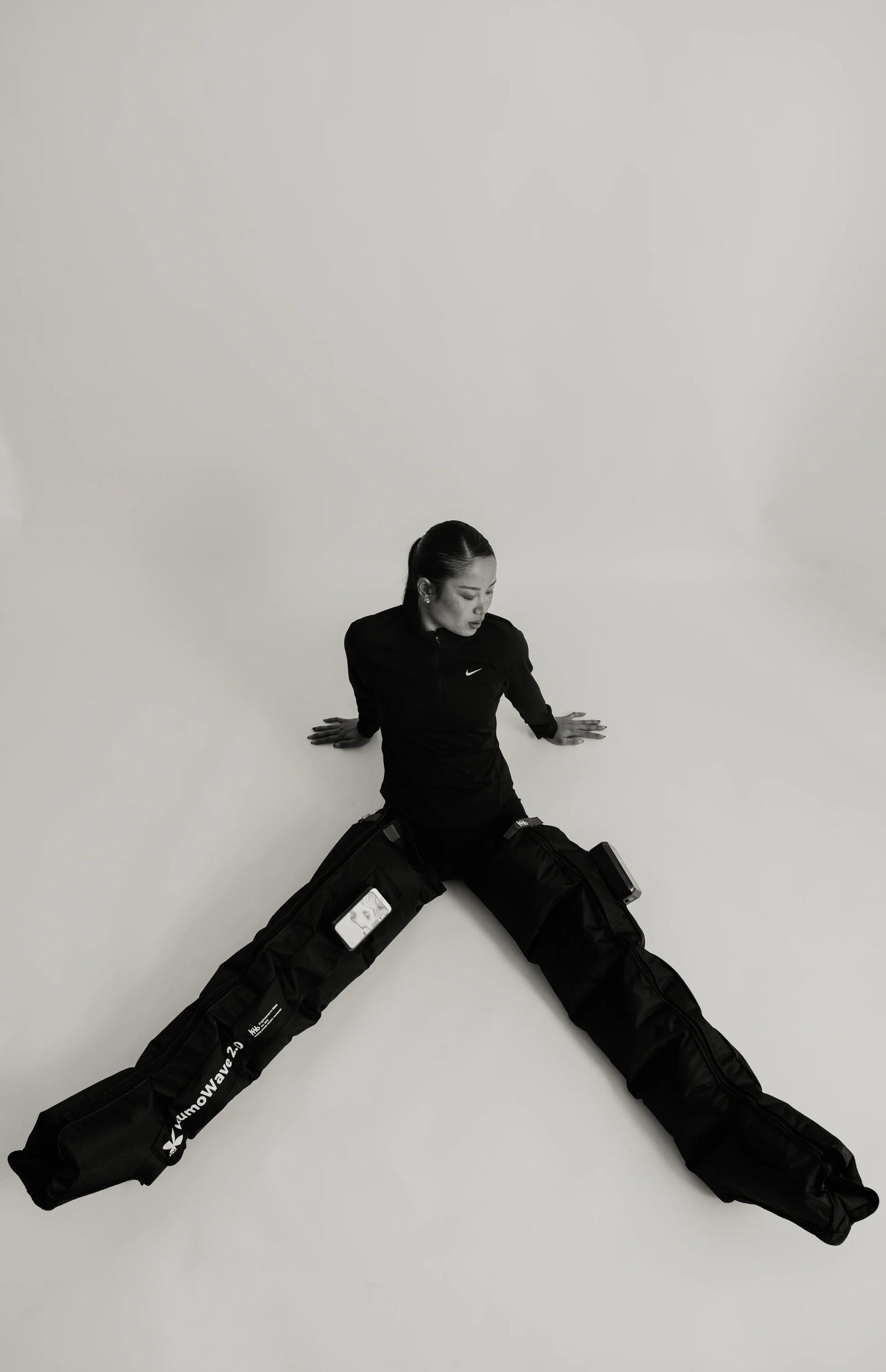
KumoWave pressotherapy boosts circulation and helps drain fluid with sequential compression, in 20-minute sessions at home.
- Boosts circulation and helps drain fluid
- Chamber-based compression, adjustable to you
- Sequential compression that mimics manual drainage
€799,00€999,00
−10% on your 1st order when you subscribe to the newsletter

What is fluid retention and why is it more noticeable in summer?
Fluid retention, also called edema, is the accumulation of fluid in tissues. It is often seen in the legs, ankles, feet, and hands, and can fluctuate throughout the day. In summer, the problem doesn't always appear from scratch: often it becomes more visible because several factors coincide at once, such as heat, humidity, more time spent immobile, travel, a saltier diet, or poorer hydration. If you want to broaden the general context, fluid retention: causes, symptoms, and real solutions summarizes the most common triggers.
The key is that the body prioritizes cooling down. To do this, it sends more blood to the skin and uses sweating as the primary mechanism for heat loss. This physiological adjustment helps regulate temperature but can also favor fluid being more noticeable in the periphery, especially in the extremities. (ncbi.nlm.nih.gov)
Personalized protocol · included with your purchase
Want us to tell you how to use it in your case?
With your purchase, our experts prepare a personalized usage protocol for your case: sport, circulation, fluid retention, pregnancy or lipedema.
Message us on WhatsAppOur experts reply · no obligation
Mechanisms that worsen swelling in hot weather
1. Blood vessels dilate to lose heat
When it's hot, superficial vessels open to facilitate heat dissipation, and sweat contributes to cooling. Evaporation accounts for about 22% of total body heat loss, so the body relies heavily on this system. The side effect is that blood and some fluid circulate more easily on the surface, and peripheral swelling can become more evident.
2. Spending hours standing or sitting promotes accumulation in the legs
Prolonged immobility hinders the return of fluid to the heart, and gravity does the rest. Harvard Health points out that heat dilates small veins and that standing for long periods on hot days can make ankles swell much more. That's why summer edema is usually noticed at the end of the day, after working, traveling, or running errands with little movement.
3. Humidity, sweating, and dehydration work against you
In a humid environment, sweat evaporates less effectively, and the body cools with more difficulty. Mayo Clinic also explains that dehydration reduces the ability to sweat normally and maintain an adequate temperature. This does not mean that all swelling is "due to not drinking enough water," but that heat stress can make heaviness and retention more visible. (mayoclinic.org)
on your first order when you join the newsletter
We send you the code instantly. No spam.
4. Salt causes the body to retain more water
If you eat salty foods, the body responds by retaining water to dilute excess sodium. Harvard Health summarizes it very clearly: after a very salty meal, the body tends to "store" water to compensate. In summer, when there is already a natural tendency to swell, a diet rich in ultra-processed foods, cured meats, salty snacks, or sauces can make the problem even more noticeable. (health.harvard.edu)
5. Not everyone adapts to heat at the same pace
Heat acclimatization is not instantaneous. The CDC explains that the body needs to adapt gradually to a warm environment and that this adaptation improves sweating, stabilizes circulation, and increases cutaneous blood flow; in their guide, this process can require between 7 and 14 days of progressive exposure. If a heatwave hits suddenly, it's normal to notice more discomfort, fatigue, and swelling. (cdc.gov)
If the discomfort is concentrated mainly in the lower limbs, fluid retention in legs: why it occurs and how to relieve it delves into the factors that make ankles and calves the most sensitive area.
Frequent symptoms and warning signs
Mild fluid retention usually provides quite recognizable clues. It is advisable to observe if the swelling appears at the end of the day, if it improves with rest, or if it leaves a mark when pressing the area with a finger. Mayo Clinic describes common symptoms as shiny or stretched skin, the mark left when pressing, and a feeling of heaviness.
- Feet, ankles, or hands more swollen than usual, especially in the afternoon.
- Tight, shiny skin or with a visible mark when pressed for a few seconds.
- Feeling of heavy legs or fatigue when walking.
- Partial improvement after elevating the legs or spending a night at rest. (health.harvard.edu)
- Swelling of only one leg, with pain, warmth, or redness, which no longer fits with a simple heat discomfort.
There are signs that should not be normalized. If the swelling is accompanied by difficulty breathing, chest pain, irregular heartbeat, fever, only one leg affected, or a red and warm area, you should consult as soon as possible. In these cases, it could be something more than heat-related retention.
And if you are looking for a more complete daily routine, habits, foods, and exercises that actually help broadens the focus with simple and sustainable measures.
What you can do at home to relieve it
Useful measures, simply explained
| What to do | Why it helps | When it's usually most effective |
|---|---|---|
| Elevate legs above heart level | Facilitates fluid return and reduces pressure in ankles and calves. (mayoclinic.org) | After work, when you get home, or if you've spent a lot of time standing. |
| Walk and move your ankles frequently | Activates the muscle pump in the legs and helps blood and fluid return upwards. | During long days sitting, when traveling, and when you feel accumulated heaviness. |
| Reduce excess salt | Sodium causes the body to retain water; lowering its consumption usually helps with mild edema. | When you eat out frequently or consume too many highly processed foods. |
| Use compression if recommended | Compression helps prevent fluid from accumulating in the extremities. | If you have a tendency to repeated swelling, venous insufficiency, or long trips. |
Also, try to wear loose clothing, stay cool, drink fluids regularly, and avoid staying still for too long. The NHS recommends, in the case of swollen hands and arms, moving the area normally, elevating it when possible, hydrating, and trying to stay cool if the heat worsens the edema. (nhs.uk)
Do not self-medicate with diuretics on your own. The treatment of edema depends on the cause, and although some mild cases improve with simple measures, in others, it is necessary to rule out circulatory, kidney, liver, heart problems, or a venous thrombosis.
If you already use compression or want to better understand its logic, how to support venous return with pressotherapy explains the circulatory objective of this type of support clearly.
And if you're interested in adapting your routine when temperatures rise significantly, pressotherapy and heat: safe adjustments in summer gathers recommendations designed for the most demanding days.
FAQ
Why do feet and hands swell in summer with the heat?
Because the body uses the dilation of superficial vessels and sweating to cool down, which favors fluid accumulation more easily in the extremities. In the hands, even exercise can cause vessels to open more and temporary swelling to appear. If there is also humidity, you spend a lot of time still, or you already have a tendency to edema, the discomfort multiplies.
How to reduce fluid retention caused by heat in summer?
The most useful approach is usually to combine several measures: drink regularly, walk or move your legs every so often, elevate your limbs when resting, and cut down on salt in your diet. Mayo Clinic adds that compression can help in arms or legs, and Harvard Health emphasizes that elevating your feet and using support can also reduce the problem. If swelling persists, it's important to find the cause and not just "tough it out."
Does fluid retention in summer worsen during extreme heatwaves?
Yes, it can worsen. The CDC points out that the body needs time to acclimate to heat and that incomplete adaptation increases vulnerability; furthermore, Mayo Clinic explains that when humidity is high, sweat evaporates less effectively, and the body cools with more difficulty. During heatwaves, the feeling of heaviness and swelling usually appear sooner and with greater intensity. If you notice unilateral pain, redness, or shortness of breath, do not attribute it solely to the weather.
What home measures help prevent leg swelling in summer?
The most effective ones are usually very simple: avoid staying in the same position for too long, get up frequently, move your ankles, elevate your legs when resting, and wear loose-fitting clothing. Mayo Clinic and Harvard Health agree that walking, elevating the legs, and using compression when appropriate helps prevent fluid from accumulating as much. It's also advisable to review salt consumption and maintain good hydration.
Can diet increase fluid retention on hot days?
Yes. A very salty meal can cause the body to retain water to dilute sodium, and this is more noticeable in summer if there is already a pre-existing tendency to swelling. Therefore, reducing ultra-processed foods, cured meats, salty snacks, and heavily seasoned sauces is usually a good idea. It's not about eating "salt-free" by force, but about reducing the excess and giving more weight to fresh foods.
What now?
If summer swelling happens to you every year, start with the basics: less immobility, less salt, more hydration, and more breaks to elevate your legs. Then, if you want to delve deeper into specific solutions and how to incorporate recovery at home, return to the Kumo Balance website and review pressotherapy and heat: safe adjustments in summer to adapt your routine wisely.
KumoWave pressotherapy
Choose your at-home pressotherapy
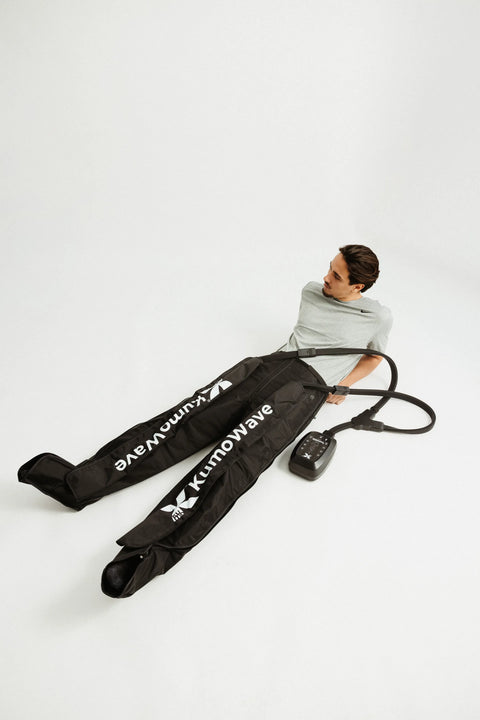
KumoWave Elite – Pressotherapy Pants
Full-coverage trousers. Ideal for lipedema, fluid retention and intensive use.
€799,00 €999,00
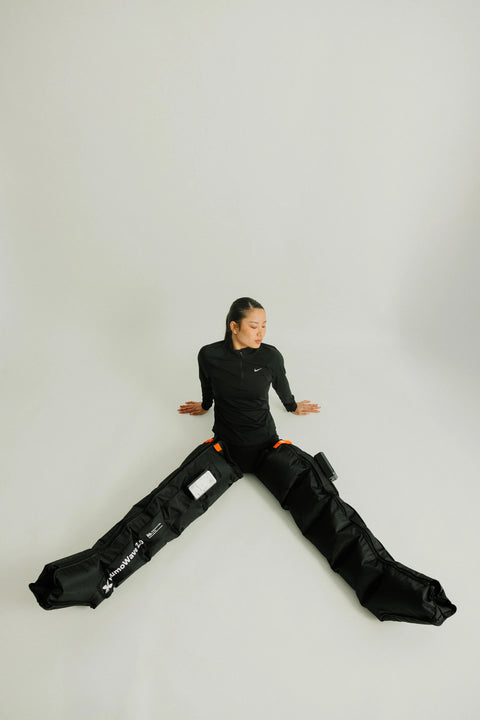
KumoWave 2.0 - Wireless Pressotherapy
Wireless, lightweight boots. Perfect for daily use and recovery.
€499,00 €599,00