
Swollen legs are not just an annoyance.
When the body retains more fluid than it should, this excess usually accumulates in the ankles, feet, and legs. It can occur for everyday reasons, such as spending many hours sitting or standing, but also due to venous, cardiac, renal, hepatic, or lymphatic causes. If the problem is frequent, worsens at the end of the day, or appears with pain, warmth, shortness of breath, or swelling in only one leg, it is advisable to pay attention. (medlineplus.gov)
Pressotherapy at home
End the day with light legs
★★★★★ 4,8/5 · rated by verified customers
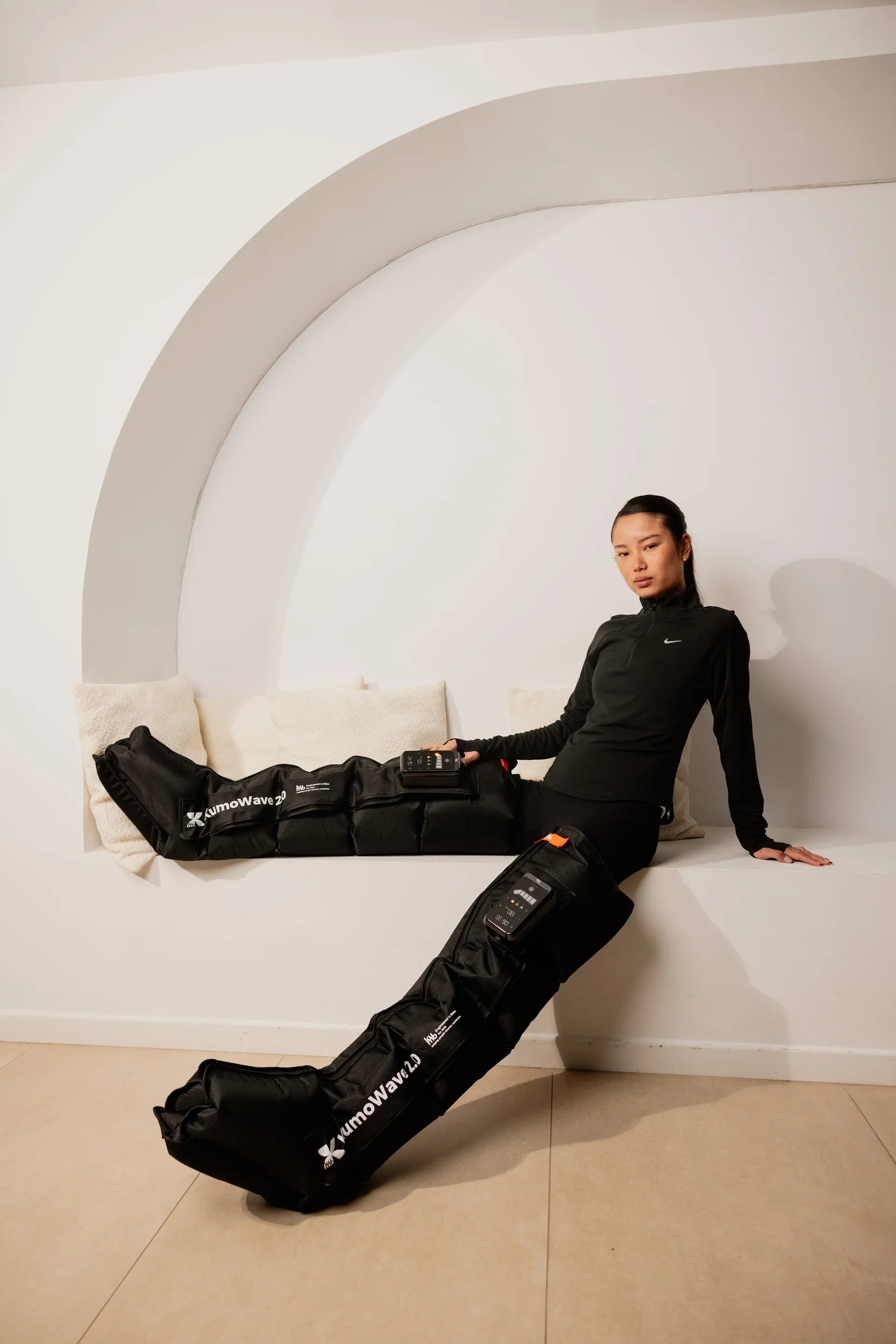
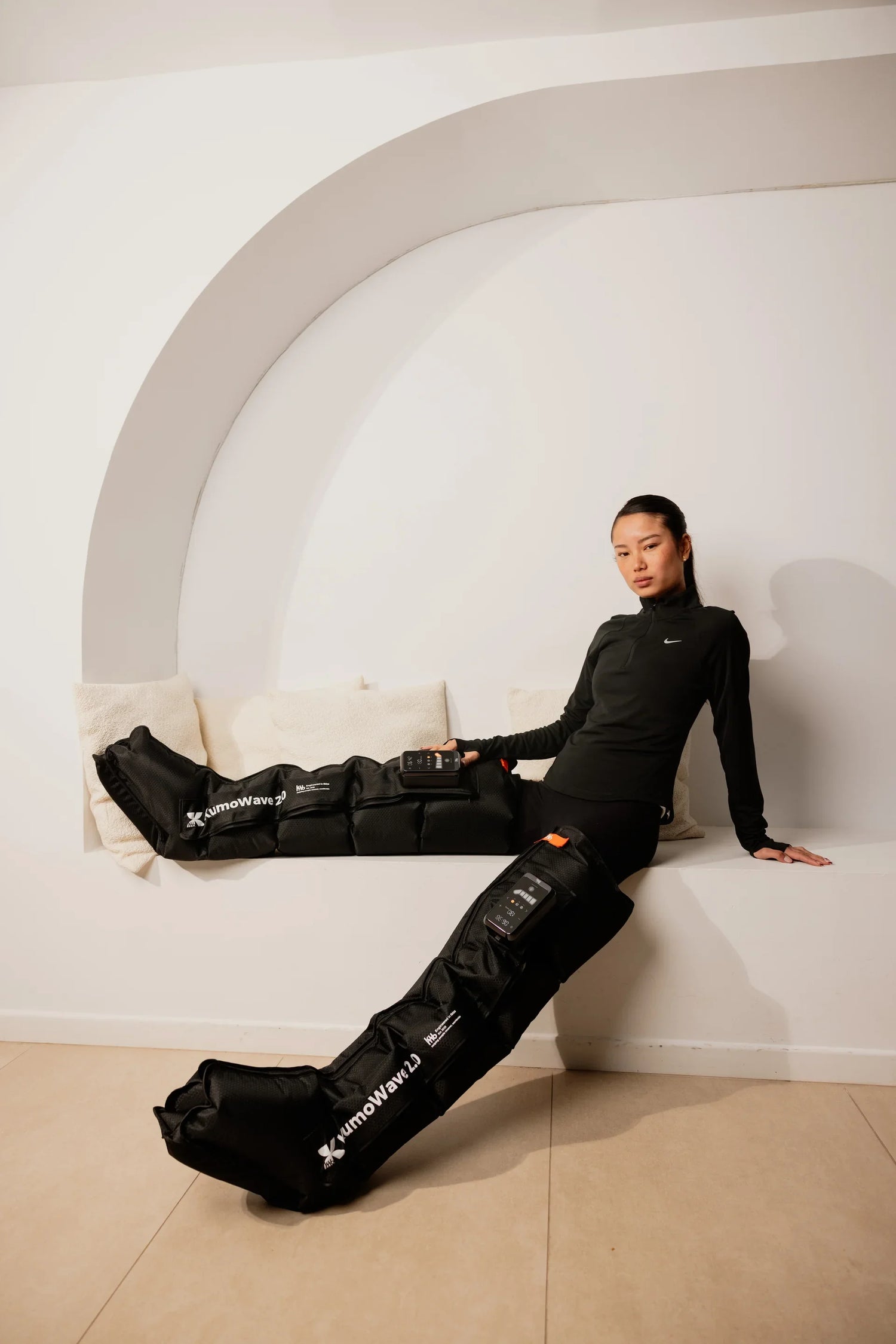
KumoWave pressotherapy boosts circulation and helps drain fluid with sequential compression, in 20-minute sessions at home.
- Boosts circulation and helps drain fluid
- Chamber-based compression, adjustable to you
- Sequential compression that mimics manual drainage
€829,00€999,00
−10% on your 1st order when you subscribe to the newsletter

If you want to broaden the context, the general guide on fluid retention: causes, symptoms, and real solutions helps you place the problem within a more complete view.
What fluid retention in the legs really is
In medicine, fluid retention in the legs is known as edema: a swelling caused by fluid accumulation in the tissues. It is usually seen in the feet, ankles, and legs, and can be pitting or non-pitting. In the pitting form, pressing with a finger leaves a small mark that takes time to disappear; in the other, the skin does not sink in that way. (medlineplus.gov)
Personalized protocol · included with your purchase
Want us to tell you how to use it in your case?
With your purchase, our experts prepare a personalized usage protocol for your case: sport, circulation, fluid retention, pregnancy or lipedema.
Message us on WhatsAppOur experts reply · no obligation
This detail matters because not all swelling means the same thing. Sometimes it is a temporary response to heat or immobility, but other times it is a clue that the venous return, the lymphatic system, the heart, the kidneys, or the liver are not managing fluid balance well. (medlineplus.gov)
Why it occurs
Everyday factors that promote swelling
Standing or sitting for long periods, heat, high salt intake, pregnancy, and some medications can promote leg swelling. MedlinePlus also notes that mild leg swelling is common in warm months, especially after walking or standing for long periods. (medlineplus.gov)
Therefore, in healthy people, swelling can appear at the end of a long day and improve with rest, gentle movement, and leg elevation. Even so, if the swelling recurs or does not improve, it is advisable to check if there is something else behind it. (medlineplus.gov)
on your first order when you join the newsletter
We send you the code instantly. No spam.
Circulatory problems and venous return
When the valves in the leg veins do not work well, blood tends to pool downwards. This can cause heaviness, pain, tired legs, varicose veins, and swelling, especially after sitting or standing for long periods. The NHLBI explains that walking activates the calf muscles and helps blood return to the heart, while compression can relieve symptoms such as pain, swelling, and heaviness. (nhlbi.nih.gov)
If this is your case, the article on leg edema: causes and how to relieve it at home may also help you, because it focuses on the most common pattern of this type of swelling.
When the cause may be medical and not just functional
Leg swelling can also appear when the heart does not pump with enough force. In heart failure, fluid accumulates in the tissues and can cause ankle and leg edema, as well as shortness of breath, fatigue, and weight gain due to fluid retention. (medlineplus.gov)
The kidneys can also be behind the problem. In diseases such as nephrotic syndrome, swelling can affect the face, abdomen, arms, and legs; in addition, a low-sodium diet can help in some cases, always under medical supervision. The liver, for its part, can cause edema when cirrhosis exists and fluid accumulates in the legs or abdomen. (medlineplus.gov)
Finally, the lymphatic system can fail and produce lymphedema, a chronic swelling that usually affects the arms or legs, can start soft and pitting, and over time become more persistent. (nhs.uk)
How to guide yourself according to the swelling pattern
Quick table of common causes, clues, and what usually helps
This table summarizes guiding patterns; it does not replace a medical evaluation, but it helps to understand when swelling seems functional and when it deserves more attention. (medlineplus.gov)
| Possible cause | Common clues | What usually helps |
|---|---|---|
| Mild retention due to heat, salt, or long hours of inactivity | Usually affects both legs, worsens at the end of the day, and improves with rest or elevation. May leave a mark when pressed. (medlineplus.gov) | Walking, wiggling the ankles, elevating the legs, and moderating excess salt. (medlineplus.gov) |
| Venous insufficiency or varicose veins | Heaviness, tired legs, swelling that worsens when standing or sitting for long periods and improves when elevating the feet. (nhlbi.nih.gov) | Daily movement, compression, and leg elevation to promote venous return. (nhlbi.nih.gov) |
| Lymphedema | Chronic swelling in one part of the limb, sometimes soft at first and more persistent over time. (nhs.uk) | Compression, regular exercise, and specialized fluid management techniques. (nhs.uk) |
| Heart, kidney, or liver problem | Swelling along with shortness of breath, fatigue, distended abdomen, foamy urine, or less urine output. (medlineplus.gov) | Medical evaluation to treat the underlying cause. (medlineplus.gov) |
| Deep vein thrombosis | Only one leg swollen, with pain, warmth, or redness. (nhs.uk) | Urgent medical attention. (nhs.uk) |
How to relieve it at home
1. Elevate your legs strategically
Elevating your legs helps fluid drain better. The NHS recommends doing so while sitting or lying down, ideally with your feet above hip level, and suggests elevating them for 30 minutes, 3 to 4 times a day. It also advises keeping the leg elevated when resting and avoiding spending too much time with your feet down. (nhs.uk)
2. Activate the calf with gentle movement
The calf acts as a natural pump for venous return. Daily walking, moving your feet up and down, and rotating your ankles help blood return to the heart and reduce the feeling of heavy legs. The NHLBI and NHS agree that regular activity is one of the most useful measures when swelling has a circulatory component. (nhlbi.nih.gov)
- Walk for a few minutes several times a day if you spend many hours sitting. (nhlbi.nih.gov)
- Move your ankles up and down to activate the muscle pump. (nhs.uk)
- Avoid staying still for long periods with your feet dangling. (nhs.uk)
- If your legs swell when you sleep, use a pillow to keep them slightly elevated. (nhs.uk)
3. Moderate salt and take care of the overall context
Excess sodium can promote fluid retention, so reducing ultra-processed foods, salty snacks, and heavily seasoned meals can make a difference. MedlinePlus also mentions that, in certain situations, a professional may recommend limiting salt and using diuretics, but the latter should only be taken when indicated by a doctor. (medlineplus.gov)
If you want to connect this habit with a global strategy, the guide on how pressotherapy supports venous return explains why circulation and daily habits usually go hand in hand.
4. Use compression and pressotherapy as support, not as a substitute
External compression can help prevent swelling and relieve symptoms such as pain, heaviness, and edema in people with venous problems. The NHLBI explains that compression stockings or bands exert gentle pressure on the legs, and the NHS includes them in the management of venous edema, along with movement and elevation. (nhlbi.nih.gov)
As part of a recovery routine, some people also incorporate pressotherapy as complementary support for comfort and a feeling of lightness. If you are interested in this approach, you can review the home pressotherapy collection and the complete guide to lymphatic drainage, especially if you are looking for a more structured home routine. (nhlbi.nih.gov)
And if the swelling is concentrated mainly in the ankles, the article on pressotherapy for swollen ankles and its adjustment guides you on a more precise placement.
When it is not advisable to treat it only at home
There are situations where swelling stops being a common nuisance and becomes a warning sign. The most important is swelling of only one leg, especially if it comes with pain, warmth, or redness, because it can indicate deep vein thrombosis. If there is also shortness of breath or chest pain, immediate attention is required. (nhs.uk)
Swelling of a single leg, especially if it is painful, warm, or red, should not be dismissed as trivial. (nhs.uk)
- Seek urgent evaluation if the swelling is unilateral and accompanied by pain, warmth, or redness. (nhs.uk)
- Go immediately if the swelling appears with shortness of breath or chest pain. (nhs.uk)
- Consult if the swelling is unexplained, does not improve, or worsens over days. (medlineplus.gov)
- Request a review if it is accompanied by a distended abdomen, foamy urine, less urine output, or marked fatigue. (medlineplus.gov)
FAQ about fluid retention in the legs
Why do legs swell and what causes fluid retention in them?
Leg swelling occurs when fluid accumulates in the tissues. The most common causes range from spending many hours standing or sitting, heat, excess salt, pregnancy, or some medications, to venous, lymphatic, cardiac, renal, or hepatic problems. When the swelling is mild and bilateral, it usually points to functional or venous factors; if it is unilateral or accompanied by other symptoms, more serious causes should be ruled out. (medlineplus.gov)
How to relieve fluid retention in the legs: exercises, elevation, and helpful habits?
The most useful approach is usually to combine several measures: walking daily, wiggling your ankles frequently, avoiding long hours of immobility, and elevating your legs when you rest. The NHS recommends elevating your feet for 30 minutes, 3 to 4 times a day, in addition to maintaining regular activity. Reducing excess salt also helps. If the origin is venous, compression can be a great support, but always as a complement and not as a substitute for a medical evaluation. (nhs.uk)
What to do if leg swelling is constant or worsens at the end of the day?
If swelling appears repeatedly or intensifies in the afternoon, it is usually important to observe the pattern. This behavior is common in venous and lymphatic problems because fluid accumulates over hours. It is advisable to check if it improves by elevating the legs, if it leaves a mark when pressed, and if it affects one or both legs. If it persists for several days, returns frequently, or the cause is unclear, it is best to seek a medical evaluation. (nhlbi.nih.gov)
Can fluid retention in the legs be a sign of serious problems: when to see a doctor?
Yes. You should consult a doctor quickly if the swelling affects only one leg, if there is pain, warmth, or redness, or if shortness of breath or chest pain appears. A review is also warranted if the swelling comes with marked fatigue, a swollen abdomen, less urine output, or foamy urine, because these data point to cardiac, renal, or hepatic causes. The key idea is not to assume that every swollen leg is “normal.” (nhs.uk)
What are the differences between simple edema and edema associated with diseases such as cardiac, renal, or hepatic problems?
Simple edema is usually milder, often bilateral, and improves with movement, rest, and elevation. In contrast, edema associated with diseases usually comes with more contextual signs: shortness of breath and fatigue in cardiac problems, foamy urine or reduced diuresis in renal problems, or a distended abdomen and signs of cirrhosis in hepatic problems. In addition, it can be more persistent and not improve as well with home measures. Therefore, the evolution and accompanying symptoms are as important as the swelling itself. (medlineplus.gov)
What now?
If your goal is to relieve heaviness and create a smarter routine, start with the basics: move more, elevate your legs, and check if the swelling has a clear pattern. And if you want to explore home recovery solutions, Kumo Balance's home recovery proposal offers a starting point for further informed exploration. (nhs.uk)
KumoWave pressotherapy
Choose your at-home pressotherapy
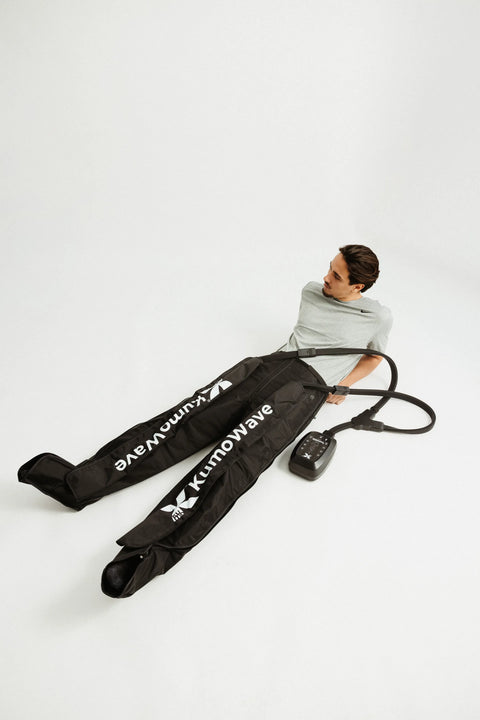
KumoWave Elite – Pressotherapy Pants
Full-coverage trousers. Ideal for lipedema, fluid retention and intensive use.
€829,00 €999,00
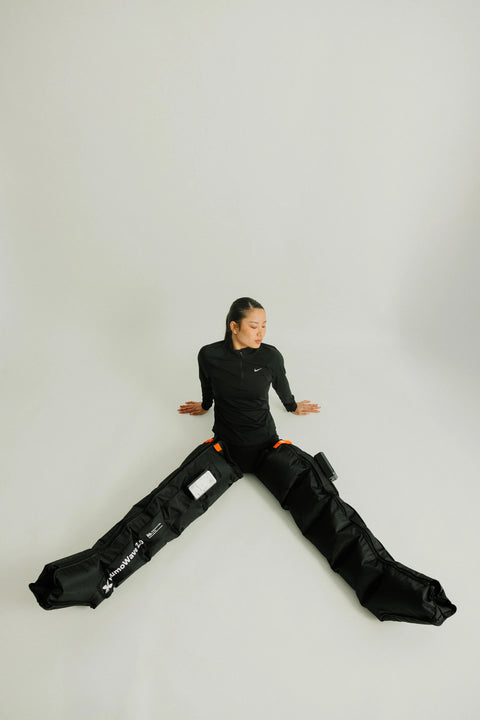
KumoWave 2.0 - Wireless Pressotherapy
Wireless, lightweight boots. Perfect for daily use and recovery.
€499,00 €599,00