
The LED facial mask is no longer a fleeting trend. Chosen well, it can support a non-invasive routine for acne, fine lines, texture, and redness, always with realistic expectations and consistency. If you're interested in a home care approach aligned with Kumo Balance's non-invasive wellness technology, this guide will help you understand what to look for in 2026, how to use it safely, and what signs distinguish a good device from a mediocre one. (aad.org)
What is an LED facial mask and how does it work?
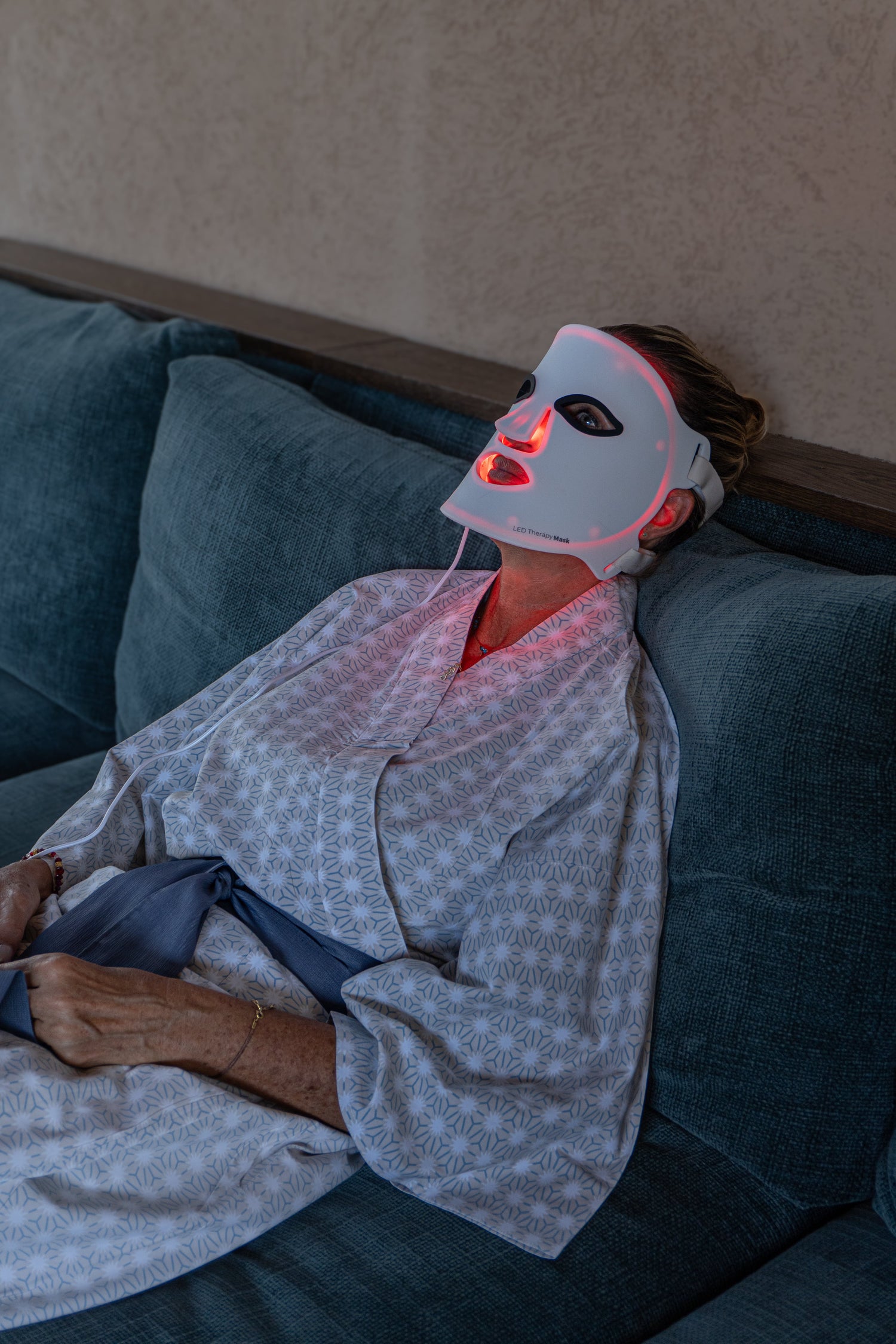
An LED facial mask is a photobiomodulation device: it emits visible light and, in some models, near-infrared light to stimulate biological responses in the skin. The American Academy of Dermatology explains that these devices are used at home for acne and signs of aging, but that results depend heavily on the device, duration of use, and the target treated. The AAD's guide on red light therapy also reminds us that “FDA-cleared” refers to regulatory safety, not guaranteed efficacy. (aad.org)
Facial red light
Bring your skin back to life
★★★★★ 4,8/5 · rated by verified customers
The KumoSkin LED mask helps repair and calm your skin in short sessions at home.
- 250 LEDs in flexible medical silicone
- Red light to boost collagen and glow
- 4 lights: red, infrared, blue and yellow
€299,00€429,00
−10% on your 1st order when you subscribe to the newsletter

In practice, blue light is more associated with acne breakouts, red light with fine lines, texture, and firmness, and near-infrared with deeper rejuvenation protocols. This logic aligns with the type of indications found in FDA-reviewed devices and recent clinical studies on facial rejuvenation. (accessdata.fda.gov)
How to choose yours in 2026
Choosing well is not about chasing the highest number of colors, but about aligning objective, fit, wavelength, comfort, and safety. The FDA even has a draft guidance specific to photobiomodulation devices, reinforcing that product labeling and evaluation matter as much as marketing. (fda.gov)
Personalized protocol · included with your purchase
Want us to tell you how to use it in your case?
With your purchase, our experts prepare the ideal LED protocol for your skin type and goal (acne, wrinkles, dark spots…).
Message us on WhatsAppOur experts reply · no obligation
Quick table of key criteria
| Criterion | What to prioritize | Why it matters |
|---|---|---|
| Wavelengths | Red 630–660 nm for anti-aging, blue 415–470 nm for acne, and near-infrared 830–850 nm if the device includes it for deeper protocols. | These are the bands that appear most frequently in FDA-reviewed devices and in recent studies on rejuvenation and acne. (accessdata.fda.gov) |
| Coverage and fit | An anatomical shape that distributes light homogeneously and fits well on the forehead, cheeks, nose, and chin. | A stable fit helps make the session more comfortable and uniform; flexible silicone and ergonomic design usually improve this experience. (kumobalance.com) |
| Usage control | Timer and, if possible, adjustable intensity. | Allows you to start with milder sessions and adapt the routine to your tolerance and the device manual. (kumobalance.com) |
| Eye safety | The manufacturer clearly indicates whether eye protection is required. | The AAD recommends following the device's instructions and not substituting the indicated protection with sunglasses. (aad.org) |
| Realistic expectation | Seek gradual improvements, not instant miracles. | Evidence shows possible results, but they vary depending on the device, power, and consistency. (aad.org) |
If you want to see how this translates into a specific device, the KumoSkin Mask product page shows a mask with 250 independent LEDs, flexible medical-grade silicone, full facial coverage, and digital control with adjustable timer and intensity. As a design reference, it's a good example of what is often sought in a well-designed home LED facial mask. (kumobalance.com)
Which wavelengths really matter?
If your goal is to choose wisely, it's good to start with the most repeated evidence. Red light is best suited for skin aging routines, because the AAD points out that some studies show subtle or noticeable improvements in wrinkles, spots, roughness, redness, and laxity. Within this same framework, the FDA has authorized several devices for at-home signs of aging. (aad.org)
For acne, blue light and some red/blue combinations are still the most common. In 2025, a systematic review and meta-analysis on home-use LED devices for acne reviewed 6 studies, and the overall literature continues to point to a possible complementary role of phototherapy in inflammatory lesions. However, it does not replace a complete dermatological strategy when acne is persistent or moderate-to-severe. (pubmed.ncbi.nlm.nih.gov)
on your first order when you join the newsletter
We send you the code instantly. No spam.
In facial rejuvenation, a 2025 multicenter trial with 630 nm and 850 nm found significant improvements in crow's feet at weeks 8, 12, and 16, with good tolerance and no relevant pain. Translated into the real world: results can exist, but they accumulate with weeks of consistent use, not in a single session. (pubmed.ncbi.nlm.nih.gov)
Therefore, if you have to prioritize, think like this: red for anti-aging, blue for acne, and near-infrared when the device includes it and you are looking for a more comprehensive protocol. Extra colors can be an addition, but they should not distract you from the main criterion: that the mask has a solid technical basis and clear usage instructions. (accessdata.fda.gov)
How to use it properly for a meaningful routine
If you prefer a clear sequence, the step-by-step guide to using the LED facial mask summarizes a simple logic: prepare the skin, adjust the mode, respect the times, and be consistent. This structure aligns with what dermatologists recommend to get the most out of light without improvising. (kumobalance.com)
- Clean and dry your skin thoroughly before starting. Kumo's usage guide recommends removing makeup, cleansing with a gentle gel, and completely drying the face; it also suggests avoiding retinoids, AHAs, BHAs, and oils just before the session if you are looking for a more comfortable experience. (kumobalance.com)
- Choose the mode according to your objective. Red works best for firmness and fine lines; blue for breakouts and acne-related bacteria; and near-infrared, when present, is used in deeper protocols. (aad.org)
- Start with the manufacturer's recommended time. The AAD insists that there is no universal duration and that device instructions must be followed; FDA-reviewed models feature sessions of 10, 15, or 20 minutes, but this does not mean all masks should be used equally. (aad.org)
- Wear eye protection if the manual requires it. The AAD warns against substituting recommended eyewear with sunglasses, as they do not offer the same protection or fit. (aad.org)
- Be consistent for several weeks. Changes in texture, redness, or fine lines usually accumulate over time; therefore, a realistic routine is more valuable than sporadic sessions. (aad.org)
If ease of use matters to you, the LED facial mask benefits guide helps to contextualize what red, blue, or infrared light can contribute within a coherent skincare routine. (kumobalance.com)
Who might benefit and when caution is advised
An LED facial mask can be very suitable if you are looking to support mild to moderate acne, fine lines, uneven texture, or occasional redness. The AAD, however, makes it clear that it is not a solution for everyone and that the clinical context should be reviewed, especially if you are already using dermatological treatments or medications that increase light sensitivity. (aad.org)
There are three cases where special caution is warranted: if you have a light-sensitive condition such as lupus, if you are taking photosensitizing medication, or if you experience repeated irritation when using the mask. The AAD also warns that darker skin tones may be more sensitive to visible light and develop more intense or long-lasting hyperpigmentation, so in these cases, vigilance is even more important. (aad.org)
In parallel, clinical evidence suggests that short-term safety is good and that the most common adverse effects are usually mild, such as temporary irritation or slight discomfort. This does not eliminate the need for caution, but it does help to separate serious phototherapy from advertising noise. (aad.org)
What are realistic results?
The most honest promise is this: LED facial light can help, but it doesn't transform skin overnight. The AAD cites a study in which 90 patients received 8 red light treatments over 4 weeks, and more than 90% noticed some improvement, including smoother skin, less redness, and a reduction in dark spots. In other words, signs do appear, but usually with a well-scheduled use. (aad.org)
In acne, the conversation also has nuances. Recent evidence suggests that home-use LED devices can reduce lesions in some users, but protocols, wavelengths, and powers vary greatly between studies and brands. This explains why a mask should not be chosen solely by the number of colors, but by its technical coherence and its suitability for the problem you want to treat. (pubmed.ncbi.nlm.nih.gov)
If you're looking for a practical rule, think in weeks, not days: gradual improvements between 6 and 16 weeks are more realistic than instant changes, especially when the goal is firmness, texture, or crow's feet. Consistency, daily sun protection, and a well-done basic routine remain half of the result. (pubmed.ncbi.nlm.nih.gov)
FAQ
How long should I use my LED facial mask?
There is no universal duration. The AAD insists that you should follow the device's instructions, because the useful time changes depending on the power, wavelength, and target treated. As a reference, some FDA-reviewed models work with sessions of 10, 15, or 20 minutes, but this is not a fixed rule for all masks. The important thing is to start cautiously, be consistent, and not exceed what the manufacturer indicates. (aad.org)
Can I use my LED mask every day?
Sometimes yes, but only if the device itself allows it and if your skin tolerates it well. The AAD reminds that at-home phototherapy requires regular use, although the exact frequency depends on the device. Some protocols are daily and others recommend several sessions per week. If you notice persistent redness, itching, or discomfort, it is advisable to reduce the frequency and review the manual. With LED, more does not always mean better: consistency matters more than forcing long or excessive sessions. (aad.org)
What should I do before using an LED mask?
Start with clean, dry skin. Kumo's step-by-step guide recommends removing makeup, washing with a gentle cleanser, and thoroughly drying the face before the session. It also suggests avoiding retinoids, AHAs, BHAs, and oils just before if you want a more comfortable experience. Then, select the light mode according to your objective and confirm if your device requires eye protection. This simple preparation reduces interference and makes the routine much clearer. (kumobalance.com)
Are there any side effects?
Side effects are usually mild and temporary. The AAD mentions skin irritation and slight discomfort as possible reactions in some users. Additionally, people with darker skin may be more sensitive to visible light and develop more intense or long-lasting hyperpigmentation. If you have lupus, a photosensitive condition, or are taking medication that increases light sensitivity, it is prudent to speak with a dermatologist beforehand. Safety is good, but it should not be used blindly. (aad.org)
Can I use my LED mask if I have sensitive skin?
Possibly yes, but with more caution than resilient skin. The key is to choose a mask with adjustable intensity, a comfortable fit, and a conservative protocol at the beginning. The AAD notes that therapy may not be suitable in cases of photosensitivity or with certain medications, so sensitive skin warrants prior evaluation if there is also relevant medical history. If the device causes repeated irritation, it is advisable to reduce frequency or discontinue and review the case with a professional. (aad.org)
What now?
If your objective is clear, the next step is to refine your choice with a more practical perspective. You can start with the guide to buying an LED facial mask in 2026 and then review the KumoSkin Mask product page to see if its combination of 250 LEDs, flexible medical-grade silicone, and intensity control fits your routine. (kumobalance.com)

Facial red light
KumoSkin Mask – LED Facial Mask
★★★★★ 4,8/5 · rated by verified customers
- 250 LEDs in flexible medical silicone
- Red light to boost collagen and glow
- 4 lights: red, infrared, blue and yellow
€299,00€429,00· pay in installments with seQura or Klarna