Abdominal lymphatic drainage can help relieve swelling.
It is not a strong massage or a technique to “flatten” the abdomen: it works with gentle pressure, slow rhythm, and a specific direction to promote lymph return. If you want to place the technique in its context, start with a complete explanation of how it works, and if you are looking for a broader view of self-care, check out Kumo Balance's recovery and wellness technology. (my.clevelandclinic.org)
Pressotherapy at home
End the day with light legs
★★★★★ 4,8/5 · rated by verified customers
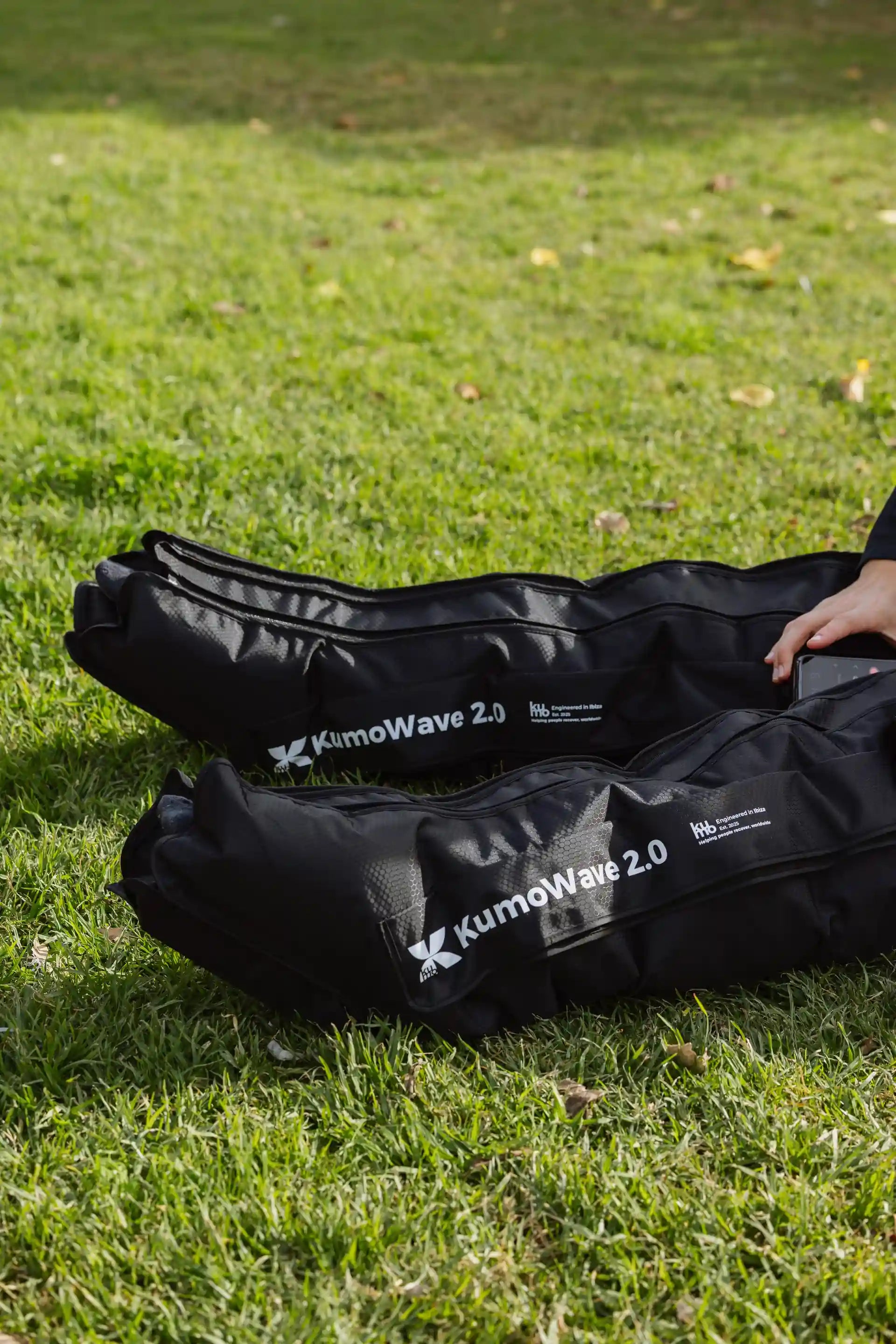
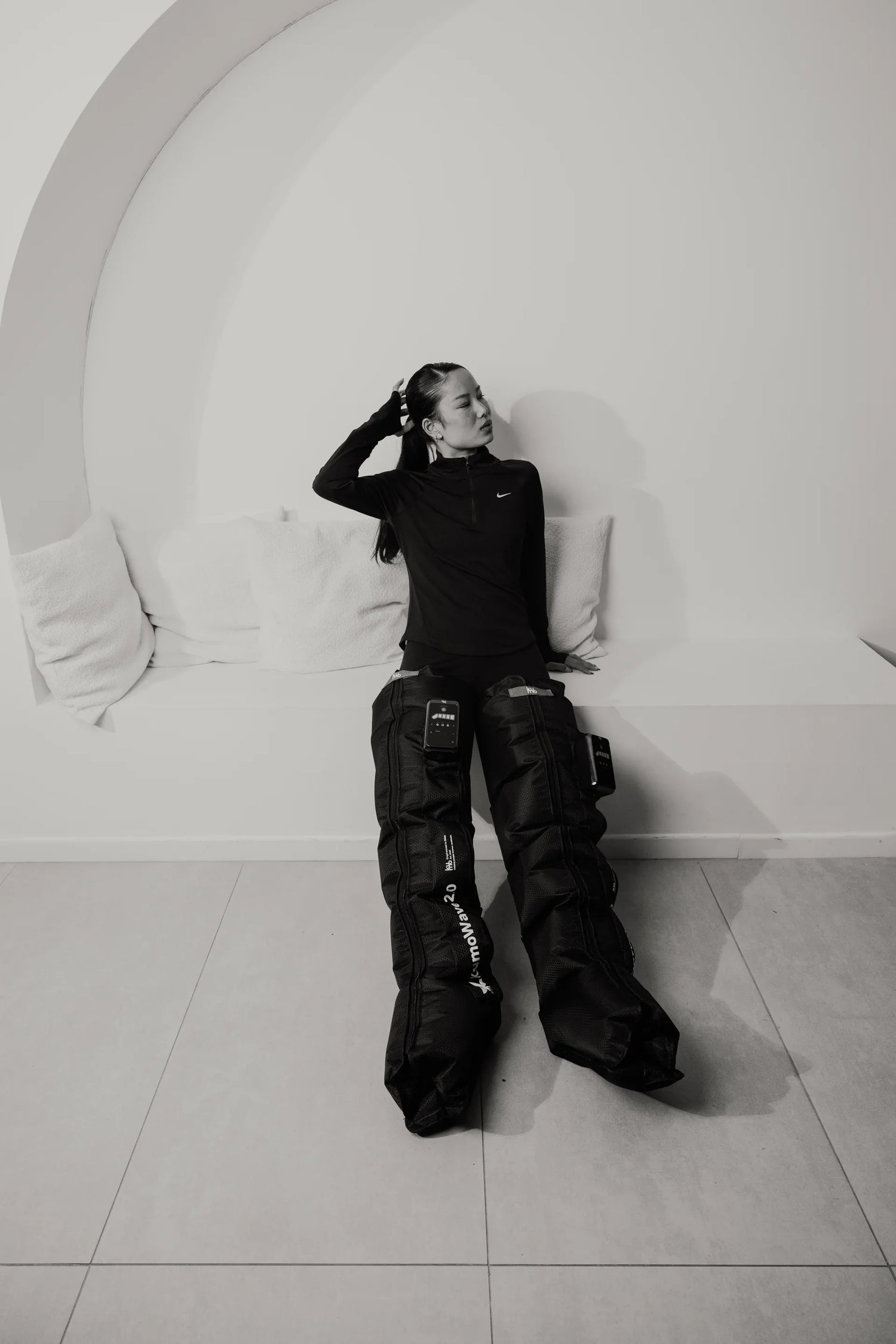
KumoWave pressotherapy boosts circulation and helps drain fluid with sequential compression, in 20-minute sessions at home.
- Boosts circulation and helps drain fluid
- Chamber-based compression, adjustable to you
- Sequential compression that mimics manual drainage
€829,00€999,00
−10% on your 1st order when you subscribe to the newsletter

What is abdominal lymphatic drainage?
We are talking about a variant of manual lymphatic drainage or simple self-drainage applied to the torso and abdomen. The idea is to aid the movement of lymph and interstitial fluid with very superficial maneuvers; Cleveland Clinic explains that the professional uses light pressure and usually starts with areas with lymph nodes, while the NHS integrates it into lymphedema management and self-drainage education. Cleveland Clinic's clinical explanation and the NHS's lymphedema treatment agree that the key is to mobilize fluid, not to exert force. (my.clevelandclinic.org)
In practice, the abdominal approach is usually part of a broader torso drainage routine: first the outflow pathways are activated, and then the area is worked with slow, superficial movements. This fits better when there is fluid retention, heaviness, or localized edema, always with a prior assessment if the symptoms are new or noticeable. (my.clevelandclinic.org)
Personalized protocol · included with your purchase
Want us to tell you how to use it in your case?
With your purchase, our experts prepare a personalized usage protocol for your case: sport, circulation, fluid retention, pregnancy or lipedema.
Message us on WhatsAppOur experts reply · no obligation
Real benefits of abdominal lymphatic drainage
It can reduce the feeling of bloating and heaviness
When swelling is related to fluid retention, this technique can help the fluid move better and the area feel less "heavy." Cleveland Clinic mentions bloating among the signs that can appear when the lymphatic system does not flow well, and the NHS explains that manual lymphatic drainage stimulates fluid flow and reduces inflammation. If you want to broaden your understanding, you also have other benefits of lymphatic drainage for health. (my.clevelandclinic.org)
It can support postoperative recovery in selected contexts
The evidence is not identical in all cases, but there are interesting signs in postsurgical edema. A randomized trial in 2025 with 46 patients found less edema, pain, and trismus after third molar extraction in the MLD group; in addition, Cochrane reviewed 6 trials on breast cancer-related lymphedema and observed that, in some analyses, adding MLD to compression provided an extra 7.11% reduction. This does not prove the same effect for the abdomen, but it does suggest that manual drainage can be useful when the main problem is edema. If your case is postsurgical, the 2025 postsurgical guide expands on precautions. (bmcoralhealth.biomedcentral.com)
Helps build a more organized self-care routine
Clinical guidelines highlight that simple self-drainage can be taught by a therapist and practiced at home, usually with a short duration and a stable sequence; the NHS presents it as a maintenance technique, and the consensus guide on lymphedema indicates that, when indicated, it is usually combined with compression and supervised learning. To see how it fits into a home routine, you can review the detailed guide on how to do it at home. (nhs.uk)
on your first order when you join the newsletter
We send you the code instantly. No spam.
Quick summary: benefits, uses, and limits
| Situation | What it can provide | Important nuance |
|---|---|---|
| Swelling due to fluid retention | It can improve the feeling of heaviness and promote fluid drainage. | It works best when the cause is actually lymphatic or edematous. (my.clevelandclinic.org) |
| Post-surgical recovery | There are favorable studies in different contexts of edema and pain. | The response varies depending on the surgery, recovery phase, and clinical plan. (bmcoralhealth.biomedcentral.com) |
| Self-drainage at home | It can be taught and practiced briefly and regularly. | It usually requires professional supervision, especially at the beginning. (nhs.uk) |
| Risk cases | It should not be done without evaluation when there is infection, thrombosis, or unstable organ failure. | Clinical guidelines are clear with these precautions. (lnni.org) |
How to do it step by step at home
Before improvising, it is worth remembering that lymphatic self-care works best when a professional has already taught you the correct direction of drainage. If you want a more detailed and safe version of the process, consult the safe step-by-step techniques. Guidelines from hospitals such as Gateshead Health and West Suffolk NHS agree on the same basic principles: abdominal breathing, slow rhythm, and no pain. (gatesheadhealth.nhs.uk)
- Start with diaphragmatic breathing. Sit or lie down with your shoulders relaxed, place your hands on your abdomen, and breathe slowly; when you inhale, your belly should rise, and when you exhale, it should lower. This action helps activate the drainage pattern and relax the core area. (gatesheadhealth.nhs.uk)
- Use only superficial pressure. The rule is to move the skin, not to crush deep tissue. The technique should not cause pain or redness of the skin, and several clinical sheets insist on doing it with bare hands, without excessive force, and on a comfortable surface. (healthsystem.osumc.edu)
- Work the abdomen and torso slowly. In guided routines, you start by opening outflow pathways and then make very gentle passes over the lower part of the torso or abdomen, following the direction you have been taught. There is no need to "knead"; the important thing is the gentle, repeated motion. (wsh.nhs.uk)
- Respect repetitions and time. Clinical protocols are not identical, but they usually speak of 5 to 10 repetitions per area, or 10 to 20 minutes in some self-drainage routines; other informative sheets place the session around 20 or 30 minutes. (lnni.org)
- End with breathing and skin check. Finish with a few deep breaths and check how your abdomen responds: if you notice pain, heat, redness, or that the discomfort worsens, stop the practice. If you have been advised to use compression, apply it only according to professional guidelines. (wsh.nhs.uk)
The best version of abdominal lymphatic drainage is gentle, slow, and painless. If you need force to "feel something," the technique is already becoming too intense. (healthsystem.osumc.edu)
When not to do it and what precautions to take
Lymphedema guidelines cite acute cellulitis, active lymphangitis, erysipelas, acute deep vein thrombosis, unstable heart failure, kidney failure, liver cirrhosis with ascites, and superior vena cava obstruction as contraindications or situations requiring high caution. In addition, pregnancy, menstruation, recent abdominal surgery, colitis, cystitis, and unexplained pain require individual assessment. If you are looking for a practical reference on risks, you can see the contraindications and risks of lymphatic drainage. (lnni.org)
- If there is infection, fever, or you feel worse, do not do it and seek medical evaluation. (wsh.nhs.uk)
- If the area is inflamed from a recent surgery, only follow your medical team's instructions. (lnni.org)
- If you have been advised to use compression, use it according to professional recommendation to maintain the result. (nhs.uk)
In other words, abdominal lymphatic drainage is a supportive tool, not a universal shortcut. Its best results appear when there is a clear indication, a gentle technique, and a well-evaluated clinical context. (nhs.uk)
Frequently asked questions
What are the benefits of abdominal lymphatic drainage and how is it performed correctly?
Its most realistic benefits are reducing the feeling of bloating, improving fluid mobility, and, in some contexts, supporting the recovery of postoperative edema. The correct way does not require force: it is based on superficial pressure, slow rhythm, diaphragmatic breathing, and a sequence taught by a professional. The key point is not to cause pain or redness. If the swelling appears suddenly, with fever or significant pain, it should stop being treated as a simple aesthetic problem and seek clinical evaluation. (my.clevelandclinic.org)
How is abdominal lymphatic drainage done step by step to reduce swelling?
Start seated or lying down, with relaxed shoulders and slow breathing: the abdomen should rise on inhalation and lower on exhalation. Then use your flat hand to make very gentle passes over the torso or abdomen, always in the direction indicated by the guideline you were taught. The clinical sheets consulted agree that the movement should be short, superficial, and painless. A home session usually lasts between 20 and 30 minutes, although the actual time depends on the cause of the swelling and whether you have been given specific instructions after a professional consultation. (gatesheadhealth.nhs.uk)
How long does an abdominal lymphatic drainage session last and how many sessions are recommended?
There is no single figure for everyone. In self-drainage, some guides talk about 10 to 20 minutes daily, while others place the session around 20 or 30 minutes. In the clinical setting, a consensus guide mentions that, when indicated, manual drainage can be scheduled for 2 to 5 sessions per week during the intensive phase, and usually combined with compression. The actual recommendation depends on your diagnosis, the volume of edema, and how your body responds. (lnni.org)
Is abdominal lymphatic drainage safe for people with pregnancy or lymphedema?
In lymphedema, it can be part of the management if indicated and well supervised. In pregnancy, however, caution is advised: several guidelines list pregnancy, menstruation, and recent abdominal surgery as situations requiring individual assessment or specific precautions. The idea is not to prohibit it systematically, but to adapt the technique and avoid the abdomen if there is a risk, unexplained pain, infection, or symptoms suggesting another cause. If the condition is new or worsens rapidly, the priority is no longer massage, but clinical review. (lnni.clevelandclinic.org)
What techniques are used in abdominal lymphatic drainage and what precautions should be taken?
Very gentle maneuvers are used, such as slow passes, semicircular movements over the skin, and abdominal breathing to promote fluid return. The main precaution is not to turn it into a deep massage: it should not hurt, it should not redden, and it should not be done if there is cellulitis, active infection, deep vein thrombosis, unstable heart failure, or suspicion of another medical problem. If you do it at home, it is ideal to have received an individual explanation beforehand and to be clear about which area to work on and in what order. (healthsystem.osumc.edu)
What now?
If you want to continue with a more complete self-care routine, start with the practical guide to doing it at home and return to the core of the routine with Kumo Balance's recovery and wellness proposal. You might also find this explanation of how lymphatic drainage works useful to better integrate the steps and precautions.
KumoWave pressotherapy
Choose your at-home pressotherapy
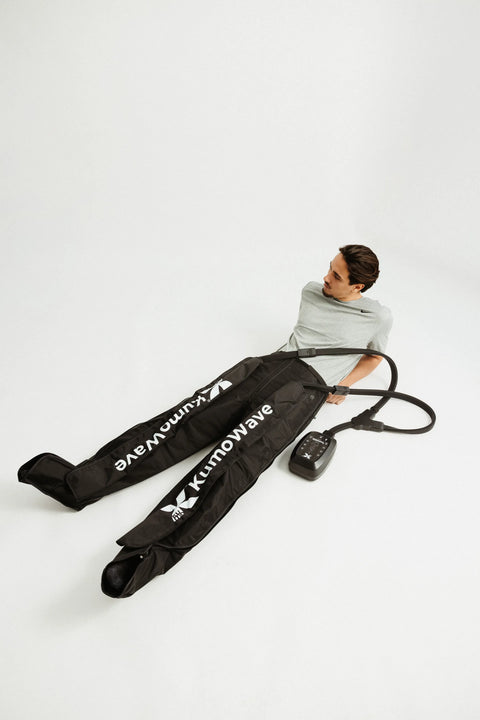
KumoWave Elite – Pressotherapy Pants
Full-coverage trousers. Ideal for lipedema, fluid retention and intensive use.
€829,00 €999,00
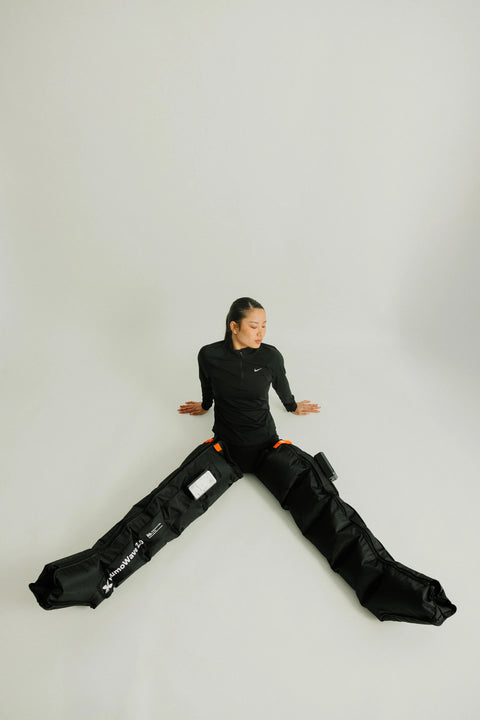
KumoWave 2.0 - Wireless Pressotherapy
Wireless, lightweight boots. Perfect for daily use and recovery.
€499,00 €599,00