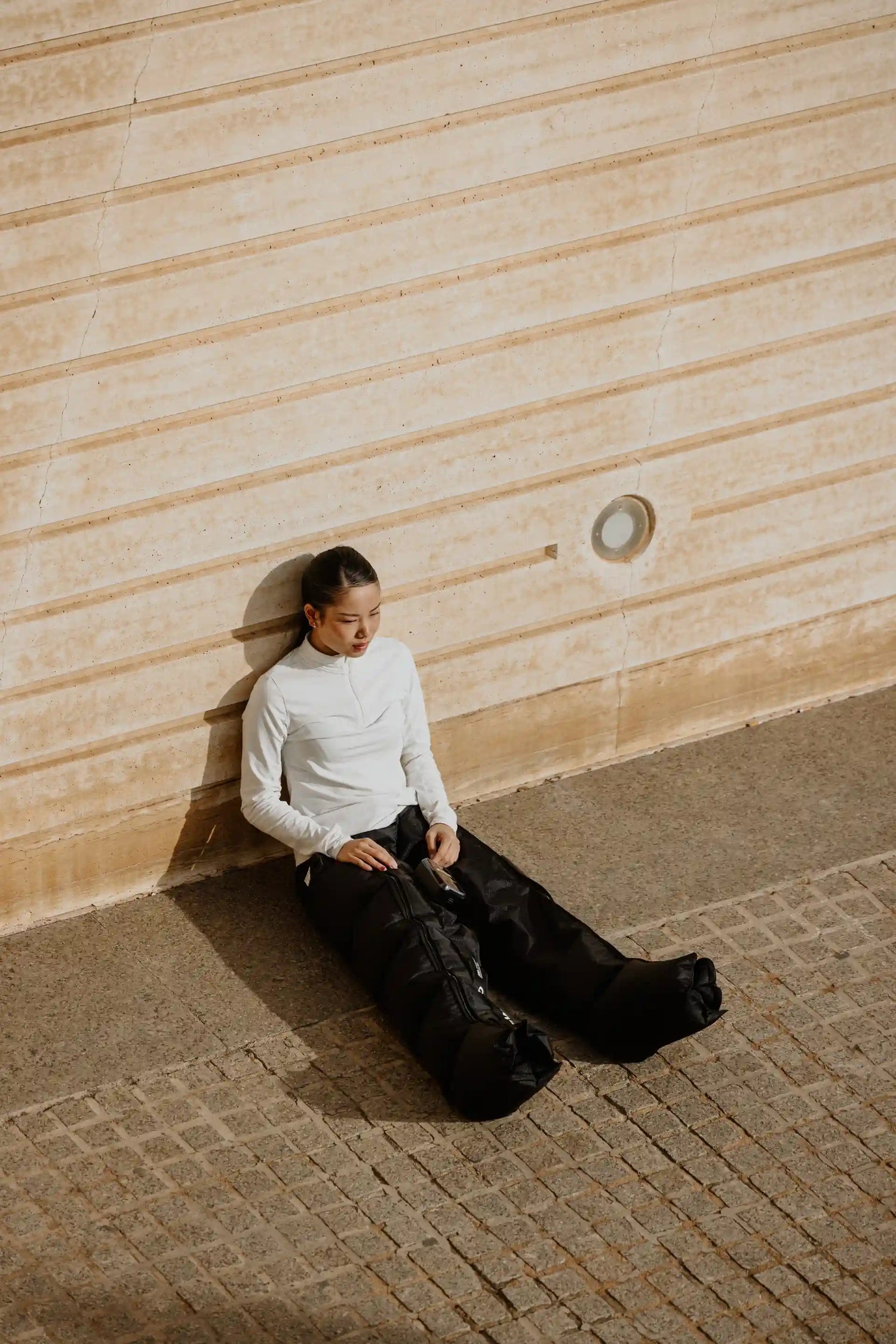
Each mode has a function.
In pressotherapy boots, the program changes the inflation sequence, the pause between chambers, and the pressure level. Therefore, a sequential cycle does not produce the same sensation or pursue the same objective as a more rhythmic or gentler one. This difference guides the use towards drainage, circulatory support, or a feeling of relief. (mayoclinic.org)
Pressotherapy at home
End the day with light legs
★★★★★ 4,8/5 · rated by verified customers
KumoWave pressotherapy boosts circulation and helps drain fluid with sequential compression, in 20-minute sessions at home.
- Boosts circulation and helps drain fluid
- Chamber-based compression, adjustable to you
- Sequential compression that mimics manual drainage
€829,00€999,00
−10% on your 1st order when you subscribe to the newsletter

For this reason, choosing correctly matters more than looking for "the strongest mode." Intermittent pneumatic compression is used as support in lymphedema and in contexts of immobility, but it is not advisable to improvise if there is severe arterial insufficiency or uncompensated heart failure. (ncbi.nlm.nih.gov)
What really changes from one program to another
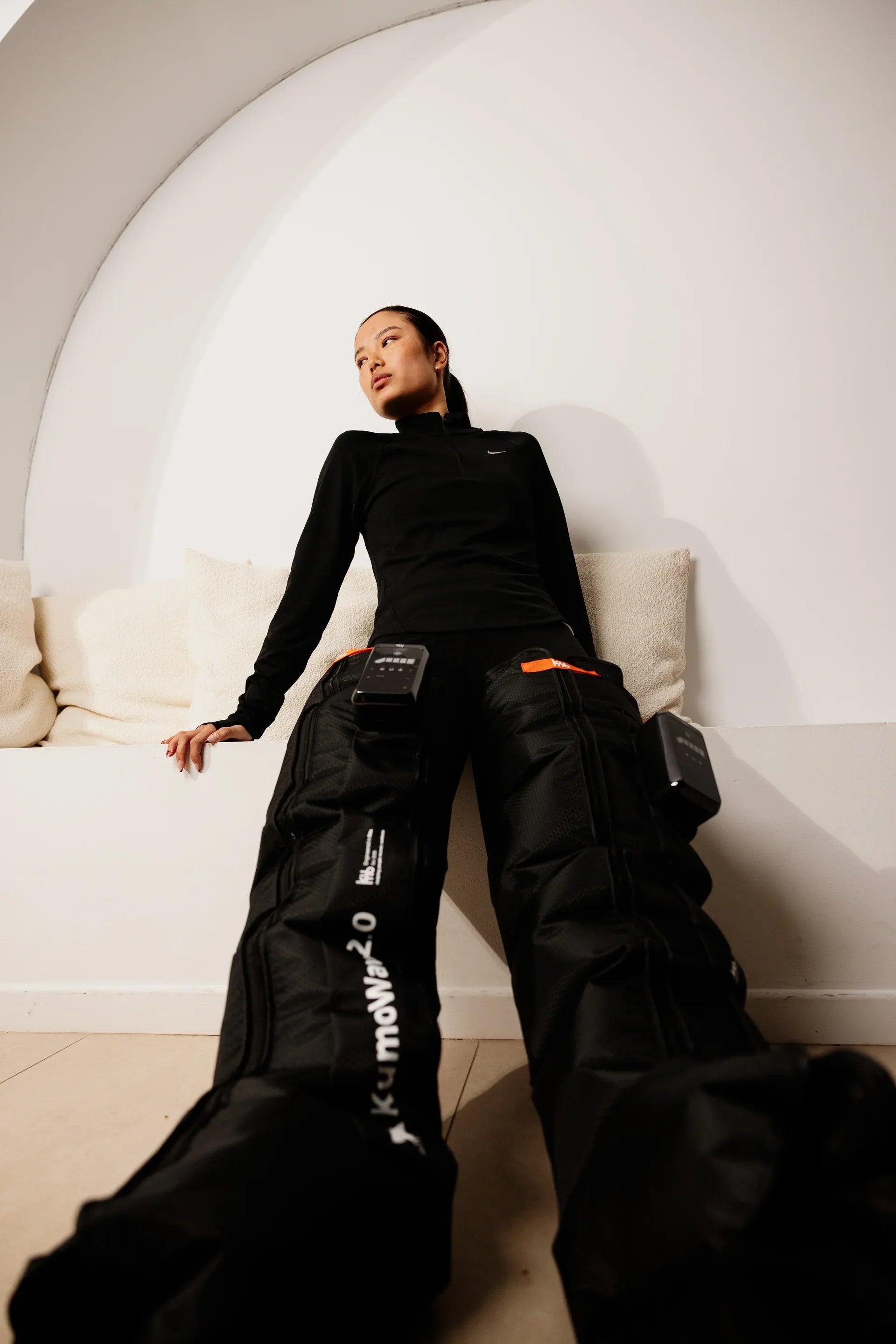
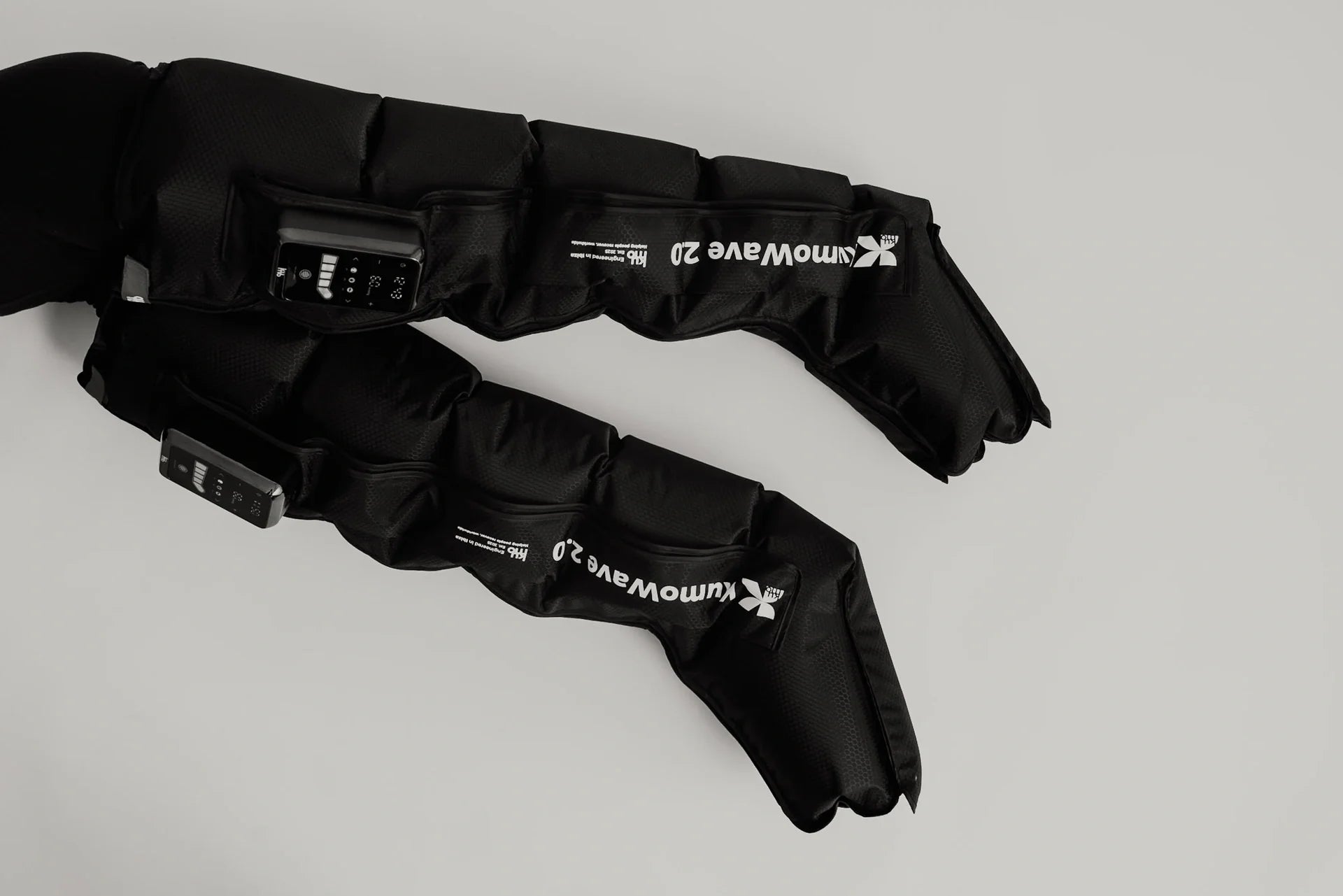
If you want to understand the technical basis, it's worth reviewing how pressotherapy boots work: one or more sleeves inflate and deflate to move the content of the leg in an orderly fashion. In practice, the program decides where the pressure starts, how long each phase lasts, and how continuous the stimulus is.
Personalized protocol · included with your purchase
Want us to tell you how to use it in your case?
With your purchase, our experts prepare a personalized usage protocol for your case: sport, circulation, fluid retention, pregnancy or lipedema.
Message us on WhatsAppOur experts reply · no obligation
More than the menu name, what matters is how the compression is distributed. If you want to delve deeper into this point, the explanation of 5-chamber pressotherapy and more uniform compression may help you.
The exact names vary by brand, but the logic is usually repeated: sequence, pressure, and time. If you understand these three variables, interpreting the controls becomes much easier. (my.clevelandclinic.org)
Quick table: what each program does
Essential comparison of the most common modes
| Program | What it's for | When to choose it |
|---|---|---|
| Sequential / Drainage | Inflates in an orderly fashion to push fluid proximally and relieve the sensation of heaviness. | Tired legs, swelling, and support for lymphatic drainage. |
| Massage / Relaxation | Generates a rhythmic inflation and deflation that resembles a leg massage. | When you seek comfort, rest, and a less aggressive experience. |
| Recovery | Supports circulation while you are at rest and seek a more comfortable return to calm. | After exertion or during periods of relief, always sitting or lying down. |
| Gentle / Customized | Allows adjustment of pressure and time to better tolerate the session. | If you are starting, are sensitive, or need to fine-tune the dosage more carefully. (pmc.ncbi.nlm.nih.gov) |
In other words: the best program is not the one that sounds most technical, but the one that achieves the response you are looking for without overdoing the intensity. Clinical literature still does not establish a universal dosage, so fine-tuning is important.
on your first order when you join the newsletter
We send you the code instantly. No spam.
How to choose the mode according to your objective
If your doubt is choosing between several profiles, this approach fits with the guide to choosing pressotherapy programs according to your objective: first define what you want to achieve, and then adjust the intensity and usage time.
Tired legs and fluid retention
For the sensation of heavy legs, the most sensible thing is usually to start with a sequential or drainage program, with moderate pressure and without pain. Intermittent compression helps move blood and can be a useful support when you spend a lot of time standing or sitting.
Lymphatic drainage
If your priority is lymphatic drainage, look for the pattern that starts at the most distal part and moves upwards, because that is the classic principle of sequential compression. In lymphedema, pressotherapy is considered a complement within a broader approach, not a sole substitute for treatment.
Recovery after training
After training, the goal of the program is to promote circulation and a feeling of relief while you are at rest. In practice, it is advisable to use it sitting or lying down, because compression devices are not designed to be walked with. Furthermore, the ideal dosage is not fixed: a 2023 study on lower limb lymphedema compared 1 and 2-hour protocols per day, but the optimal frequency remained undefined.
If you want to make it a more stable routine, the home use section helps avoid errors in placement, pressure, and consistency.
Cellulite or orange peel skin
Pressotherapy alone does not erase cellulite. In massage-based treatments, Mayo Clinic notes that there may be a slight improvement after several sessions, but the effect is usually brief; therefore, if the goal is aesthetic, the massage program should be understood as indirect support, not a definitive solution. (mayoclinic.org)
Pressure, duration, and frequency: practical rules
There is no universal recipe. Even in the clinical literature on lymphedema, the optimal duration of pneumatic compression therapy remains not well established; therefore, the most sensible reference is to start with what the manufacturer indicates and adjust according to tolerance and objective.
If your equipment allows pressure regulation in mmHg, use the minimum effective pressure and only increase if you don't feel pain, tingling, or excessive pressure. To fine-tune this point, how to adjust pressure in mmHg without overdoing it may be helpful: the idea is to achieve a useful response without making the session uncomfortable. (ncbi.nlm.nih.gov)
When not to use the program on your own
- Do not use it if you suspect deep vein thrombosis or notice a hot, swollen, and painful leg.
- Also avoid it with an active skin infection, severe arterial insufficiency, or uncompensated heart failure.
- Discontinue the session if pain, chafing, or excessive pressure appears under the sleeves.
If you want to expand your understanding of safety, reading about the benefits and contraindications of pressotherapy boots will help you better understand when to use each mode and when to save it for another time.
Express checklist for interpreting the controls
- First, check if the program is sequential, rhythmic, or gentler, as this defines the main objective of the session.
- Then, check if you can regulate the pressure and duration, as this combination adapts the session to your body.
- Finally, verify if the manufacturer allows adjustment of pressure and time, as this combination adapts the session to your objective without overdoing it.
This simple reading helps you avoid the most common mistake: confusing a comfortable program with one that is truly suitable for your goal.
Frequently asked questions
What benefits does each mode of pressotherapy boots offer and in what cases should each one be used?
The sequential or drainage mode is used when you want to move fluid and relieve heavy legs; the more rhythmic or massage mode is for resting and improving the feeling of relief; and custom programs help adjust the intensity to your tolerance. In lymphedema, sequential compression appears as useful support, while pneumatic compression is also used in contexts of immobility. The key is to choose the program according to the objective, not the most striking name.
How to choose the right mode of a pressotherapy boot depending on whether you are looking for lymphatic drainage, muscle recovery, or cellulite relief?
For lymphatic drainage, prioritize the distal-proximal sequence and pressure that is not uncomfortable. For muscle recovery, use a comfortable, rhythmic mode at rest, because the idea is to promote circulation and a feeling of relief. For cellulite, it is advisable to be cautious: pressotherapy can accompany, but it does not by itself eliminate the underlying aesthetic cause, and the results of massage-based methods are usually brief.
How long does each pressotherapy program in boots last and how many sessions per week are recommended?
There is no universal duration valid for everyone. Clinical studies on lymphedema have compared 1 and 2-hour protocols per day, but the optimal dosage is still undefined; therefore, the best reference is the device manual and how your legs respond. If you are a beginner, start with short sessions and only increase when use is comfortable and predictable.
Is it safe to use pressotherapy boots during training and what precautions are there with each mode?
It is safest to use them at rest, not while walking or moving. Cleveland Clinic indicates that these devices are used sitting or lying down and should be removed before standing up, as they could cause you to trip. Furthermore, the mode should not hurt: if pain, chafing, or an excessive pressure sensation appears, reduce intensity or suspend the session. For training, their natural place is usually after exertion, as part of the cool-down.
What are the differences between pressotherapy boots with 5 modes versus 3 modes and which is the best option for tired legs?
The practical difference is usually flexibility, not additional "magic." With 3 well-designed modes, you can cover basic drainage, relaxation, and recovery; with 5 modes, you have more room to fine-tune intensity, rhythm, and objective. For tired legs, the most important thing is that the program is sequential, comfortable, and adjustable. If the equipment allows pressure and duration adjustment, that weighs more than the number of menus.
What now?
If you want to continue refining your choice, return to the Kumo Balance home page or review the home use guide to apply each program with more criteria and less improvisation.
KumoWave pressotherapy
Choose your at-home pressotherapy
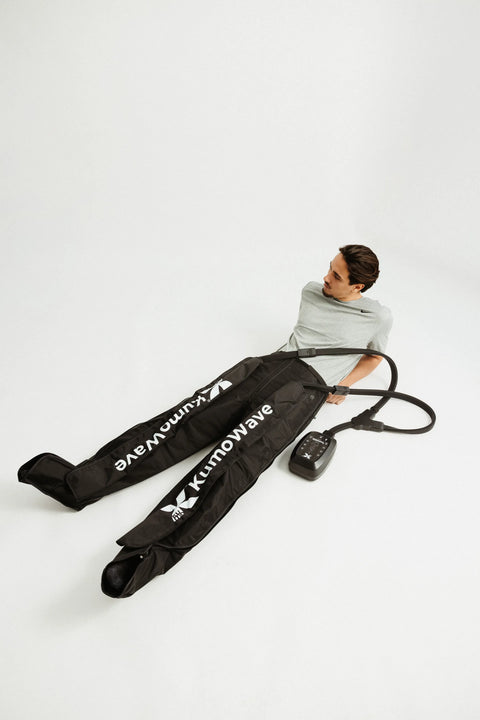
KumoWave Elite – Pressotherapy Pants
Full-coverage trousers. Ideal for lipedema, fluid retention and intensive use.
€829,00 €999,00
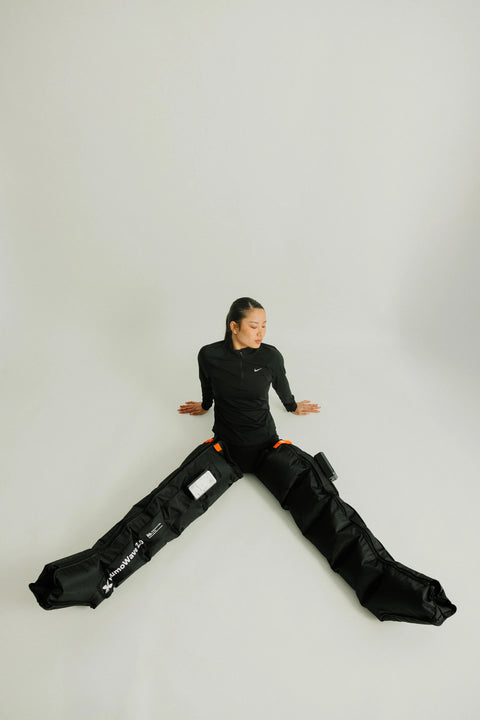
KumoWave 2.0 - Wireless Pressotherapy
Wireless, lightweight boots. Perfect for daily use and recovery.
€499,00 €599,00