
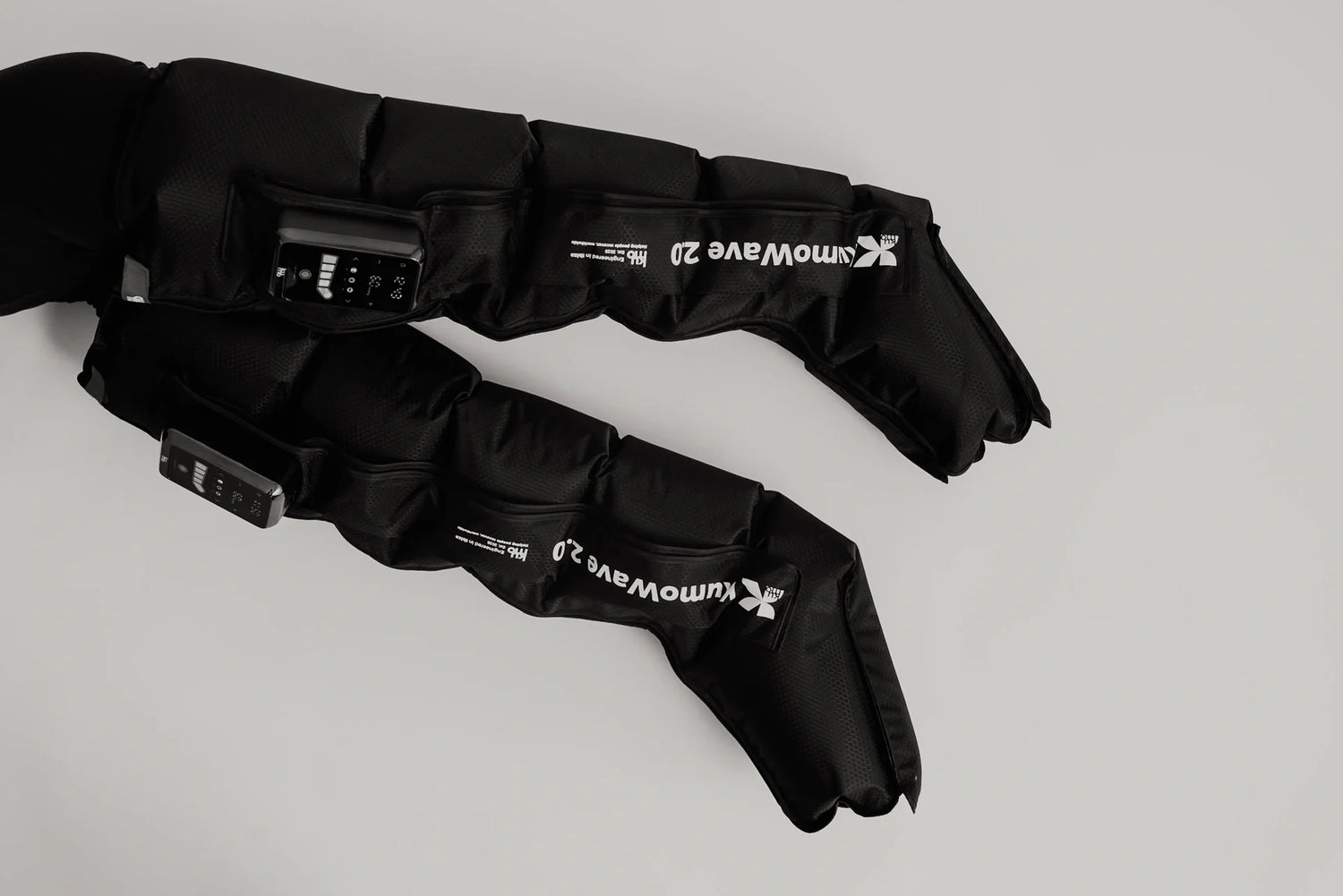
Your legs need recovery.
After a long run, it's normal to feel heaviness, stiffness, and delayed onset muscle soreness (DOMS); muscle pain usually appears one to three days after exertion and, in most cases, can be managed at home.
Pressotherapy at home
End the day with light legs
★★★★★ 4,8/5 · rated by verified customers
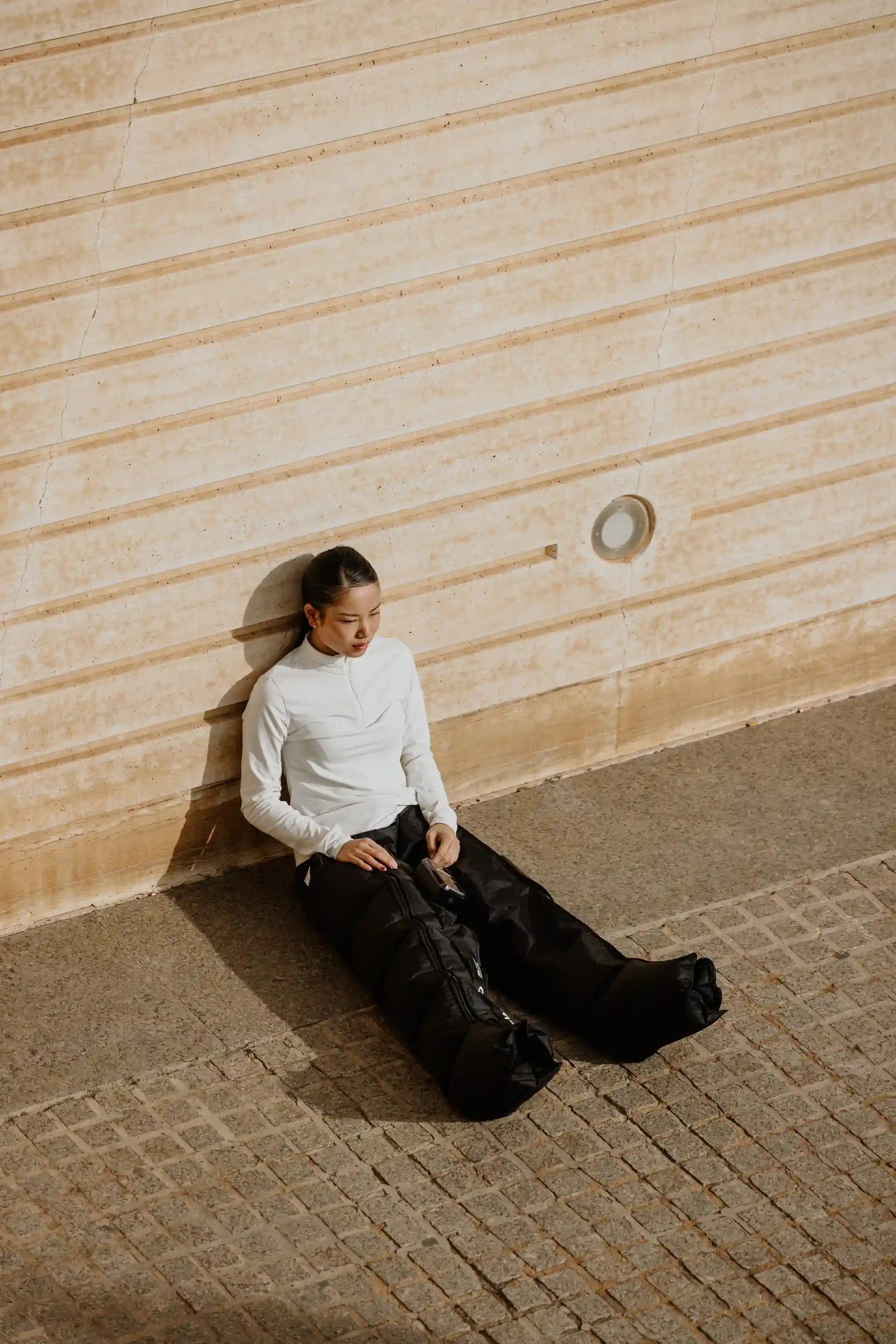
KumoWave pressotherapy boosts circulation and helps drain fluid with sequential compression, in 20-minute sessions at home.
- Boosts circulation and helps drain fluid
- Chamber-based compression, adjustable to you
- Sequential compression that mimics manual drainage
€829,00€999,00
−10% on your 1st order when you subscribe to the newsletter

The key is to intelligently reduce the load: move a little, eat well, drink enough, and get the necessary sleep for your body to repair itself. (pubmed.ncbi.nlm.nih.gov)
Effective recovery doesn't aim to erase the training, but rather to be better prepared for the next block with less fatigue and perceived pain. (frontiersin.org)
Personalized protocol · included with your purchase
Want us to tell you how to use it in your case?
With your purchase, our experts prepare a personalized usage protocol for your case: sport, circulation, fluid retention, pregnancy or lipedema.
Message us on WhatsAppOur experts reply · no obligation
What happens to your legs after a long run
Post-exertion discomfort usually occurs when the session has been long, demanding, or unusual for your legs. The pain appears progressively, affects specific muscles, and usually subsides in a few days; if it becomes acute, constant, or incapacitating, it's no longer advisable to assume it's "normal."
- Very intense or constant pain deserves attention if it doesn't improve with rest.
- Marked swelling or noticeable weakness do not fit with simple recovery discomfort.
- Dark or bloody urine is a warning sign and requires medical evaluation.
The Cleveland Clinic clinical guide on DOMS reminds us that this pain does not appear during the session, but afterward, and that it is advisable to consult if it lasts more than a week or comes with worrying symptoms.
24-72 hour recovery routine
First 30 minutes
Start with a gentle cool-down: walk for five or ten minutes, hydrate, and eat something if you're going to follow up with another session soon. The ACSM recommends recovering fluid deficit after exercise and prioritizing carbohydrates and protein to replenish glycogen and repair tissue. (pubmed.ncbi.nlm.nih.gov)
on your first order when you join the newsletter
We send you the code instantly. No spam.
If it helps, the meta-analysis on recovery techniques also supports active recovery and immersion as useful tools to reduce DOMS. (frontiersin.org)
During the day
Active recovery usually works better than staying completely stiff: a walk, very light cycling, or gentle mobility can reduce the feeling of heaviness. In the same review, compression also showed a favorable effect on DOMS and perceived fatigue. (frontiersin.org)
If you want to organize your routine without improvising, at-home pressotherapy for athletes is a good starting point, and the KumoWave 2.0 Wireless Pressotherapy shows how to incorporate sequential compression at home. (frontiersin.org)
When the dominant sensation is heavy legs or slight swelling, it's also worth understanding how pressotherapy and lymphatic drainage complement each other, especially if your goal is to add relief without adding more burden to your day. (frontiersin.org)
Before sleeping
The night counts. The review on sleep in athletes indicates that sleep deprivation increases inflammation, worsens muscle repair, and alters pain perception; therefore, a complete dinner and a quiet night are as valuable as any recovery tool. (pmc.ncbi.nlm.nih.gov)
If you've had a long outing and have another session the next day, remember that adequate carbohydrates, protein, and fluids help replenish energy and improve recovery.
What really helps and what to put into perspective
The following table summarizes the most practical options for a runner who has just finished a long run. Not all of them work equally well for everyone, but they do help prioritize without wasting time on rituals that offer little benefit. (frontiersin.org)
Practical summary of recovery tools
| Strategy | What it provides | How to interpret it |
|---|---|---|
| Active recovery | Walking or very gentle cycling helps move the legs and usually reduces the feeling of stiffness. | It's one of the most useful tools when the goal is to feel less DOMS and less fatigue. (frontiersin.org) |
| Compression or pressotherapy | Can reduce the sensation of muscle pain and perceived fatigue. | Works well as a supplement, not as a substitute for sleep, hydration, or good food. (frontiersin.org) |
| Long stretches | Provide a sense of mobility and can be pleasant. | Have not been shown to improve recovery compared to rest. (frontiersin.org) |
| Immersion or cryotherapy | Can help reduce pain and the feeling of heavy legs in the short term. | Useful if you're looking for immediate relief, especially after demanding sessions. (frontiersin.org) |
| Nutrition and hydration | Replenish fluids and provide energy for repair and rebuilding. | They are the physiological basis of good recovery, especially if you train again soon. |
| Sleep | Promotes muscle repair and improves tolerance to the next day's exertion. | Without enough rest, any strategy falls short. |
In other words: first cover the basics, and then add tools that help you feel lighter legs. Evidence doesn't promise miracles, but it does suggest that the right combination can significantly improve the recovery experience. (frontiersin.org)
Pressotherapy and runners: how it fits into the routine
Pressotherapy is especially well-suited when legs feel heavy after several hours of impact. It doesn't replace rest or fix a poorly planned training schedule, but it can be a comfortable support within a broader recovery strategy. (frontiersin.org)
If you prefer to go step by step, start with the guide to using pressotherapy at home step by step, and if you want to see the full range, the at-home pressotherapy collection brings together several options designed to integrate rest into your routine. (frontiersin.org)
The idea is not to turn recovery into a second session, but to reduce the feeling of heaviness so that the next workout goes better. In practice, this usually means less stiffness, less perceived fatigue, and greater ease in running smoothly again. (frontiersin.org)
FAQ
What to do right after a long run?
The most useful thing is to cool down with a gentle walk, drink fluids, and eat a complete meal if you're going to train again soon. The combination of carbohydrates, protein, and fluids helps replenish energy and repair tissue, while active recovery can reduce the feeling of soreness. If you're very tired, prioritize a quiet evening and a good night's sleep.
Is stretching a good idea when my legs hurt?
It can be pleasant and give you a sense of mobility, but don't expect a big effect on recovery. A 2021 meta-analysis found no clear improvement in delayed muscle soreness or recovery compared to rest. If you like to stretch, do it gently and without forcing; use it as a feeling of release, not as the main strategy to "fix" your legs.
Does pressotherapy work for heavy legs?
Yes, as support. Compression appears in recovery literature as a tool that can reduce DOMS and perceived fatigue, so it makes sense when you finish a long run with a feeling of heavy legs. However, pressotherapy does not replace hydration, food, or rest; it adds more when integrated into a well-executed routine. (frontiersin.org)
When should I worry about pain?
If the pain is very intense, constant, there is significant swelling, you have difficulty using your leg, or you notice dark urine, we are no longer talking about normal recovery discomfort. Cleveland Clinic recommends consulting if the discomfort lasts more than a week, and Mayo Clinic reminds us that intense pain with weakness and cola-colored urine can be a sign of rhabdomyolysis. When in doubt, it's best to stop and seek evaluation.
What now?
Start with a simple solution: visit the at-home pressotherapy collection and return to the Kumo Balance homepage to see how recovery fits into your routine. The goal is not to do more, but to recover better to run with less heaviness.
KumoWave pressotherapy
Choose your at-home pressotherapy
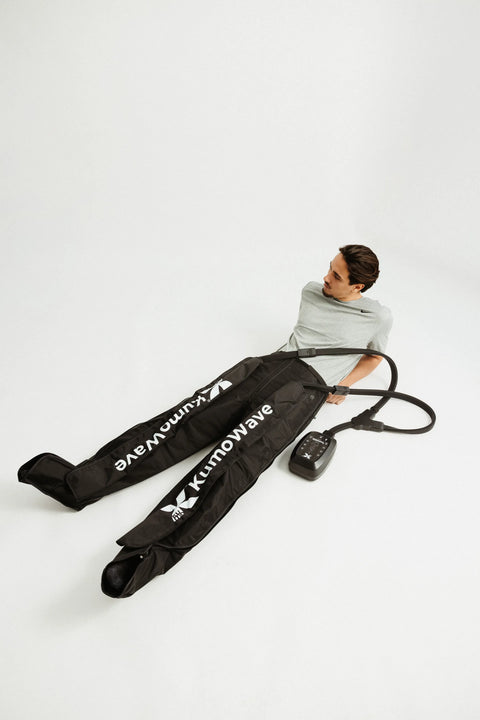
KumoWave Elite – Pressotherapy Pants
Full-coverage trousers. Ideal for lipedema, fluid retention and intensive use.
€829,00 €999,00
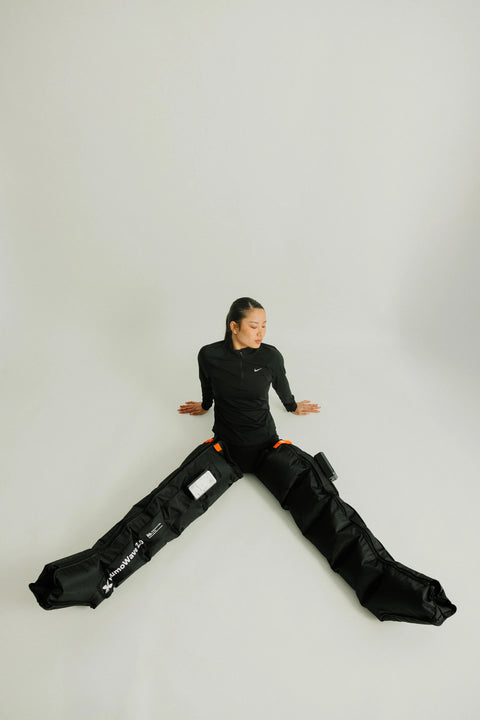
KumoWave 2.0 - Wireless Pressotherapy
Wireless, lightweight boots. Perfect for daily use and recovery.
€499,00 €599,00