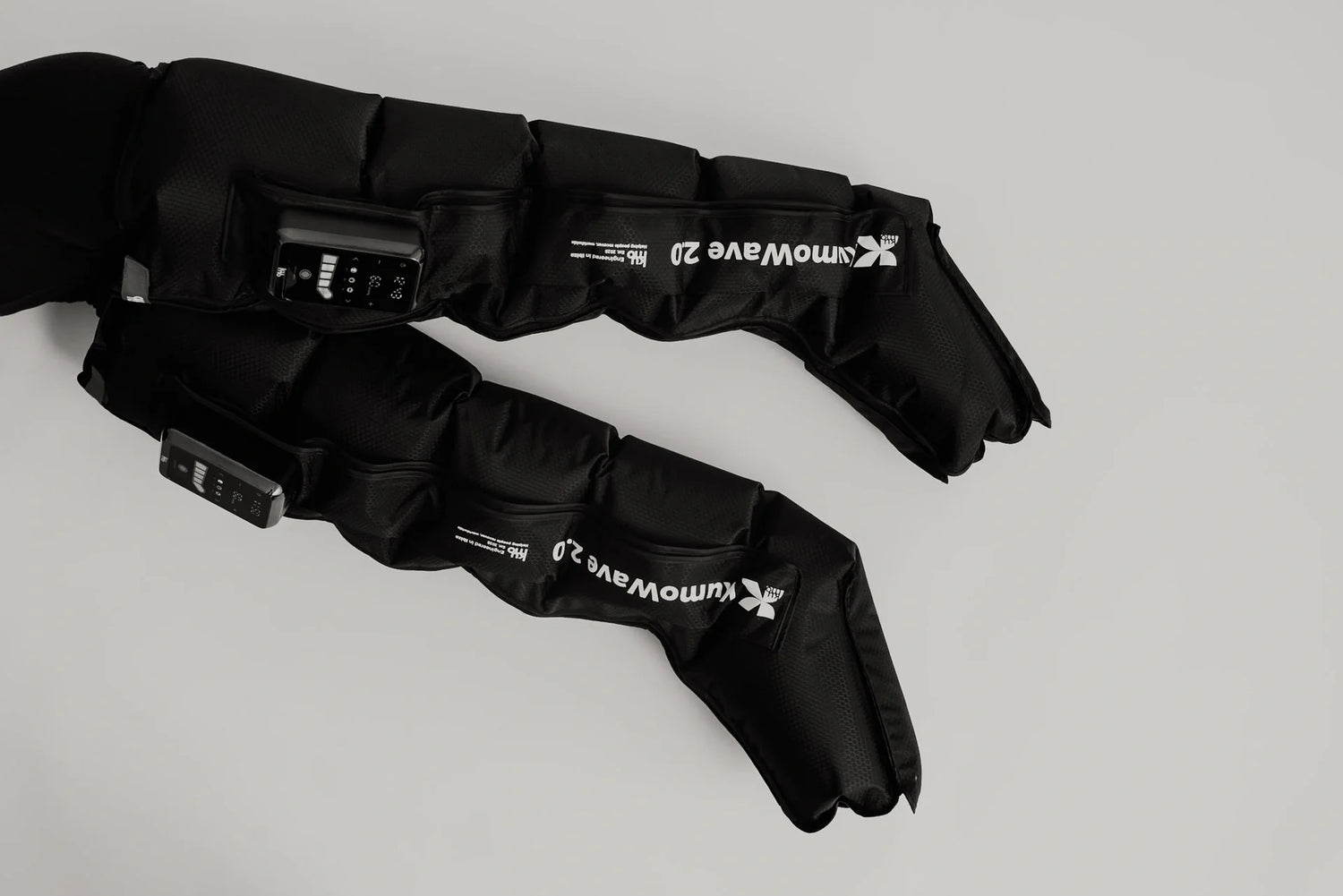
Choosing the right pressotherapy program changes everything.
If you use pressotherapy boots to make your legs feel lighter, recover better after training, or simply reduce the feeling of "heaviness," the most important thing is not to "turn it up high," but to adjust the program to your goal: sequence, intensity, duration, and time of day. In this Kumo guide, I'll explain how to read a program and how to choose it judiciously, without magic promises and with a safe and useful approach.
Pressotherapy at home
End the day with light legs
★★★★★ 4,8/5 · rated by verified customers
KumoWave pressotherapy boosts circulation and helps drain fluid with sequential compression, in 20-minute sessions at home.
- Boosts circulation and helps drain fluid
- Chamber-based compression, adjustable to you
- Sequential compression that mimics manual drainage
€799,00€999,00
−10% on your 1st order when you subscribe to the newsletter

If you want to see the brand's solutions, you can start with the official Kumo website or go directly to the pressotherapy collection.
What is a pressotherapy "program" (and why not all of them serve the same purpose)
Pressotherapy (also called intermittent pneumatic compression or IPC) uses air chambers that inflate and deflate in cycles to generate rhythmic pressure in the legs. In a healthcare context, this technology is widely used, for example, to promote venous return in people with reduced mobility (as described by medical centers such as Johns Hopkins). (hopkinsmedicine.org)
Personalized protocol · included with your purchase
Want us to tell you how to use it in your case?
With your purchase, our experts prepare a personalized usage protocol for your case: sport, circulation, fluid retention, pregnancy or lipedema.
Message us on WhatsAppOur experts reply · no obligation
In wellness and recovery, we talk about "programs" to refer to how that compression is applied. The same equipment can offer very different sensations depending on:
- Sequence: distal to proximal (ankle → calf → thigh) or "wave" patterns.
- Gradient: higher pressure at the bottom and softer at the top, or uniform.
- Inflation and deflation time: faster or slower cycles.
- Intensity: in levels or in mmHg (when the equipment allows it).
- Duration: 10–15 min, 20–30 min, 45–60 min, etc.
Simple rule: if your goal is "lightness" and comfort, look for a gentle and constant program; if your goal is "post-workout recovery," prioritize a progressive and tolerable sequence, without pain.
How to choose according to your goal: the logic behind each program
1) Tired legs and feeling of heaviness (standing work, sedentary lifestyle, heat)
Goal: improve the sensation of return and comfort, without leaving the legs "sensitive."
on your first order when you join the newsletter
We send you the code instantly. No spam.
- Recommended program: sequential/gradient (ascending wave), medium-slow rhythm.
- Intensity: low to medium (should feel firm but pleasant).
- Duration: 15–25 minutes.
- Ideal time: end of the day or after several hours sitting/standing.
In a clinical setting, IPC devices work with repeated inflation/deflation cycles; for example, Cleveland Clinic describes inflations every 20–60 seconds in the use of these systems. (my.clevelandclinic.org) At home, the idea is similar: constant rhythm + high tolerance.
2) Post-workout recovery (DOMS, "heavy legs," training volume)
Goal: reduce the perception of pain/sensitivity and accelerate the feeling of subjective recovery (without confusing it with "healing" an injury).
- Recommended program: sequential with gradient, "sweeping" upward sensation.
- Duration: 20–30 minutes (sometimes 30–40 if you tolerate it very well).
- Ideal time: within 2–6 hours after exertion, or at night.
- found improvements mainly in pain/soreness variables in the short term, while effects on "function" (performance/jumping) are smaller and vary according to protocol. ( pmc.ncbi.nlm.nih.gov ) In addition, a review (
- concludes that the evidence is limited and there is no clear superiority over other recovery methods, partly due to the low number of comparable studies. ( pubmed.ncbi.nlm.nih.gov )
How to apply it in practice: if you notice pain, tingling, or numbness when increasing intensity, that program is not "more pro," it is too much. Adjust so that the session is sustainable and repeatable.
3) "Mild" swelling/fluid retention (travel, heat, hormonal changes)
Goal: feeling of reduced inflammation and lightness, without irritating tissues.
- Recommended program: gentle sequential, with complete deflation (to let the tissue "rest" between cycles).
- Duration: 20–30 minutes; if occasional (long trip), 30–40 min may be more comfortable.
- Extra useful: slightly elevate your legs and move for 2–3 minutes afterwards (gentle walking).
In the field of lymphedema (a different medical context that requires supervision), an international consensus document describes intermittent pneumatic compression as a two-phase approach (reduction + maintenance) and warns about monitoring proximal shifts of edema if not applied correctly. (journals.librarypublishing.arizona.edu) This type of nuance is key: more pressure or more time is not always better; it depends on the objective and the tissue.
4) "Office" recovery: cold feet, heavy ankles, stiffness
Goal: activate the pumping sensation without fatigue.
- Recommended program: rather fast and gentle cycles (light "massage" sensation).
- Duration: 10–20 minutes, even in the middle of the afternoon.
This type of session is ideal if you want to build a habit: easy, pleasant, and with low friction. This is the "recovery as a lifestyle" approach that we at Kumo seek to make a routine.
5) Aesthetics (cellulite, "orange peel skin"): what to realistically expect
On the internet, pressotherapy is associated with aesthetic goals, but here it is important to be strict: results depend heavily on physical activity, diet, hydration, rest, and consistency. Pressotherapy can be a complement for a feeling of lightness and well-being, but it is not a universal "shortcut."
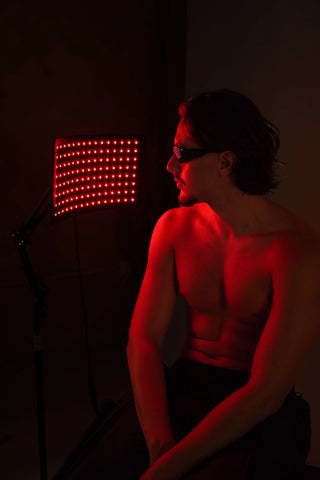
If your focus is aesthetic, the best criterion is to choose a tolerable and consistent program (e.g., 20–30 min, 3–5 days/week) and accompany it with daily movement. If you are looking to improve overall recovery, you can combine habits and technologies (for example, with LED light therapy or a massage gun) according to your routine, without making it an "all or nothing."
Key parameters: how to adjust intensity and time without making mistakes
Intensity: "firm but pleasant" (and never painful)
If your equipment allows mmHg, it is useful to know the order of magnitude that appears in clinical literature (not as a recommendation for self-treatment, but as a reference): a systematic review on lymphedema dosage (2019) reports results with 45–60 minutes and pressures between 30 and 60 mmHg in sequential programs, also indicating that the quality of evidence is limited and caution should be exercised when generalizing. (pubmed.ncbi.nlm.nih.gov)
In wellness practice, the smartest thing is usually to start below your "maximum tolerable" and only increase if you feel better the next day (not more sensitive).
Duration: more time doesn't always add up
- 10–15 min: gentle activation, "waking up" legs, frequent use.
- 20–30 min: ideal balance for tired legs and post-workout.
- 45–60 min: long sessions (more typical in specific therapeutic contexts and with criteria). (pubmed.ncbi.nlm.nih.gov)
Frequency: consistency beats intensity
If you're torn between "strong 1 day" vs "gentle 4 days," in recovery, the latter usually works better: less aggression, more adherence, better load management.
Quick table: indicative pressotherapy programs by objective
Selection guide (indicative) to adjust your session
| Objective | Program type | Suggested intensity | Duration | Frequency | Adjustment signal |
|---|---|---|---|---|---|
| Tired legs | Sequential/gradient, medium rhythm | Low–medium | 15–25 min | 3–6 days/week | If you feel sensitivity the next day, lower one level |
| Post-workout | Sequential with "ascending wave" | Medium (no pain) | 20–30 min | 2–5 days/week (depending on load) | If there is tingling/numbness, lower intensity or change program |
| Long trip / swollen ankles | Gentle sequential, complete deflation | Low | 20–40 min | As needed | If discomfort worsens, stop and consult |
| Relaxation / nightly routine | Slow rhythm, "massage" sensation | Low | 15–20 min | 4–7 days/week | Should improve rest, not over-activate you |
Common mistakes when choosing a program (and how to avoid them)
- Going too strong "because otherwise, it won't work": in pressotherapy, excess can lead to irritation, discomfort, or worse adherence.
- Long sessions without need: if your goal is "lightness," 15–25 min are usually more sustainable than 60 min.
- Using it as a substitute for movement: walking 5–10 min a day and taking active breaks multiplies the effect of any tool.
- Not checking the skin: both Johns Hopkins and other institutions recommend monitoring the skin and reporting any redness, heat, pain, or injury. (hopkinsmedicine.org)
Safety: when NOT to use pressotherapy (contraindications and warning signs)
Important: this guide is for informational purposes only and does not replace medical advice. If you use pressotherapy for a health reason (significant edema, venous insufficiency, post-operative, lymphedema, etc.), consult a professional.
Regulatory documentation and manuals for IPC devices list contraindications such as: suspected or confirmed deep vein thrombosis (DVT), congestive heart failure, active infection in the limb, severe ischemic arterial disease, among others. (accessdata.fda.gov)
Signs to stop and consult:
- Acute pain, increased swelling, or local heat.
- Persistent numbness, intense tingling, or color changes.
- Worsening skin lesions/irritation.
FAQ about Kumo pressotherapy programs
Which Kumo pressotherapy program should I choose for tired legs?
For tired legs, a sequential and progressive program (a "wave" sensation that rises from the ankle) with low-to-medium intensity and 15–25 minutes usually works best. The key is that it should be pleasant: if it squeezes so much that you want to take it off, you won't sustain it over time. If you use it at the end of the day, combine the session with 1–2 minutes of gentle walking afterwards to enhance the feeling of lightness. If sensitivity appears the next day, lower a level or reduce the duration.
Can I use Kumo pressotherapy boots every day?
In a wellness approach, many people can use pressotherapy daily if the program is gentle and the session does not cause discomfort (for example, 10–20 minutes). For post-workout recovery, it is common to alternate days depending on the load. The important thing is not "every day" but how it leaves you feeling: if you improve your feeling of lightness and rest, you're doing well; if you notice irritation, numbness, or pain, reduce intensity/frequency. And if there is a medical condition (significant edema, previous DVT, heart failure, infection), consult first. (accessdata.fda.gov)
What intensity should I choose in Kumo if I'm a beginner?
As a beginner, start with the minimum intensity or a "low" level and only increase when you are sure the session is comfortable. A good criterion is the "conversation test": if you can relax and breathe normally, perfect; if you tense up, it's probably too much. In clinical studies (in specific contexts not directly transferable to wellness), pressures in moderate ranges (e.g., 30–60 mmHg) are reported in sequential programs, but the practical recommendation at home is to prioritize tolerance and consistency. (pubmed.ncbi.nlm.nih.gov)
Kumo pressotherapy before or after training?
In general, after usually makes more sense if you're looking for comfort and a feeling of recovery (20–30 min, medium intensity without pain). Before training, if you use it, a short and gentle session (10–15 min) is better for a feeling of activation, avoiding high intensities that leave the muscles "numb." Evidence in sports is mixed: there are more consistent results in the perception of pain/soreness than in performance, and more solid comparative studies are still needed. (pubmed.ncbi.nlm.nih.gov)
When should I not use Kumo pressotherapy?
Do not use it if you have suspected or confirmed deep vein thrombosis, decompensated heart failure, active infection in the leg, or severe arterial disease, among other situations. These points consistently appear in regulatory documentation and manuals for intermittent pneumatic compression devices. (accessdata.fda.gov) If you experience unusual pain, heat, redness, or worsening swelling, stop and seek medical evaluation. For therapeutic goals (lymphedema, post-operative), professional supervision is especially important.
What's next?
If you want to integrate pressotherapy as part of your recovery routine, explore Kumo pressotherapy and combine it with simple habits (daily movement, sleep, hydration). And if you need guidance on which solution best fits your daily life, you can write to us from the contact page. For more complete recovery, you can also discover LED therapy or the massage gun within the Kumo ecosystem.
KumoWave pressotherapy
Choose your at-home pressotherapy
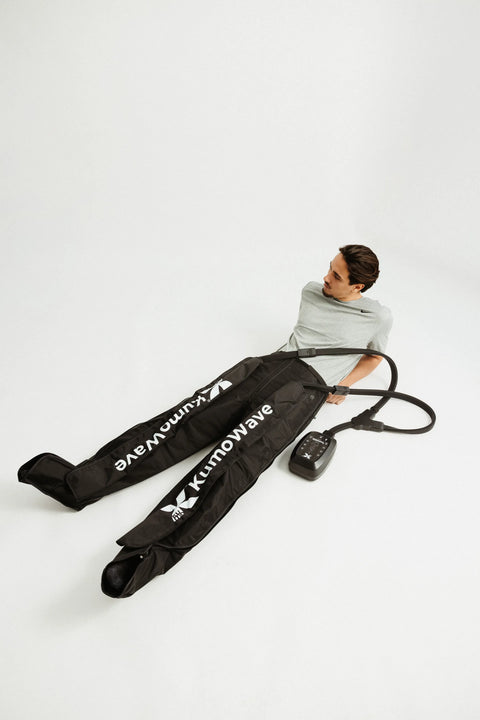
KumoWave Elite – Pressotherapy Pants
Full-coverage trousers. Ideal for lipedema, fluid retention and intensive use.
€799,00 €999,00
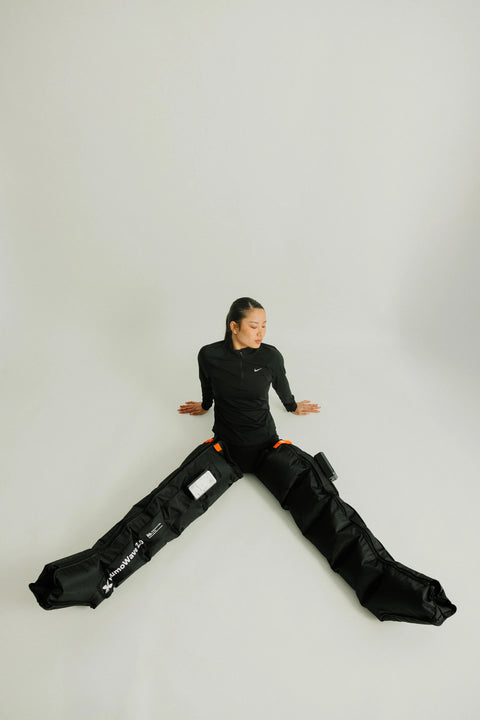
KumoWave 2.0 - Wireless Pressotherapy
Wireless, lightweight boots. Perfect for daily use and recovery.
€499,00 €599,00