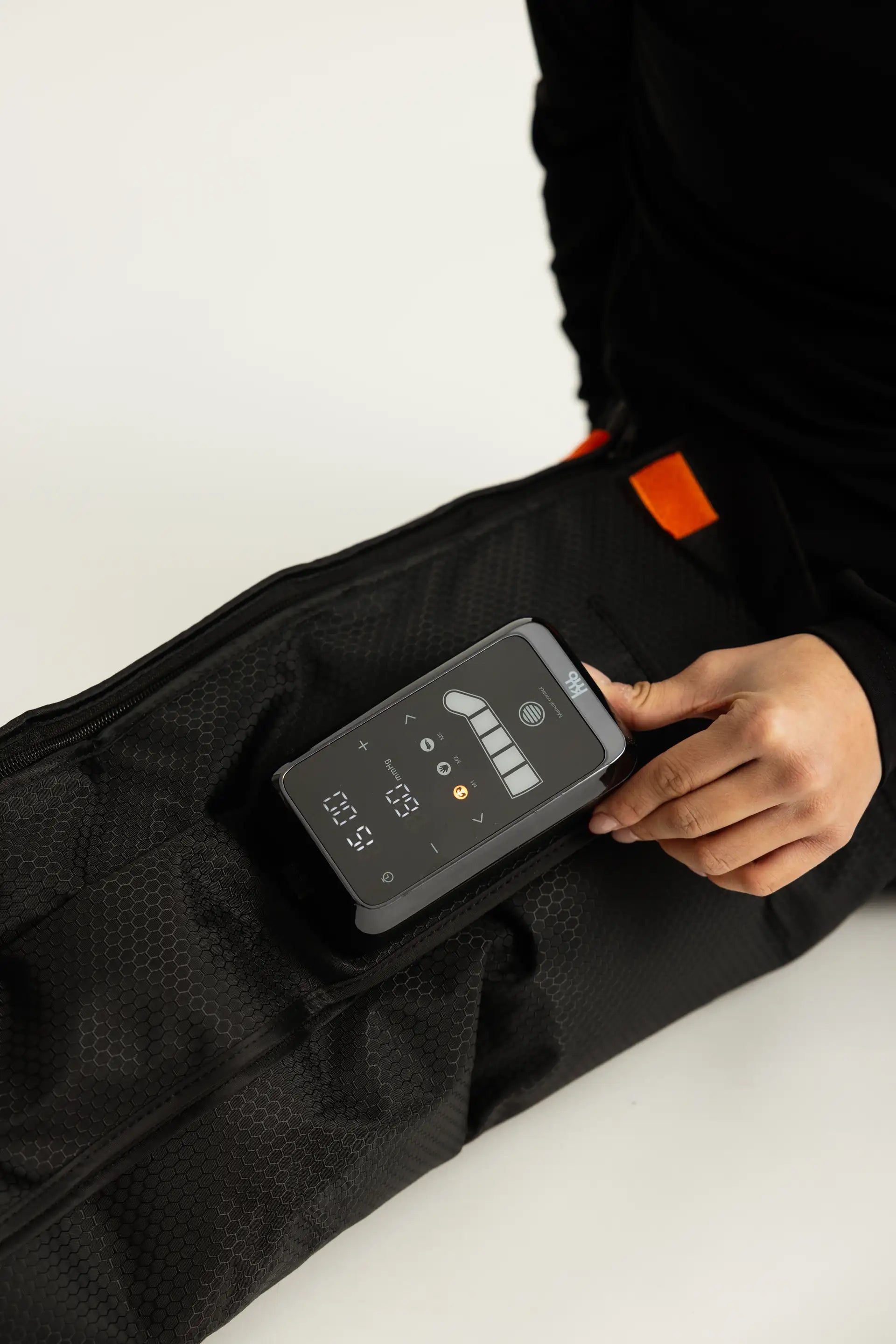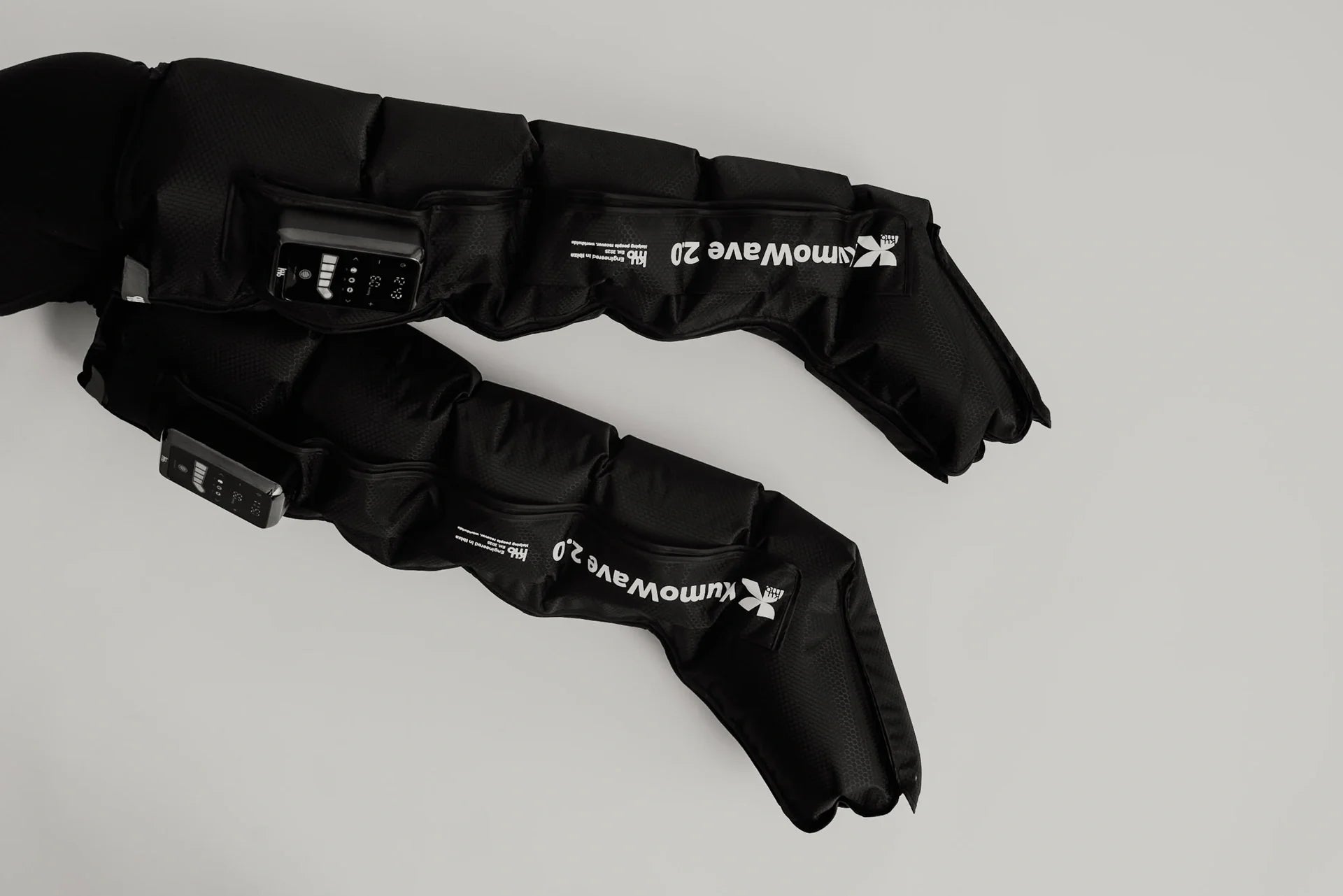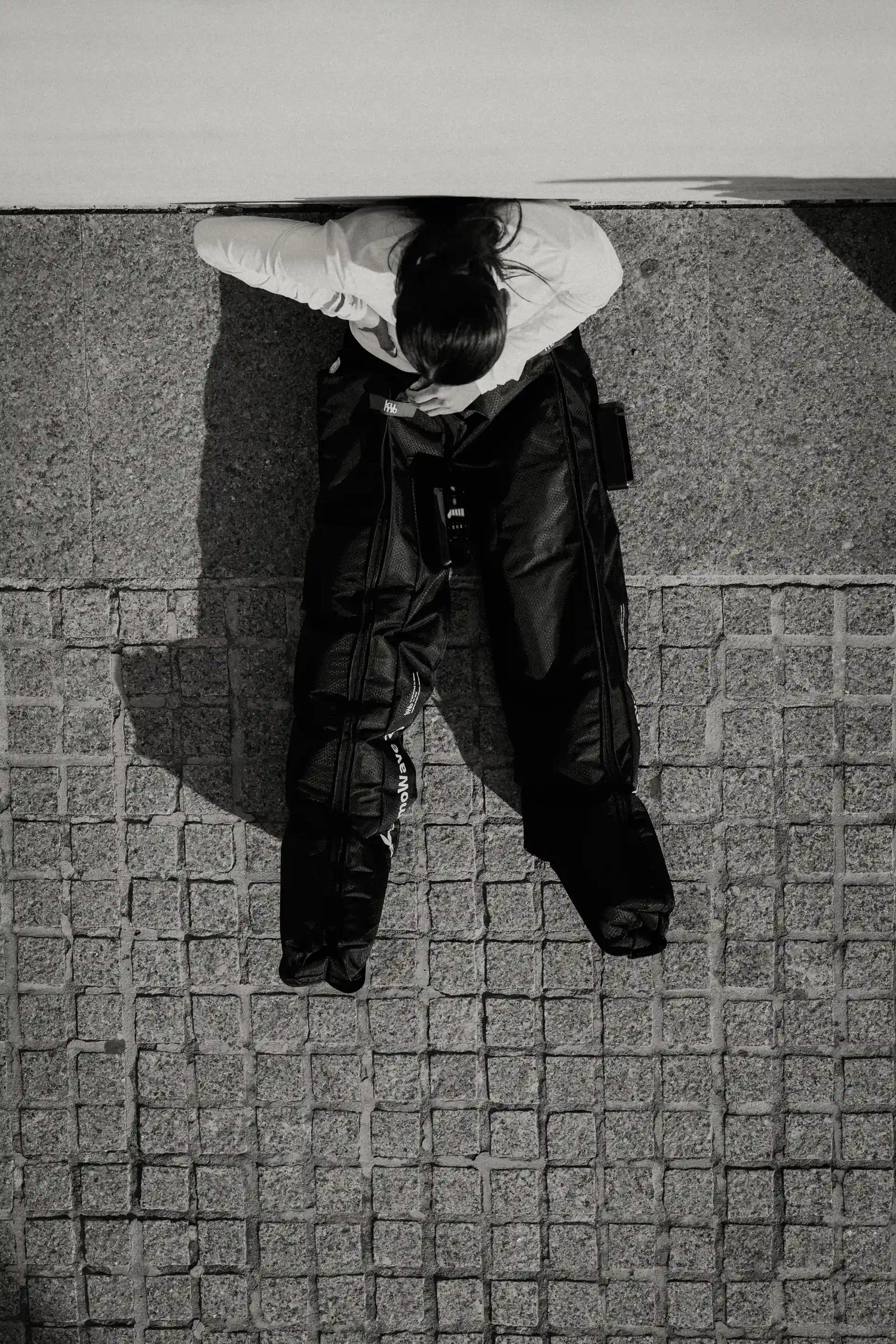
Yes: clothing can change the compression.
If you're wondering if you can do pressotherapy with tights, leggings, or pants under the boots, the answer is "it depends on the fabric and thickness." A thin, smooth, seamless layer is usually compatible (it can even improve comfort and hygiene), but thick, rigid, or textured garments can alter contact, distribute pressure unevenly, and create pressure points.
Pressotherapy at home
End the day with light legs
★★★★★ 4,8/5 · rated by verified customers
KumoWave pressotherapy boosts circulation and helps drain fluid with sequential compression, in 20-minute sessions at home.
- Boosts circulation and helps drain fluid
- Chamber-based compression, adjustable to you
- Sequential compression that mimics manual drainage
€799,00€999,00
−10% on your 1st order when you subscribe to the newsletter

In this guide, I'll explain, in a practical way, what really changes when you wear clothes underneath, what clinical sources and user manuals recommend, and how to apply it to your routine with Kumo's recovery technology. (wsh.nhs.uk)
How Pressotherapy (IPC) Works and Why Clothing Matters
What is Pressotherapy (Intermittent Pneumatic Compression)
Pressotherapy is based on intermittent pneumatic compression (IPC): boots or sleeves with air chambers inflate and deflate in cycles to apply pressure to the limb. In a healthcare setting, it is used, for example, to help prevent deep vein thrombosis (DVT) in patients with reduced mobility or after surgery; and in wellness/performance, it is used non-medically as a recovery and relief tool. (my.clevelandclinic.org)
Personalized protocol · included with your purchase
Want us to tell you how to use it in your case?
With your purchase, our experts prepare a personalized usage protocol for your case: sport, circulation, fluid retention, pregnancy or lipedema.
Message us on WhatsAppOur experts reply · no obligation
The Key is Not Just "How Much Pressure," but "How it Reaches the Leg"
Between what the machine indicates and what your leg "receives," there is an important concept: interface pressure (the actual pressure at the contact point between material and skin). Compression literature emphasizes that the "dose" depends on the material, tension, radii of curvature, bony points, and contact, and that measuring this interface pressure is essential when evaluating compression in real-world conditions. (sciencedirect.com)
Therefore, by adding clothing underneath, you can change:
- Contact (more "bridges" or gaps if the fabric is rigid or wrinkles).
- Friction and slippage (very slippery fabrics or, conversely, very "grippy" ones).
- Uniformity (seams, pockets, or zippers create areas with different pressure).
- Perception (it may feel less intense without necessarily being "worse," or it may feel more uncomfortable due to a specific point).
What Exactly Happens if You Wear Tights, Pants, or Stockings Underneath?
1) A Thin Layer Usually Has a Small Effect… and Sometimes Positive
In clinical and therapeutic settings, a light layer is often recommended for hygiene and to reduce irritation. For example, an instruction manual for a sequential compression system advises not to wear garments directly on the skin and suggests wearing "light clothing," "clean hosiery," or "stockinette" underneath, also avoiding elements that rub or damage the material (zippers, buttons, etc.). (manuals.plus)
on your first order when you join the newsletter
We send you the code instantly. No spam.
In practice, a thin, "second skin" type of tight can:
- Reduce direct friction and the risk of irritation if you sweat.
- Improve the feeling of "gliding" during inflation/deflation.
- Facilitate cleaning (the garment absorbs some of the sweat).
2) Thick or Textured Garments Can "Break" Uniformity
If the fabric is thick (fleece, neoprene, denim) or has textures (3D seams, rigid panels), it's most common for wrinkles or areas without contact to appear. In compression, when there is "bridging," the material does not hug continuously, and the pressure becomes less uniform; literature on interface pressure describes this phenomenon when discussing layers and intermittent loss of contact. (sciencedirect.com)
Furthermore, any "hard" element (zipper, button, pocket, keys) not only affects compression: it can be painful or create an undesirable pressure point.
3) Be Careful with Stacking "Compression + Compression" Without Indication
There are medical situations where graduated compression stockings are combined with IPC (e.g., in DVT prevention). A review (meta-analysis) published in 2024 concluded that GCS + IPC was more effective than GCS alone in patients after gynecological surgery. (thrombosisjournal.biomedcentral.com)
However, this does not mean that, in domestic or recovery use, it is a good idea to wear strong compression stockings underneath "by default." If you are already wearing significant compression and add IPC on top, you can completely change the sensation and pressure distribution. If your case is clinical (lymphedema, venous insufficiency, postoperative), it is prudent to follow the professional's plan.
Practical Recommendations: What to Wear (and What to Avoid) with Kumo Pressotherapy
In the KumoWave pressotherapy collection, you will see that there are different configurations (number of chambers, coverage, etc.). In general, the more "precise" and segmented the compression, the more advisable it is to maintain a simple base layer to avoid distorting contact.
Quick Table: Clothing Under Pressotherapy Boots (Pros and Cons)
| What you wear underneath | Is it usually recommended? | Why | Practical advice |
|---|---|---|---|
| Thin, smooth leggings (running/yoga type) | Yes, in most cases | Good continuous contact; less direct friction | Choose fabric without thick seams and without rigid panels |
| Thin sweatpants | Yes, if they don't wrinkle | Comfortable, but can wrinkle at the ankle/knee | Smooth out the fabric well before closing the boot |
| Jeans/denim | No | Rigid fabric: bridging, wrinkles, and hard spots | Avoid: even hospital guides advise "no jeans" |
| Thin high socks | Yes | Protects ankle/foot, improves hygiene | Avoid pronounced seams on toes or very tight elastic |
| Medical compression stockings (high compression) | Depends (better with indication) | "Compression on compression": changes dose and sensations | If you use them, watch for numbness and marks; consult if it's for a clinical reason |
Note: a leaflet from an NHS lymphedema service generally advises wearing comfortable clothing (joggers or leggings) and avoiding jeans. (wsh.nhs.uk)
60-Second Checklist Before Starting the Session
- Remove "hard points": phone in pocket, keys, zippers, buttons, thick laces.
- Choose a thin layer: smooth leggings or thin high socks usually work well. (manuals.plus)
- Smooth out the fabric: make sure there are no wrinkles at the ankles, behind the knee, or on the shin.
- Check sensations: if numbness, sharp pain, or tingling appears, stop the session and check the placement (clinical leaflets advise stopping if numbness or sharp pain occurs). (wsh.nhs.uk)
- Check the skin afterward: look for very localized redness or "line" marks typical of a seam. In IPC, it is recommended to check the skin when the device is off. (hopkinsmedicine.org)
Does Clothing Reduce Compression? The Honest Answer (Without Myths)
There Is No Universal "Percentage"
Online, it's common to read "you lose X% of pressure with tights." The reality is that there is no single figure that applies to all boots, all fabrics, and all legs, because the effective pressure depends on contact and how the system as a whole behaves. Research on interface pressure emphasizes the importance of specifying where and how it is measured, because it varies with the anatomical point and the method. (sciencedirect.com)
What We Do Know: Layers Change Pressure Behavior
In the textile-therapeutic field, it has been observed that changing the number of layers alters interface pressure and can even cause "bridging" and loss of contact in certain cases. An example described in a chapter on Lycra® compression garments showed that a double layer significantly increased the average pressure compared to a single layer, while three layers did not necessarily increase it more due to tension and bridging effects. This illustrates the point exactly: more layers do not always equal better pressure if contact becomes irregular. (sciencedirect.com)
Comfort, Skin, and Hygiene: Reasons Why "A Thin Layer" is Usually a Good Idea
IPC can generate heat and friction, especially during long sessions. In a healthcare setting, it is insisted upon to check the skin and report any pain, redness, heat, or skin damage. (hopkinsmedicine.org)
Furthermore, some user manuals specify the underlayer as a measure for hygiene and prevention of irritation, and emphasize avoiding elements that rub or damage the cuff. (manuals.plus)
In practical terms, for most home pressotherapy users:
- A thin garment (smooth leggings or thin high socks) is a good balance between contact and skin care.
- If you have reactive skin, prioritize soft fabrics (cotton or seamless technical fabrics) and reduce irritating factors (accumulated sweat, folds, aggressive elastic bands).
- If you are using IPC for a medical reason, follow the protocol indicated by your healthcare team.
Signs That Clothing Is Interfering (and How to Correct It)
- You notice "peaks" of pressure at a certain point (shin, tibial crest, behind the knee): this is usually a wrinkle or a thick seam. Solution: reposition the garment, smooth it out, and restart.
- Numbness or tingling: stop the session and check adjustment/layer; clinical material advises stopping if numbness or sharp pain occurs. (wsh.nhs.uk)
- Very clear linear marks at the end: these usually come from seams, elastic bands, or folds. Switch to a smoother layer.
- A "loose" and not very enveloping feeling even at usual intensities: there may be too much thickness, or the boot doesn't fit well due to the clothing (or size/placement). Try a thinner layer.
An Important Note About Pressure and Goals (Recovery vs. Clinical Use)
In clinical literature on lymphedema and mixed edema (e.g., phlebolymphedema), pressure ranges and limits are discussed, and it is warned that high pressures can be painful or not recommended in certain conditions (for example, recommendations not to apply pressures >60 mmHg in limb lymphedema are cited in some texts). (pmc.ncbi.nlm.nih.gov)
At the same time, in the domestic pressotherapy market, there are devices with wide ranges. On the Kumo page, for example, it is described that KumoWave 2.0 offers adjustable pressure "up to 195 mmHg" (according to the manufacturer's specification on its website). (kumobalance.com)
Practical conclusion: do not extrapolate clinical parameters to sports recovery (or vice versa). If your use is for wellness/performance, adjust progressively and prioritize comfort; if your case is clinical, use the parameters prescribed by a professional.
How to Integrate Pressotherapy into a Kumo Routine (Without Complicating Things)
One advantage of Kumo is that you can set up a more complete recovery routine by combining different technologies, without one "stepping on" the other:
- Before or after training: a pressotherapy session (with a thin, wrinkle-free layer) for a feeling of lightness and relief.
- For relaxation and rest: explore LED light therapy solutions if you are looking to support wellness habits (skin, rest, nighttime routine).
- For localized points: more specific work with KumoPulse Air for specific muscles (e.g., calves or quadriceps), without replacing rest or mobility work.
If your goal is consistency, the most important thing is not to do it "perfectly," but to make it easy to repeat: thin layer + wrinkle-free placement + quick skin check.
FAQ: Pressotherapy with Clothing and Common Questions at Kumo
Can I use Kumo pressotherapy boots with gym leggings?
Yes, in most cases, it is a good option if the legging is thin, elastic, and smooth. In fact, a clinical leaflet from a lymphedema service recommends wearing comfortable clothing like joggers or leggings and avoiding jeans, because rigid fabrics wrinkle and alter contact. Check that there are no thick seams (especially on the shin and behind the knee) and smooth out the fabric before closing the boot. If you notice pressure points or numbness, stop and reposition. (wsh.nhs.uk)
Is pressotherapy better with bare skin or with a thin layer?
For many people, a thin layer improves the experience: it reduces direct friction, helps with hygiene, and lessens irritation from sweat. A sequential compression use manual even states not to wear garments directly on the skin and suggests wearing light clothing, hosiery, or stockinette underneath, as well as avoiding zippers and buttons. The key is that this layer does not create folds or rigid areas that "break" uniformity. If your skin is sensitive, this can make a difference. (manuals.plus)
Can I wear medical compression stockings under Kumo pressotherapy?
It depends on the reason. In clinical DVT prevention, there are protocols that combine graduated compression stockings with IPC; a meta-analysis (2024) in gynecological surgery observed better prevention with GCS + IPC than with GCS alone. But in domestic recovery use, "compression on compression" can change effective pressure, increase discomfort, or generate marks if not indicated. If you use stockings by medical prescription (venous/lymphatic/postoperative), follow your professional's criteria. (thrombosisjournal.biomedcentral.com)
What signs indicate that clothing is interfering with compression?
Typical signs are: localized pain (seam or wrinkle), intense linear marks after finishing, a "peak" sensation at a point, or numbness. Clinical material advises stopping treatment in case of numbness or sharp pain, and recommends checking the skin when the device is off. The solution is almost always simple: switch to a smoother and thinner garment, eliminate folds, and avoid rigid elements (zippers/buttons/pockets). (wsh.nhs.uk)
Does pressotherapy help with muscle recovery? Is there evidence?
Evidence in sports recovery is heterogeneous depending on the protocol, timing, and population, but there are controlled trials studying IPC after damaging exercise. For example, a randomized trial published in 2021 (BMC Sports Science, Medicine and Rehabilitation) evaluated IPC against other interventions by measuring strength, pain (VAS), and serum markers (CK/LDH) after a plyometric jump protocol. This does not mean it is "magic" or indispensable, but it is an investigated field with serious methodologies. To make the most of it, prioritize consistency, comfort, and correct adjustment (including the clothing layer). (bmcsportsscimedrehabil.biomedcentral.com)
What Now?
If you want to take the next step, explore KumoWave pressotherapy and combine your routine with LED light therapy solutions or focal work with KumoPulse Air. And if you have questions about which option best suits your daily life, you can write directly from the contact page.
KumoWave pressotherapy
Choose your at-home pressotherapy
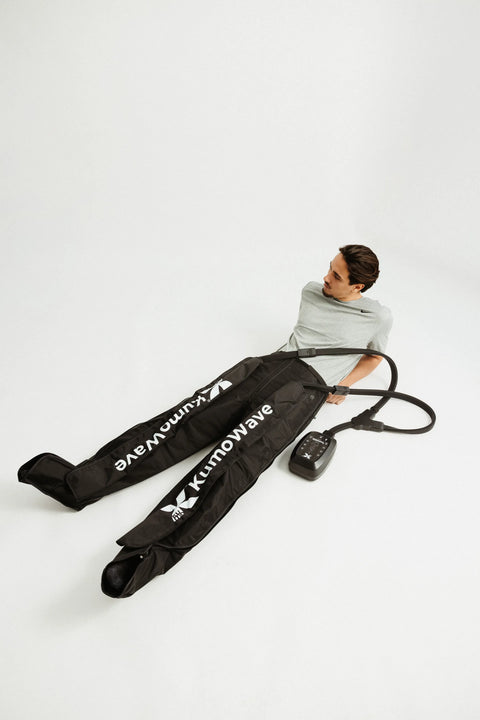
KumoWave Elite – Pressotherapy Pants
Full-coverage trousers. Ideal for lipedema, fluid retention and intensive use.
€799,00 €999,00
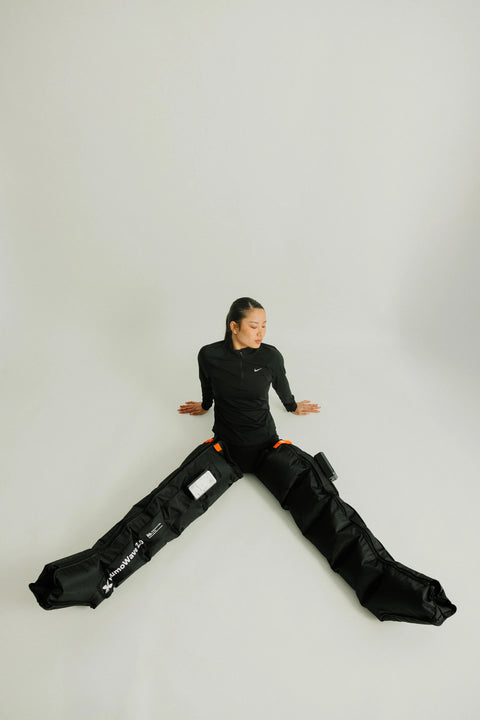
KumoWave 2.0 - Wireless Pressotherapy
Wireless, lightweight boots. Perfect for daily use and recovery.
€499,00 €599,00