

Swollen ankles shouldn't be normalized.
If you're looking for a clear guide on how to put on compression boots and how to adjust them when you notice ankle edema, here's a practical and prudent method: from skin preparation and posture, to intensity, duration, and signals to stop. In addition, you'll see how to integrate compression therapy into a more complete recovery routine with the Kumo approach. (mayoclinic.org)
Pressotherapy at home
End the day with light legs
★★★★★ 4,8/5 · rated by verified customers
KumoWave pressotherapy boosts circulation and helps drain fluid with sequential compression, in 20-minute sessions at home.
- Boosts circulation and helps drain fluid
- Chamber-based compression, adjustable to you
- Sequential compression that mimics manual drainage
€799,00€999,00
−10% on your 1st order when you subscribe to the newsletter

Before you start: understanding why ankles swell
What is edema (and why it often appears in feet and ankles)
Ankle swelling is often edema: fluid accumulation in the tissues. It can appear due to benign causes (many hours sitting or standing, excess salt, hormonal changes) or situations requiring medical evaluation (venous insufficiency, heart, kidney, or liver problems, lymphatic system disorders, certain medications). (mayoclinic.org)
A useful clue is pitting edema: you gently press with a finger for a few seconds and a temporary "mark" remains. Mayo Clinic describes this sign and other typical symptoms in the feet and ankles. (mayoclinic.org)
Personalized protocol · included with your purchase
Want us to tell you how to use it in your case?
With your purchase, our experts prepare a personalized usage protocol for your case: sport, circulation, fluid retention, pregnancy or lipedema.
Message us on WhatsAppOur experts reply · no obligation
When it's NOT "normal": warning signs before using compression therapy
Compression therapy can be pleasant for tired legs, but it should not delay a consultation if there are warning signs. Seek medical help (emergency if applicable) if any of these cases appear:
- Swelling and pain in only one leg, with warmth or color changes (possible deep vein thrombosis).
- Shortness of breath, chest pain, or palpitations along with swelling.
- Fever, marked redness, or increasing pain (possible infection or other cause).
- Swelling that spreads, prevents walking, or appears suddenly without a clear cause.
These criteria are repeated in clinical guidelines and reference resources on edema and thrombosis (e.g., NHS, Mayo Clinic, Cleveland Clinic). (nhs.uk)
What is compression therapy and how can it help with swollen ankles
The key idea: sequential intermittent pneumatic compression
Compression therapy is inspired by intermittent pneumatic compression (IPC): air chambers that inflate and deflate in sequence, generating a "push" from distal to proximal to promote venous and lymphatic return, and relieve the sensation of heaviness. A document from the National Lymphedema Network (NLN) explains its use as an adjunct in lymphedema management programs and emphasizes the importance of individualizing pressure and protocol. (nortonschool.com)
on your first order when you join the newsletter
We send you the code instantly. No spam.
Evidence and realistic expectations (what you can and cannot expect)
In clinical contexts (e.g., lymphedema), evidence is primarily evaluated as a complement to other measures (bandaging/compression, drainage, therapeutic exercise). In 2025, a systematic review and meta-analysis published in Lymphology analyzed advanced pneumatic devices (search 2010–2021), supporting their role within conservative management in selected patients. (journals.librarypublishing.arizona.edu)
In effectiveness reviews and guidelines compiled by NCBI, protocols with varying pressure ranges and durations are described, and it is emphasized that they are often used together with complete decongestive therapy, not as a "sole solution." (ncbi.nlm.nih.gov)
In sports recovery, there are also trials: for example, an RCT published in 2021 in BMC Sports Science, Medicine and Rehabilitation applied IPC with a defined protocol after eccentric exercise and measured pain and associated markers. This does not make compression therapy a treatment for medical causes of edema, but it does guide its use in wellness and recovery. (bmcsportsscimedrehabil.biomedcentral.com)
Correct placement of compression boots (ankle): safe and comfortable method
Preparation (2 minutes that make a difference)
- Check skin and sensitivity: avoid using on open wounds, severe dermatitis, or unexplained acute pain.
- Remove jewelry (anklets) and check for clothing creases on the ankle.
- Thin sock (optional): helps reduce friction and improves sensation, especially if skin is dry.
- Posture: ideally lying down or semi-reclined, with the leg relaxed and the ankle in a neutral position. If you can, slightly elevate your legs (for comfort, do not "force" elevation).
If you've been immobile for many hours (long trip, office), remember that immobility can worsen swelling; before putting on the boots, take a few gentle steps or perform ankle flexion-extension for 30–60 seconds to "wake up" the calf muscle pump (without pain). (cancer.gov)
Step-by-step: how to put on the boot without pressure points on the ankle
- Unfold the boot and locate the heel and instep area so the foot "sits" in place.
- Insert the foot all the way: the heel should be well-fitted. Avoid the ankle being "twisted" inside.
- Align the joint: ensure that the narrowest part of the boot coincides with the ankle, without the closure crossing directly over the malleolus with excessive tension.
- Close from bottom to top: first the foot/ankle, then the calf. The sensation should be firm but never painful.
- Check for creases: a crease on the instep or ankle can create an uncomfortable pressure point when the chambers inflate.
- Connect hoses/cables ensuring they are not bent (an obstruction changes inflation and sensation).
- First minute at low intensity: this is your tolerance "test." Observe toes: color, temperature, and tingling.
Quick check table (before, during, and after)
| Moment | What to check | What to do if something is wrong |
|---|---|---|
| Before | Intact skin, no acute pain; boot without creases; heel well-placed | Reposition, use a thin sock, or do not start the session if there is obvious injury/irritation |
| During | "Intense but tolerable" compression; no numbness; toes with normal color | Decrease intensity or pause; if numbness/pain persists, stop the session |
| After | Feeling of lightness; no persistent deep marks | Reduce intensity/time next time; moisturize skin if dry |
Adjusting compression therapy: pressure, programs, and duration (without improvising)
Indicative ranges in clinical literature (to understand the order of magnitude)
If your equipment shows pressure in mmHg (or if you want to understand what its "levels" mean), there are useful clinical references:
- The NLN mentions that generally recommended pressures for pneumatic pumps are usually in the range of 30–60 mmHg (with the need for individualization and caution with excessive pressures). (nortonschool.com)
- In an evidence summary at NCBI, reviewed studies used pressures of 40–60 mmHg with sessions of 0.5 to 2 hours, depending on the protocol and population. (ncbi.nlm.nih.gov)
- In research on muscle recovery, higher protocols have been used (for example, 80 mmHg in a 2021 RCT), but this does not imply that it is ideal for everyone or for edema of medical origin. (bmcsportsscimedrehabil.biomedcentral.com)
Prudent interpretation: for ankles swollen due to fatigue, sedentary lifestyle, or daily load, it is usually more sensible to prioritize tolerance and regularity rather than "going to the maximum." And if your swelling is persistent or has a diagnosis (e.g., lymphedema/venous insufficiency), the protocol should be adapted by a professional. (nortonschool.com)
How to translate this to your Kumo boots (levels) without overdoing it
At home, with compression boots oriented to wellness, use this simple rule:
- Start at the lowest level that is clearly perceptible to you.
- Maintain that level for 2–3 sessions and only increase if: (1) there is no tingling or pain, (2) no deep marks remain, (3) the subsequent sensation is lightness, not "irritated ankle."
- If you notice the ankle "more sensitive" afterward, lower a level or shorten the time.
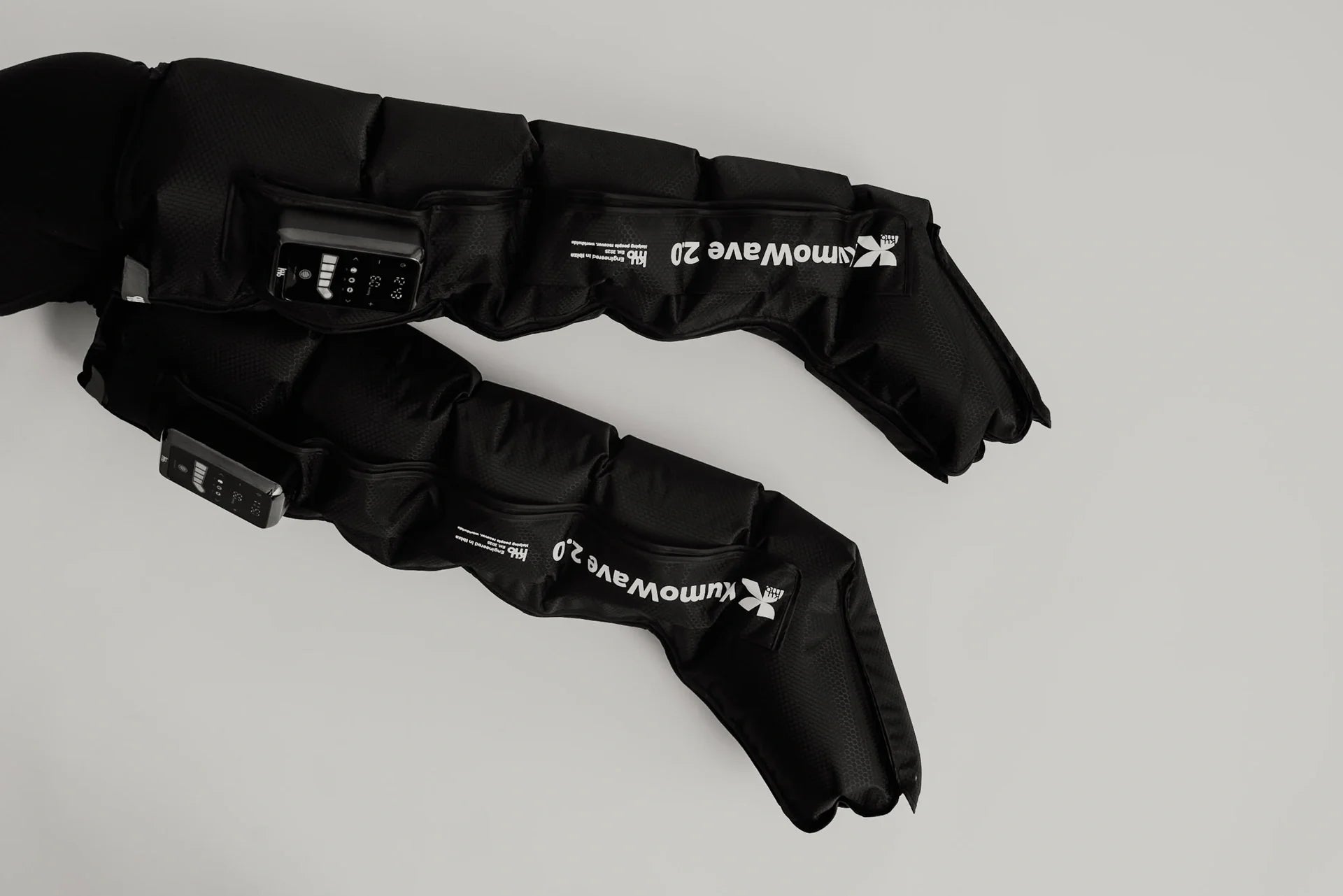
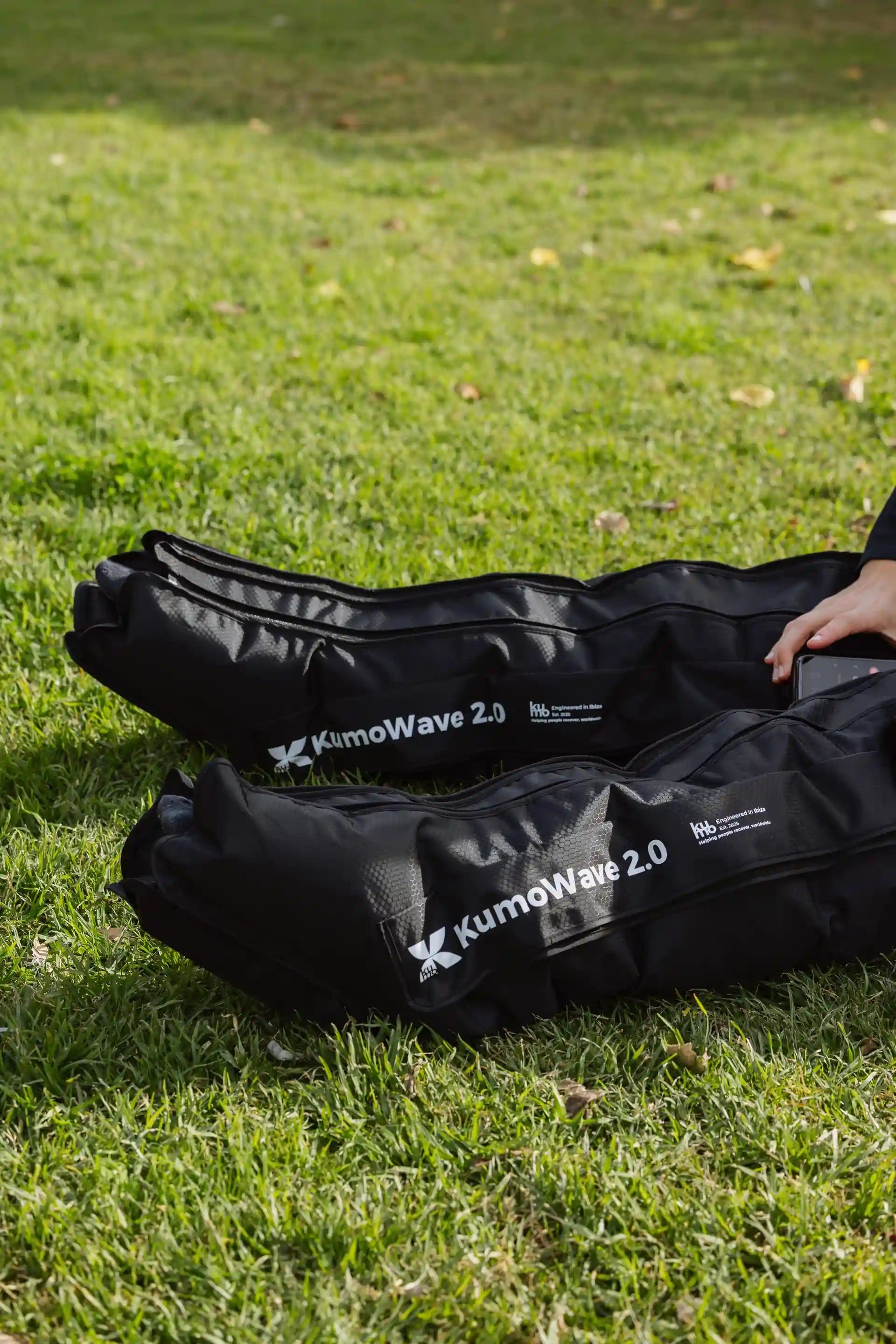
If you're interested in exploring options, you can view the Kumo compression therapy collection to integrate pneumatic compression as part of your daily recovery habits.
Duration and frequency: what usually fits into a realistic routine
In clinical materials, sessions that often last around 1 hour (NLN) and ranges of 30 to 120 minutes according to protocols (NCBI) are described. For home use oriented to comfort, many people prefer shorter and more constant sessions, adjusting according to tolerance and response. (nortonschool.com)
A practical and conservative guideline:
- First 3–5 days: 15–30 min, low intensity.
- If all goes well: increase to 30–45 min.
- Frequency: 3–6 days/week depending on your daily load (standing work, travel, training).
Common mistakes when using compression therapy on swollen ankles (and how to avoid them)
- Putting on the boot with the heel poorly seated: increases pressure on the instep and ankle. Solution: reposition until the foot is "fitted."
- Excessive pressure "because it will be more effective that way": more is not always better; prioritize tolerance and safety (the NLN warns about possible damage to superficial structures with excessively high pressures). (nortonschool.com)
- Using it with acute pain or recent injury without proper judgment: if there was significant trauma or you cannot bear weight normally, first seek evaluation and management of the injury.
- Expecting it to replace movement and habits: if you spend 10 hours immobile, compression therapy helps, but moving and changing posture is still fundamental for swelling related to a sedentary lifestyle. (cancer.gov)
Precautions and contraindications (very important)
If you suspect thrombosis (pain and swelling in one leg, warmth, color change) or have shortness of breath/chest pain, do not do a session "to see if it goes away": seek medical attention.
The NLN lists conditions that are usually considered contraindications for pneumatic compression, such as acute infection, severe peripheral arterial disease, superficial phlebitis or acute deep vein thrombosis, cancer recurrence in the affected area, or decompensated congestive heart failure. (nortonschool.com)
And if your edema is accompanied by warning signs (e.g., marked unilateralism, pain and warmth), resources such as NHS and Mayo Clinic describe these symptoms as compatible with DVT and recommend medical attention. (nhs.uk)
Kumo recovery routine: combining technologies wisely
Ankle swelling is often "multifactorial": posture, load, rest, hydration, mobility, stress. In the Kumo approach, compression therapy can be a piece within a more complete recovery ritual, without promising medical cures:
- Compression therapy: for a feeling of lighter legs after a long day, travel, or training.
- Complementary self-massage: a massage gun can help you relax your calves and soleus (key for the muscle pump), avoiding direct pressure on the ankle if it is very sensitive. If you're interested, you can find the KumoPulse Air massage gun.
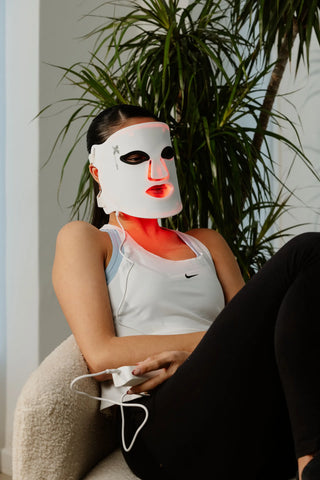
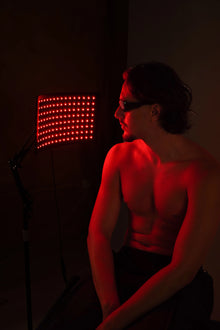
- LED light: as part of a wellness routine (for example, relaxation and self-care), you can explore LED light therapy within global recovery habits.
Concrete examples of use (typical situations)
1) Swollen ankles from standing for many hours
Goal: relieve heaviness and "decongest" comfortably.
- 5 min: gentle walk at home + 20 heel raises (if no pain).
- Compression therapy: 20–40 min, low to medium intensity (depending on tolerance).
- Afterward: 2–3 min gentle walking + water + legs elevated 5–10 min if it feels good.
2) Swelling after a flight or long trip
Goal: regain mobility and reduce stiffness due to prolonged immobility.
- First: walk 5–10 min, move ankles in circles and flexion-extension.
- Compression therapy: short session (15–30 min) to check tolerance.
- Attention: if pain and swelling appear in one leg that does not subside, or signs compatible with DVT, consult. (mayoclinic.org)
3) Heavy ankles after training (especially legs)
Goal: comfort and perceived recovery (without replacing rest).
- Compression therapy: 20–45 min, moderate intensity if pleasant.
- Avoid: tightening to the maximum "for recovery." In sports studies, specific protocols exist, but your reference at home should be tolerance. (bmcsportsscimedrehabil.biomedcentral.com)
FAQ: frequent questions about Kumo compression therapy and swollen ankles
How long should I use Kumo compression therapy if I have swollen ankles?
As a prudent starting point, use short sessions (15–30 minutes) at low intensity and observe how your ankles respond: comfort during the session, absence of tingling or pain, and a feeling of lightness afterward. In clinical settings, variable sessions are described (often around 1 hour) and broad ranges of 30 to 120 minutes depending on the protocol, but at home, it is advisable to prioritize regularity and tolerance. If the swelling is persistent, unilateral, or accompanied by pain/warmth, consult a professional.
Is it normal to feel tingling in the foot during compression therapy?
It should not be the dominant sensation. Well-adjusted pneumatic compression feels intense but tolerable. Tingling, numbness, or coldness in the toes may indicate excessive pressure, a crease in the instep/ankle, or incorrect placement (heel poorly seated). Stop the session, reposition the boot, and restart at a lower level. If tingling appears easily or you have known vascular problems, it is best to seek clinical guidance before insisting.
Can I do compression therapy if I suspect fluid retention (edema) but don't know the cause?
If the swelling is mild and clearly associated with sitting/standing for many hours, you could use it cautiously (low intensity, short session) as a comfort measure. But if there is no obvious cause, if the edema increases, affects several areas, or is associated with symptoms such as shortness of breath, chest pain, fever, or painful swelling in only one leg, medical evaluation is appropriate. Clinical resources describe many possible causes of edema, from benign factors to conditions requiring specific treatment.
Does Kumo compression therapy replace compression stockings for venous insufficiency?
They are not equivalent by definition: compression therapy is intermittent and sequential; stockings usually exert sustained compression with a gradient. In venous pathology, recommendations for compression levels (in mmHg) depend on the diagnosis and severity, and are usually individualized. If you have diagnosed venous insufficiency or venous edema, it is ideal for a professional to indicate what best combines: stockings, exercise, elevation, control of factors and, if applicable, pneumatic compression as a complement.
What should I do if the swelling returns every day even if I use compression therapy?
If it is recurrent, the key is to change the "context": active breaks (2–5 min every hour), ankle mobility, walking, elevating legs when possible, checking salt in diet if applicable, and monitoring medications/conditions that favor edema (always with your doctor). Compression therapy can help with the feeling of tired legs, but it does not correct an underlying medical cause on its own. If the swelling is new, worsens, or appears with warning signs, an evaluation is advisable to rule out important causes.
What now?
If you want to make recovery a simple habit, explore the compression boot options and complete your routine with Kumo wellness tools. And if you need guidance on which solution best fits your daily life, you can contact the team for general usage and care questions (without replacing medical advice when necessary).
Recommended external sources (reliable reading)
- Mayo Clinic: Edema (symptoms, causes, and when to seek care)
- Cleveland Clinic: Edema (2026 update)
- NHS: Deep vein thrombosis (symptoms)
- National Lymphedema Network: Position Paper (IPC, pressures, and contraindications)
- NCBI Bookshelf: Review of evidence and guidelines on IPC in lymphedema
- BMC (2021): Clinical trial with IPC in post-exercise recovery
- Lymphology (2025): Systematic review and meta-analysis on advanced pneumatic devices
KumoWave pressotherapy
Choose your at-home pressotherapy
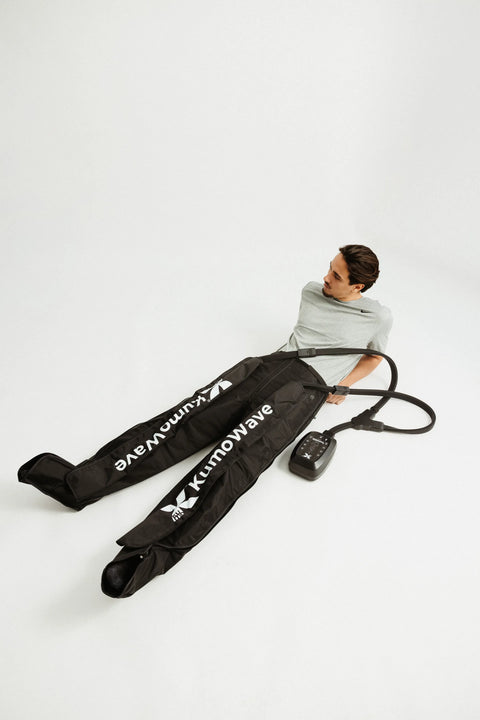
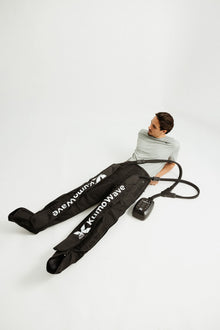
KumoWave Elite – Pressotherapy Pants
Full-coverage trousers. Ideal for lipedema, fluid retention and intensive use.
€799,00 €999,00
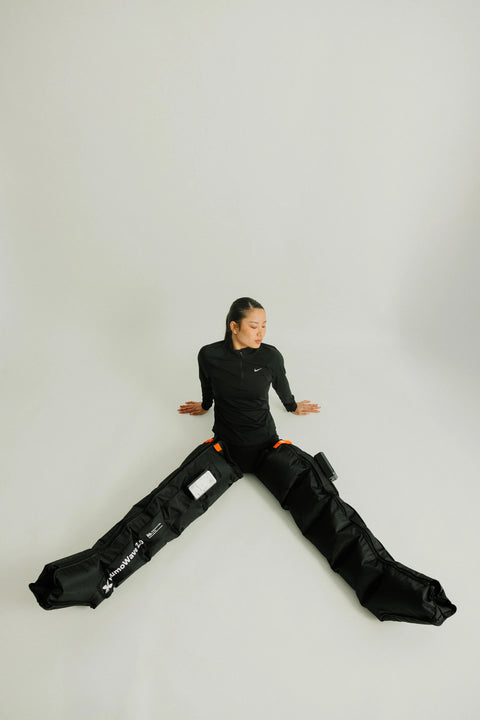
KumoWave 2.0 - Wireless Pressotherapy
Wireless, lightweight boots. Perfect for daily use and recovery.
€499,00 €599,00