The battery also needs training.
If you use wireless pressotherapy, your experience depends as much on the compression as it does on how you care for the battery: actual autonomy, stable performance, and, above all, safety. In this practical guide (without unnecessary technical jargon), you'll find charging and storage habits designed for daily use, applicable to boots like the KumoWave and any recovery device with a lithium battery from Kumo. (kumobalance.com)
Pressotherapy at home
End the day with light legs
★★★★★ 4,8/5 · rated by verified customers
KumoWave pressotherapy boosts circulation and helps drain fluid with sequential compression, in 20-minute sessions at home.
- Boosts circulation and helps drain fluid
- Chamber-based compression, adjustable to you
- Sequential compression that mimics manual drainage
€799,00€999,00
−10% on your 1st order when you subscribe to the newsletter

Why how you charge wireless pressotherapy boots matters
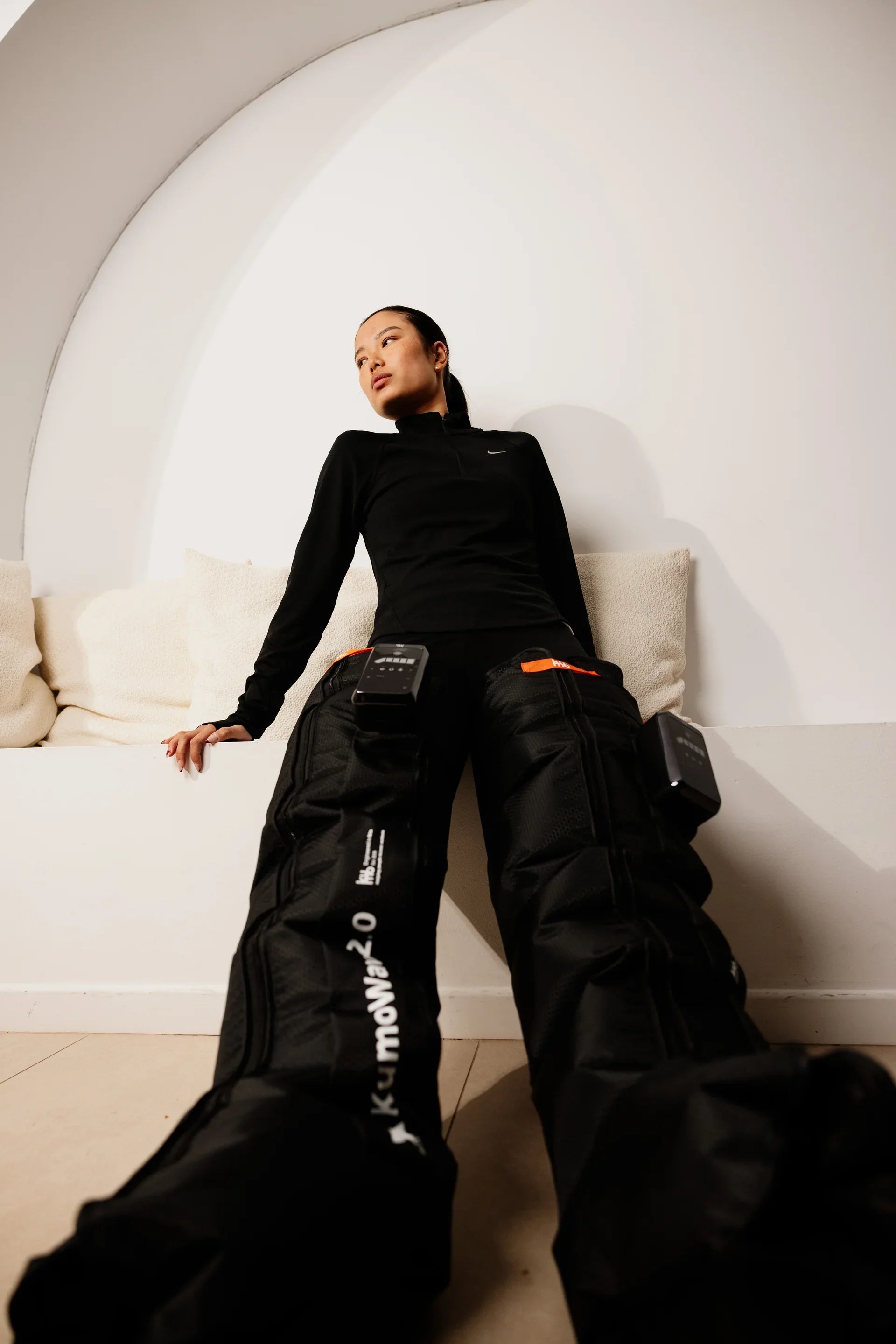
Pressotherapy boots are sequential pneumatic compression systems: they inflate and deflate air chambers in zones to promote venous and lymphatic return and relieve the feeling of heavy legs after activity or long days. When this type of system is wireless, the battery becomes the "invisible engine" of the session. (kumobalance.com)
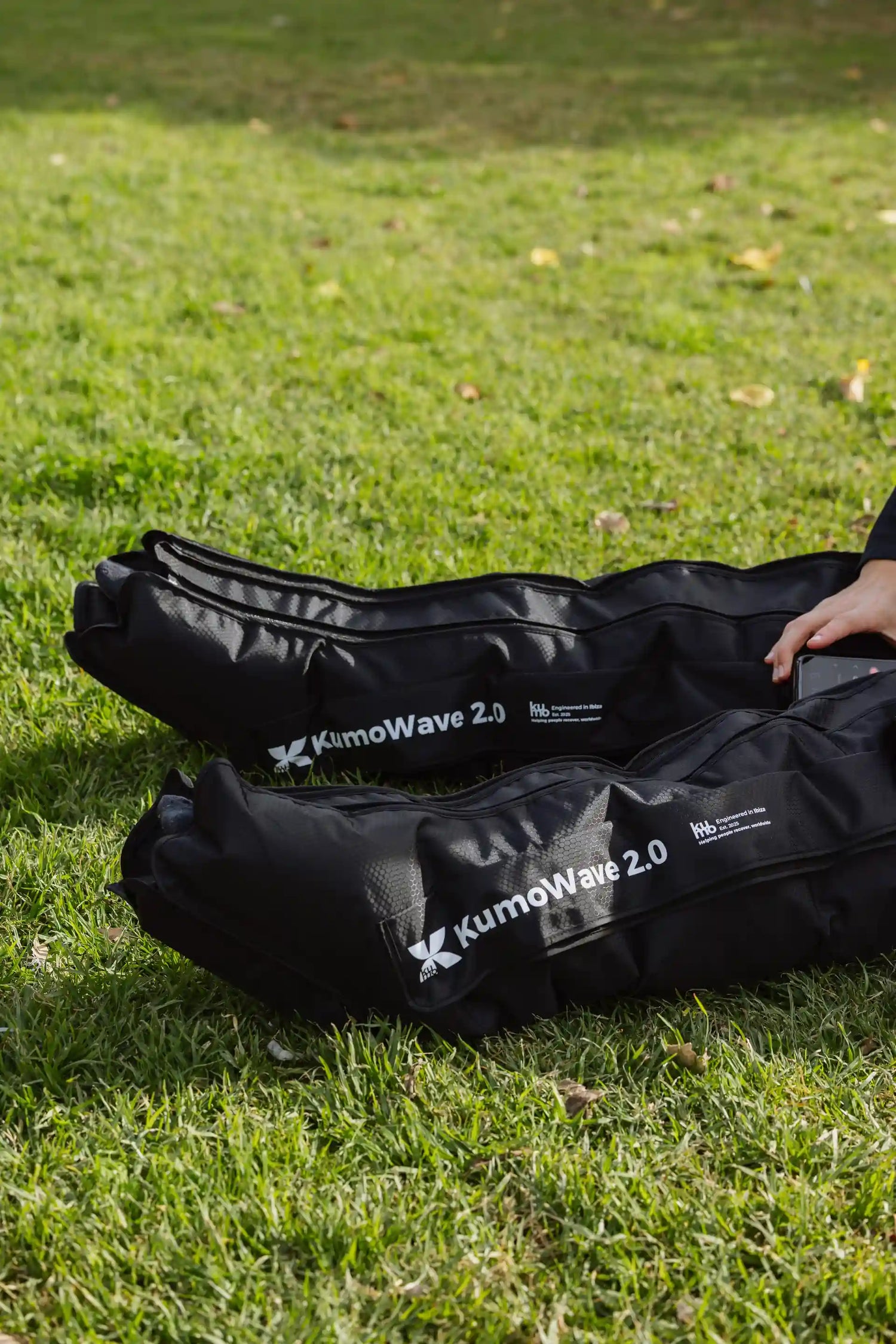
In models like KumoWave 2.0, the approach is clear: completely wireless operation with an integrated battery and portable use (home, travel, or post-workout). In addition, the manufacturer itself includes safety recommendations such as not using while sleeping. All of this makes it worthwhile to adopt consistent and safe charging habits. (kumobalance.com)
Personalized protocol · included with your purchase
Want us to tell you how to use it in your case?
With your purchase, our experts prepare a personalized usage protocol for your case: sport, circulation, fluid retention, pregnancy or lipedema.
Message us on WhatsAppOur experts reply · no obligation
The basics: what "ages" a lithium battery
Cycles vs. calendar aging (what happens even if you don't use it)
A battery degrades through two main pathways:
- Cycle aging: charging and discharging add "cycles" (not always from 0% to 100%; several partial uses can equate to one full cycle).
- Calendar aging: time also matters, especially if the battery spends many hours at a high state of charge and/or at an elevated temperature.
This difference explains why a device can lose autonomy even if you "don't use it that much": sometimes what punishes it most is leaving it always at 100% or storing it in a hot place. (mdpi.com)
The silent enemy: heat + 100% for hours
In lithium-ion batteries, heat accelerates internal reactions that degrade capacity. Apple, for example, warns that exposing the device to ambient temperatures above 35 °C can permanently damage capacity, and that charging in hot environments can worsen it. Although your pressotherapy boots are not a mobile phone, the electrochemical principle is the same: high heat + high charge for a long time is a bad combination. (apple.com)
on your first order when you join the newsletter
We send you the code instantly. No spam.
At the research level, a study by Chalmers University (published in Applied Sciences, 2018) observed that, when considering use-related aging and maintaining a lower charge level, using a 50% SOC charge limit could increase a vehicle battery's lifespan by between 44% and 130% (depending on the driving case analyzed). You don't need to charge your boots to 50% always, but the key idea is valid: avoiding high charge levels "just because" helps extend life. (mdpi.com)
Recommended charging routine (without obsessing)
Practical 20–80% rule: useful for most days
As a general habit, try to keep the battery in a "comfortable zone" most of the time (for example, between 20% and 80%). This reduces the time the battery spends in extreme states (very high or very low), which are usually more stressful. Battery University summarizes this approach as a typical strategy for prolonging the life of lithium-based batteries, especially if repeated over months. (batteryuniversity.com)
When it makes sense to reach 100%:
- If you're going out and need maximum autonomy.
- If you anticipate several consecutive sessions without a charging option.
- If the manufacturer indicates a specific calibration (and only when indicated).
Before and after a session: habits that add up
- Before: if you are below ~20–30% and want a full session without interruptions, charge for a while beforehand (no need to wait for "0%").
- After: if you've just used the boots and notice the module/battery is warm, let it cool down before plugging it in. This is a safety recommendation and good practice that appears in institutional guides for lithium batteries. (cmu.edu)
- If you're not going to use them in 24–48 hours: it's not mandatory to "top up" to 100%; maintaining a medium level is usually kinder to the battery.
Overnight charging: best to avoid for safety (if you can)
Many modern batteries include control electronics (BMS) to reduce overcharge risks, but several safety guides still recommend not charging lithium-ion devices without prolonged supervision and not leaving them charging while you sleep. If your routine only allows you to charge at night, prioritize doing so in a safe place (see safety section) and following the manufacturer's instructions. (dhses.ny.gov)
Table: charging habits according to your week
| Scenario | Objective | Recommended charging habit | Why it works |
|---|---|---|---|
| Frequent use (3–6 sessions/week) | Stable autonomy + less wear | Short, frequent charges; avoid extremes (e.g., 20–80%) | Reduces stress from high SOC and deep discharges |
| Occasional use (1–2 sessions/week) | Always "ready" | Don't always store at 100%; recharge the day before if needed | Fewer hours at maximum SOC |
| Travel / competition | Maximum autonomy | Full charge just before leaving; avoid heat during transport | 100% is useful when you really need it |
| Several-week break | Preserve battery health | Store at medium charge (≈40–60%) and in a cool/dry place | Less calendar aging |
Safety when charging pressotherapy with battery
The charging location matters more than it seems
To reduce risks associated with lithium-ion batteries:
- Charge on a hard, flat, and dry surface.
- Avoid charging on a bed, sofa, or near textiles (blankets, clothes).
- Keep away from liquids, direct heat, and sun.
These types of recommendations appear in official safety guides (for example, avoiding charging on a bed or under pillows and choosing a safe and clear area). (dhses.ny.gov)
Kumo Reminder: in addition to charging, safety during use also counts. KumoWave 2.0 explicitly states do not use while sleeping. Always follow your model's recommendations. (kumobalance.com)
Temperature: when NOT to charge
Two simple rules:
- Avoid charging in extreme heat: above ~35 °C ambient, the risk of degradation increases; furthermore, the device may limit charging to protect itself. (apple.com)
- Avoid charging in extreme cold: some safety guides recommend not charging below 0 °C and not above ~40 °C (105 °F). (dhses.ny.gov)
Chargers, cables, and outlets: "compatible" isn't always "safe"
With recovery devices, it's tempting to use any cable/adapter "that fits." Better habit:
- Use the included charger or one approved by the manufacturer.
- Avoid dubious quality adapters.
- Do not connect the charger to overloaded power strips if you can avoid it; prioritize a wall/stable outlet (according to some institutional guidelines). (dhses.ny.gov)
As a general framework, UL (a recognized safety organization) recommends using properly tested batteries/chargers and following the manufacturer's instructions for storage, use, and charging. (ul.com)
Warning signs: when to stop and not "force"
Stop using/charging and request a review if you detect:
- Swelling, deformed casing, or cracks.
- Strange odor, smoke, sparks, or excessive heat.
- Autonomy that plummets in a few uses (without a change in routine).
- Charger/cable that gets too hot or makes poor contact.
The recommendation to inspect for damage and not modify/disassemble batteries appears in official safety guides. (dhses.ny.gov)
Storage and transport (home, backpack, and airplane)
If you won't use the boots for weeks: how to store them
A very effective (and little-known) habit is the charge level at which you store the device. For prolonged storage, Apple recommends not storing it fully charged or fully discharged, but around 50% and in a cool, dry place. It even suggests recharging to ~50% every six months if stored for a long time. The idea is simple: avoid deep discharge and avoid sustained high SOC. (apple.com)
Applied to battery-powered pressotherapy, the practical advice is:
- Leave the equipment around 40–60% before storing it.
- Store in a cool, dry place out of direct sunlight.
- Check the level every few weeks if the device remains unused for a long time.
Traveling by plane with wireless pressotherapy: quick checklist
Exact rules depend on the airline and battery type (and can change), but some principles are very consistent:
- The FAA reminds that lithium batteries and spare batteries/power banks must be carried by the passenger in the cabin (and if baggage is checked at the gate, they must be removed and carried with you). (faa.gov)
- IATA, in its guide for travelers, also indicates that lithium devices and batteries should be carried in carry-on baggage and that loose batteries must be protected to prevent short circuits. (iata.org)
- A common threshold is the 100 Wh limit for lithium-ion batteries without approval, and up to 160 Wh with operator approval in certain cases (according to IATA documentation). (iata.org)
How to find Wh (Watt-hour) if you only see mAh: Wh = (mAh × V) / 1000. Example: a 10,000 mAh battery at 7.4 V would be 74 Wh. If your device shows Wh on the label, use that data (it's what airports usually ask for).
- Before flying: check the label/manual for Wh, and confirm your airline's policy.
- In the cabin: carry the equipment where you can access it; avoid bumps and pressure on the module.
- Protection: if carrying extra batteries (if applicable), cover contacts/terminals to prevent short circuits.
Integrating the battery into your Kumo recovery routine (without running out of charge)
The key to making recovery a habit is making it easy. If you're building your routine with Kumo, a simple strategy is to assign "charging times" just as you assign "recovery times." For example:
- After the session: let it cool, charge for 20–30 min while you shower/eat dinner.
- Rest day: a short maintenance charge (if needed), without always aiming for 100%.
- Before traveling: full charge as close to departure as possible (to avoid spending hours at 100%).
If you also combine tools, you can alternate consumption/times: pressotherapy for legs and, at another time, resources like LED light therapy or a specific session with KumoPulse Air. This way you distribute recovery and avoid depending on a single "long" session when the battery is low. (kumobalance.com)
If you want to explore pneumatic compression options, you can view the brand's pressotherapy collection and choose the format that best suits your routine (home, travel, post-workout). (kumobalance.com)
FAQ: common questions about battery-powered pressotherapy and Kumo
Is it bad to leave my Kumo boots charging all night?
It usually won't "break" the battery immediately because many devices incorporate charge management, but it can be suboptimal for two reasons: safety and wear from remaining at a high state of charge for many hours. Several safety guides recommend not leaving lithium-ion devices charging without prolonged supervision or while you sleep. If you ever need to charge at night, do so in a clear area, on a hard surface, away from textiles, and following the manufacturer's manual. (dhses.ny.gov)
What is the "ideal percentage" to store a Kumo pressotherapy device if I won't use it for a while?
For prolonged storage, the most recommended approach is usually an intermediate charge (approx. 40–60%). A clear reference is Apple's guide for lithium batteries: avoid storing them fully charged or fully discharged for long periods and leave them around 50% in a cool, dry environment. In wireless pressotherapy, this helps reduce calendar aging and prevents deep discharge if weeks pass without use. (apple.com)
Can I charge the pressotherapy device right after using it?
Better habit: wait for it to cool down. After a session, it's normal for the module or battery area to be warm. Some best practice guides for lithium batteries recommend not charging immediately after use and letting the battery return to ambient temperature. This reduces thermal stress during charging and can help both safety and lifespan. If your Kumo model includes specific instructions, always prioritize those instructions. (cmu.edu)
What should I do if the battery in my Kumo boots lasts less and less?
First, review habits that usually reduce autonomy: charging and storing in very hot conditions, leaving the device always at 100% for hours, or charging in poorly ventilated environments. Also, inspect the equipment for physical signs (deformation, cracks, abnormal heating). If everything is correct but autonomy is clearly decreasing, it could be normal degradation over time or a charger/battery problem. The safest recommendation is to follow the manual and, if you need assistance, contact support for a review. (dhses.ny.gov)
Can I take my battery-powered pressotherapy boots on a plane?
In general, devices with lithium batteries are best carried in carry-on baggage, and spare batteries/power banks are usually restricted to the cabin. The FAA reminds that, if a carry-on bag is eventually checked at the gate, spare batteries must be removed and kept with the passenger. IATA also publishes guides for travelers and mentions common Wh limits (for example, 100 Wh without approval and up to 160 Wh with approval in certain cases). Before flying, check your equipment's Wh and your airline's policy. (faa.gov)
What's next?
If you want to make recovery a sustainable routine, start with the basics: consistent sessions and safe charging habits. To discover Kumo's recovery ecosystem (pressotherapy, LED light, and massage), visit the store at kumobalance.com and, if you need guidance on use, maintenance, or compatibilities, contact us through the contact page. (kumobalance.com)
KumoWave pressotherapy
Choose your at-home pressotherapy
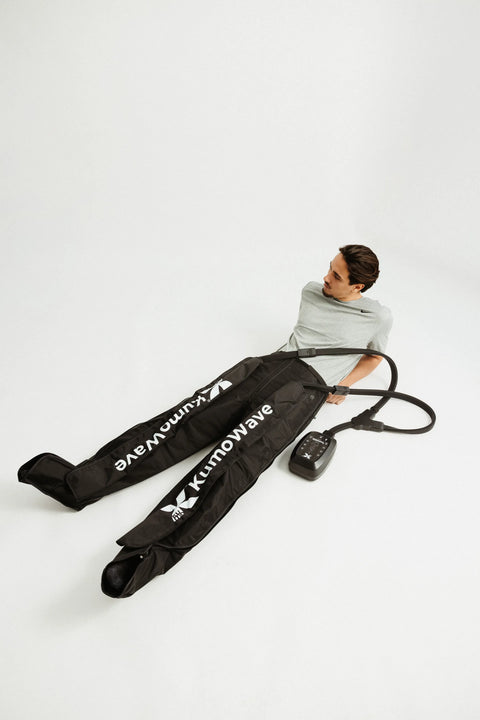
KumoWave Elite – Pressotherapy Pants
Full-coverage trousers. Ideal for lipedema, fluid retention and intensive use.
€799,00 €999,00
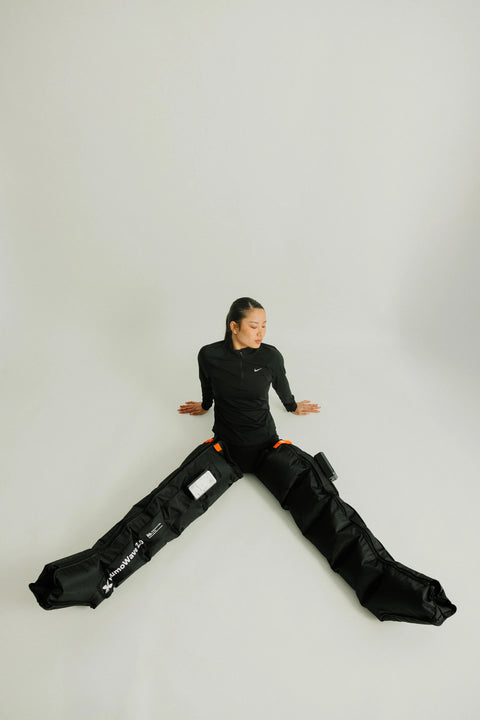
KumoWave 2.0 - Wireless Pressotherapy
Wireless, lightweight boots. Perfect for daily use and recovery.
€499,00 €599,00