
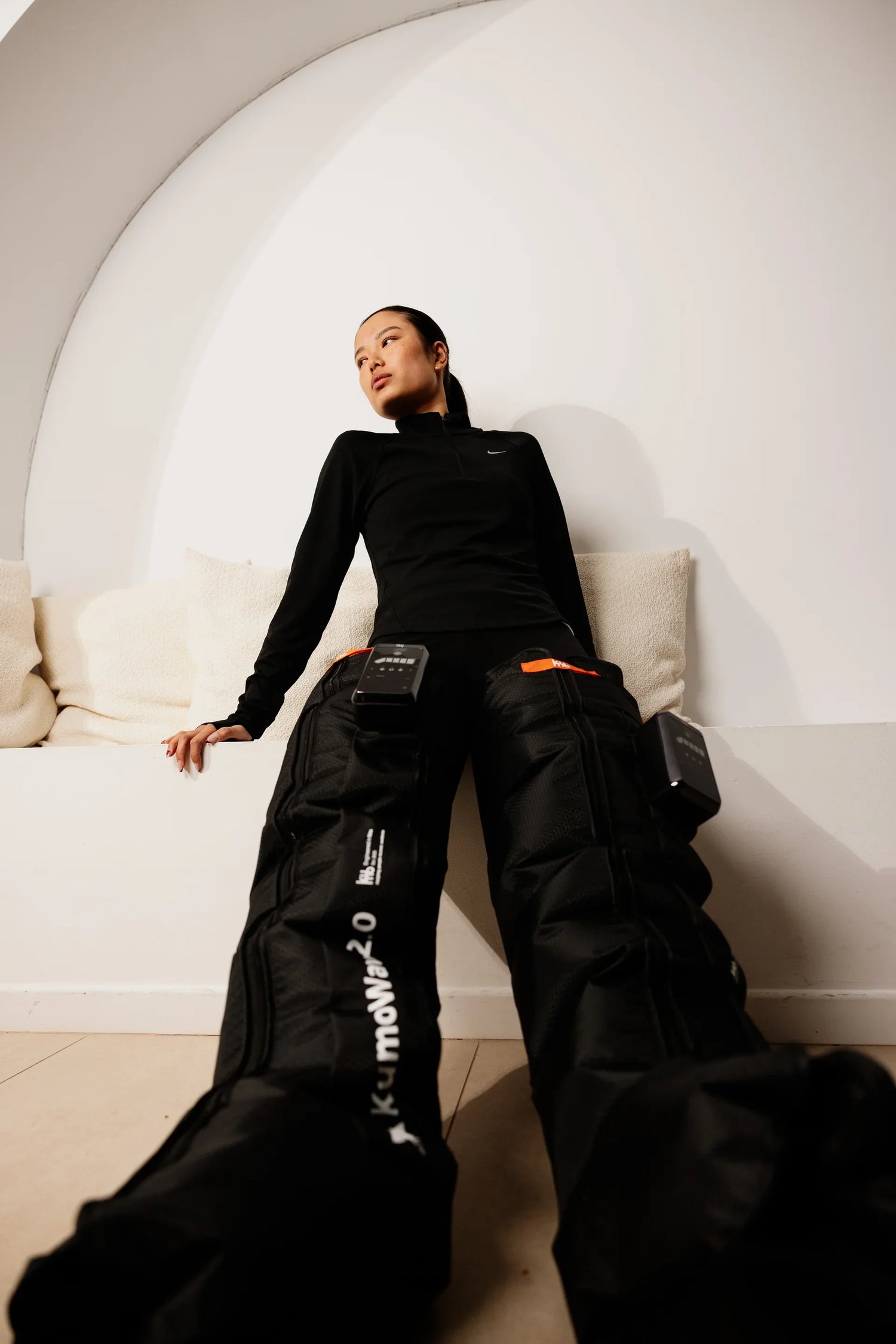
Order matters. After sports, the most practical sequence is usually massage gun first and then pressotherapy, as long as there is no acute pain or suspected injury. This is a reasoned recommendation: massage helps reduce the perception of DOMS and pneumatic compression can support recovery, but evidence has not shown a single perfect sequence for everyone.
The logic is simple: the gun works on a specific area, and pressotherapy acts more globally on the legs and gives a feeling of lightness. When both are used in the same session, it usually makes sense to start locally and finish with broader, more relaxing compression. (pubmed.ncbi.nlm.nih.gov)
Pressotherapy at home
End the day with light legs
★★★★★ 4,8/5 · rated by verified customers
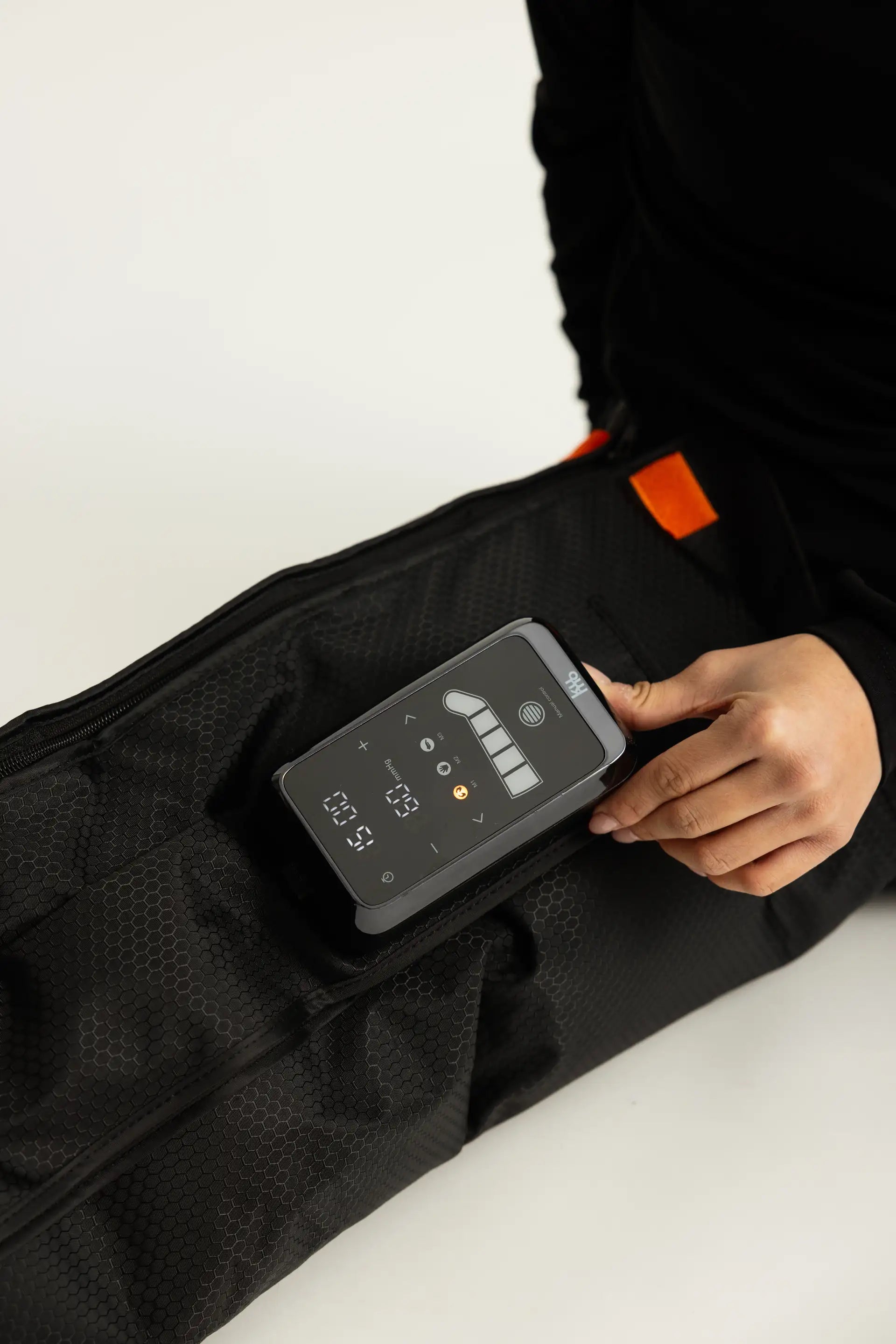
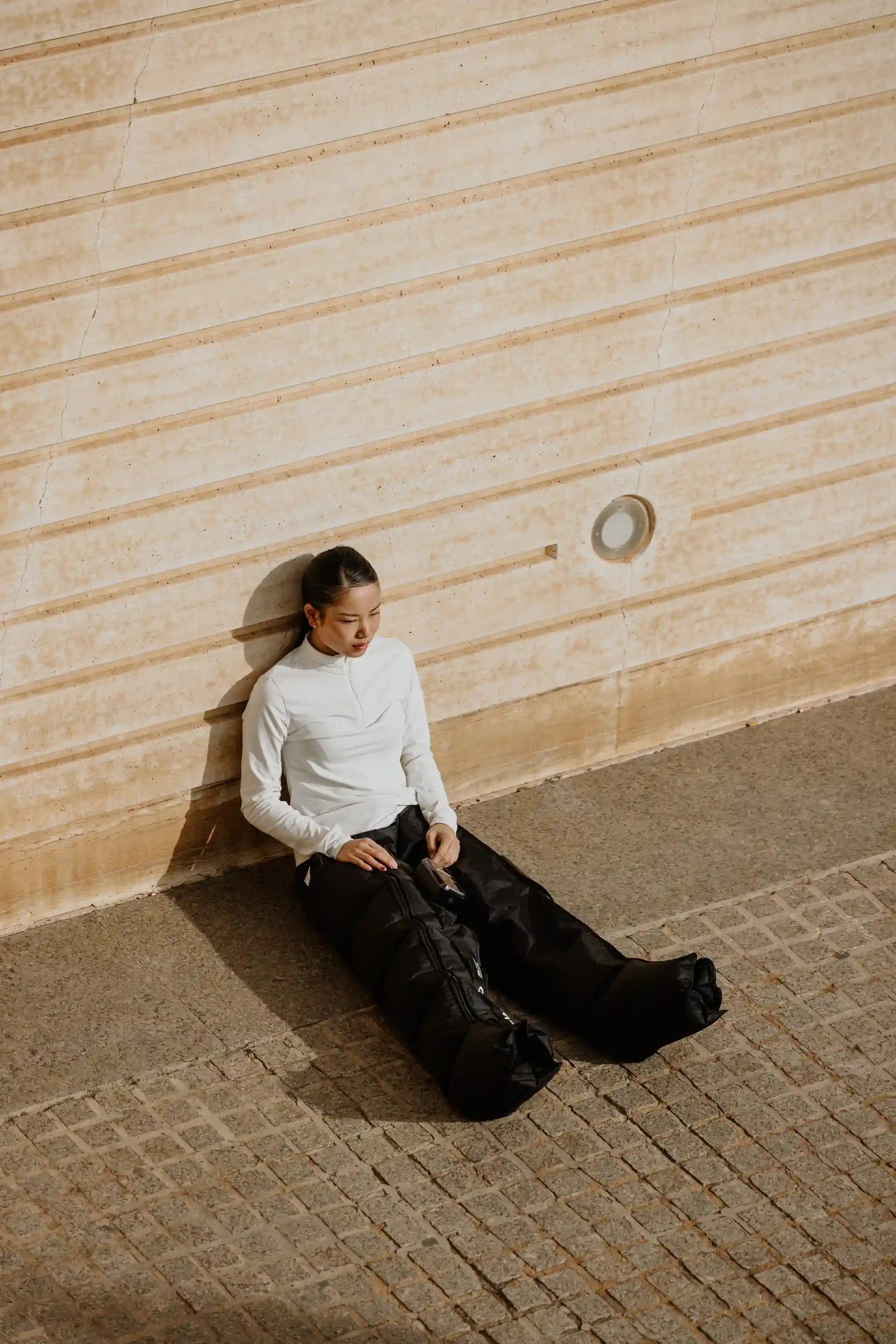
KumoWave pressotherapy boosts circulation and helps drain fluid with sequential compression, in 20-minute sessions at home.
- Boosts circulation and helps drain fluid
- Chamber-based compression, adjustable to you
- Sequential compression that mimics manual drainage
€829,00€999,00
−10% on your 1st order when you subscribe to the newsletter

Quick answer
If you want a simple rule, use the massage gun and then pressotherapy. This way you address the area that needs it most first and then close with a compression phase that usually fits better with post-workout recovery. Evidence on massage and DOMS shows benefits at 24, 48, and 72 hours, and IPC describes small to moderate improvements in pain and soreness; this is why this sequence works well as a practical criterion.
The exception is clear: if you experience sharp pain, unusual inflammation, bruising, or discomfort that does not seem like typical muscle fatigue, it is not advisable to continue with either tool. The safety review on percussive massage also warns against using it on wounds, recent fractures, clots, sensitive areas, or in an aggressive and prolonged manner.
Personalized protocol · included with your purchase
Want us to tell you how to use it in your case?
With your purchase, our experts prepare a personalized usage protocol for your case: sport, circulation, fluid retention, pregnancy or lipedema.
Message us on WhatsAppOur experts reply · no obligation
Why this order usually makes sense
The recommendation is supported by three lines of evidence: a systematic review on massage and DOMS showed less pain after intense exercise, a meta-analysis on intermittent pneumatic compression found small to moderate effects on pain and soreness, and a review on massage guns and recovery confirms that this tool is studied both before and after activity. Added to this is a safety review on percussive therapy that insists on using it with caution.
The important thing is this: these reviews do not directly compare the exact sequence “gun first vs. pressotherapy first.” In other words, the order recommended here is a practical inference based on how each tool acts and what we know about each one separately. (pubmed.ncbi.nlm.nih.gov)
- and 72 hours (-1
- versus no intervention. In a classic study, a massage applied two hours after exercise also reduced pain and creatine kinase. This reinforces the idea that the gun fits very well into the post-exertion phase, always in a brief and controlled format. ( pubmed.ncbi.nlm.nih.gov )
Something similar happens with pressotherapy: intermittent pneumatic compression is described as a tool that promotes fluid movement and can provide modest benefits on pain, recovery, and function. In a study on compression after exercise, compression garments improved blood flow and recovery rates, which helps explain why so many people reserve it for the end of the session.
on your first order when you join the newsletter
We send you the code instantly. No spam.
Quick table: which sequence to choose according to your objective
| Objective | Recommended order | Why |
|---|---|---|
| Very stiff area or localized contracture | Massage gun and then pressotherapy | First you work on the specific point and then finish with global compression. The sequence respects the difference between local work and general recovery. |
| Heavy legs without a clear pain point | Pressotherapy alone or pressotherapy after very brief use of the gun | If there is no obvious muscle focus, compression may be sufficient as a recovery closing. |
| Intense training with probable DOMS | Gentle gun first, pressotherapy afterward | Literature supports post-exercise massage for DOMS and compression as additional support, even if the effect is moderate. |
If your case is similar to the first, you can delve deeper into the guide to recommended times and key areas after training; if you identify more with the feeling of heavy legs or standing work, pressotherapy for heavy legs helps you decide when to prioritize compression.
How to apply it step by step
- Start by slowing down your heart rate. Before any tool, let your body finish recovering from the exertion; the idea is to recover, not to add more strain.
- Use the massage gun on muscles that are actually tight. Keep it brief, avoid bone, and don't seek pain. The safety review reminds not to use it on wounds, bruises, recent fractures, or sensitive areas.
- Then move on to pressotherapy. In this phase, the goal is a more general and relaxing compression, not localized work. IPC is associated with small to moderate improvements in pain and soreness.
- Check your response the next day. If you feel better, maintain the sequence; if you notice irritation or atypical pain, reduce intensity or consult a professional.
To further refine the use of the gun, the muscle group usage guide helps you choose where to start when training has targeted quadriceps, glutes, or calves more.
When to change the order
- If you're only looking for overall comfort. You can start directly with pressotherapy and save the gun for another time or even another day, because it's not always necessary to work on a specific point to feel relief.
- If the area is very sensitive. Reduce the intensity or avoid the gun, as the safety review insists on not using it aggressively or on compromised tissues.
- If you're coming from very voluminous sessions or a lot of eccentric loading. The sequence is still valid, but with less pressure and less local work time, because the goal is to recover without further irritating the muscles.
- If the problem seems to be more about mobility than pain. It might help to review how compression fits with fascial tissue, for example, in the reading on pressotherapy and fascia. (pmc.ncbi.nlm.nih.gov)
When the discomfort is recurrent or appears with abnormal swelling, do not try to resolve it with mechanical recovery alone: compression helps with sensation, but does not replace a clinical evaluation.
Mistakes to avoid
- Confusing DOMS with injury. The gun and pressotherapy can help with DOMS, but they are not intended for acute pain, joint instability, or suspicious inflammation.
- Insisting too much with the gun. Safety literature warns that repeated and aggressive use on the same area for a long time is not a good idea.
- Believing that more pressure always equals better recovery. The benefit of IPC is modest, so increasing intensity without criteria does not guarantee better results.
- Using the sequence as a substitute for rest. Real recovery still depends on training, sleep, and how your body tolerates the load; tools add up, but they don't work magic.
FAQ on pressotherapy and massage gun
In what order should I use pressotherapy and a massage gun after exercise?
The most useful option for most people is massage gun first and then pressotherapy. This way you work on a specific area before moving on to a more global and relaxing compression. Available evidence supports massage for relieving DOMS and pneumatic compression for improving pain and recovery sensation, although it does not demonstrate a single mandatory sequence. That's why we talk about a practical recommendation, not a rigid rule.
Should pressotherapy be used before or after training along with the massage gun?
If the main goal is recovery, pressotherapy fits better after training. The gun can also be used before for very gentle activation in specific cases, but the review on massage guns positions it as a pre and post-activity tool, while IPC is studied mostly as a post-exercise method. In practice, if you are going to combine both, the most logical approach is usually to reserve pressotherapy for the end.
Can pressotherapy and a massage gun be combined after high-intensity training?
Yes, as long as there is no acute pain or signs of injury. In fact, after intense sessions, it makes sense to first use the gun briefly on the most stressed muscles and then pressotherapy as a finish. Massage can reduce the sensation of DOMS in the 24 to 72 hours after exertion, and pneumatic compression provides additional, albeit moderate, support. If the discomfort is unusual, inflamed, or very localized, it is advisable to stop and review the cause.
What routine combines pressotherapy and massage gun to avoid DOMS?
The most sensible routine is simple: finish training, do a brief session with the gun on the most tense areas, and then use pressotherapy to complete recovery. High intensity is not necessary; in fact, safety evidence advises caution with percussive massage. Literature on DOMS shows that massage can decrease pain after intense exercise, while compression helps as a reinforcement. The key is consistency and not turning recovery into another strenuous session.
Is it better to use the massage gun before exercise and pressotherapy after, or vice versa?
For a recovery-focused routine, the most useful is vice versa: gun first if you need to treat a specific area, and pressotherapy after. The gun can serve as light activation before training, but its main use here is post-workout. Pressotherapy, on the other hand, fits naturally as a final phase because it acts more globally. If your priority is performance beforehand, you can use the gun very gently; if your priority is recovery, save pressotherapy for the end.
What now?
If you want to turn this logic into a simple routine, start with the home pressotherapy collection to see compression options, check out the KumoWave 2.0 system if you're looking for a wireless option, and return to the Kumo Balance homepage to guide yourself calmly. The idea is simple: first identify the area that needs work, then finish the session with more global compression.
KumoWave pressotherapy
Choose your at-home pressotherapy
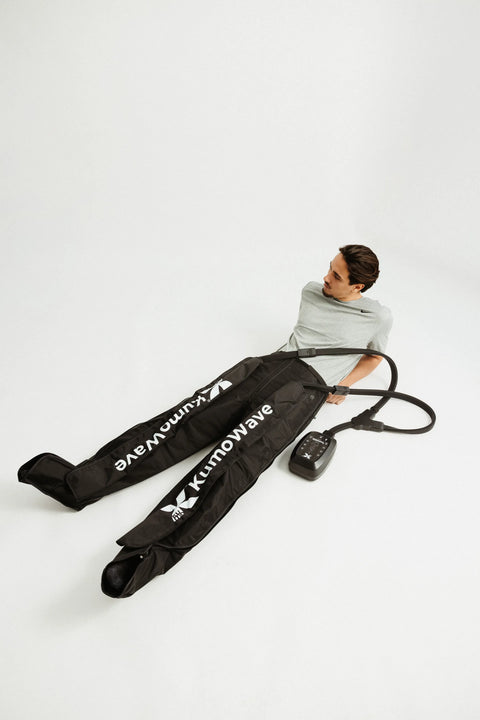
KumoWave Elite – Pressotherapy Pants
Full-coverage trousers. Ideal for lipedema, fluid retention and intensive use.
€829,00 €999,00
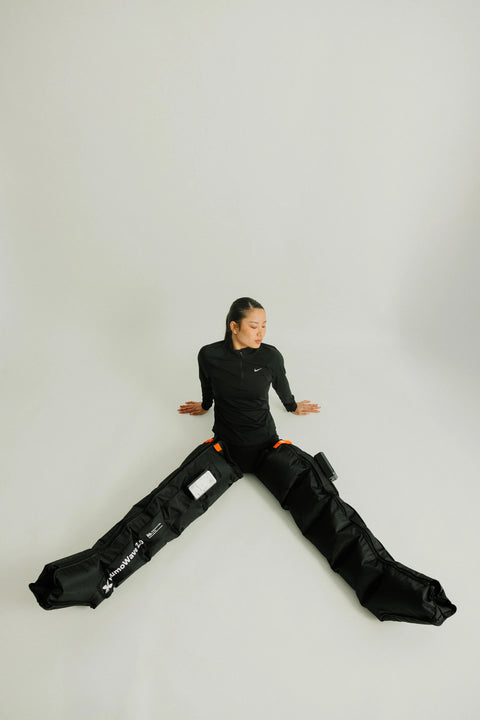
KumoWave 2.0 - Wireless Pressotherapy
Wireless, lightweight boots. Perfect for daily use and recovery.
€499,00 €599,00