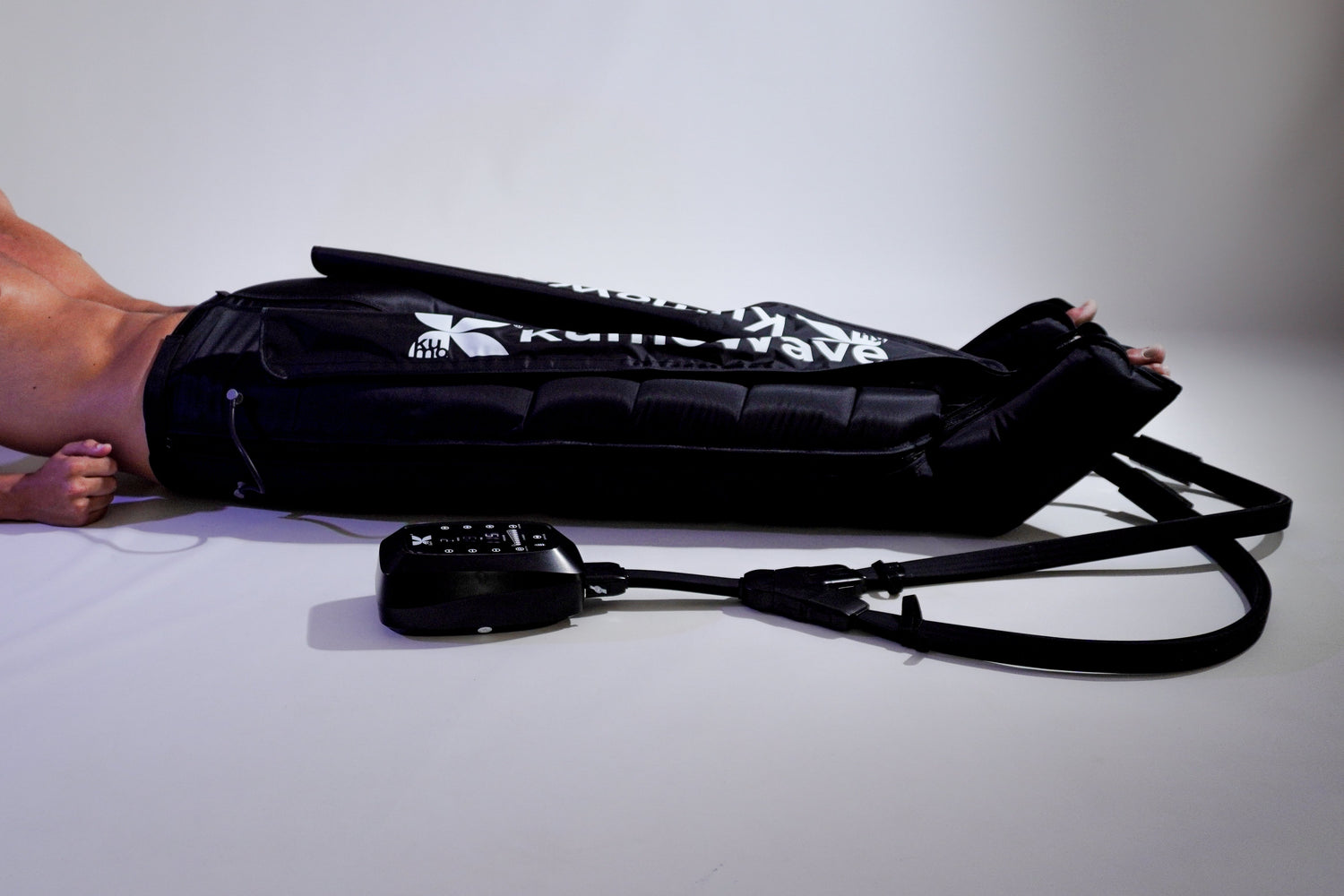
Mobility is not "lost" simply due to a lack of stretching.
Often, stiffness stems from a combination of muscle fatigue , fluid retention , mechanical stress , and changes in the behavior of the fascia (the large connective tissue that envelops and connects structures). In this guide, you'll see how compression therapy (sequential or intermittent pneumatic compression) can support your mobility through circulatory and tissue "unloading" mechanisms, and how to integrate it with smart recovery habits, Kumo- style. ( hopkinsmedicine.org )
Pressotherapy at home
End the day with light legs
★★★★★ 4,8/5 · rated by verified customers
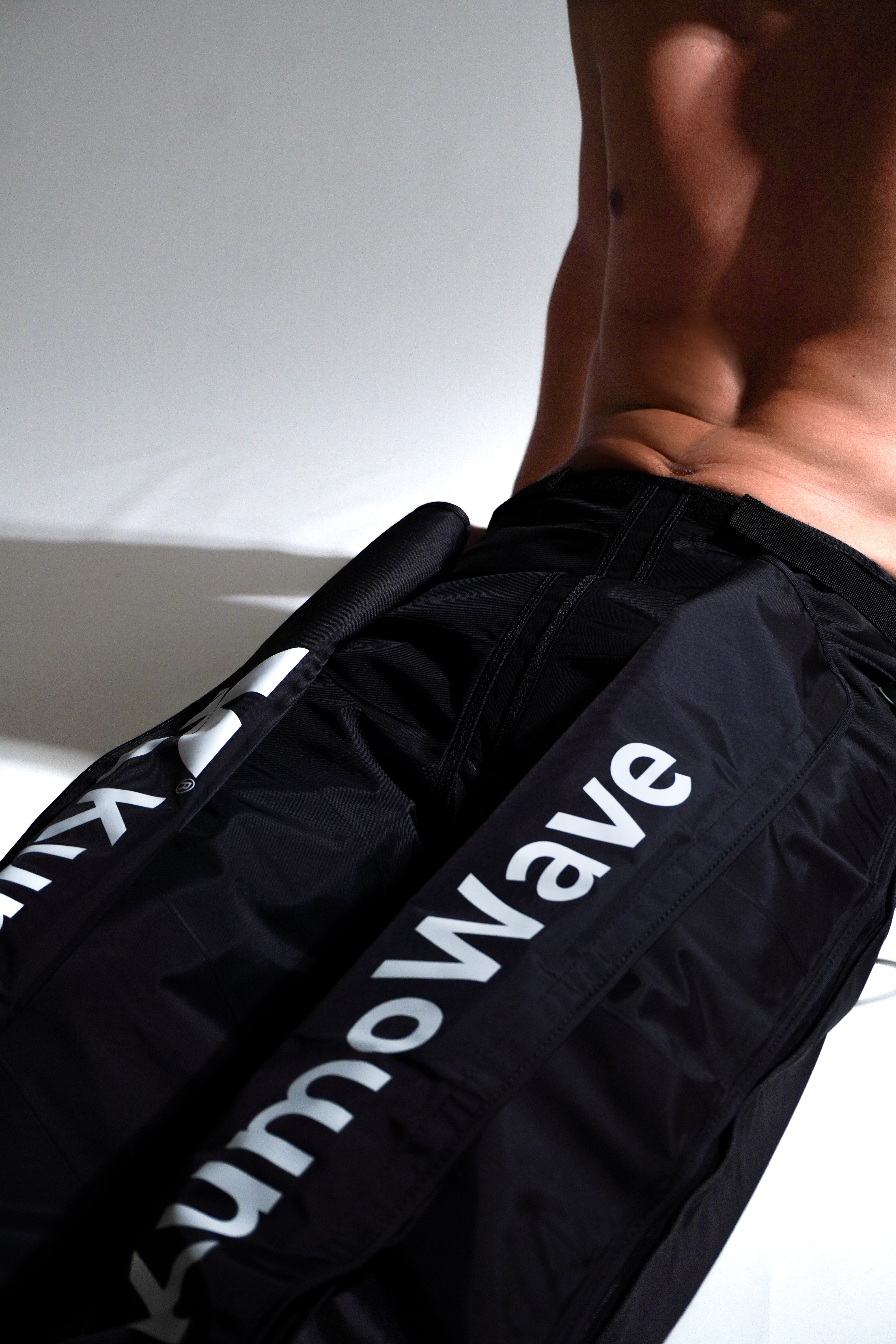
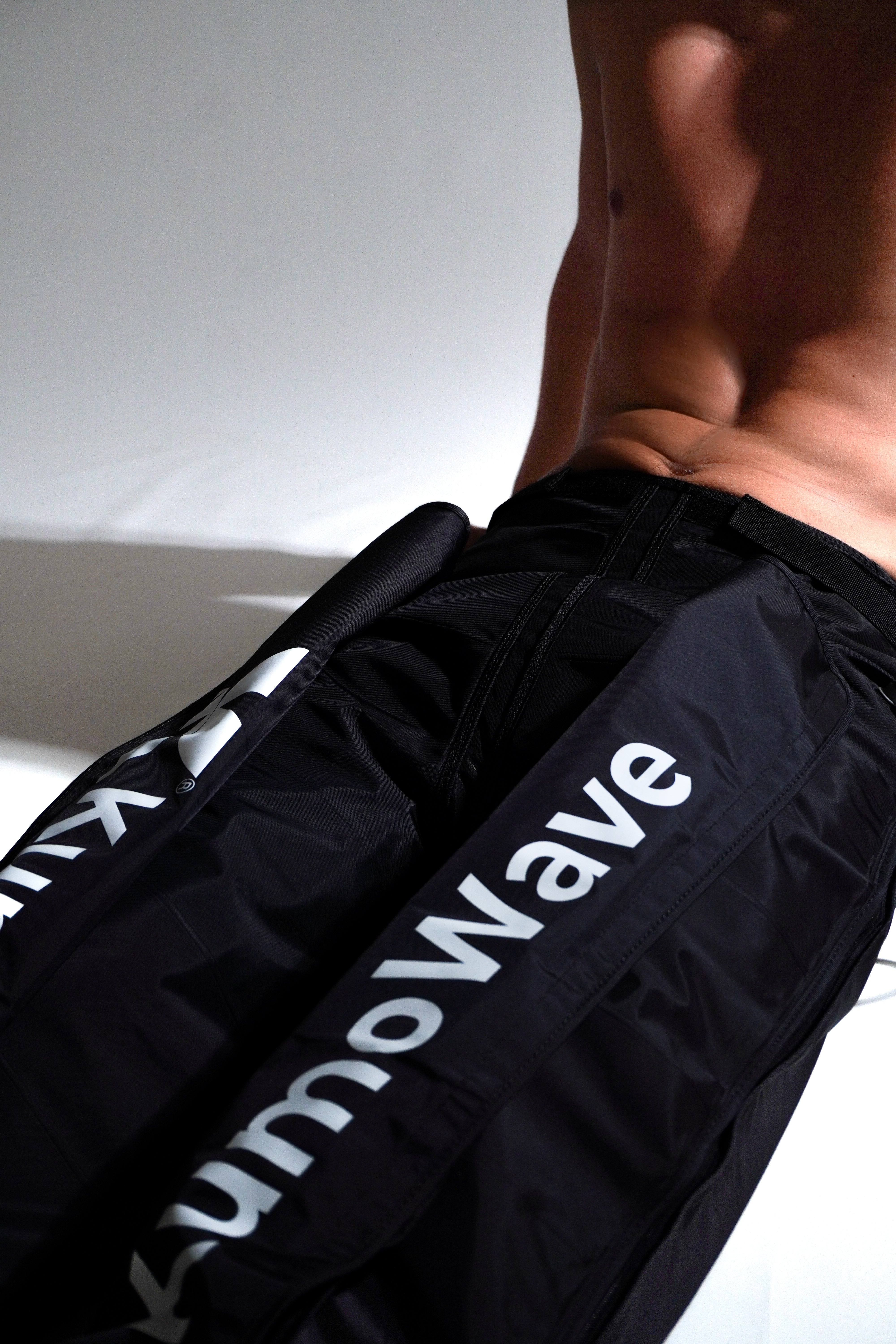
KumoWave pressotherapy boosts circulation and helps drain fluid with sequential compression, in 20-minute sessions at home.
- Boosts circulation and helps drain fluid
- Chamber-based compression, adjustable to you
- Sequential compression that mimics manual drainage
€799,00€999,00
−10% on your 1st order when you subscribe to the newsletter

If you want to explore Kumo's recovery ecosystem, you can start from the homepage and, in particular, the pressotherapy collection.
What is fascia and why does it have such a significant impact on your range of motion?
Fascia: the “network” that provides support, transmits forces, and senses
Fascia is a continuous, three-dimensional connective tissue that surrounds muscles, nerves, blood vessels, joints, and organs. For years it was thought to be “just wrapping,” but today its role in mechanical support , force transmission , and mechanoperception (how the body detects tension and movement) is recognized. ( pubmed.ncbi.nlm.nih.gov )
Personalized protocol · included with your purchase
Want us to tell you how to use it in your case?
With your purchase, our experts prepare a personalized usage protocol for your case: sport, circulation, fluid retention, pregnancy or lipedema.
Message us on WhatsAppOur experts reply · no obligation
Fascial gliding: where mobility is gained (or limited)
For fluid movement, fascial layers must glide past one another. A key component of this gliding is hyaluronan (hyaluronic acid) , present between deep fascia and muscle, and between fascial layers. Its viscoelastic behavior (more or less “dense” depending on conditions) influences how tissue stiffness and “stickiness” feel. ( pubmed.ncbi.nlm.nih.gov )
Anatomical research has also quantified that hyaluronan content varies by area: for example, values of ≈35 μg/g have been reported in the fascia lata and higher values around joints (e.g., ankle retinacula), which fits with the idea that where gliding is most needed, there is usually more hyaluronan. ( pubmed.ncbi.nlm.nih.gov )
Fascial stiffness is not always "shortening": it is also a state of the system
Fascia can modulate its tension: reviews and histological studies have described contractile elements and the presence of cells capable of influencing its stiffness. This does not mean that all pain is “fascia-related,” but it does explain why stress, repetitive strain, and insufficient recovery can result in a feeling of tightness and limited mobility. ( pubmed.ncbi.nlm.nih.gov )
on your first order when you join the newsletter
We send you the code instantly. No spam.
What is pressotherapy (sequential compression) and what does it do to the body?
Simple definition
Compression therapy is a form of intermittent pneumatic compression applied with chambers that inflate and deflate (often sequentially “from distal to proximal,” for example, from foot to thigh). Clinically, it is used, among other purposes, to increase venous flow and help reduce the risk of thrombosis in immobilized individuals; in wellness and sports, it is used as a recovery tool and to promote a feeling of “light legs.” ( hopkinsmedicine.org )
How it improves "return circulation" (and why that can feel like more mobility)
Intermittent compression can increase venous flow rates and volume during application, promoting return to the heart. Hemodynamic studies in healthy volunteers have observed significant increases in flow with compression (using typical research pressures such as 40 mmHg at the calf/thigh, depending on the study design). ( pubmed.ncbi.nlm.nih.gov )
Furthermore, research has shown that pneumatic compression sessions can acutely increase variables related to vascular function and shear stimuli in specific populations (e.g., spinal cord injury), supporting the idea of a real physiological effect on the peripheral vascular system. ( pmc.ncbi.nlm.nih.gov )
Pressotherapy and fascia: the realistic bridge (without magic promises)
That is something that can reasonably be expected
- Less "heaviness" and congestion after many hours of sitting, traveling, or high-impact training.
- Better readiness to move by reducing the feeling of "heavy" legs.
- Indirect support for gliding : by modulating peripheral fluids and tissue comfort, some people perceive greater freedom of movement (especially in ankle/knee/hip when walking or squatting).
What the evidence in sport says (and why it's a good idea to combine them)
In sports recovery, the results of intermittent pneumatic compression are mixed . A meta-analysis (2024) in healthy/athletic populations found trivial to small overall effects on muscle function, and trivial to moderate effects on perceived pain/discomfort, with high variability in markers of muscle damage. It also describes that protocols of ~20–30 minutes and pressures around ~80 mmHg are among the most commonly used. ( pubmed.ncbi.nlm.nih.gov )
A systematic review with meta-analysis (2025) comparing several modalities concluded, with moderate-certainty evidence , that pneumatic compression applied after exercise does not reduce muscle soreness at 24 hours compared to a control. ( pubmed.ncbi.nlm.nih.gov )
This does not "invalidate" pressotherapy: it simply indicates that, if your goal is mobility , it usually works better as part of a plan (movement + soft tissue + light + sleep), not as the sole intervention.
Key idea: If your mobility is limited by pain, tenderness, or post-exertion inflammation, compression therapy can help you feel more "looser." If your limitation is technical, related to strength at the end of your range of motion, or chronic stiffness, you will also need active training (motor control, strength, and/or specific mobility exercises).
Practical protocols for using mobility-oriented pressotherapy
Table: Common objectives and how to schedule them (guideline)
| Aim | When to use | Typical duration | Intensity (focus) | Recommended “Combo” (Kumo) |
|---|---|---|---|---|
| Heavy legs / congestion | At the end of the day or after a trip | 20–30 min | Medium, comfortable (pain-free) | Pressotherapy + gentle walk 10–15 min |
| Post-strength training (legs) | Within 2–6 hours afterwards | 20–30 min | Media; prioritizes tolerance | Pressotherapy + massage gun (fast and superficial) |
| Improve your sense of mobility before moving | Before a light session | 10–20 min | Low-medium | Pressotherapy + dynamic mobility 6–10 min |
| Global recovery (charging days) | In blocks (2–4 days/week) | 20–30 min | Average | Pressotherapy + LED light therapy (recovery routine) |
These durations are consistent with common protocols in sports research (e.g., 20–30 minutes) and reported usage ranges (e.g., ~80 mmHg in many studies), but the priority is always comfort and the device's indications. ( pubmed.ncbi.nlm.nih.gov )
Golden rules for pressotherapy to "add" to your mobility
- Don't turn it into torture: high pressure doesn't equal better results. If it hurts, you'll tense up and lose sight of your goal.
- Use it to prepare for movement: finish with 5–10 minutes of active mobility (ankle, hip, assisted squat) to “convert” the feeling of lightness into a useful range.
- Focus on consistency: in recovery, the benefit is usually perceived through the accumulation of good habits (sleep, daily steps, hydration, well-programmed loads).
How to combine pressotherapy with other tools (Kumo approach)
1) Pressotherapy + myofascial release (when you're looking for range of motion)
- reported an increase in ROM with a large effect (d ≈ 0
- in the included studies. Therefore, a practical approach is to use compression therapy to "unload" and then apply 5–8 minutes of tissue work (roller/ball) followed by active mobility. (pubmed.ncbi.nlm.nih.gov)
2) Pressotherapy + massage gun (for tone and comfort)
On days when your legs feel like they're made of stone, a simple strategy is: pressotherapy (20–30 min) + 2–4 minutes per area with a massage gun (quadriceps, calves, gluteus medius) in a comfortable setting. At Kumo, you can find a massage gun option designed for deep tissue work.
3) Pressotherapy + red/LED light (comprehensive recovery)
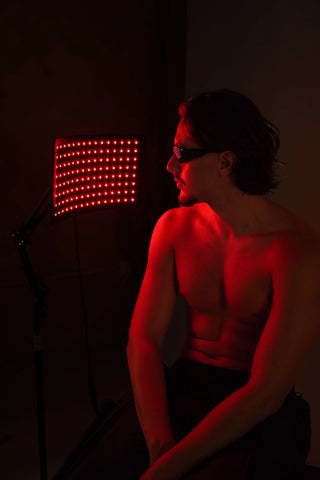
Photobiomodulation (light therapy) is the subject of active research for performance and recovery; for example, a meta-analysis (2024) found small-to-moderate improvements in muscle endurance and strength recovery in certain contexts and populations, although results may depend on the protocol and activity profile. At Kumo, LED light therapy is integrated as a recovery routine (especially useful if your neck/back also carries a load and your mobility isn't "just legs"). ( pubmed.ncbi.nlm.nih.gov )
When NOT to use pressotherapy (and when to seek medical advice)
Although it's often perceived as "gentle" in the context of wellness, pneumatic compression isn't for everyone. Clinical reports describe risks such as discomfort, heat, sweating, and skin irritation/injury (especially if the fit is incorrect). Precautions are advised for individuals with peripheral vascular disease or other conditions. If you experience sudden pain, significant swelling, redness, an active wound, or suspect thrombosis, do not use it and consult a doctor. ( hopkinsmedicine.org )
Real-life examples: 3 mobility routines with pressotherapy
Routine A (office/travel): “light legs” in 35 minutes
- Pressotherapy: 20–25 min (comfortable medium intensity).
- Gentle walk: 8–10 min.
- Mobility: 2–3 sets of 6–8 repetitions of ankle (knee to wall) + hip hinge.
Routine B (post-squats/deadlifts): regain range without losing tone
- Pressotherapy: 20–30 min.
- Brief tissue work: 5 min (roller or massage gun).
- Active mobility: assisted sustained squat 2 × 30–45 s + rotational lunge 2 × 6/side.
Routine C (intense week): Kumo habit “complete recovery”
- Pressotherapy: 20–30 min.
- LED/red light: 10–15 min routine depending on your goal (skin or recovery).
- Sleep hygiene: low light 60–90 min before bed and 5–10 min of gentle breathing.
What do some specific studies say (to manage expectations)
To give you a balanced view:
- In a randomized controlled trial (RCT) (2021) following eccentric jumping exercise, pneumatic compression showed no intergroup differences in biochemical or functional markers, and active knee flexion range of motion decreased after muscle damage in all groups (including IPC). ( pmc.ncbi.nlm.nih.gov )
- In long-distance runners (2020), a protocol of immediate 1 hour and daily use for 5 days did not reduce subjective pain or CRP compared to control. ( pubmed.ncbi.nlm.nih.gov )
- In an RCT (published 2025; ePub 2025) in untrained subjects with DOMS by plyometrics, improvements in pain recovery (VAS) and tensiomyography variables were reported, with peak effect 48–72 h post-exercise. ( pubmed.ncbi.nlm.nih.gov )
The practical interpretation is clear: pressotherapy can help some people and in some scenarios, but the variability is high; therefore, the best approach to mobility is usually multimodal .
FAQ about Kumo, pressotherapy and fascia
Does Kumo pressotherapy "break" fascial adhesions or "detach" them?
That's not the most accurate way to describe it. Fascia is a living tissue with an extracellular matrix and components like hyaluronan that facilitate gliding between layers. Pressotherapy primarily acts on fluid dynamics (venous return and peripheral comfort), which can make you feel less stiff and have more freedom of movement. For more consistent changes in range of motion, it's usually best to combine pressotherapy with active mobility and tissue work (roller/gun) as part of a recovery routine.
How long should I use Kumo compression boots if my goal is to improve mobility?
As a practical guideline, many sports protocols reported in reviews use sessions of approximately 20–30 minutes and pressures around 80 mmHg, but the key is tolerance: start at a comfortable intensity and prioritize consistency. After the session, do 5–10 minutes of active mobility exercises (ankle, hip, assisted squats) to consolidate the feeling of lightness into actual movement. If you experience tingling, pain, or numbness, reduce the intensity or stop the session.
Can I combine Kumo pressotherapy with the massage gun and LED therapy on the same day?
Yes, and it usually makes sense if you target different goals: compression therapy to relieve tension in the legs and improve comfort; a massage gun to reduce localized tone and sensitivity; LED/red light therapy as part of a recovery routine (depending on usage). Evidence in recovery shows that no single tool is universally applicable, so the order matters: first something general and relaxing (compression therapy), then something localized (massage gun), and finish with gentle mobility exercises. Keep the total reasonable so you don't turn recovery into another stressful chore.
Does pressotherapy help if I have muscle soreness and feel that my mobility is limited the next day?
It may help with sensation and comfort for some people, but the evidence is mixed: some studies have found no clear benefits for pain or inflammation, and recent reviews suggest small and variable effects on sports recovery. If your priority is regaining mobility with DOMS, the most consistent strategy is usually: gentle walking, active movement within comfortable ranges, sleep, and, if you're doing well, compression therapy for support. If the pain is severe or there are abnormal signs (marked unilateral swelling, heat, redness), consult a doctor.
So what now?
If you want to make recovery a simple and sustainable habit, explore Kumo's compression boots and combine them with LED light therapy or a massage gun depending on your goal (mobility, comfort, rest). And if you need guidance on what best fits your routine, you can contact us.
KumoWave pressotherapy
Choose your at-home pressotherapy
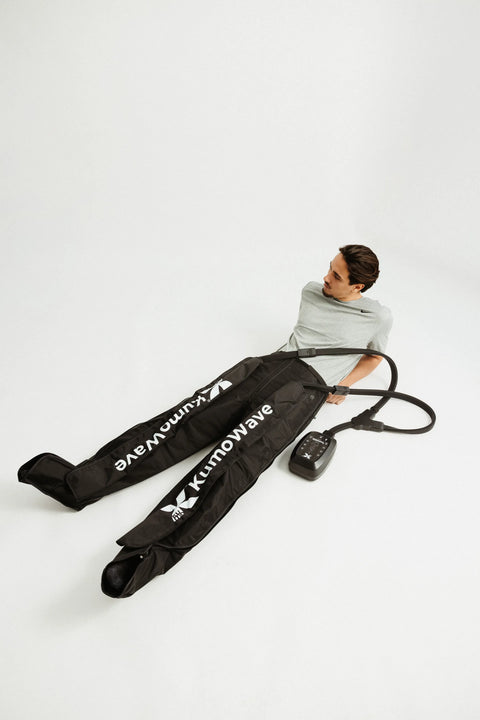
KumoWave Elite – Pressotherapy Pants
Full-coverage trousers. Ideal for lipedema, fluid retention and intensive use.
€799,00 €999,00
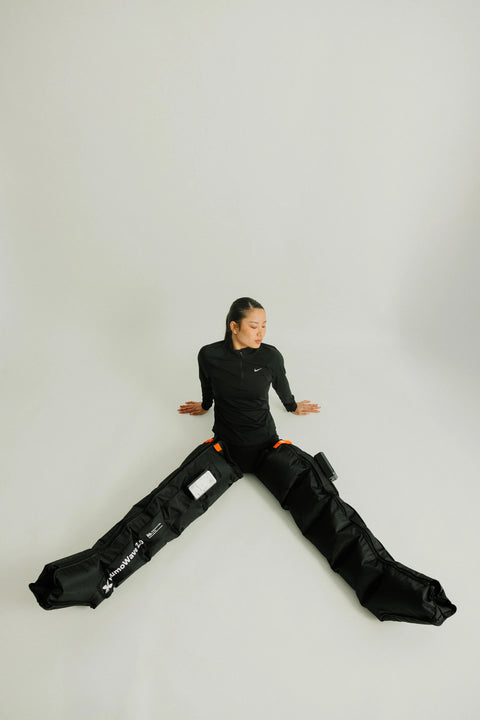
KumoWave 2.0 - Wireless Pressotherapy
Wireless, lightweight boots. Perfect for daily use and recovery.
€499,00 €599,00