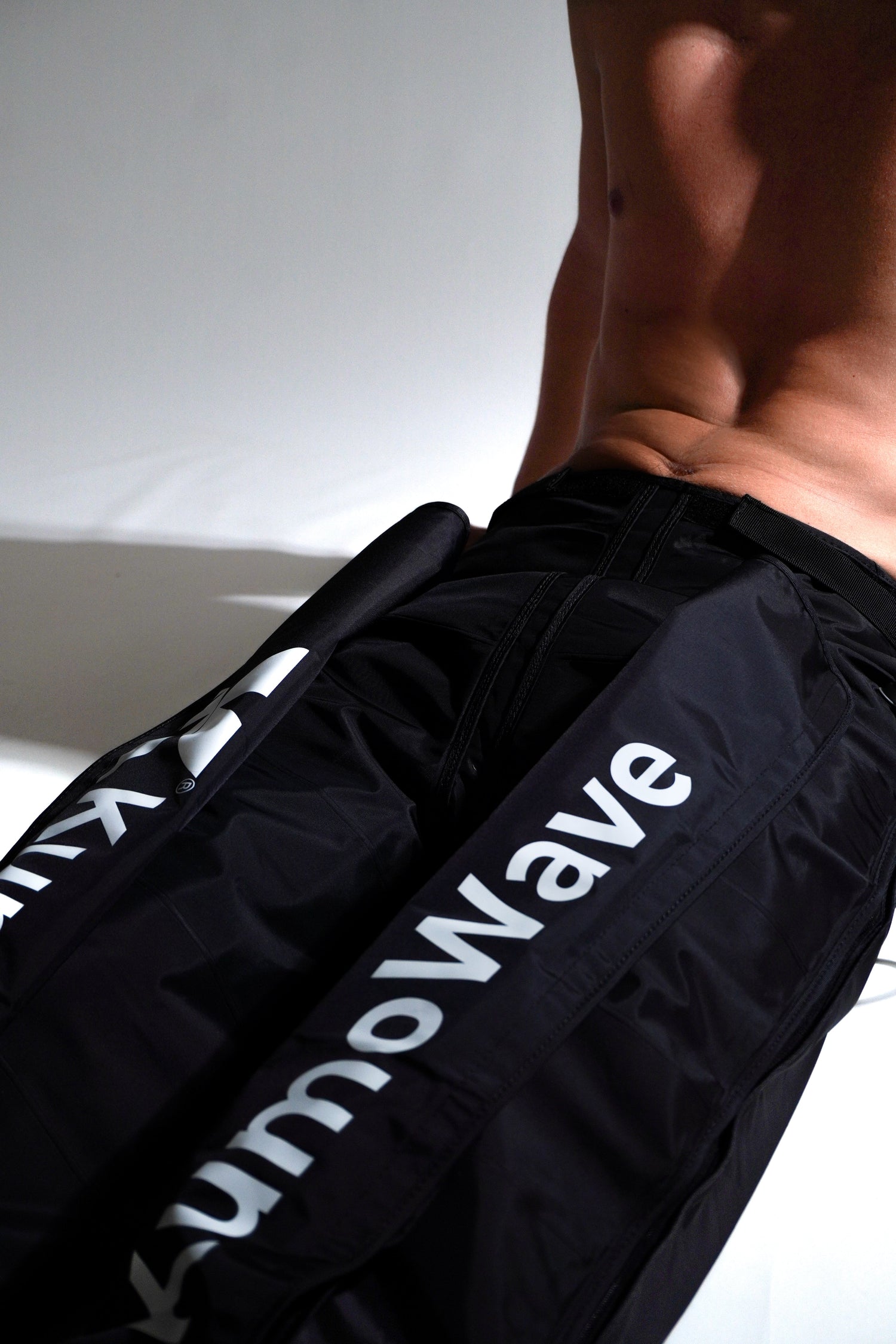
Your body speaks.
If you're experiencing persistent fatigue, a drop in performance, light sleep, or heavy legs, you probably don't need more willpower, but rather a well-planned recovery day . This article will show you the most common signs that it's time to slow down and, most importantly, a practical way to plan your recovery at home using wellness technology (like Kumo 's), without turning rest into another exhausting chore.
Pressotherapy at home
End the day with light legs
★★★★★ 4,8/5 · rated by verified customers
KumoWave pressotherapy boosts circulation and helps drain fluid with sequential compression, in 20-minute sessions at home.
- Boosts circulation and helps drain fluid
- Chamber-based compression, adjustable to you
- Sequential compression that mimics manual drainage
€799,00€999,00
−10% on your 1st order when you subscribe to the newsletter

What is a recovery day (and what is not)
Recovery is not about “doing nothing” (if you don't want to).
A recovery day is an intentional pause to allow the muscular system, sleep, nervous system, and skin to return to their baseline. It can be:
- Passive recovery: rest, short nap, reading, gentle stretching.
- Active recovery: walking, mobility, breathing, gentle yoga (without seeking intensity).
What is NOT a recovery day
- "Train gently" but end up sweating and racing against the clock.
- To punish someone for overeating or skipping a session.
- Filling the day with screens until late (usually worsens sleep).
Clear signs that you need a recovery day
These signs appear in athletes as well as in people with sedentary jobs, mental stress, or intense routines. The key is to see patterns (not an isolated symptom).
Personalized protocol · included with your purchase
Want us to tell you how to use it in your case?
With your purchase, our experts prepare a personalized usage protocol for your case: sport, circulation, fluid retention, pregnancy or lipedema.
Message us on WhatsAppOur experts reply · no obligation
1) Physical signals (muscle, joint, circulation)
- Muscle soreness that doesn't subside or a feeling of "heavy body" beyond the usual.
- Heavy legs , swollen feet at the end of the day, or a feeling of "poor circulation".
- Morning stiffness that takes too long to loosen up.
- Repeated discomfort (tendon, knee, lower back) that returns when you turn up the volume.
2) Performance signals (when effort no longer translates into progress)
- Higher RPE : The session feels harder than normal with the same weight/pace.
- Worse coordination and a feeling of clumsiness.
- Stagnation or clear decline during several consecutive training sessions.
3) Sleep signals and the nervous system (the silent alarm)
- You have trouble sleeping or wake up several times a night. In the U.S., in 2020, an estimated 14.5% of adults had trouble falling asleep and 17.8% had trouble staying asleep. ( cdc.gov )
- You wake up without a "reset" even if you sleep 7-8 hours.
- Increased irritability , decreased frustration tolerance, or a feeling of "racing brain".
- Sustained stress (and the body notices): Nighttime light can affect the biological nighttime signal (melatonin); even ambient light before sleep has been associated with suppression and shortening of melatonin duration (2011 study). ( pmc.ncbi.nlm.nih.gov )
4) Signals you can see in metrics (if you use a watch or app)
- Higher resting heart rate for several consecutive days (compared to your average).
- HRV trending downwards in a sustained manner (more useful in trends than in a single day).
- “Sleep score” worse repeated or less time of deep/REM sleep.
5) Signs on the skin (yes, that's also recovery)
- Dull skin, more reactive or with breakouts when stress increases or sleep decreases.
- Increased redness or a feeling of skin inflammation after intense weeks.
Quick self-check (3 minutes) to decide if today is the day to recover
Mark “yes” or “no”. If you get 3 or more “yes” answers, a recovery day is usually a good idea.
- Did I sleep poorly 2 nights in the last 3 days?
- Do I have "strange" pain or stiffness (not the typical kind from training) or do I feel more clumsy?
- Does my usual session feel harder for no clear reason?
- Am I more irritable or less motivated than usual?
- Heavy legs / swelling / local fatigue?
- Have my metrics (resting HR/HRV/sleep) been "off" for 2-3 days?
How to plan your recovery day at home (without complicating things)
The idea is simple: reduce stress + improve circulation + relax tissue + promote sleep . The technology helps when used intentionally and in reasonable doses.
Step 1: Define the goal for the day (choose 1)
- Goal A: Light legs and less feeling of strain.
- Objective B: to loosen muscles and regain range of motion.
- Goal C: Sleep better tonight.
- Objective D: calm + skin (regenerative routine).
Step 2: Keep moving, but lower the intensity
A “minimum effective” is usually:
on your first order when you join the newsletter
We send you the code instantly. No spam.
- 20–40 min of gentle walking, or
- 10–20 min of mobility + slow nasal breathing, or
- Gentle, pain-free stretches (avoid “forcing”).
Step 3: Add technology at home (if it helps you be consistent)
At Kumo, recovery is designed as a habit: aesthetics, technology, and performance in a single gesture. You can take advantage of tools like compression boots , LED light therapy (including red/LED light for wellness routines), or a massage gun like the KumoPulse Air .
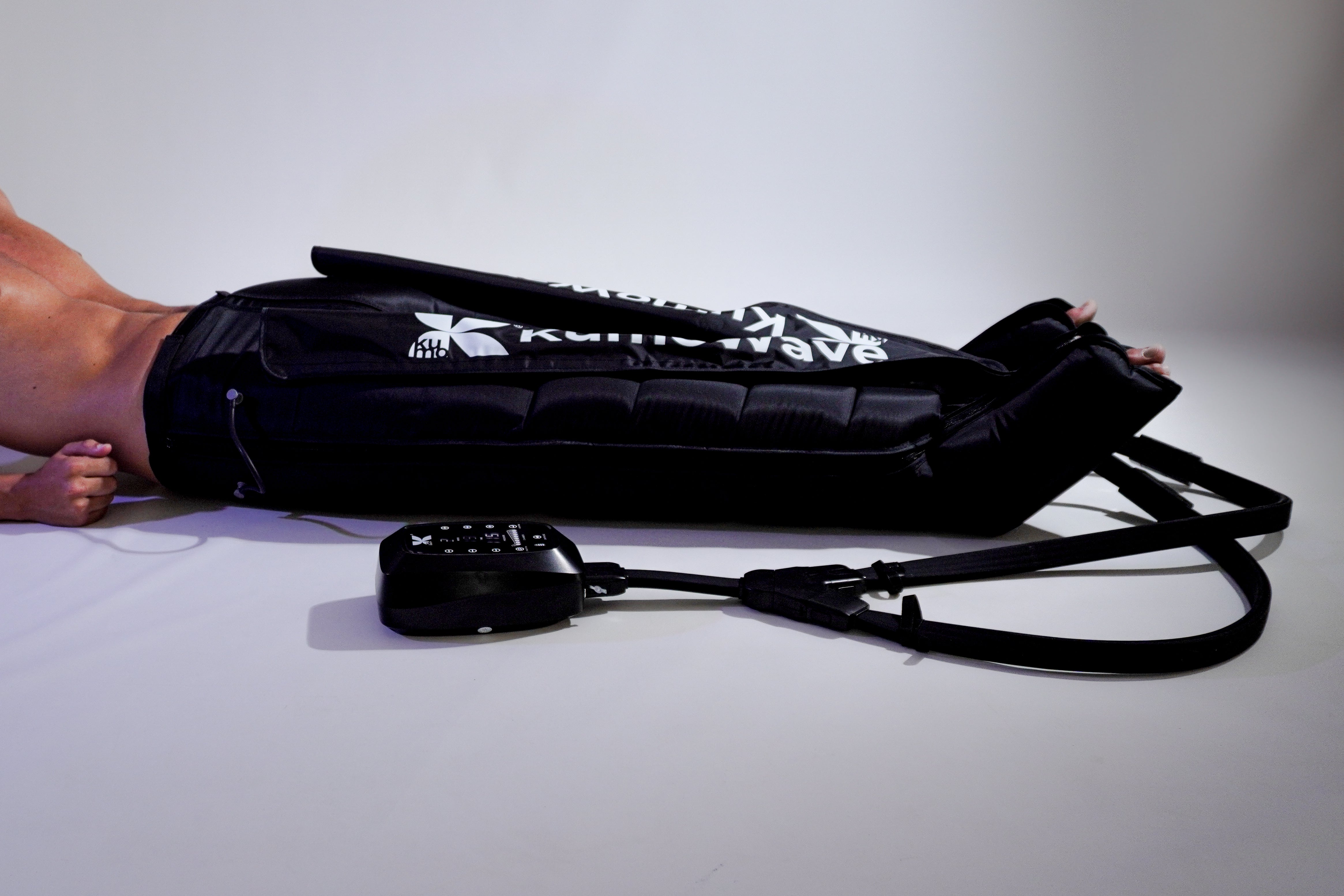
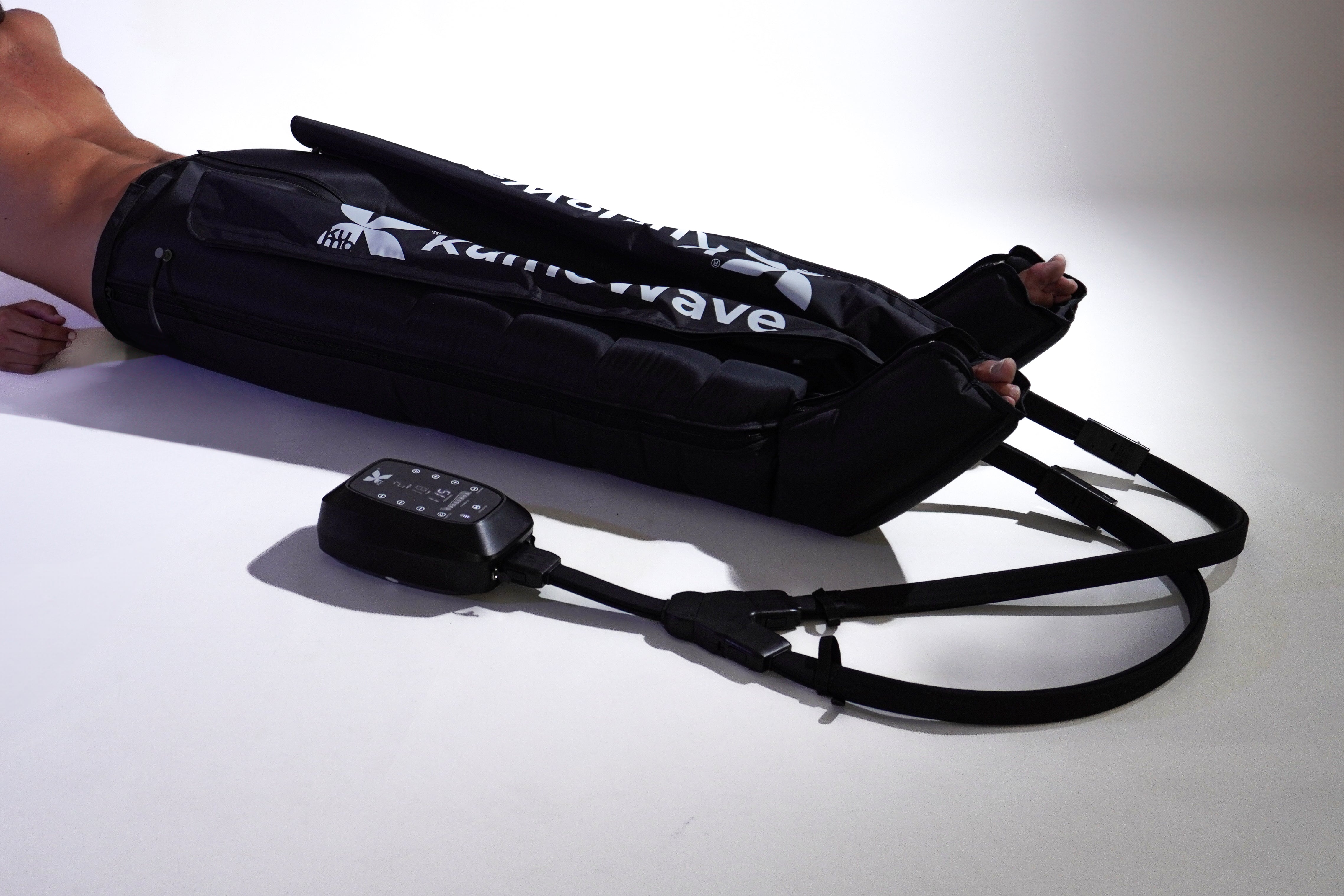
Pressotherapy (pneumatic compression): when your legs ask for a “reset”
Intermittent pneumatic compression (IPC) is used to promote venous return and blood flow in the legs (well-known for thrombus prevention in clinical settings). ( hopkinsmedicine.org ) In sports recovery, a systematic review and meta-analysis (17 studies, 319 participants) found small effects on muscle function and trivial to moderate effects on pain/needle sensitivity, with variability according to protocols. ( pubmed.ncbi.nlm.nih.gov )
- Use it if: you have heavy legs, a feeling of "heaviness", a long trip, a day of standing for long periods, or after weeks of high volume.
- Avoid/consult beforehand if: you have ulcers or skin lesions in the area, burns, or peripheral vascular disease (clinically, a higher risk of complications is observed in these cases). ( hopkinsmedicine.org )
Massage gun (percussion): for loosening without crushing
Massage guns can be useful for targeted muscle tissue work. Evidence is mixed: for example, a study in the Journal of Athletic Training found that brief application (5 minutes on calves after exercise) had little effect on short-term physical recovery compared to a control group. ( meridian.allenpress.com ) In contrast, other studies suggest improvements in range of motion after eccentric exercise (with certain protocols). ( pmc.ncbi.nlm.nih.gov )
To use it better (and more safely), a practical guideline is to spend no more than a couple of minutes per muscle group and avoid bones. ( health.clevelandclinic.org )
- Use it if: you notice localized stiffness (quadriceps, glutes, calves), or you want to "awaken" mobility without aggressive stretching.
- Avoid: the front of the head/neck, joints, bony areas, wounds, or damaged skin; and if something hurts "bad," stop. ( health.clevelandclinic.org )
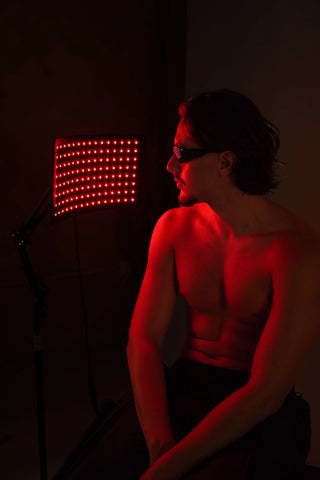
Red light / photobiomodulation: support for recovery and sleep routine (with realistic expectations)
Photobiomodulation (PBM) and light therapies in the red/near-infrared range are being studied in muscle recovery. A recent meta-analysis on DOMS (delayed onset muscle soreness) observed pain reduction at 72–96 hours and strength improvements at 24–48 hours in the included studies (with evidence still limited by the number of trials). ( pmc.ncbi.nlm.nih.gov )
Regarding sleep, there is a controlled trial (2012) in female basketball players where 30 minutes of red light at night for 14 days was associated with improved sleep quality (PSQI) and melatonin levels, as well as endurance performance; it is a small study in a specific population, so it should be taken as a clue, not a universal promise. ( pubmed.ncbi.nlm.nih.gov )
- Use it if: your goal for the day is to "slow down" and prepare for a better night's rest, or to accompany a gentle post-workout routine.
- Key tip: Protect your “biological night”: Bright ambient light at night can interfere with melatonin. ( pmc.ncbi.nlm.nih.gov )
LED mask: recovery also means skin (especially when there is stress)
LED therapy has dermatological uses, and at-home treatments often aim for gradual improvements. An important message from the clinic: home devices are usually less powerful than those used in the office, so results tend to be more subtle and depend on consistency. ( my.clevelandclinic.org )
For mild-to-moderate acne, a review and meta-analysis of portable/home LED devices (academic publication in 2025) reported improvements with red and/or blue light in randomized trials. ( jamanetwork.com ) Clinical institutions have also summarized evidence and safety recommendations for red light therapy in specific contexts. ( aad.org )
- Use it if: you notice your skin is dull, reactive, or you want a "regenerative" routine that also helps you disconnect.
- Safety: If you have photosensitivity, take photosensitizing medication, or have doubts about your skin type, consult a dermatologist; some public health guidelines recommend considering eye protection in certain cases. ( webmd.com )
Sample routine (template) for a recovery day at home
- Morning (10–20 min): gentle mobility + short walk + hydration.
- Midday (10 min): screen-free break + breathing (4–6 breaths/min) or gentle stretching.
-
Afternoon (20–40 min): Choose 1 main technology:
- heavy legs → pressotherapy
- localized stiffness → massage gun (very localized)
- stressful day → red/LED light + calming routine
- Nighttime (30–60 min before bed): Dim the lights, avoid stimulating content, and if you use red/LED light, do so following the device's instructions and prioritize a dark and quiet environment.
How to choose your Kumo recovery “stack” based on how you feel
Table: signals → action → home technology
| Main signal | What to prioritize today | Technology support (at home) | Approximate duration | Quick precaution |
|---|---|---|---|---|
| Heavy legs / feeling of being weighed down | Circulation + rest | Pressotherapy | Comfortable session as per team's instructions | Avoid if you have wounds/ulcers or vascular disease; if in doubt, consult a doctor. ( hopkinsmedicine.org ) |
| Localized rigidity | Range of motion | KumoPulse Air Massage Gun | “A couple of minutes” per muscle group | Not on bones/joints; if it hurts, stop. ( health.clevelandclinic.org ) |
| Muscle soreness (DOMS) + decreased performance | Download + dream | Red light / LED (PBM as support) | Consistency > intensity | The evidence is promising but not "magical"; adjust your expectations. ( pmc.ncbi.nlm.nih.gov ) |
| Light sleep / high stress | Sleep hygiene | Red light + environment with less night light | Pre-sleep routine | Room light before bed can suppress melatonin. ( pmc.ncbi.nlm.nih.gov ) |
| Dull or reactive skin | Constancy + calm | LED mask / LED therapy | Regular sessions | At home, results are usually subtle and gradual. ( my.clevelandclinic.org ) |
Common mistakes that ruin a recovery day
- Doing "a lot" of everything: pressotherapy + strong massage + aggressive stretching + sauna... Recovery is based on doses , not accumulation.
- Self-massage with pain: the goal is to relieve and improve mobility, not to "beat" the knot.
- Compensating with caffeine late in the day: it can worsen sleep and prolong the fatigue cycle.
- Screens and bright light at night: If your goal is to sleep, protect your nighttime sleep (less light, less stimulation). ( pmc.ncbi.nlm.nih.gov )
When one day of recovery is not enough (and it is advisable to consult a doctor)
Wellness technology is a support tool, but it does not replace a professional evaluation. Consult a healthcare professional if you experience any of these signs:
- Sharp pain, stabbing pain, marked swelling, or loss of function.
- Suspected overuse injury that does not improve within a few days (clinical signs and recommendations regarding overtraining/repetitive use injuries). ( mayoclinichealthsystem.org )
- Symptoms consistent with a vascular problem (unilateral swelling, heat/redness, calf pain) or sudden difficulty breathing: emergency room .
- Persistent insomnia or intense fatigue that lasts for weeks.
FAQ: Common questions about Kumo and recovery days
Can I use Kumo compression therapy on a recovery day even if I haven't trained?
Yes, a recovery day isn't just "post-workout." Many people accumulate fatigue from standing, traveling, sitting at work, or stress. Compression therapy is associated with improving blood flow in the legs through intermittent compression, a technique also widely used in clinical settings. ( hopkinsmedicine.org ) In sports, evidence suggests small benefits in pain/muscle soreness according to protocols. ( pubmed.ncbi.nlm.nih.gov ) The key is to use it comfortably, without pain or numbness, and avoid it if you have skin lesions or vascular disease without supervision.
How long should you use a massage gun like KumoPulse Air on a rest day?
Less is often more. Clinical guidelines recommend limiting exposure to percussion for no more than a couple of minutes per muscle group, working on the muscle itself (not bone) and using moderate pressure. ( health.clevelandclinic.org ) In practice, think about "unblocking" stiffness and improving mobility, not "hammering" the area. If you have acute pain, bruising, wounds, or suspect an injury, avoid percussion and prioritize rest and professional evaluation.
Can Kumo's red light help me sleep better?
It can be a helpful addition to a sleep routine, but it's wise to be cautious about its claims. A 2012 trial in athletes showed that 14 days of nighttime exposure to red light was associated with improvements in sleep quality and melatonin levels in a specific group. ( pubmed.ncbi.nlm.nih.gov ) Even so, the biggest "multiplier" is usually good sleep hygiene: reducing light at night (room light before sleep can suppress melatonin), ( pmc.ncbi.nlm.nih.gov ) maintaining a regular sleep schedule, and reducing stimuli before bed.
Does a Kumo LED mask replace a skincare routine?
No: an LED mask is a complement . Evidence for home devices points to gradual improvements, and in mild-to-moderate acne, randomized trials with red/blue LEDs have shown benefits in recent reviews. ( jamanetwork.com ) But the foundation of good skin remains: proper cleansing, moisturizing, sunscreen (during the day), and consistency. Furthermore, at-home results are often more subtle than in-clinic treatments because home devices tend to be less powerful. ( my.clevelandclinic.org )
How can I combine pressotherapy, LED light therapy, and massage in a single day without overdoing it?
Choose one main goal (legs, sleep, skin, or stiffness) and treat the rest as a gentle "extra." For example, use pressotherapy as your main session, followed by 3–5 minutes of targeted massage on a tense spot, or LED light therapy as a final calming routine. Avoid combining everything at high intensity: recovery benefits from consistency and avoiding adding aggressive stimuli. If you wake up more tired or with more discomfort the next day, reduce the dosage and stick to just one treatment per day for a week.
So what now?
If you want to make recovery a simple (and enjoyable) habit at home, explore the Kumo ecosystem: compression therapy for light legs, LED and red light technology for wellness and skin routines, and the KumoPulse Air for targeted muscle work. If you need guidance on which routine is best for you, you can contact Kumo here .
KumoWave pressotherapy
Choose your at-home pressotherapy
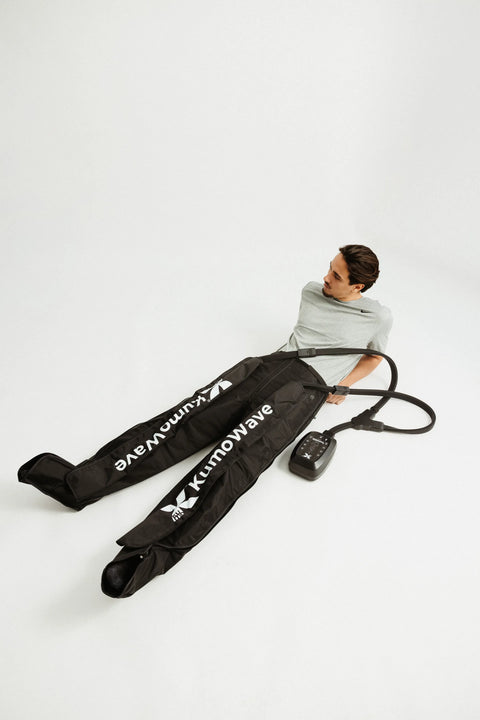
KumoWave Elite – Pressotherapy Pants
Full-coverage trousers. Ideal for lipedema, fluid retention and intensive use.
€799,00 €999,00
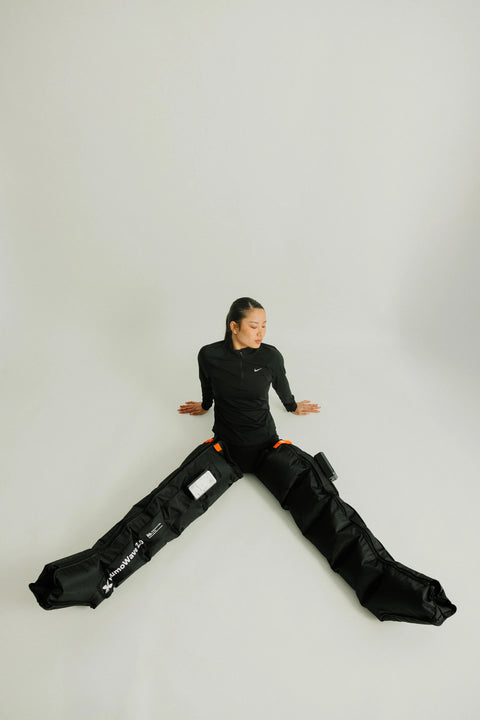
KumoWave 2.0 - Wireless Pressotherapy
Wireless, lightweight boots. Perfect for daily use and recovery.
€499,00 €599,00