Heats up better in just a few minutes.
Using a massage gun before training can help you arrive with less stiffness and a better range of motion, provided you apply it correctly: light pressure, short sessions, and on the muscle (not tendons or joints). In this practical guide, I'll explain how to incorporate it into your warm-up to prepare the tissue without overdoing it and ensure you start your workout feeling great.
Pressotherapy at home
End the day with light legs
★★★★★ 4,8/5 · rated by verified customers
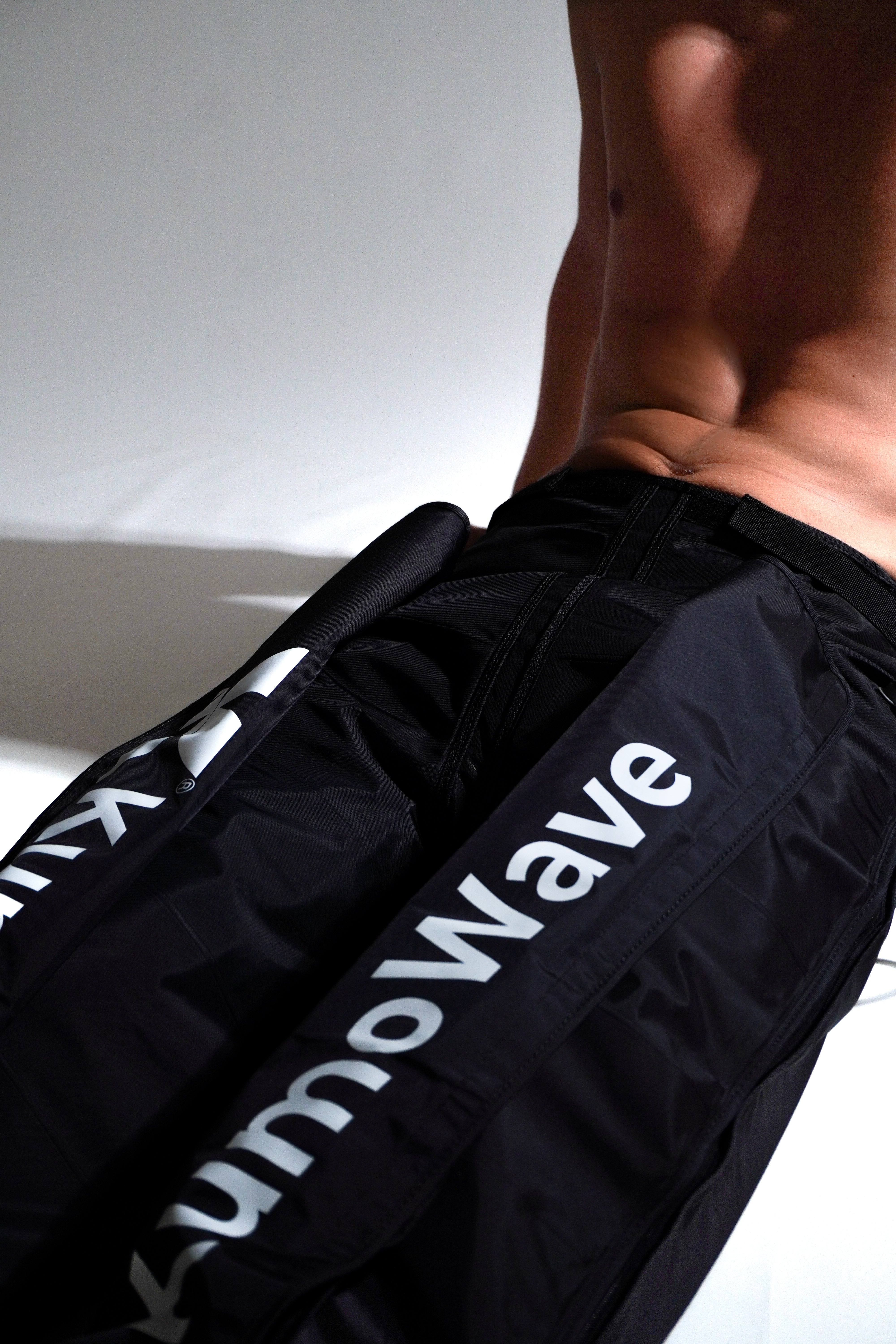
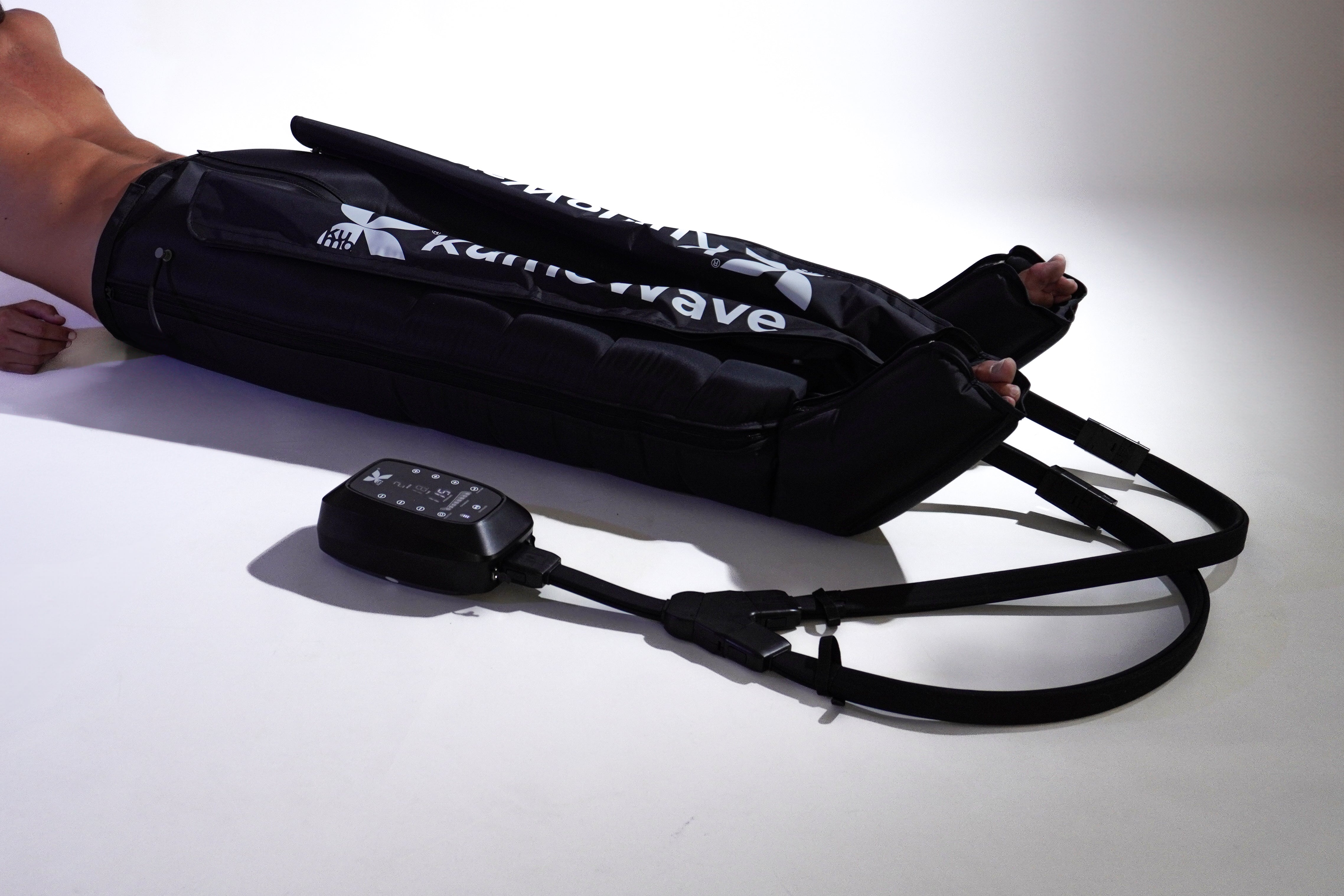
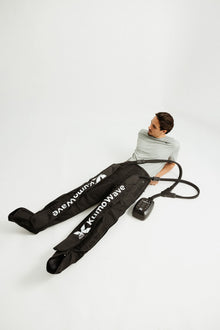
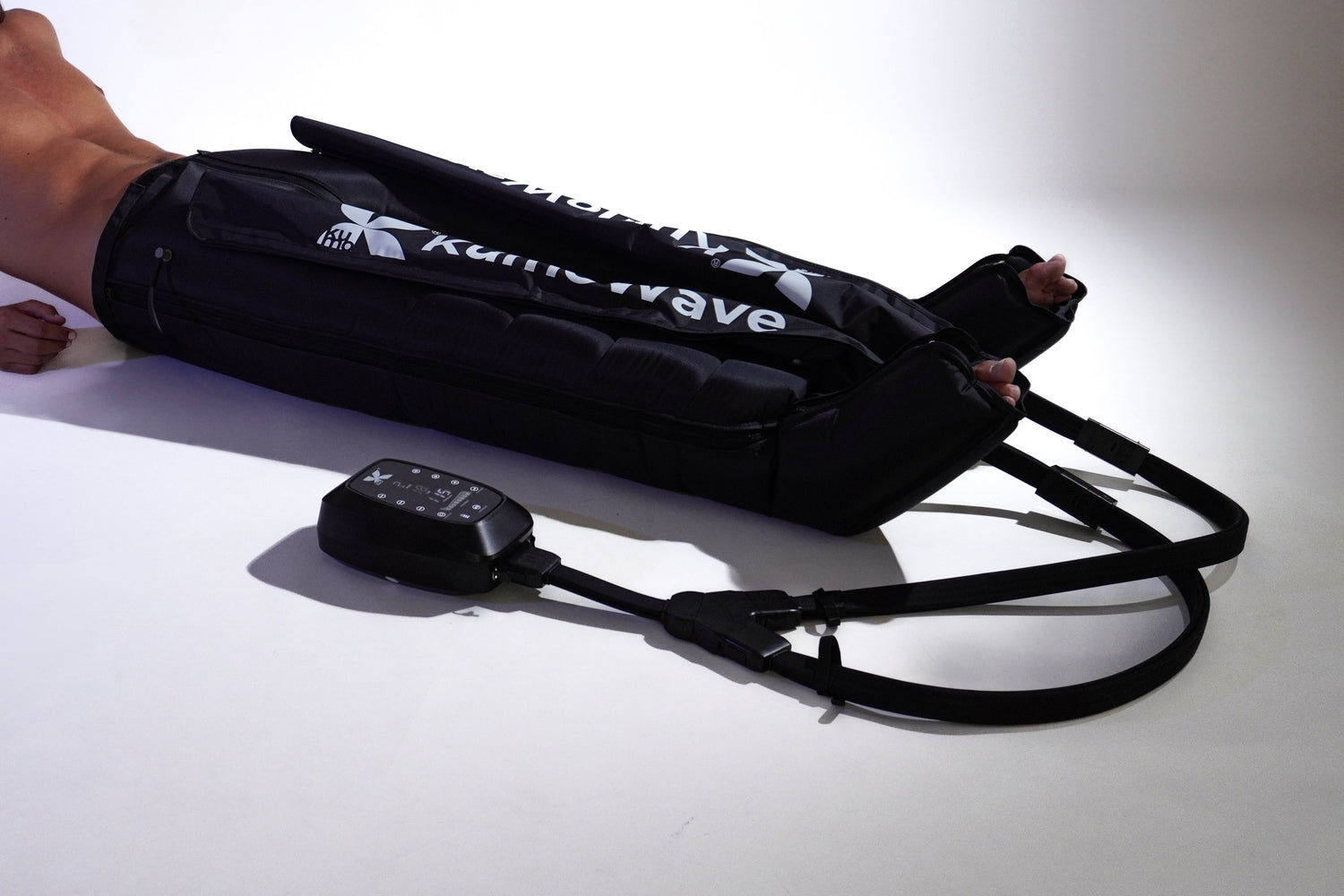
KumoWave pressotherapy boosts circulation and helps drain fluid with sequential compression, in 20-minute sessions at home.
- Boosts circulation and helps drain fluid
- Chamber-based compression, adjustable to you
- Sequential compression that mimics manual drainage
€799,00€999,00
−10% on your 1st order when you subscribe to the newsletter

At Kumo, we understand recovery as a smart routine: technology, aesthetics, and performance at the service of your well-being. If you want to explore the Kumo universe, start with the official Kumo website .
Why a massage gun might make sense before training
A massage gun (also called a percussion gun ) applies rapid impulses to soft tissue. When used correctly, it can act as a "bridge" between:
Personalized protocol · included with your purchase
Want us to tell you how to use it in your case?
With your purchase, our experts prepare a personalized usage protocol for your case: sport, circulation, fluid retention, pregnancy or lipedema.
Message us on WhatsAppOur experts reply · no obligation
- a general warm-up (raising body temperature and blood flow), and
- a specific warm-up (movements of the sport or lifts with progressive loads).
- It was observed that a percussive massage intervention increased ankle dorsiflexion range of motion by approximately +5.4° without significant changes in maximum voluntary strength measured immediately afterward. You can consult the article on PubMed Central: The Acute Effects of a Percussive Massage Treatment…
- It concludes that these tools can help improve ROM/flexibility and some recovery outcomes, although they are not the best option if your immediate goal is to maximize explosive movements (jumping, acceleration, agility), where the results are mixed. Source: The Effects of Massage Guns on Performance and Recovery: A Systematic Review (
Key idea: Before training, the massage gun isn't "stronger = better". It's less, but better : tissue preparation + dynamic activation.
What NOT to do: the mistake that overloads the muscle
The most common mistake is turning the massage gun into an intense "release" session right before training. This usually translates into:
- spending too much time in one area (staying "hammering" the spot),
- too much pressure (pushing like a rolling pin),
- passing through tendons or bony areas (unpleasant sensation and unnecessary risk),
- Use high intensities when you are still "cold".
The 2023 systematic review warns that, while it may improve ROM/flexibility, its use is not recommended as a strategy to improve performance in explosive tasks and, in some cases, may not provide improvements or may even worsen certain performance results. See: Systematic Review (2023) .
on your first order when you join the newsletter
We send you the code instantly. No spam.
Safety: simple rules to avoid injury (or arriving "soft")
Golden rules (easy to remember)
- First, warm up (even briefly). Then, fire the gun. After that, activate/move.
- Low pressure : let the device do the work.
- Short time : as a practical reference, no more than a couple of minutes per muscle group .
- Always on the muscular belly (the "fleshy" part), avoiding bones, joints and tendons.
- Pain = brake . The sensation should be one of "relief/activation", not sharp pain.
These guidelines align with clinical recommendations from publications such as the Cleveland Clinic, which emphasizes avoiding extra pressure and limiting the time spent on each muscle group . Source: Cleveland Clinic (2023): Massage Gun Usage Tips .
When to avoid it (or seek medical advice)
There are situations where percussion may not be appropriate. A systematic review (2023) compiles common contraindications and precautions: open wounds, recent fractures, clotting disorders or deep vein thrombosis , certain neuropathies, areas with implants or sensitive areas (neck/anterior neck, spine, etc.), among others. Source: Systematic Review (2023), Contraindications section .
Recommended protocol (Kumo): step by step before training
Think of this as a 3-layer warm-up. The massage gun is layer 2.
1) General warm-up (5–10 minutes)
Do 5–10 minutes of light to moderate activity (cycling, rowing, brisk walking, light jump rope). The goal is to raise your body temperature and “wake up” your system. This approach aligns with fitness recommendations focused on a general warm-up. Reference: NSCA: Introduction to Dynamic Warm-Up .
2) Massage gun (3–6 minutes, focused)
Now then: apply the gun to 2–4 key muscles you're going to use, not your entire body. If your workout is a leg workout, prioritize legs; if it's a pushing workout, prioritize chest/back/shoulders (carefully).
- Rhythm : slow, unhurried movements.
- Duration : 20–40 seconds per zone, repeating 1–2 passes; in total, maximum ~1–2 minutes per group .
- Intensity : Start low; increase only if the tissue tolerates it and there is no pain.
In studies compiled by the systematic review (2023), protocols vary widely (from very short applications of 15–30 seconds to interventions lasting several minutes), reinforcing a practical idea: for warm-ups, short and specific is best . Source: Systematic Review (2023) .
3) Activation and specific movements (4–8 minutes)
It ends with dynamic and specific movements: bodyweight squats, lunges, hip hinges, gentle hops, warm-up sets with an empty barbell, etc. This phase "converts" the feeling of mobility into performance.
Express workout routine ready to copy (based on your training)
Table: Quick pre-workout massage gun protocol (5–8 minutes)
| Session type | Target muscles | Recommended time | What to do right after |
|---|---|---|---|
| Leg (squat / lunges) | Quadriceps, gluteus medius/maximus, adductors (light) | 30–45 s per zone (1–2 passes). Max. 1–2 min per group. | 2–3 sets of bodyweight squats + 2 sets with progressive overload |
| Leg (deadlift / hinge) | Hamstrings, glutes, lower back muscles (without touching the spine) | 30–40 seconds per zone. No extra pressure. | Hinge with stick + glute bridge + approximation sets |
| Running / field (accelerations) | Gastrocnemius and soleus, quadriceps, glutes | 20–30 s per zone (very brief) | Skipping, heel-to-buttocks, progressive 60–80 m |
| Upper body (push) | Pectoralis major (belly), latissimus dorsi, triceps | 20–40 s per zone | Scapular mobility + gentle push-ups + approximation sets |
If you're looking for a massage gun within the Kumo ecosystem, you can check out KumoPulse Air (product page) and fit it into a consistent warm-up and recovery routine.
Zone technique (to hit the target)
Legs: quadriceps, hamstrings, calves
- Quadriceps : works the middle part of the thigh, avoiding the knee (patella and bony edges).
- Hamstrings : at the back of the thigh; avoid the hollow behind the knee.
- Gastrocnemius/soleus : helpful if you notice "closed" ankles. Keep the work on the muscle, not the Achilles tendon.
- Acute improvement in ankle ROM has been observed after percussive massage, which may be relevant for patterns such as deep squats or running. Source: PMC (
Glutes and hips: when the warm-up "doesn't work"
If you often experience stiffness in your hips, prioritize working your gluteus maximus and gluteus medius. Avoid focusing on the iliac crest (bone) and don't dwell on any painful spot. Finish with activation exercises (monster walks, glute bridges, lunges) to help your hips respond in a controlled manner.
Back: yes, but without a spine
You can work your latissimus dorsi and paravertebral muscles, always keeping the pressure on muscle tissue and away from the spinous processes (the bony "line" of the spine). If you experience neck pain, avoid the neck: it's a sensitive area and not the place for intense percussion.
Signs you're overdoing it (and how to fix it in 30 seconds)
- Sharp pain, stabbing or burning → low intensity or stop.
- Bruising → there was excessive pressure/time; reduce dose in the next session.
- Tingling or numbness → possible nerve irritation; stop use and avoid that area.
- You feel "lacking spark" (especially before jumping or sprinting) → cut down to 15–30 s per muscle and prioritize dynamic activation.
If you want a rule of thumb: warming up should leave you more mobile and alert , not “squashed.” And if there are any medical conditions or safety concerns, it’s wise to consult a healthcare professional (the 2023 review lists several situations where caution or avoidance is recommended). Source: Systematic Review (2023) .
How it fits into a Kumo recovery routine (beyond pre-workout)
The massage gun is a powerful tool, but it works best when it's part of a system. At Kumo, we usually approach it this way:
- Before training : massage gun (a little and well) + activation.
- After training : strategies that promote rest and circulation, depending on your case.
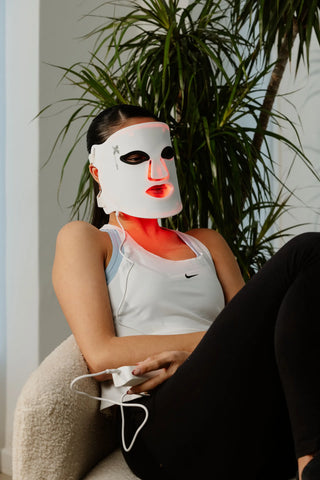
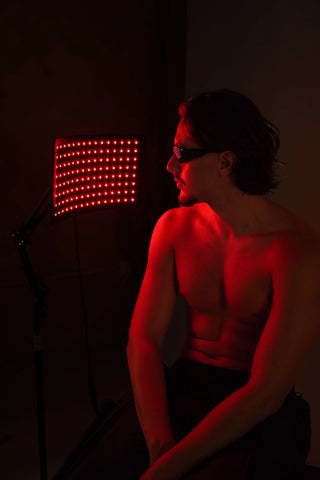
If your goal is to care for your legs and improve circulation after strenuous activities (long hours on your feet, travel, running, strength training), you can explore compression boots . To complement recovery and rest, some users incorporate red/LED light therapy into their wellness routine; at Kumo you can see LED light therapy (always as a support and not as a replacement for basic habits such as sleep, nutrition, and progressive overload).
And if you need guidance on which technology best fits your routine, you can visit Kumo's contact page.
FAQ: Kumo massage gun before training
How long should I use KumoPulse Air before training?
As a general rule, apply the massage gun to 2–4 key muscles for a total of 3–6 minutes. Hold each area for 20–45 seconds per stroke and avoid exceeding 1–2 minutes per muscle group. The goal is to prepare the tissue, not fatigue it. Furthermore, scientific evidence shows highly variable protocols, ranging from seconds to minutes, so for pre-workout, a short session followed by dynamic activation usually works best. If you notice you're losing energy, shorten the session even further and prioritize specific movements.
Is it better to use the massage gun before or after general warm-up?
- raise temperature
- massage gun focused on hardened areas
- Mobility/activation and approach sets. This order is consistent with dynamic warm-up guidelines aimed at preparing the body without generating unnecessary fatigue.
Can I use a Kumo massage gun on my neck or directly on my spine?
It's not a good idea. In general, the safety recommendation is to avoid sensitive areas like the neck/front of the neck and always apply percussion to muscle bellies, not bones or joints. Percussion in areas with superficial vascular and nerve structures increases the risk of discomfort or injury. If your goal is to relieve neck tension, it's usually wiser to work on gentle mobility, breathing, and (if appropriate) consult a physiotherapist. For the back, focus on the latissimus dorsi and surrounding muscles, avoiding the bony line of the spine.
What should I do if I feel pain or a bruise appears after using KumoPulse Air?
Stop and reduce the intensity in the next session. A bruise usually indicates excessive pressure, too long a session, or a poorly chosen area (near bone, muscle insertions, or sensitive areas). In the moment, apply the "less is more" rule: lower the intensity, move more slowly but with less pressure, and limit the time per muscle group. If there is sharp pain, tingling, loss of strength, or symptoms that do not resolve, it is wise to consult a healthcare professional before using the gun again.
So what now?
If you want to make recovery a habit (and not just a temporary fix when it's already hurting), explore the KumoPulse Air massage gun and combine it with complementary tools like compression therapy or LED light therapy . And if you need help choosing your routine, you can write directly from the contact page.
KumoWave pressotherapy
Choose your at-home pressotherapy
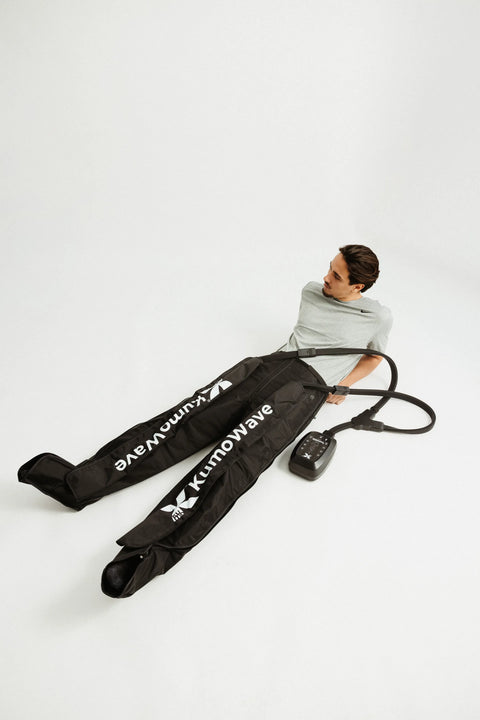
KumoWave Elite – Pressotherapy Pants
Full-coverage trousers. Ideal for lipedema, fluid retention and intensive use.
€799,00 €999,00
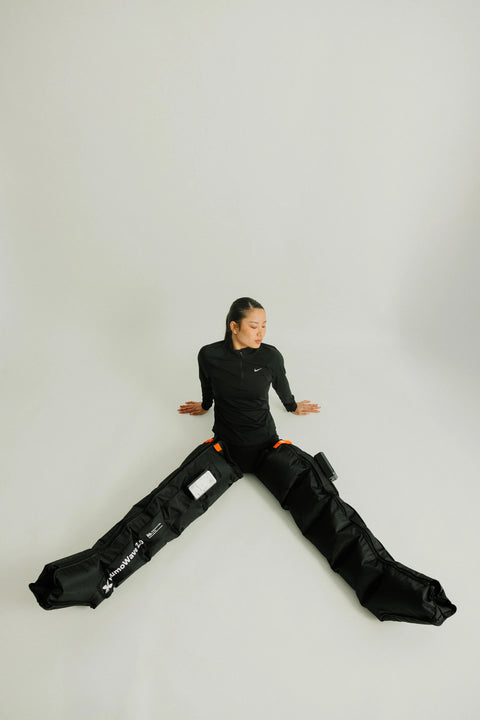
KumoWave 2.0 - Wireless Pressotherapy
Wireless, lightweight boots. Perfect for daily use and recovery.
€499,00 €599,00