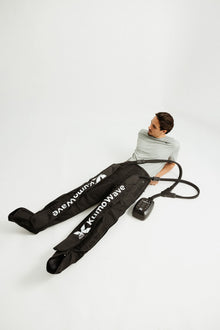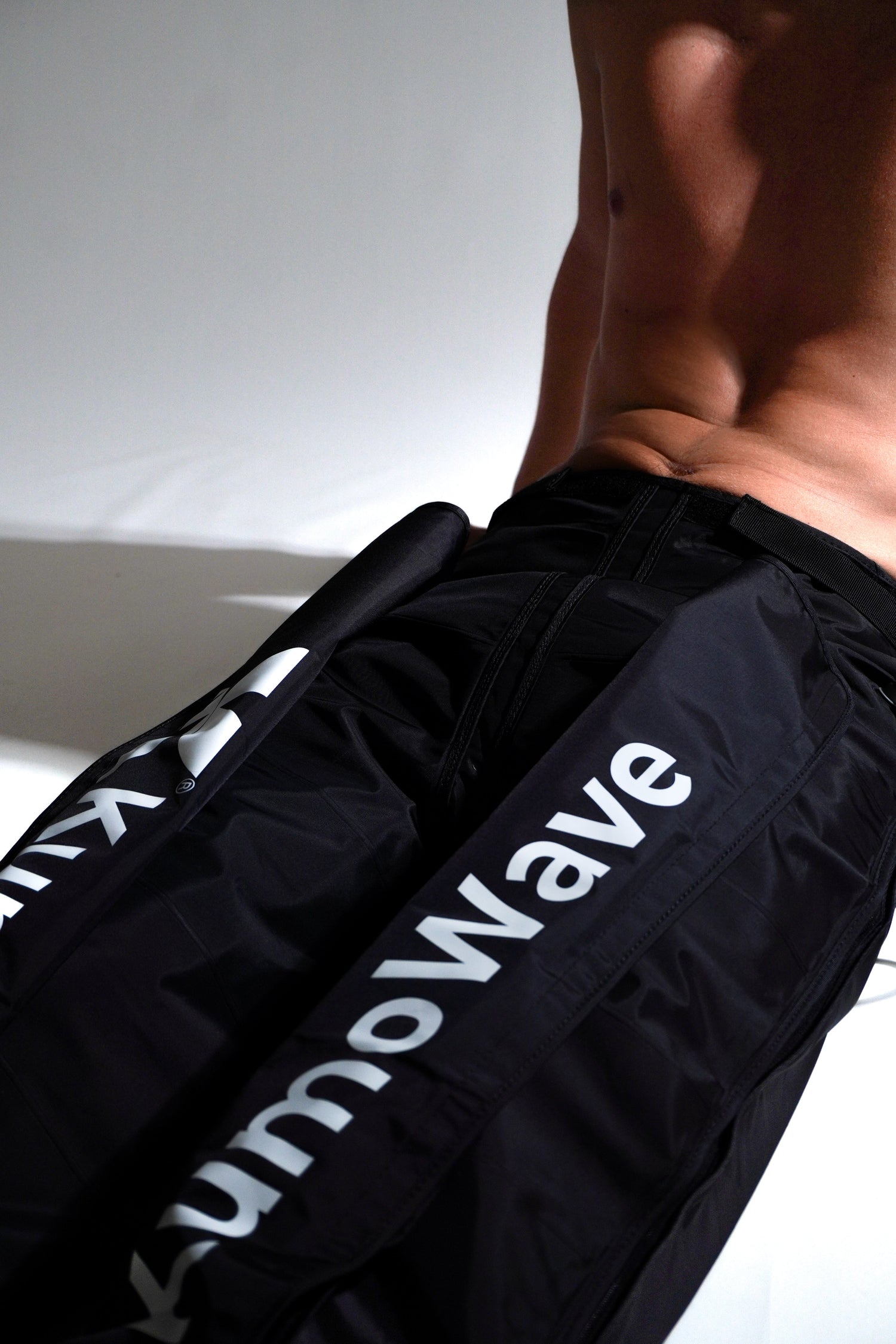
Better recovery means better training.
If you want to reduce the feeling of heavy legs and get back to your best level faster, combining pressotherapy (intermittent pneumatic compression) and stretching can be a very effective routine… as long as it's done in the right order, with realistic durations, and respecting any contraindications. In this guide, you'll learn when to use each tool, how to integrate them after different types of training, and what the evidence says about their results.
Pressotherapy at home
End the day with light legs
★★★★★ 4,8/5 · rated by verified customers
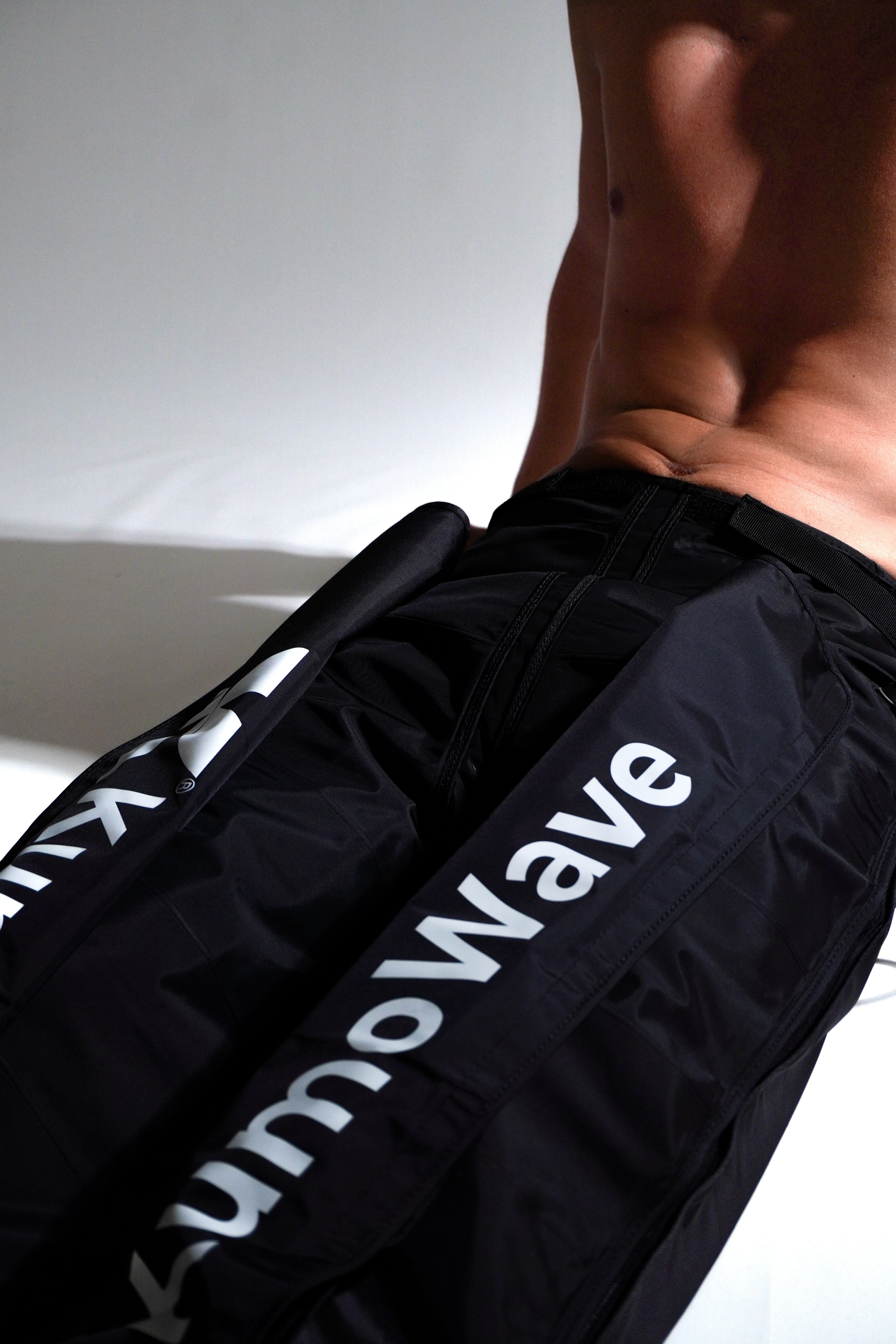
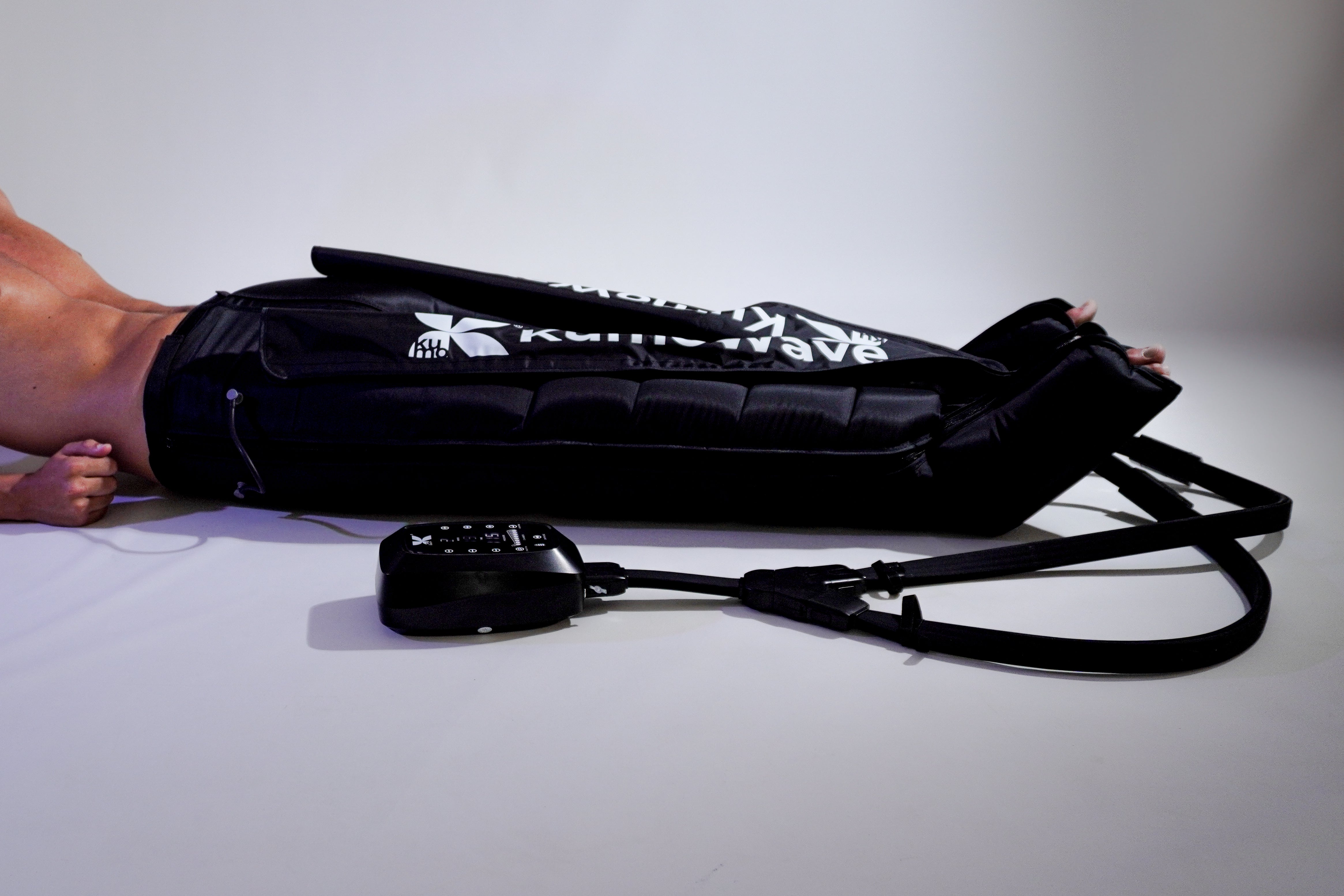
KumoWave pressotherapy boosts circulation and helps drain fluid with sequential compression, in 20-minute sessions at home.
- Boosts circulation and helps drain fluid
- Chamber-based compression, adjustable to you
- Sequential compression that mimics manual drainage
€799,00€999,00
−10% on your 1st order when you subscribe to the newsletter

At Kumo, we like to simplify recovery and make it a habit: technology, well-being, and performance, all in one ritual. You can learn more about the brand's philosophy at Kumo .
Pressotherapy + stretching: what you can expect (and what not to expect)
Before discussing protocols, it's important to adjust expectations:
Personalized protocol · included with your purchase
Want us to tell you how to use it in your case?
With your purchase, our experts prepare a personalized usage protocol for your case: sport, circulation, fluid retention, pregnancy or lipedema.
Message us on WhatsAppOur experts reply · no obligation
- Pressotherapy is often used to promote venous return and leg comfort. In sports, evidence suggests small benefits in muscle function and trivial to moderate benefits in pain/muscle soreness, with variable results depending on the study and protocol (systematic review and meta-analysis, 2024). Source (PubMed) .
- Post-workout stretching is useful for improving mobility and "winding down," but it's not a magic bullet for muscle soreness: a systematic review and meta-analysis (2021) found no clear effects compared to passive rest for regaining strength or reducing DOMS at 24–72 h. Source (PubMed) .
Key idea: Use pressotherapy to promote a feeling of lightness and a circulatory "reset," and stretching to maintain or improve range of motion and release tension. Together, they complement each other , not by promising miracles.
What is pressotherapy and why is it such a good fit after training?
Intermittent pneumatic compression (IPC) therapy applies cycles of compression and decompression using air chambers on the legs. In a clinical setting, these devices are used to increase venous blood flow and help prevent blood clots in situations of immobility. Source (Johns Hopkins Medicine) .
How it can help you in sports recovery
For athletes and the working population, the objective is usually more "practical":
on your first order when you join the newsletter
We send you the code instantly. No spam.
- Reduce the feeling of heaviness after impacts, running volume or leg workouts.
- Improve comfort when you train again the next day or spend many hours sitting down.
- Support the detox routine without being aggressive (unlike some intense massage techniques).
Regarding protocols, sports literature frequently mentions 20-30 minute sessions and pressures around 80 mmHg as commonly used options in studies (2024). Source (PubMed) .
An important point about the evidence
Not all studies find improvements. For example, a trial in long-distance runners (2020) observed no significant differences in perceived pain or C-reactive protein compared to the control group, despite using IPC for several days. Source (PubMed) . This does not invalidate its use, but it does suggest that the response depends on the type of training, the context (fatigue, sleep, nutrition), the protocol, and the variable measured (feeling vs. biomarkers).
What are the practical benefits of stretching after training?
Post-workout stretching is used for three main reasons:
- Mobility and joint range: maintain or regain "sense of spaciousness" in hips, ankles, hamstrings, etc.
- Relaxation and breathing: facilitating the transition to rest, especially during intense training.
- Movement hygiene: detecting "closed" areas and preventing compensations in the next session.
Recommended duration (without overcomplicating things)
As a general reference, the guidelines cited by the American Heart Association (2024), in line with ACSM, suggest that most adults hold each stretch for 10–30 seconds , and that older adults can hold it for up to 1 minute for flexibility. Source (AHA) .
What type of stretching to choose after training
- Smooth and sustained (static): ideal at the end, when the pulse has already decreased.
- Controlled mobility (slow dynamic): useful if you start out "rigid" and prefer movement without holding positions.
- Avoid bouncing: stretching in jerky motions usually provides less control and a greater risk of discomfort, especially in the lower back. Source (AHA) .
Order matters: 3 ways to combine pressotherapy and stretching
Option 1 (the simplest): pressotherapy first, stretching afterwards
When to choose it: when you finish with very heavy legs (running, squats, lunges, jumping sports) and you want to prioritize the feeling of lightness.
- 5–8 min cool-down: gentle walking or very light cycling.
- 20–30 minutes of pressotherapy at a comfortable pressure (without pain or tingling). In sports studies, ~20–30 minutes and ~80 mmHg are often seen as a common reference (2024). Source .
- 8–12 min of static stretching: 4–6 positions, 10–30 s per side, slow nasal breathing. Source (AHA, 2024) .
Why it works: you leave the pressotherapy with a feeling of "looser legs" and you stretch more calmly and with less impulse to force.
Option 2: Short stretches (mobility) followed by pressotherapy
When to choose it: if you end up very “shortened” (psoas/quad/hamstrings) or with joint stiffness, and you want to regain mobility without waiting.
- 3–5 min of mobility: controlled hip swings, ankle against wall, unloaded hip hinge.
- 20–30 min of pressotherapy to complete the discharge and relax.
Tip: Leave longer static stretches for later (at night), especially if you notice your body "cools down" quickly.
Option 3 (double session): pressotherapy after training + stretching at night
When to choose it: when you train in the morning or at midday and at the end of the day you want to improve mobility and sleep.
- Post-workout: pressotherapy 20–30 min.
- Night: 10–15 min of gentle stretching + diaphragmatic breathing.
This approach distributes stimuli, reduces "hurry" and is usually the easiest to sustain during busy weeks.
Table of rapid protocols according to the type of training
A practical guide (no fluff) for deciding on timing and focus
| Session type | Main objective | Pressotherapy | Stretching | Recommended order |
|---|---|---|---|---|
| Running (series / long run) | Reduce the feeling of heaviness and fatigue in the legs | 20–30 min (comfortable pressure) | 8–12 min (gastrocnemius, soleus, hamstrings, gluteus maximus) | Pressotherapy → Stretching |
| Strength (legs: squat, deadlift, lunges) | Release back and hip muscles | 20–30 min | 10–15 min (hips, flexors, hamstrings, adductors) | Short stretch (mobility) → Pressotherapy |
| HIIT / Cross training | “Lower your heart rate” and download | 15–25 min | 6–10 min (gentle, no bouncing) | Pressotherapy → Stretching |
| Day with a lot of sitting (office/travel) | Comfort and circulation | 20–30 min | 5–8 min (ankle + hip) | Pressotherapy + brief mobility |
Guided routine: leg recovery in 35 minutes (step by step)
This sequence is designed for most people who train 3–5 days/week and want a stable ritual.
- Min 0–5: Cool down. Walk, cycle gently, or do 2–3 rounds of 30s of slow breathing (inhale 4s, exhale 6s).
- 5–30 min: Leg compression therapy. If using boots, apply them without creases and avoid pressure that causes pain, numbness, or tingling. Protocols of 20–30 min are frequently reported in sports research (2024). Source .
- Min 30–35: “minimum effective” stretches (10–30 s per side): gastrocnemius/soleus (wall), hip flexor (lunge), gluteus (figure 4 on the floor), hamstrings (gentle hinge). Source (AHA, 2024) .
Common mistakes that hinder recovery
- Forcing stretches as if they were a "punishment": stretching with pain is not more effective and can irritate tissues.
- Skipping the cool-down: 5 easy minutes usually improve the transition a lot.
- Using excessively high pressure: more pressure does not always mean better results; prioritize comfort and adhesion.
- Believing that stretching eliminates muscle soreness: the evidence (2021) does not support significant effects of post-workout stretching on DOMS compared to rest. Source .
Safety: contraindications and warning signs
Compression (including intermittent pneumatic compression) is used in medicine, but it is not for everyone . A consensus article on the risks/contraindications of compression treatments describes serious adverse events as very rare (reported incidence <0.01%), and details relevant contraindications such as severe peripheral arterial disease (e.g., ABPI <0.6) or severe heart failure (NYHA IV), among others. Source (Phlebolymphology/Servier) .
When to avoid pressotherapy (or consult a doctor beforehand)
- Intense, new, unilateral pain or swelling in one leg, local heat or redness (urgent consultation to rule out vascular problems).
- Diagnosis of severe peripheral arterial disease or very weak foot pulses (requires medical evaluation). Source .
- Advanced or decompensated heart failure (prior consultation required). Source .
- Marked loss of sensation (neuropathy) or very fragile skin: increases the risk of pressure injury if the fit is incorrect. Source .
How to integrate it into your week (without living "in recovery")
- 2–3 days/week: pressotherapy 20–30 min after hard leg sessions or running.
- Daily (optional): 5–10 min of gentle mobility (ankle, hip, thoracic spine).
- 1–2 nights/week: longer stretches (10–15 min) if your goal is flexibility and relaxation.
This generally aligns with what stretching guidelines also indicate: consistency and moderate dosage (AHA, 2024). Source .
How to take this routine to the next level with Kumo (without complicating things)
If you like to turn recovery into a "premium" ritual (comfortable, aesthetic and easy to maintain), you can rely on the Kumo ecosystem:
- Compression therapy boots: for your leg relief and comfort sessions. Find the collection in the compression therapy section .
- Targeted muscle massage: For calves, gluteus medius, or soles of the feet, a massage gun can be useful as a localized complement (always with tolerance and without going "on the pain"). You can check out the KumoPulse Air massage gun .
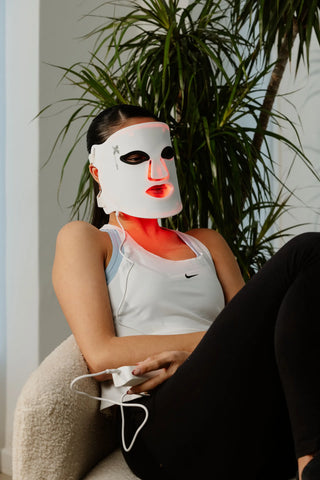
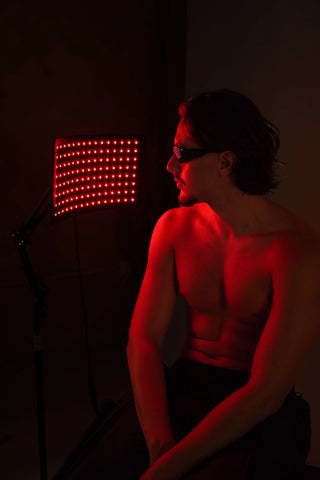
- LED light (as a wellness habit): if you already work on rest and body care routines, LED light therapy can be part of your recovery and relaxation "hygiene" at home.
Important note: each tool serves a different purpose; prioritize what has the greatest impact on your case (sleep, training load, nutrition) and use technology as sustainable support, not as a substitute for the basics.
FAQ: Frequently asked questions about Kumo, pressotherapy and stretching
How long should I wear Kumo compression boots after training?
In sports, many research protocols use sessions of approximately 20–30 minutes , and this range is usually a good starting point for most people, provided it's comfortable and doesn't cause tingling or pain. A systematic review and meta-analysis (2024) specifically describes durations of 20–30 minutes and pressures around 80 mmHg as frequently used options. Adjust the pressure to your tolerance and prioritize consistency: 2–3 times per week after strenuous sessions is usually more beneficial than overdoing it on a single day.
Is it better to do stretching before or after pressotherapy?
It depends on your goal. If you end up with heavy legs and are looking to relieve tension, compression therapy followed by stretching is usually a good idea, because you can stretch more relaxed and without rushing. If, on the other hand, you end up with stiffness in your joints (hips/ankles), do 3–5 minutes of gentle mobility exercises and then compression therapy. In either case, avoid stretching with bouncing or pain, and hold positions for 10–30 seconds as a general guideline (AHA, 2024).
Does Kumo pressotherapy replace stretching?
No, they are different tools. Pressotherapy is more associated with comfort and a feeling of lightness in the legs, while stretching aims to maintain or improve mobility and body control. Furthermore, evidence on post-workout stretching suggests no clear effects on muscle soreness or strength recovery compared to rest (meta-analysis, 2021), so it's best to view stretching as a mobility/relaxation exercise rather than as a way to "relieve muscle soreness." Combining them makes sense when you use each with a clear objective.
Can I use pressotherapy if I have varicose veins or legs that tend to swell?
Compression is widely used in venous contexts, but the individual decision depends on your situation (symptoms, diagnosis, tolerance, skin type, sensitivity, and arterial health). A consensus statement on compression outlines clear contraindications (e.g., severe peripheral arterial disease or severe heart failure) and emphasizes that many problems arise from incorrect indication or application. If you experience new pain, significant swelling, discoloration, loss of sensation, or have concerns about vascular pathology, it is wise to consult a healthcare professional before using compression devices at home.
So what now?
If you want to make this combination a simple habit, start with the essentials: 20–30 minutes of compression therapy + 8–12 minutes of stretching on your tough leg days. Explore compression therapy boots and complete your routine with wellness tools like LED light therapy or a targeted massage with the KumoPulse Air . If you need guidance on what best fits your routine, you can contact us through our contact page.
KumoWave pressotherapy
Choose your at-home pressotherapy
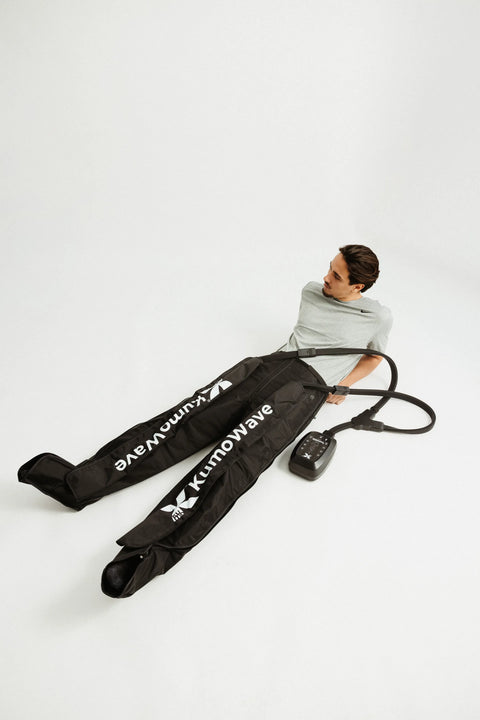
KumoWave Elite – Pressotherapy Pants
Full-coverage trousers. Ideal for lipedema, fluid retention and intensive use.
€799,00 €999,00
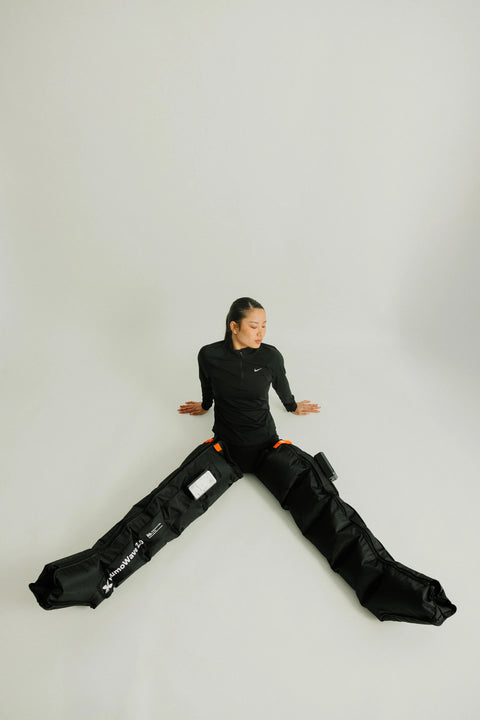
KumoWave 2.0 - Wireless Pressotherapy
Wireless, lightweight boots. Perfect for daily use and recovery.
€499,00 €599,00