Pressure matters.
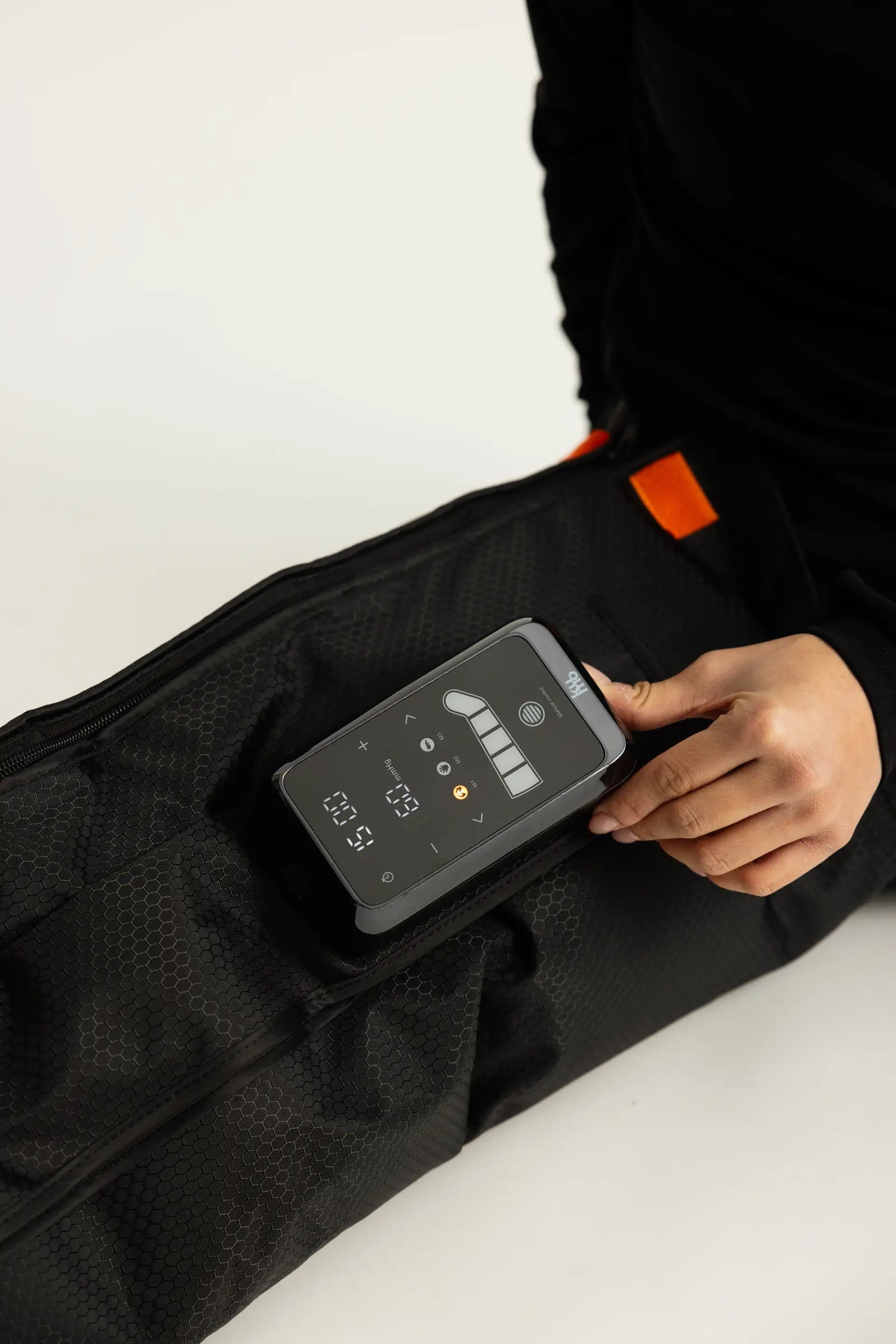
In pressotherapy, choosing the right mmHg isn't about setting the maximum, but rather adjusting the intensity to the goal, the treated area, and personal tolerance. In clinical literature, protocols vary greatly between arms and legs, and there isn't a single valid number for everyone.
Pressotherapy at home
End the day with light legs
★★★★★ 4,8/5 · rated by verified customers
KumoWave pressotherapy boosts circulation and helps drain fluid with sequential compression, in 20-minute sessions at home.
- Boosts circulation and helps drain fluid
- Chamber-based compression, adjustable to you
- Sequential compression that mimics manual drainage
€829,00€999,00
−10% on your 1st order when you subscribe to the newsletter

If you're still unclear on the basics, it's best to first review what pressotherapy is and how it works and what sequential compression means and how it feels. The Mayo Clinic guide on lymphedema describes sequential pneumatic compression as a support to move fluid out of the limb.
The basic rule: goal, treated area, and tolerance
There is no universal pressure. An NCBI review on intermittent pneumatic compression for lymphedema collected trials with pressures ranging from 25 to 60 mmHg, while a more recent systematic review cited 60-120 mmHg for legs and 25-60 mmHg for arms. The National Cancer Institute's PDQ adds that there is a theoretical concern when exceeding 60 mmHg for prolonged periods. From this, it can be inferred that the best pressure is not the highest, but the one that fits your goal and tolerance.
Personalized protocol · included with your purchase
Want us to tell you how to use it in your case?
With your purchase, our experts prepare a personalized usage protocol for your case: sport, circulation, fluid retention, pregnancy or lipedema.
Message us on WhatsAppOur experts reply · no obligation
The best pressure is the one that produces an effect without pain, tingling, or deep marks; if this does not happen, the level is poorly adjusted. (pmc.ncbi.nlm.nih.gov)
Indicative pressure ranges according to your goal
The following table summarizes common ranges in the literature on intermittent pneumatic compression. It does not replace an individual assessment, but it does help understand where to start and when it makes sense to increase or decrease.
| Goal | Indicative Range | When it usually fits | Clinical Basis |
|---|---|---|---|
| Adaptation or first contact | 25–40 mmHg | If you are looking for a gentle sensation, have little experience, or want to assess tolerance without forcing. | Evidence of early prevention and several IPC protocols operate within this low ceiling. (pubmed.ncbi.nlm.nih.gov) |
| Heavy legs, mild retention or recovery | 40–60 mmHg | If the goal is a more noticeable compression, but still comfortable and well-tolerated. | This interval is very present in reviews and trials on edema and lymphedema. |
| Lower limbs with more pronounced edema | 60–120 mmHg | When the indication is more intensive and there is professional supervision or prior experience with the technique. | It has been studied mainly in legs; one trial compared 120 vs 60 mmHg. |
| Arms or more sensitive areas | 25–60 mmHg | When the priority is to work gently and maintain a more moderate compression. | It is the most cited range for upper limbs in the most recent review. |
If you don't know where to start, always use the lower end of the range that corresponds to your goal and only increase if the session feels comfortable and the result is insufficient. To fine-tune the adjustment, how to adjust pressure in mmHg without overdoing it may be helpful; and to fit the use into your week, how often to do pressotherapy and how long per session also helps.
on your first order when you join the newsletter
We send you the code instantly. No spam.
- The pressure is too high if pain, tingling, or numbness appears during the session.
- It's also advisable to lower it if deep marks remain or the compression becomes uncomfortable before finishing.
- If the goal is gentle or preventive, the literature usually moves in moderate ranges and not at the maximum available.
What the evidence says about increasing or decreasing pressure
An NCBI review on intermittent pneumatic compression devices in lymphedema summarized trials with pressures from 25 to 60 mmHg and also some more intensive studies in lower limbs. In that synthesis, the benefit depended on the protocol, not just the mmHg number.
A 2025 systematic review on pressures in legs and arms reported sessions of 45 to 120 minutes, between 3 and 7 days per week, with 60-120 mmHg for the legs and 25-60 mmHg for the arms. This distribution reinforces the idea that the treated limb greatly changes the choice.
In a clinical trial on 60 versus 120 mmHg in lower limbs, 120 mmHg pressure reduced edema more than 60 mmHg in the context of mixed lymphedema of the legs. Even so, this result cannot be automatically applied to everyone or every device.
The Mayo Clinic guide presents sequential compression as part of lymphedema management, and the National Cancer Institute's PDQ reminds us that there is a theoretical concern if pressures above 60 mmHg are maintained for a long time.
Caution: if there is suspicion of thrombosis, active infection, decompensated heart failure, or significant arterial disease, it is not advisable to self-adjust the pressure. The S1 guide on IPC insists on reviewing contraindications, and the international review on compression points out that serious events are rare when the indication is correct and the safety profile is respected. (pubmed.ncbi.nlm.nih.gov)
If your question is more strategic than technical, it may help you choose between pressotherapy and manual lymphatic drainage depending on your case. Based on comparative evidence, it can be inferred that the best option depends mainly on the goal, tolerance, and the need to repeat the treatment at home.
Common mistakes when choosing pressure
- Confusing intensity with effectiveness and starting at the maximum without having tried moderate pressure.
- Using the same value for arms and legs, when the literature clearly separates both contexts.
- Continuing even if pain, tingling, or clear discomfort appears, which usually indicates poor tolerance.
- Forgetting that there are situations where compression should be evaluated by a professional before using it at home.
Frequently asked questions about pressure in pressotherapy
What pressotherapy pressure is best for heavy legs?
For heavy legs, many people start between 40 and 60 mmHg because it is a sufficiently noticeable range without yet reaching high intensities. If you are sensitive, it is advisable to lower it a little; if you are looking for a more marked action and tolerate compression well, you can approach the upper part of the range. The key is to finish the session without pain, tingling, or a suffocating sensation. The available evidence on IPC in legs fits quite well with this progressive adjustment logic.
Is it better to start with 30, 40, or 60 mmHg?
If it's your first experience, 30 or 40 mmHg is usually a more cautious entry than 60 mmHg. The reason is simple: prevention and gentle use literature reports low or moderate values, and high ranges are more reserved for specific goals and legs with a higher edema load. Starting low gives you room to evaluate tolerance and only increase if your body responds well. At home, this progressive approach is usually more useful than seeking the maximum from day one.
Does higher pressure pressotherapy give better results?
Not always. A trial in lower limbs found better results with 120 mmHg than with 60 mmHg in a specific case, but other reviews show effective protocols in much more modest ranges. Furthermore, the National Cancer Institute's PDQ warns of a theoretical concern when pressure exceeds 60 mmHg for a long time. In practice, this means that more pressure can help in some cases, but it can also increase discomfort and does not guarantee a universally better result.
What pressure is used on arms and what pressure on legs?
The most recent review indicates approximately 25-60 mmHg for arms and 60-120 mmHg for legs. This difference makes sense because the size of the limb, tissue tolerance, and treatment goal are not the same. If you have a system with fine adjustment, it is reasonable to start at the lower end of the corresponding interval and only advance if the session is comfortable. It is not advisable to copy the pressure from a leg to an arm or vice versa.
When should I lower the pressure or stop the session?
You should lower the pressure or stop if you notice pain, tingling, numbness, very deep marks, increased discomfort, or any strange sensation that does not disappear when you reduce the intensity. It is also advisable to stop and consult if atypical swelling, respiratory discomfort appears, or if you have risk factors that may change the safety of compression. IPC guidelines insist on reviewing contraindications, and the international review of compression reminds us that good use depends on both the indication and tolerance.
What now?
If you are going to try pressotherapy at home, start with moderate pressure, observe the sensation, and adjust only if it fits your goal. To further refine, explore the home pressotherapy collection and return to the Kumo Balance homepage for the full approach.
KumoWave pressotherapy
Choose your at-home pressotherapy
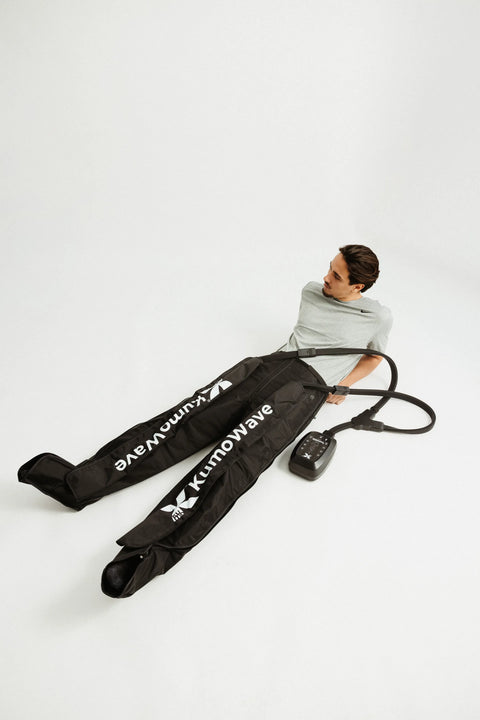
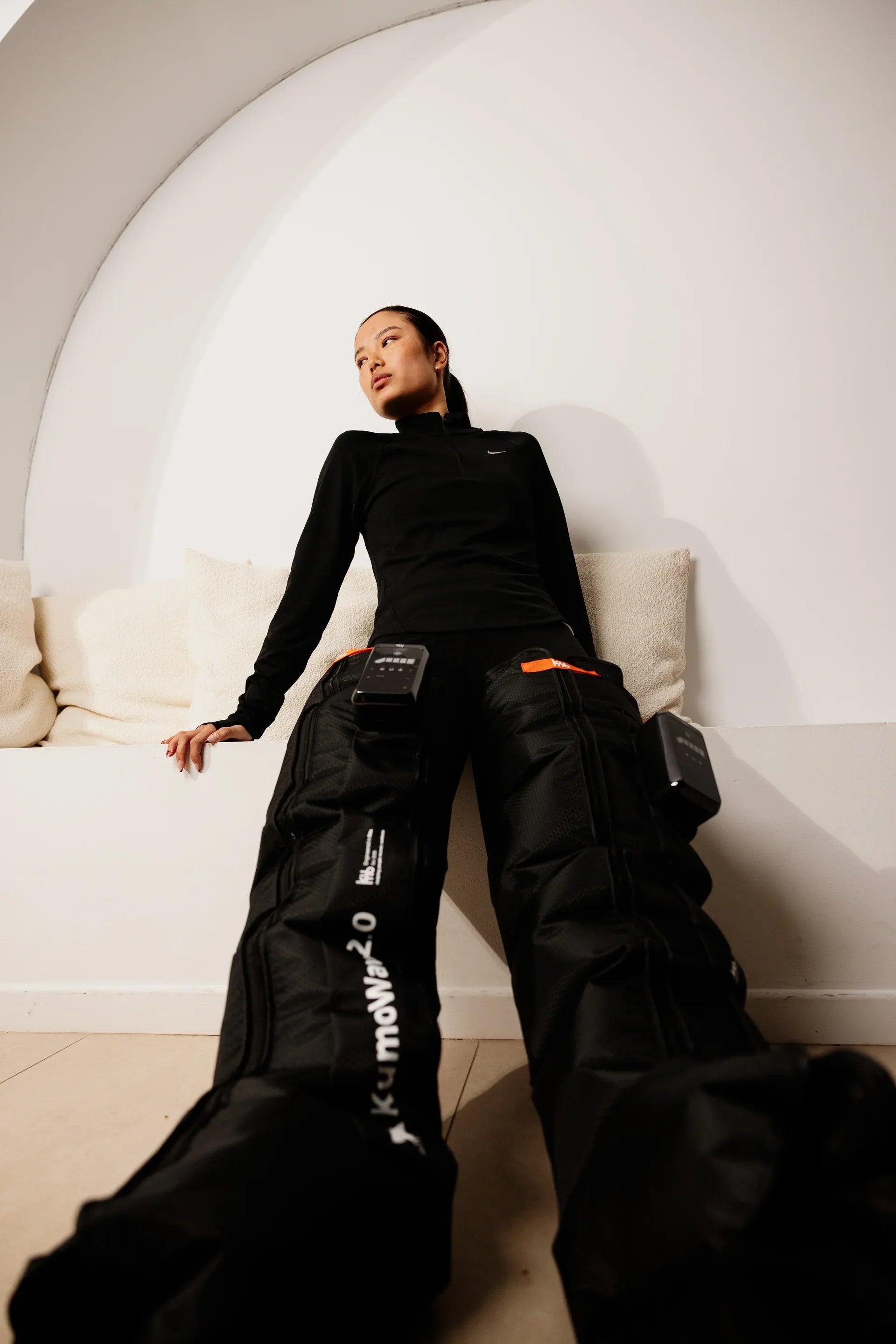
KumoWave Elite – Pressotherapy Pants
Full-coverage trousers. Ideal for lipedema, fluid retention and intensive use.
€829,00 €999,00
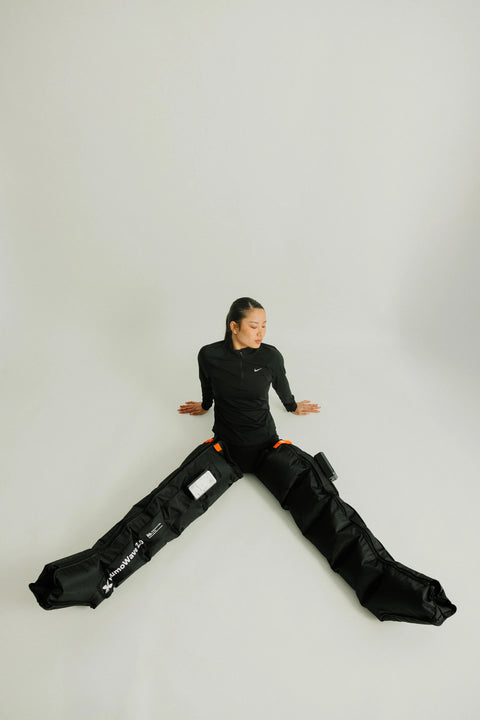
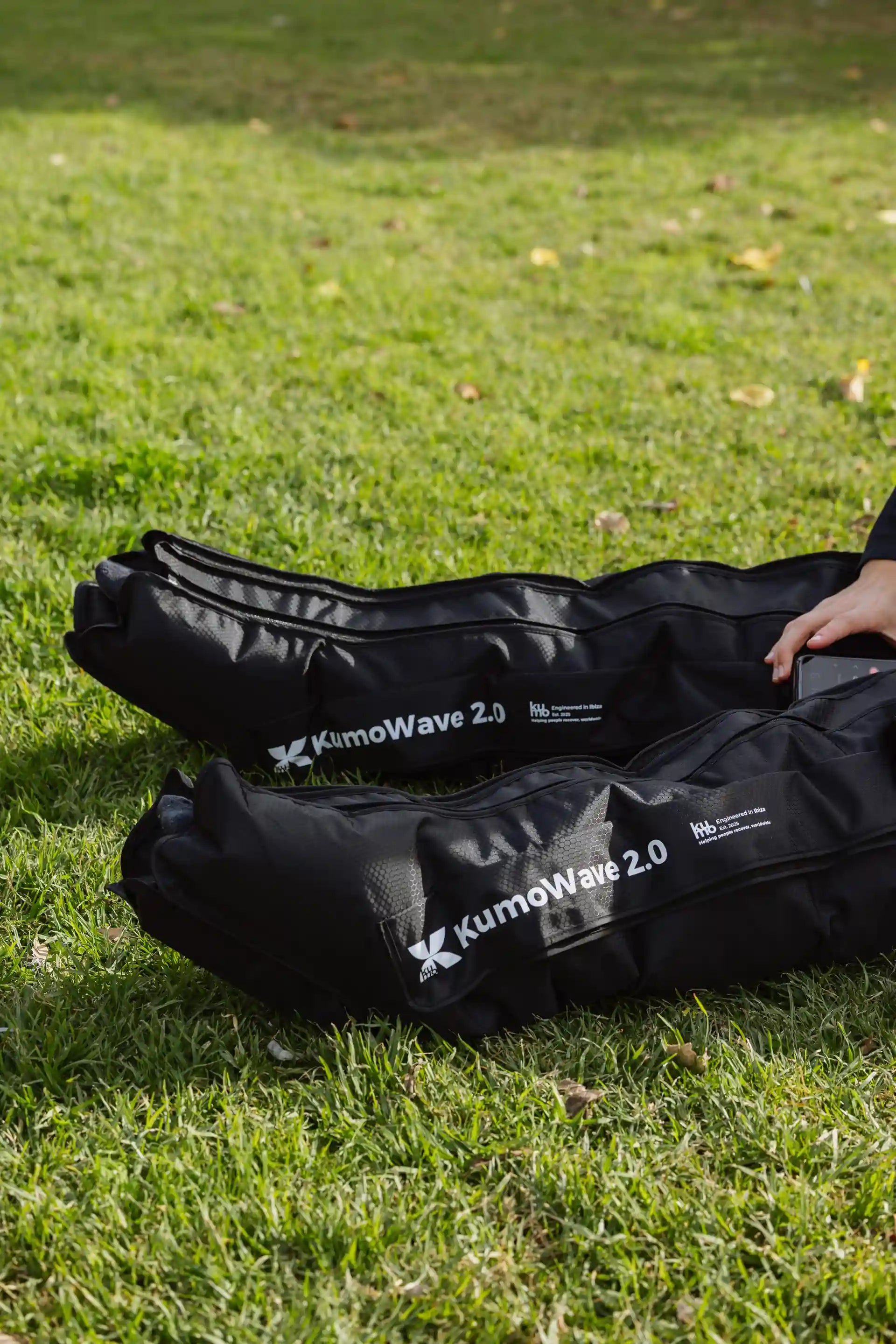
KumoWave 2.0 - Wireless Pressotherapy
Wireless, lightweight boots. Perfect for daily use and recovery.
€499,00 €599,00