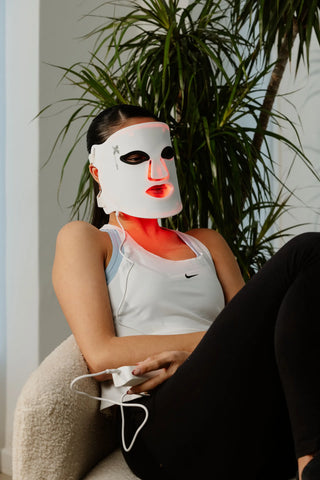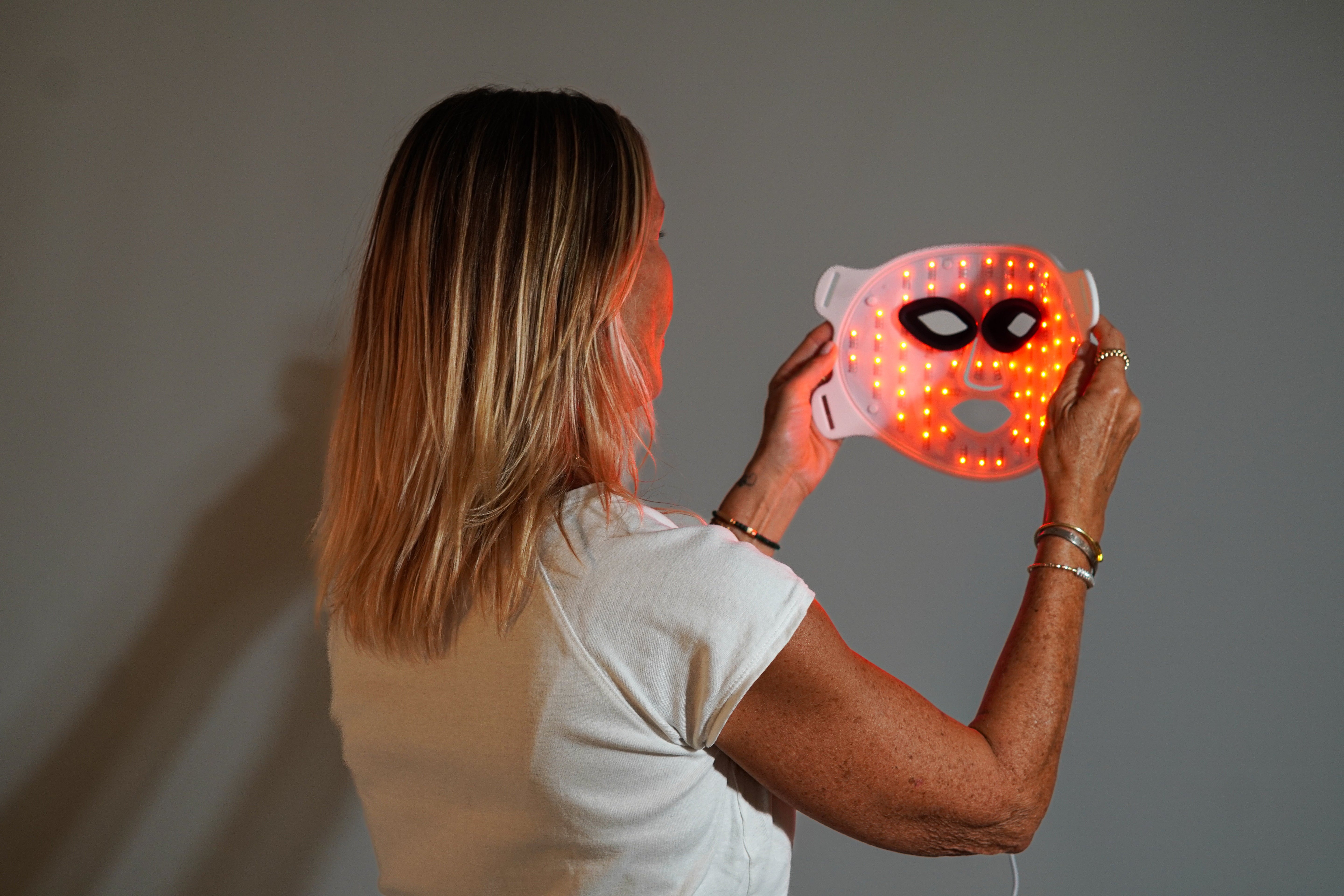

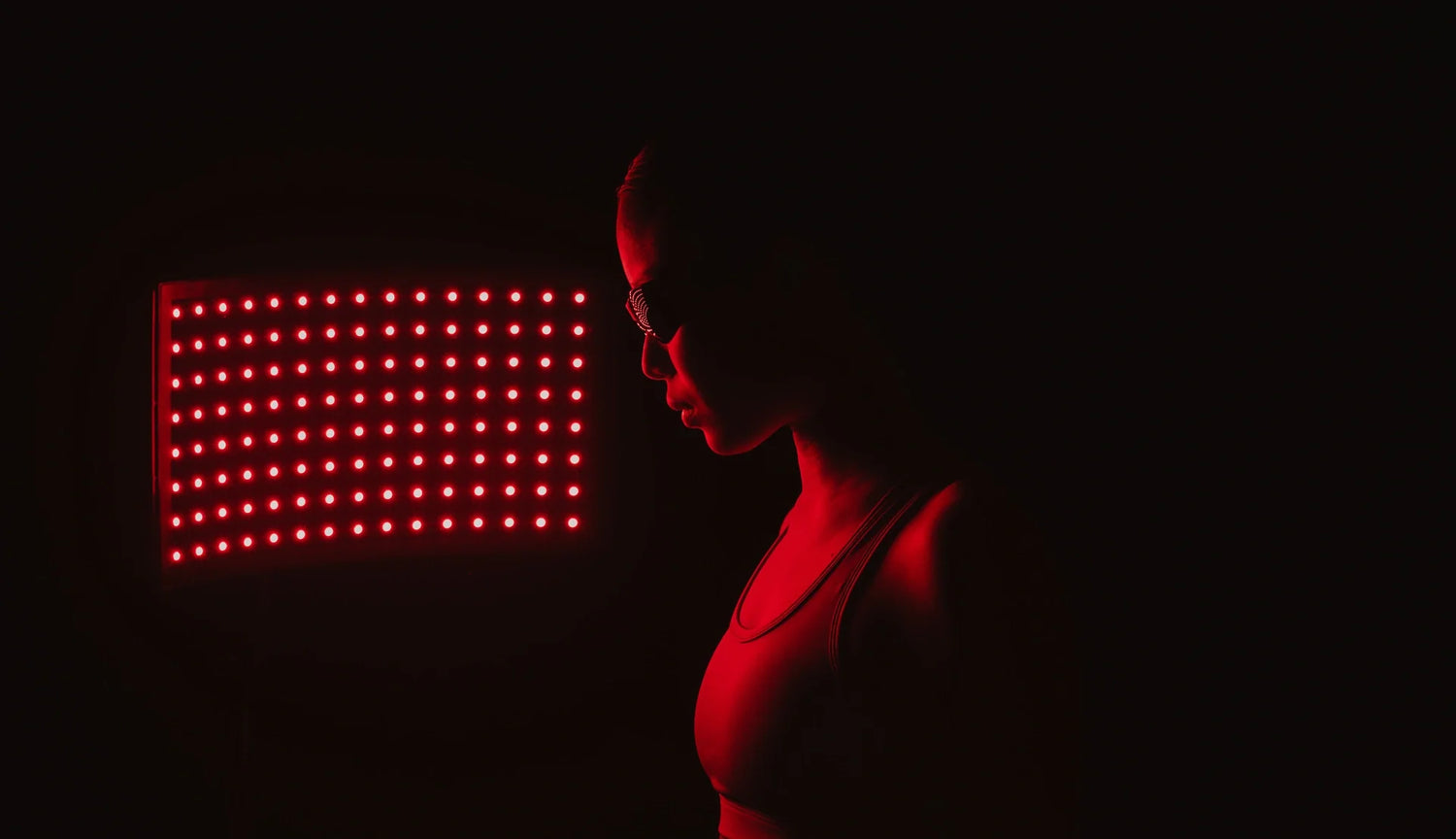

Red light can help prepare you for sleep. Used before bed, it is usually less disruptive than blue light because the human circadian system responds more strongly to short wavelengths; however, it is not a magic cure or a substitute for good sleep hygiene.
The practical idea is simple: reduce light stimulation at night, limit the session to a short time, and maintain a consistent routine. Clinical evidence on red light panels for sleep is still limited and mixed: a 2023 trial observed subjective improvements, but no objective changes in actigraphy, so it is advisable to think of this protocol as an aid, not an absolute promise.
Red & infrared light
Recover faster, at home
★★★★★ 4,8/5 · rated by verified customers
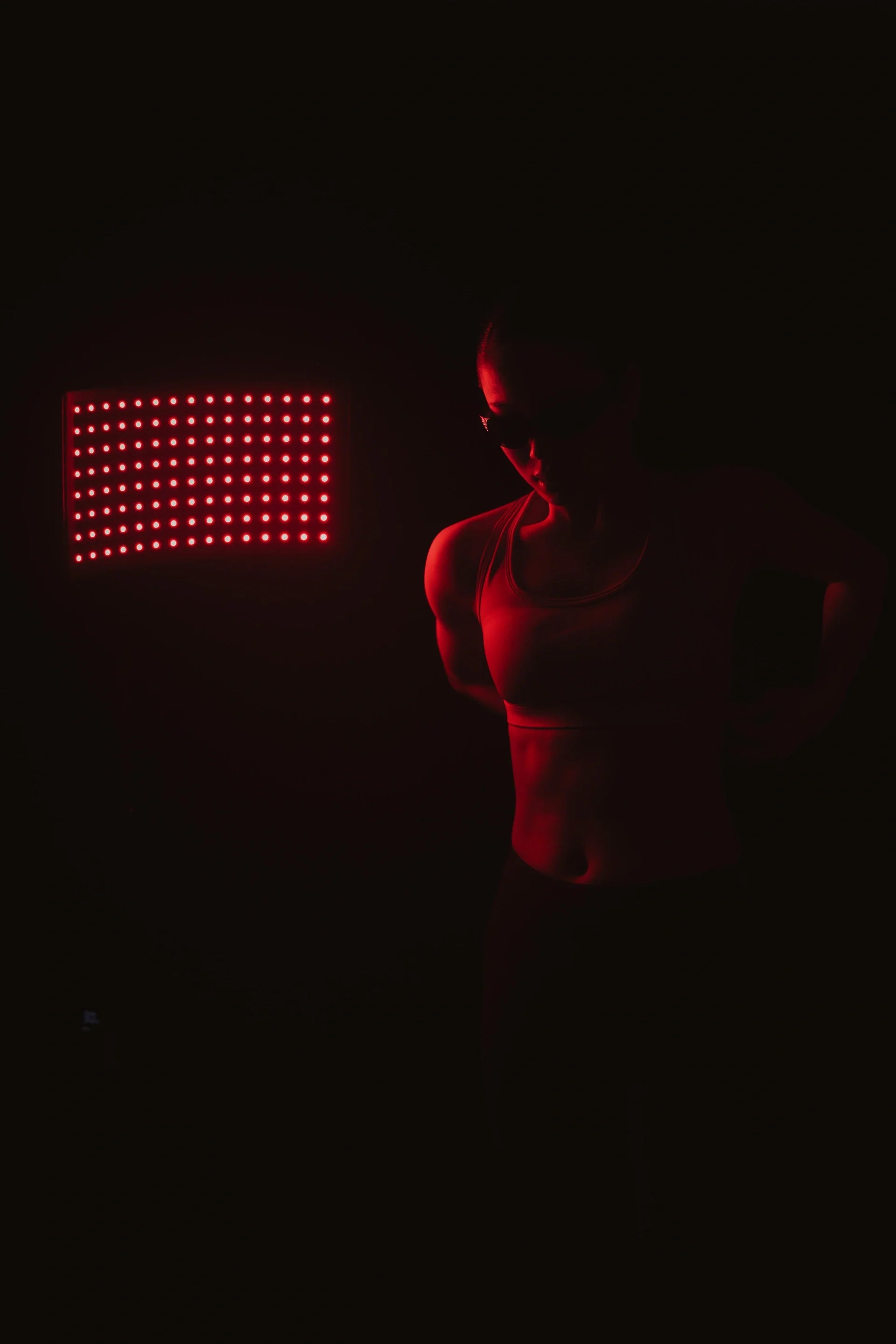
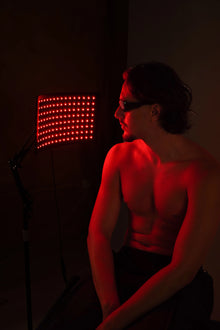
The KumoLux panel supports muscle recovery with full-body red and infrared light.
- 660 nm red + 850 nm infrared light
- Full-body muscle recovery
- Clinically validated biohacking protocols
€399,00€499,00
−10% on your 1st order when you subscribe to the newsletter

Why Red Light Is a Better Fit for Nighttime
The physiology of melatonin in Endotext explains that light synchronizes the circadian clock through the retina, and that blue wavelengths from 460 to 480 nm are especially effective at suppressing melatonin; even intensities below 200 lux can reduce it and shift the rhythm. The NTP report on night light adds that even indoor lighting can delay melatonin onset and shorten its nocturnal duration.
In the 2025 comparison between red and blue light, 631 nm red light and 464 nm blue light were applied for three hours between 9:00 PM and midnight: after the second hour, blue light kept melatonin lower, while red light allowed for partial recovery. This does not make red light an insomnia treatment, but it does position it as a less aggressive option for nighttime.
Personalized protocol · included with your purchase
Want us to tell you how to use it in your case?
With your purchase, our experts set up your red and infrared light sessions for your sport and goal.
Message us on WhatsAppOur experts reply · no obligation
If you want a more practical explanation of the timing and usage distance, the guide on red light therapy and sleep complements this approach well.
Recommended Nighttime Protocol
As a practical protocol, it is advisable to use the panel before sleep and not throughout the night. The 2023 randomized trial with a red and infrared collar included 30 adults with sleep complaints, applied the device every other night for three weeks, and found subjective improvements, but no objective changes in actigraphy; furthermore, the study itself noted that optimal dosage parameters, wavelengths, and power are still lacking.
Nighttime Protocol Summary
| Time | Goal | What to do | What to avoid |
|---|---|---|---|
| 90 to 60 minutes before sleep | Lower the "day" signal | Reduce white lights, turn off intense screens, and leave the room in a warm, dim tone. | Bright overhead light and unfiltered mobile phone use. |
| 30 to 20 minutes before sleep | Use the panel as a transition | Turn on the panel at low intensity for a few minutes and place it at a comfortable distance. | Staring directly at the LEDs or unnecessarily increasing the power. |
| At the end of the session | Maintain the darkness signal | Turn off the equipment, darken the room, and switch to rest mode. | Leaving the panel on or returning to a bright screen. |
| If your equipment combines red and infrared | Avoid excessive stimulation | Use the lowest intensity that feels comfortable and a timer. | Doing long sessions "just in case." |
Translated into practice, the rule is simple: less intensity, less time, and more consistency. Exposure to room light of 60 to 130 lux before sleep can delay melatonin, so the goal is not to "add" light, but to make a smooth transition to darkness. (ncbi.nlm.nih.gov)
on your first order when you join the newsletter
We send you the code instantly. No spam.
What to Look for When Choosing a Panel for Nighttime
If you are comparing options, the 2026 red light panel buying guide helps you filter out marketing and focus on what really matters.
What to Prioritize
- Wavelength: For nighttime, prioritize pure red or soft red combinations; in the 2025 comparison, 631 nm was less disruptive than 464 nm, and the 2023 trial used 660, 740, 810, and 870 nm without yet defining a definitive formula.
- Adjustable intensity: The easier it is to lower the power, the simpler it will be to use it as part of a sleep routine rather than as a source of stimulation.
- Timer: An automatic shut-off prevents you from falling asleep with the panel on and keeps the protocol simple.
- Comfortable use: A stable, quiet, and not excessively hot device integrates better into a nighttime routine.
If you are interested in the nuance of near-infrared, the note on infrared light panels: real benefits and how to choose one helps you understand when it makes sense to add that part of the spectrum and when it does not.
If you prefer a complete home equipment format, the KumoLux Panel integrates red and infrared light in a single panel and works well for a short, repeatable session before bed.
Common Mistakes That Sabotage Rest
As a precaution, do not treat the panel as if it were a decorative lamp for the entire night. The National Eye Institute warned in 2024 that high-power red light therapy used for myopia can exceed retinal safety limits in that context; therefore, at home, it is advisable to avoid staring, follow the manufacturer's instructions, and use the device only during the transition to sleep. (nei.nih.gov)
- Do not use it as a permanent night light: prolonged exposure still interferes with the darkness signal your brain needs.
- Do not compensate for the session with bright screens: the underlying problem remains night light and its effect on melatonin.
- Do not expect an instant change: the 2023 trial suggests subjective benefits, but it does not demonstrate a universal solution or guaranteed objective change.
- Do not reflexively increase the power: for better sleep, a gentle and regular use is usually more helpful than an intense session.
- Do not ignore eye comfort: if a session is uncomfortable, reduce intensity or distance and review the guide on eye safety in red light therapy.
If you want an already organized sequence, the night routine with red light therapy is a good complementary framework to fit the panel without complicating things.
Frequently Asked Questions
Does the red light panel actually improve sleep quality or is it just marketing?
It can help, but not in the miraculous sense that marketing sometimes promises. Red light appears less disruptive than blue light and, in some studies, improves subjective sleep perception. However, the 2023 trial with 30 adults found no objective changes in actigraphy, so the current balance is: it can be a useful nighttime aid, especially if you already practice sleep hygiene, but it should not be sold as a sole treatment for insomnia.
What time is best to use a red light panel for sleep and how long is recommended?
The most sensible approach is to use it during the relaxation period before bed, not when you are already asleep. Since the 2023 study applied it before bed and the literature on night light shows that intensity and duration matter, start with a short, fixed session, for example 10 to 20 minutes, at low intensity. If you find it activating, reduce the time or distance. The key is consistency: same time, same environment, and then darkness.
What wavelengths are most suitable for promoting melatonin and sleep?
For nighttime use, the evidence leans towards red light around 630 to 660 nm. In 2025, 631 nm was less disruptive than 464 nm, and in 2023 a trial used a combination of 660, 740, 810, and 870 nm before bed. Still, there is no definitive consensus on the best wavelength for better sleep; therefore, it is advisable to prioritize simplicity, low intensity, and regular use rather than chasing a "perfect" number.
Is it safe to use red light at night without affecting melatonin or the circadian rhythm?
Generally, yes, it is safer for nighttime than blue light if used at low power and for a short time. But "less disruptive" does not mean "harmless": Endotext and the NTP remind us that night light, even domestic, can alter melatonin, and the National Eye Institute warned in 2024 that high-power red light can exceed retinal safety limits in other clinical contexts. As a precaution, do not stare directly at the panel and follow the manual.
Does red light interfere with the circadian rhythm when used close to bedtime?
Yes, it can interfere, but usually much less than blue light. The decisive point is the combination of intensity, duration, and timing: the 2025 comparison showed that blue light maintained melatonin suppression longer, while red light allowed for partial recovery, and the NTP explains that night light can delay melatonin onset and shorten its duration. In other words, the panel should help you wind down, not keep you awake.
What Now?
If you want to put it into practice with a home-focused format, try the KumoLux Panel and return to the Kumo Balance homepage to continue building your recovery routine with a simple, consistent, and realistic approach.

Red & infrared light
KumoLux Panel – Red and Infrared LED Panel
★★★★★ 4,8/5 · rated by verified customers
- 660 nm red + 850 nm infrared light
- Full-body muscle recovery
- Clinically validated biohacking protocols
€399,00€499,00· pay in installments with seQura or Klarna