Choosing a red light therapy panel is not a matter of fashion. In 2026, the right purchase depends on wavelength, the energy that actually reaches the tissue, coverage, home safety, and clarity of the manual. (fda.gov)
If you first want to understand the basis of the technology, start with what red light therapy is and how it works; here we will focus on how to read a technical sheet without being swayed by marketing.
Red & infrared light
Recover faster, at home
★★★★★ 4,8/5 · rated by verified customers
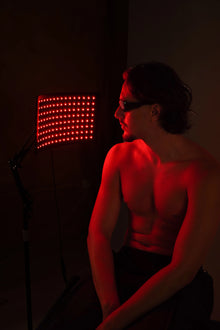
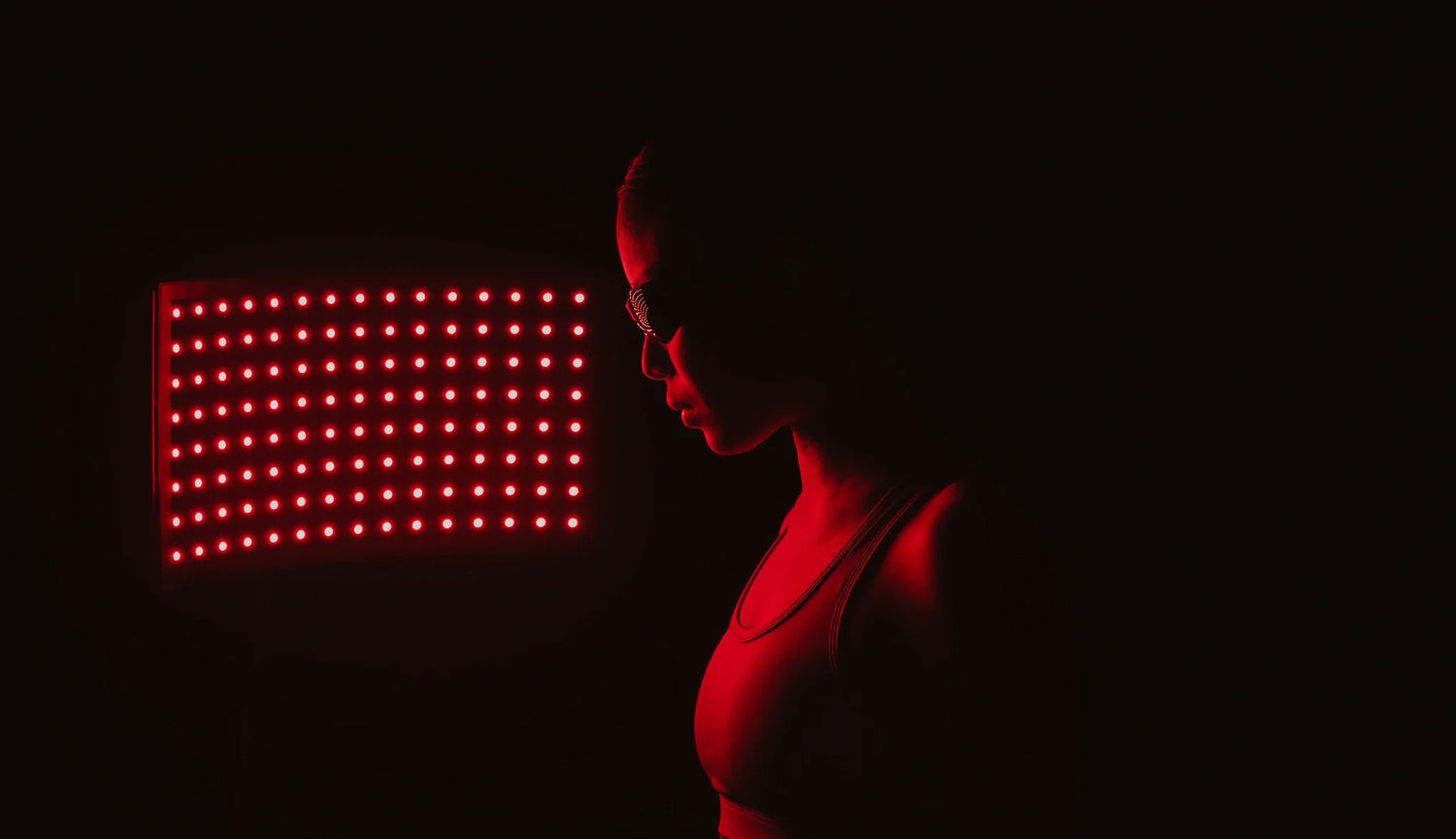
The KumoLux panel supports muscle recovery with full-body red and infrared light.
- 660 nm red + 850 nm infrared light
- Full-body muscle recovery
- Clinically validated biohacking protocols
€399,00€499,00
−10% on your 1st order when you subscribe to the newsletter

What a red light panel should solve at home
The FDA defines home use devices as devices intended for environments outside of a professional facility, where the user, environment, and risks of use change. This difference matters because a home panel should not be sold only for its premium appearance, but for its design, instructions, and realistic use. (fda.gov)
At home, the key is that the light, support, and instructions work together. If one of these elements fails, use becomes less safe and less consistent. (fda.gov)
Personalized protocol · included with your purchase
Want us to tell you how to use it in your case?
With your purchase, our experts set up your red and infrared light sessions for your sport and goal.
Message us on WhatsAppOur experts reply · no obligation
Therefore, before looking at the finish or aesthetics, it is advisable to check if the manufacturer explains the use, distance, duration, and warnings well. The FDA itself reminds us that labeling must provide sufficient instructions and warnings to avoid unsafe uses or improper doses. (fda.gov)
If your priority is a well-planned home routine, it can also help you choose an infrared panel without losing focus. The key is not to buy "more device," but to choose a format that fits your objective and your space. (fda.gov)
The criteria that really matter
Not all panels respond the same way, because photobiomodulation depends on specific parameters and not on a generic idea of "more light." The literature shows dose-response type answers and even biphasic curves: in human fibroblasts, low doses were better than higher doses in mitochondrial activity and viability, and clinical practice works with defined protocols instead of improvised sessions. (pubmed.ncbi.nlm.nih.gov)
on your first order when you join the newsletter
We send you the code instantly. No spam.
Wavelengths: why 660 nm and 850 nm appear so often
In photobiomodulation, the combination of red and near-infrared light is very common. A multicenter trial used 590, 660, and 850 nm in a multispectral protocol, and another clinical protocol worked with 660 and 850 nm LEDs on the same plate. This does not mean that all needs require exactly these figures, but it does mean that they are recurrent values when looking for a versatile panel. (pubmed.ncbi.nlm.nih.gov)
If you want to calmly compare both ranges, review the practical differences between 660 nm and 850 nm. As a reading hint, 660 nm frequently appears in facial use designs and 850 nm is part of multispectral combinations and panels designed for a broader application. (pubmed.ncbi.nlm.nih.gov)
Irradiance and fluence: the energy that really reaches your skin
Irradiance indicates how much power reaches per square centimeter, and fluence summarizes the accumulated energy over the treated area. In practice, two panels with the same total power can behave differently if the distance, useful size, or light distribution changes. The evidence on PBM insists that the result depends on fine-tuning, not just turning on the device. (pubmed.ncbi.nlm.nih.gov)
This explains why it is advisable to distrust data sheets that only talk about watts or "high intensity" without specifying at what distance the output was measured. If a device does not clarify this data, it is difficult to know what real dose you will receive. (fda.gov)
Panel size and coverage: bigger doesn't always mean better
A larger panel may make sense if you want to cover your back, legs, or a large area in fewer passes, while a more compact format may suffice for specific applications. The correct decision is not aesthetic, but practical: what surface you are going to treat, at what distance, and with what comfort you are going to repeat the protocol. This logic fits with the FDA's recommendations for home devices, which focus on the user, environment, and usability. (fda.gov)
Home safety, labeling and certifications
If the panel is for home use, look for photobiological safety documentation and an understandable user guide. IEC 62471 is the reference standard for evaluating the photobiological safety of lamps and LED lamp systems, and the FDA emphasizes that home use devices must be designed and labeled considering the unique risks of the non-clinical environment. (webstore.iec.ch)
In practice, a serious data sheet should mention warnings, duration of use, maintenance, and application limits. This information is not a minor detail: it is part of the safe way to use the device and helps to avoid unrealistic expectations. (fda.gov)
Quick summary of the criteria that really matter
| Criterion | What it means | What to look for |
|---|---|---|
| Wavelength | Defines the type of light and the use profile. | Look for specific values and clearly stated channels, such as 660 and 850 nm in multispectral designs. (pubmed.ncbi.nlm.nih.gov) |
| Irradiance and fluence | Indicate how much energy actually reaches per area. | Requires measurement at a defined distance and not just total power. (pubmed.ncbi.nlm.nih.gov) |
| Coverage | Determines how much of the body you can treat in one session. | Choose according to the area you want to cover and the comfort of use at home. (fda.gov) |
| Safety | At home, instructions and limits are more important than the slogan. | Look for photobiological safety documentation and a manual with warnings. (webstore.iec.ch) |
| Usability | Ease of use determines whether you will actually use it consistently. | Timer, simple controls, and clear labeling help to repeat the protocol. (fda.gov) |
How to read a technical sheet without falling into traps
A good panel is not evaluated by the most striking phrase in the advertisement, but by what you can verify: wavelength, irradiance at a specific distance, effective area, timer, and warnings. When this data is missing, the purchase becomes a gamble. (fda.gov)
- Verify that the data sheet indicates specific wavelengths and not a generic description of "red and infrared." (pubmed.ncbi.nlm.nih.gov)
- Check the irradiance measured at a clear distance, because total power without context says little. (pubmed.ncbi.nlm.nih.gov)
- Calculate if the useful coverage matches the area you want to treat at home. (fda.gov)
- Look for a timer, clear manual, and warnings about duration or conditions of use. (fda.gov)
- Prioritize photobiological safety documentation and accessible after-sales support. (webstore.iec.ch)
If you are comparing options, it can help you to review what to check before buying so you don't make a mistake. The goal is to avoid a pretty but untransparent device. (fda.gov)
What expectations are reasonable
Consistency weighs more than improvisation. In LIGHTSITE II, multispectral photobiomodulation was applied 3 times a week for 3-4 weeks, with repeated series over time; in a systematic review on temporomandibular disorders, the best response was associated with 3-4 weekly sessions for 10 weeks. This suggests that results do not usually come from arbitrary sessions, but from a defined protocol. (pubmed.ncbi.nlm.nih.gov)
Therefore, if a manufacturer promises immediate changes without explaining frequency, distance, or duration, it is advisable to lower expectations and ask for more transparency. The best panel is not the one that promises the most, but the one that allows for consistent use. (pubmed.ncbi.nlm.nih.gov)
If you want to see how this logic translates into user experiences, you can read real opinions and measurable results on red light therapy. (pubmed.ncbi.nlm.nih.gov)
Frequently asked questions
What to look for when buying a red light panel in 2026 for home use?
The first thing is to check that the manufacturer clearly explains the wavelength, irradiance measured at a specific distance, useful coverage, and recommended use time. At home, the timer, warnings, and an easy-to-understand manual are also important. The FDA insists that home devices have specific risks due to the interaction between user, environment, and device, so usability is not an extra: it is part of safety. (fda.gov)
What wavelengths should a red light panel emit for best facial and body results?
There is no single "magic" wavelength. Multispectral combinations often appear in the literature, and 660 nm together with 850 nm is a very common duo in photobiomodulation panels and protocols. The important thing is that the device declares its channels and that you choose the format according to your objective: more localized use, medium coverage, or broader routines. If the data sheet only says "red and infrared" without further detail, useful information for deciding is missing. (pubmed.ncbi.nlm.nih.gov)
Is a large red light panel better for full coverage or a small lamp for spot use?
It depends on your objective and the space you want to treat. A large panel is usually more comfortable if you want to cover your back, legs, or a large area without moving the device as much. A small lamp may be better when the application is specific or when you want to focus on a particular area. The key is that the actual coverage matches the work area and the use distance indicated by the manufacturer. (fda.gov)
How long and how many times a day should a red light panel be used to see results?
The best response usually comes from repeatable protocols, not improvised sessions. Published studies have used schemes of 3 times a week for 3-4 weeks, and a systematic review on temporomandibular pain observed better results with 3-4 weekly sessions for 10 weeks. This does not mean that all uses should copy those numbers, but it is advisable to follow the manufacturer's or a professional's guidelines and avoid the "more time, better" logic. (pubmed.ncbi.nlm.nih.gov)
What certifications and guarantees should accompany a red light therapy panel?
Look for photobiological safety documentation, a clear manual, and clearly visible use warnings. IEC 62471 is the reference for evaluating the safety of lamps and LEDs, and the FDA emphasizes that home devices need design, testing, and labeling designed for the actual use environment. In addition to this technical part, a clear warranty and support help to buy with less risk and to resolve usage questions without improvisation. (webstore.iec.ch)
What now?
If you already have a clear understanding of the criteria, take the next step calmly: go back to the home recovery main page and review the red and infrared LED panel to see how all this translates into a home format. The best decision is the one you can explain with data, not the one that just sounds good. To learn more, consult Kumo.

Red & infrared light
KumoLux Panel – Red and Infrared LED Panel
★★★★★ 4,8/5 · rated by verified customers
- 660 nm red + 850 nm infrared light
- Full-body muscle recovery
- Clinically validated biohacking protocols
€399,00€499,00· pay in installments with seQura or Klarna