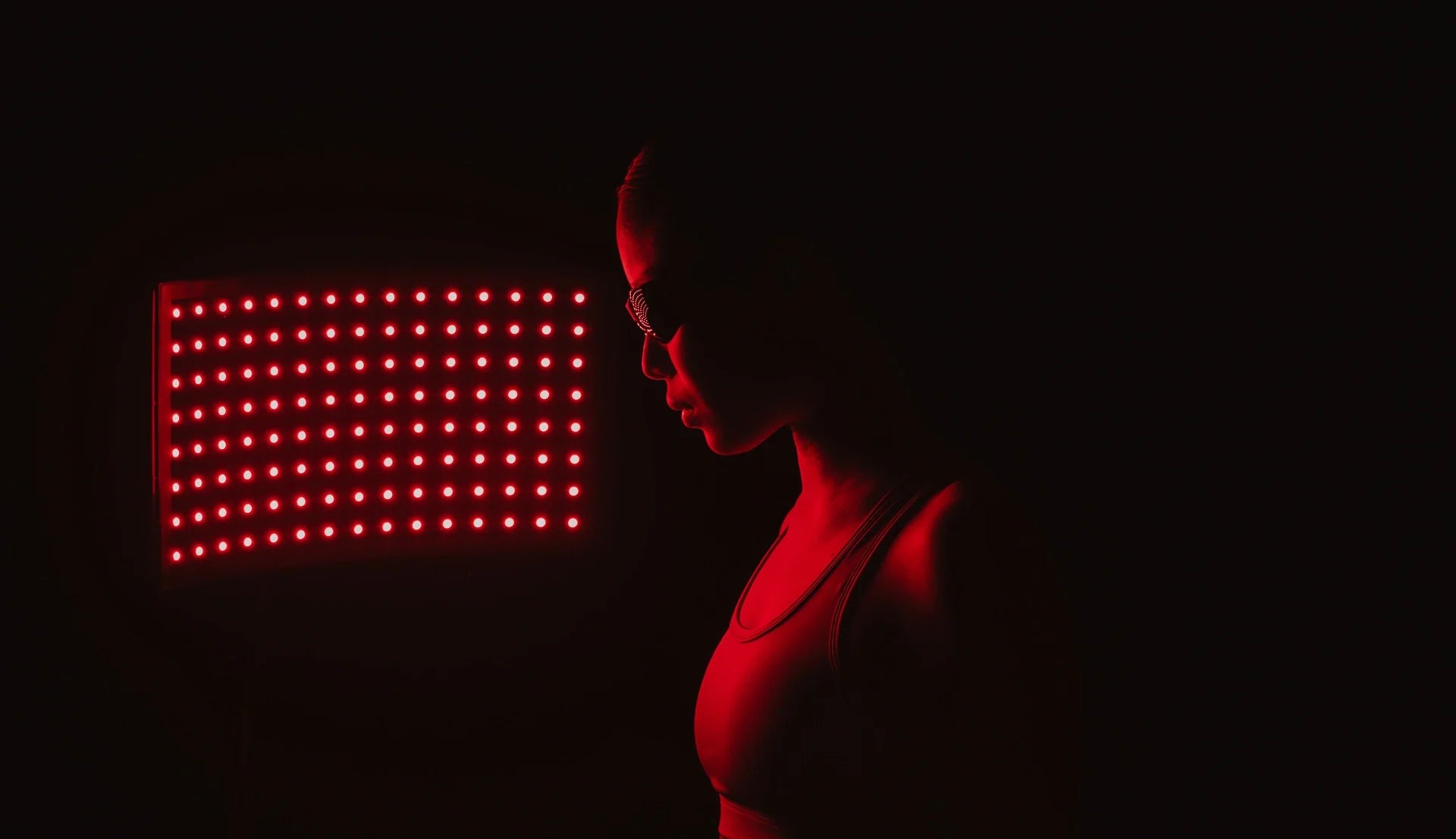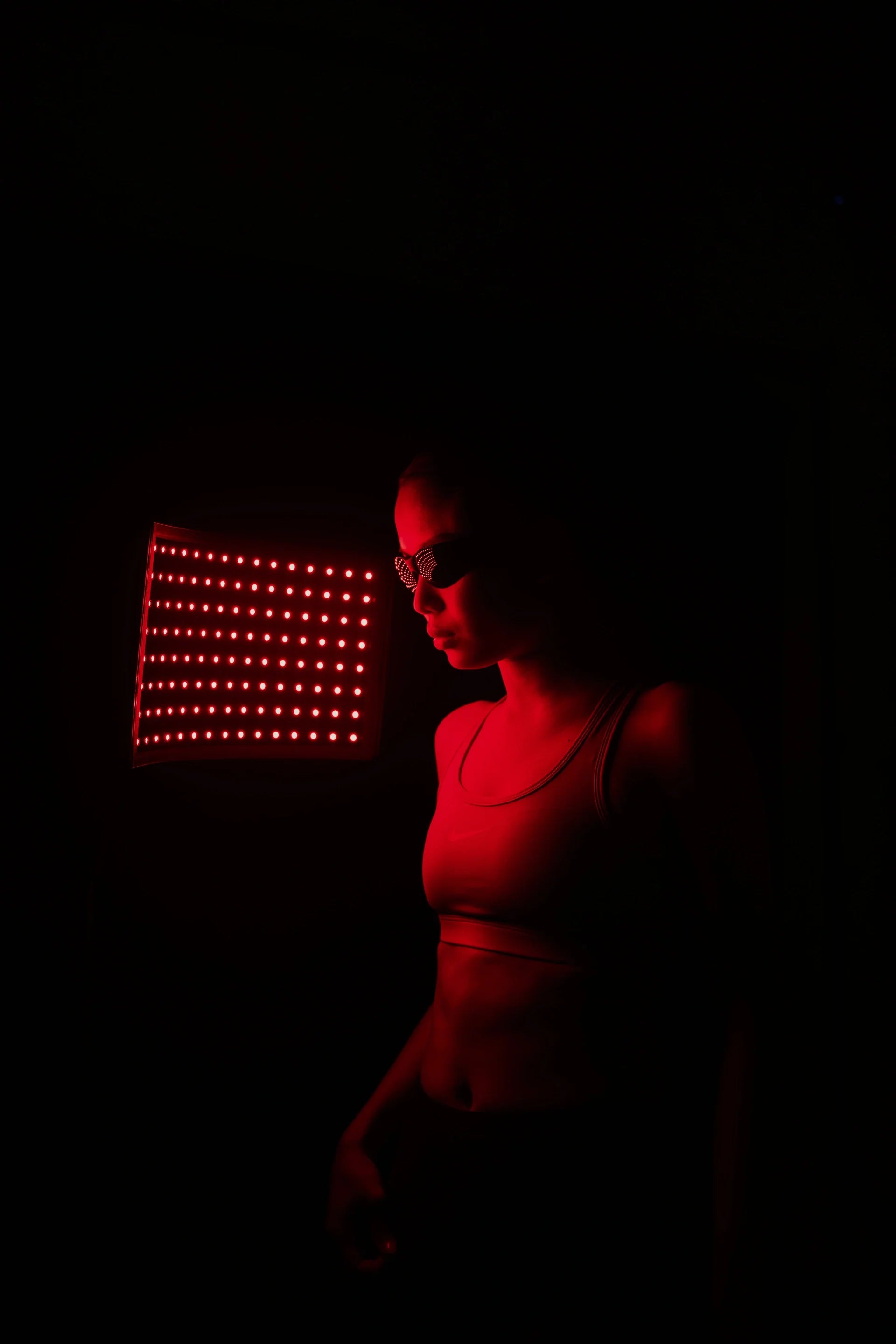
At 40, your skin needs a strategy.
LED therapy can fit into your facial routine if you use it as support and not as a shortcut. Dermatological guidelines indicate that red and blue light can help with fine wrinkles, redness, texture, and mild acne, but results are usually subtle and depend on consistency, good cleansing, and daily sun protection. (aad.org)
Facial red light
Bring your skin back to life
★★★★★ 4,8/5 · rated by verified customers
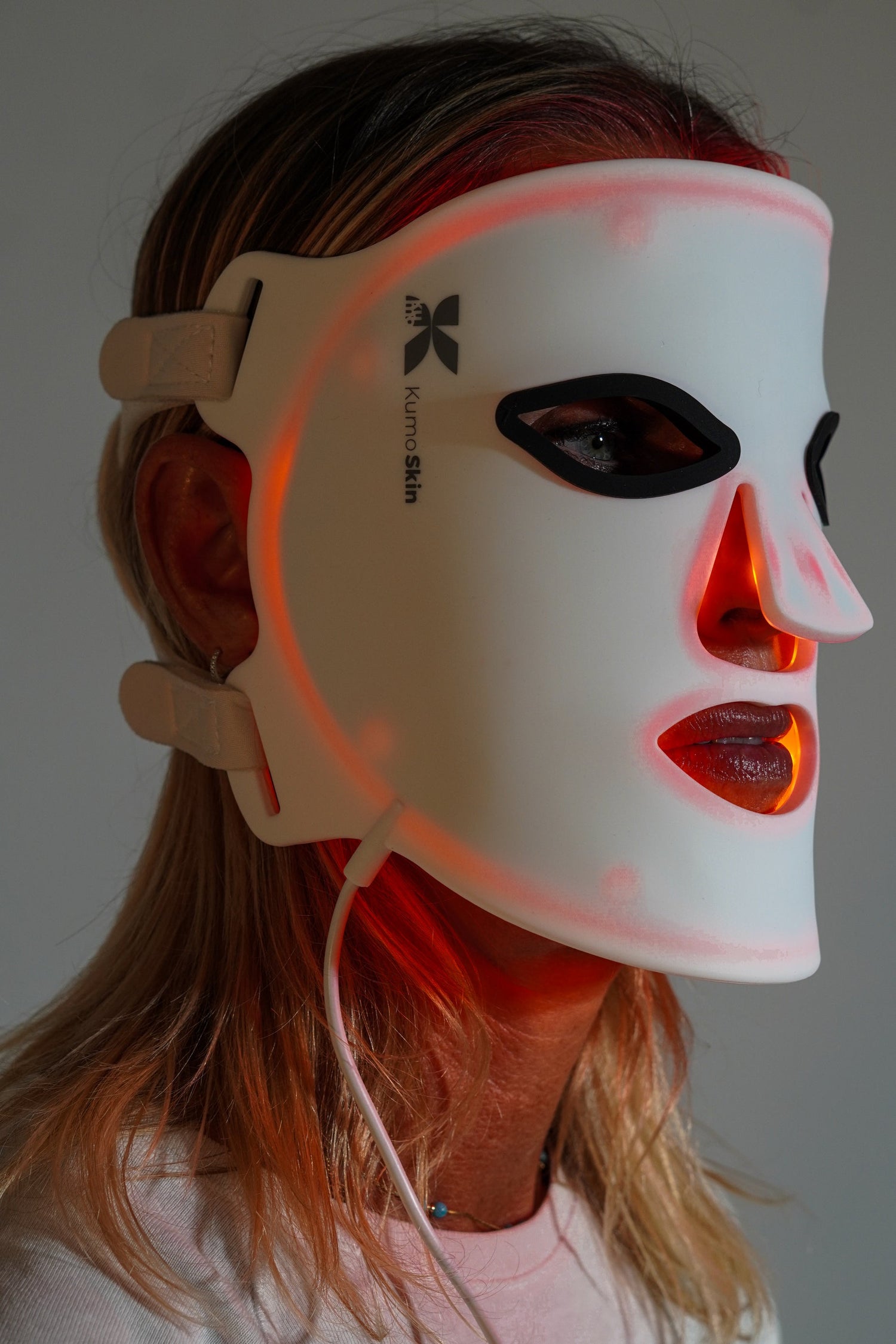
The KumoSkin LED mask helps repair and calm your skin in short sessions at home.
- 250 LEDs in flexible medical silicone
- Red light to boost collagen and glow
- 4 lights: red, infrared, blue and yellow
€299,00€429,00
−10% on your 1st order when you subscribe to the newsletter

In Kumo Balance's wellness and recovery proposal, technology only makes sense when it makes your routine simpler, more sustainable, and easier to repeat.
The best routine is not the longest, but the one you can maintain without irritating your skin or giving up after two weeks. (aad.org)
Personalized protocol · included with your purchase
Want us to tell you how to use it in your case?
With your purchase, our experts prepare the ideal LED protocol for your skin type and goal (acne, wrinkles, dark spots...).
Message us on WhatsAppOur experts reply · no obligation
What changes in the skin at 40
At this age, dryness, loss of firmness, fine lines, and dullness associated with photoaging typically become more visible. The AAD's reference for skin in your 40s and 50s emphasizes starting with sun protection, daily hydration, and gentle cleansing. (aad.org)
- Skin may feel drier and less elastic, so hydration is no longer optional. (aad.org)
- Spots and uneven tone usually require consistency, not aggressive formulas. (aad.org)
- If adult acne breakouts or redness appear, the routine should adapt to that problem and not just to wrinkles. (aad.org)
That's why, at 40, a short, clear, and well-tolerated routine works better than an accumulation of hard-to-maintain products. (aad.org)
How to integrate LED therapy without disrupting your routine
The Cleveland Clinic guide to LED therapy explains that the skin must be clean, that home results are usually subtle, and that repeated use is necessary; therefore, LED light works best as a supplement, not a substitute. In consultation, a session usually lasts about 20 minutes, and if used correctly, you typically don't need recovery time. (my.clevelandclinic.org)
on your first order when you join the newsletter
We send you the code instantly. No spam.
If you haven't mastered the protocol yet, first review what a facial LED mask is and how it works, and then how to use the facial LED mask step-by-step to avoid errors in placement, timing, or frequency.
The best integration is not the most complex, but the one that adds light without irritating the skin or breaking consistency. (aad.org)
Practical order of use
- Cleanse your face with a gentle, makeup-free cleanser before the session. (my.clevelandclinic.org)
- Dry your skin thoroughly so the device acts on a clean, comfortable surface. (my.clevelandclinic.org)
- Apply the LED following the manufacturer's time and frequency, without improvising. (aad.org)
- Finish with hydration, and in the morning add a broad-spectrum SPF 30 or higher. (aad.org)
If you prefer a more detailed nighttime sequence, the step-by-step guide to a nighttime facial routine with an LED mask can serve as a map to avoid mixing too many steps in one night.
Facial routine table with LED therapy
| Time | What you do | Why it fits at 40 |
|---|---|---|
| Morning | Gentle cleansing, light hydration, and SPF 30 or higher sunscreen. | You protect your skin and maintain a stable base for the rest of the day. |
| LED Session | Use the mask on a clean, dry face, with the eye protection indicated by the device. | Light works best when skin is free of makeup and dirt. |
| Night | Remove makeup, cleanse, apply LED if applicable, and finish with moisturizer. | Nighttime facilitates a calmer, more consistent routine. |
| Consistency | Repeat the protocol for several weeks, without skipping instructions. | Real changes are usually gradual and depend on regular use. |
This scheme summarizes the logic recommended by dermatologists: gentle cleansing, hydration, sun protection, and using LED on clean skin to gain comfort and consistency. (aad.org)
Which light to choose based on your goal
If you're evaluating your equipment, the complete guide to choosing your facial LED mask helps you understand what to look for before deciding. Generally, blue light acts more superficially, red light penetrates deeper, and near-infrared penetrates even further. This difference explains why not all LED masks are suitable for the same purpose. (my.clevelandclinic.org)
- Red light: is the most logical choice if you're looking for more luminosity, less redness, and support for fine lines. (aad.org)
- Blue light: makes more sense when the main goal is mild to moderate acne. (my.clevelandclinic.org)
- Red-blue combination: can be useful if you want to work on texture, breakouts, and overall skin appearance simultaneously. (jamanetwork.com)
- Near-infrared: usually accompanies deeper protocols, although its at-home suitability depends on the equipment. (my.clevelandclinic.org)
The key is not "more colors," but a well-designed device, realistic frequency, and expectations aligned with what light can truly do. (aad.org)
Common mistakes when integrating LED
As the AAD reminds when discussing anti-aging care, using more product or more intensity does not guarantee more results; in fact, it can irritate the skin and make signs of aging more visible. (aad.org)
- Expecting an immediate change after a single session. (aad.org)
- Using the mask over makeup, dirt, or cream that the manufacturer does not recommend. (my.clevelandclinic.org)
- Forgetting eye protection. (my.clevelandclinic.org)
- Saturating the skin with too many active ingredients on the same night. (aad.org)
- Confusing "FDA-cleared" with a guarantee of results rather than safety. (aad.org)
Precautions and contraindications
Before starting, review the contraindications and care for the facial LED mask if you are taking photosensitizing medication or if your skin reacts easily. The FDA explains that photobiomodulation uses very low doses of visible light, but it is not recommended in cases such as photosensitivity disorders, pregnancy or planning, active implants, open lesions, or photosensitizing medication. (fda.gov)
- If you are taking isotretinoin, lithium, or other drugs that increase light sensitivity, seek guidance before using it. (my.clevelandclinic.org)
- If you have active implants, a history of skin cancer, or an infection in the area, do not use it without medical supervision. (fda.gov)
- If your skin is darker, the AAD warns that visible light can promote hyperpigmentation and more intense or lasting spots. (aad.org)
- If you need to protect your eyes especially, use the protection indicated by the device or consult a dermatologist. (my.clevelandclinic.org)
When in doubt, a dermatological evaluation is always more helpful than a blind test. (aad.org)
Real results and patience
Changes with LED are usually gradual. The AAD cites a study with 90 patients who received eight red light facial treatments in four weeks, and more than 90% reported noticing some improvement; however, it also reminds that long-term effects are still not entirely clear. If you want to fine-tune the frequency, the guide on how many sessions you need to notice changes in texture and luminosity can help you determine the ideal pace. (aad.org)
In acne, the evidence is also promising: a 2025 review and meta-analysis in JAMA Dermatology concluded that at-home LED devices, especially those combining red and blue, can be effective and likely complement other over-the-counter or prescription treatments. (jamanetwork.com)
The practical conclusion is simple: don't expect a dramatic change overnight, but do expect gradual improvement if you choose the device well, use it regularly, and maintain a solid basic routine. (aad.org)
Frequently Asked Questions
What are the benefits of LED therapy for acne and skin luminosity?
LED light can help in two distinct ways: blue light is more associated with controlling mild to moderate acne, while red light is usually associated with less inflammation, improved texture, and a more luminous appearance. The important part is that results are usually subtle and depend on regularity, not a single session. At home, LED works best as a complement to a simple routine that includes cleansing, moisturizing, and sunscreen. (my.clevelandclinic.org)
What skin problems can LED light therapy treat?
According to Cleveland Clinic and the AAD, LED therapy can be used for acne, fine lines, redness, uneven texture, and in some cases, support for skin recovery. Not everything responds equally: it is not the primary option for acne cysts, blackheads, or whiteheads, nor does it replace a dermatological diagnosis if something suspicious changes in your skin. If your goal is anti-aging, the most sensible approach is to view it as additional support within a well-thought-out routine. (my.clevelandclinic.org)
Is LED light therapy safe for all skin types?
In general, LED is considered safe in the short term and does not use UV light, so it does not produce the same type of damage as the sun or a tanning bed. However, it is not identical for everyone: the AAD warns that darker skin types may be more sensitive to visible light and develop hyperpigmentation, and Cleveland Clinic reminds that some people should avoid it or use it under medical supervision. The correct answer is not "yes for everyone," but "it depends on your skin, your medication, and your tolerance." (aad.org)
How long does it take to see results from facial LED therapy?
It is usually not a therapy with immediate effect. Cleveland Clinic notes that the clearest changes come with repeated treatments and that some home devices require several weeks of use; the AAD cites a study with eight sessions in four weeks in which more than 90% of participants noticed some improvement. The most realistic expectation is gradual changes in texture, redness, or luminosity, especially if you combine LED with good cleansing, hydration, and sunscreen. (my.clevelandclinic.org)
Is it better to use the LED mask in the morning or at night?
Both options can work, but night is usually more comfortable because the skin is clean, there is no makeup, and you can finish with moisturizer without rushing. It is also possible in the morning, as long as you respect the device's instructions and finish the routine with sunscreen. If you have doubts, the key is not the exact time, but maintaining the routine consistently and without irritating the skin with too many steps. (my.clevelandclinic.org)
What now?
If you want to start with a simple routine, go back to the guide on choosing your facial LED mask, review how many sessions you need to notice changes, and if you prefer a broader view of the wellness ecosystem, re-enter Kumo Balance's wellness and recovery proposal. From there, your routine for your 40s can be much simpler, more consistent, and better adapted to your skin. For more in-depth information, visit Kumo.

Facial red light
KumoSkin Mask – LED Facial Mask
★★★★★ 4,8/5 · rated by verified customers
- 250 LEDs in flexible medical silicone
- Red light to boost collagen and glow
- 4 lights: red, infrared, blue and yellow
€299,00€429,00· pay in installments with seQura or Klarna