Blue light matters. Scientific evidence suggests it can activate oxidative stress and pigmentation in the skin, but exposure from a home screen is usually much lower than that from the sun. Therefore, the real risk is better understood by dose and context than by fear. If you are looking for a facial care routine aligned with a non-invasive wellness approach, it is worth separating what is proven from what is still being investigated. (pubmed.ncbi.nlm.nih.gov)
What is blue light and why is it a concern for the skin?
Blue light is part of high-energy visible light and reaches the skin from the sun, screens, and some LED lights. In dermatology, it is primarily of interest for two reasons: the generation of reactive oxygen species and the activation of melanogenesis, i.e., melanin production. (pubmed.ncbi.nlm.nih.gov)
Facial red light
Bring your skin back to life
★★★★★ 4,8/5 · rated by verified customers
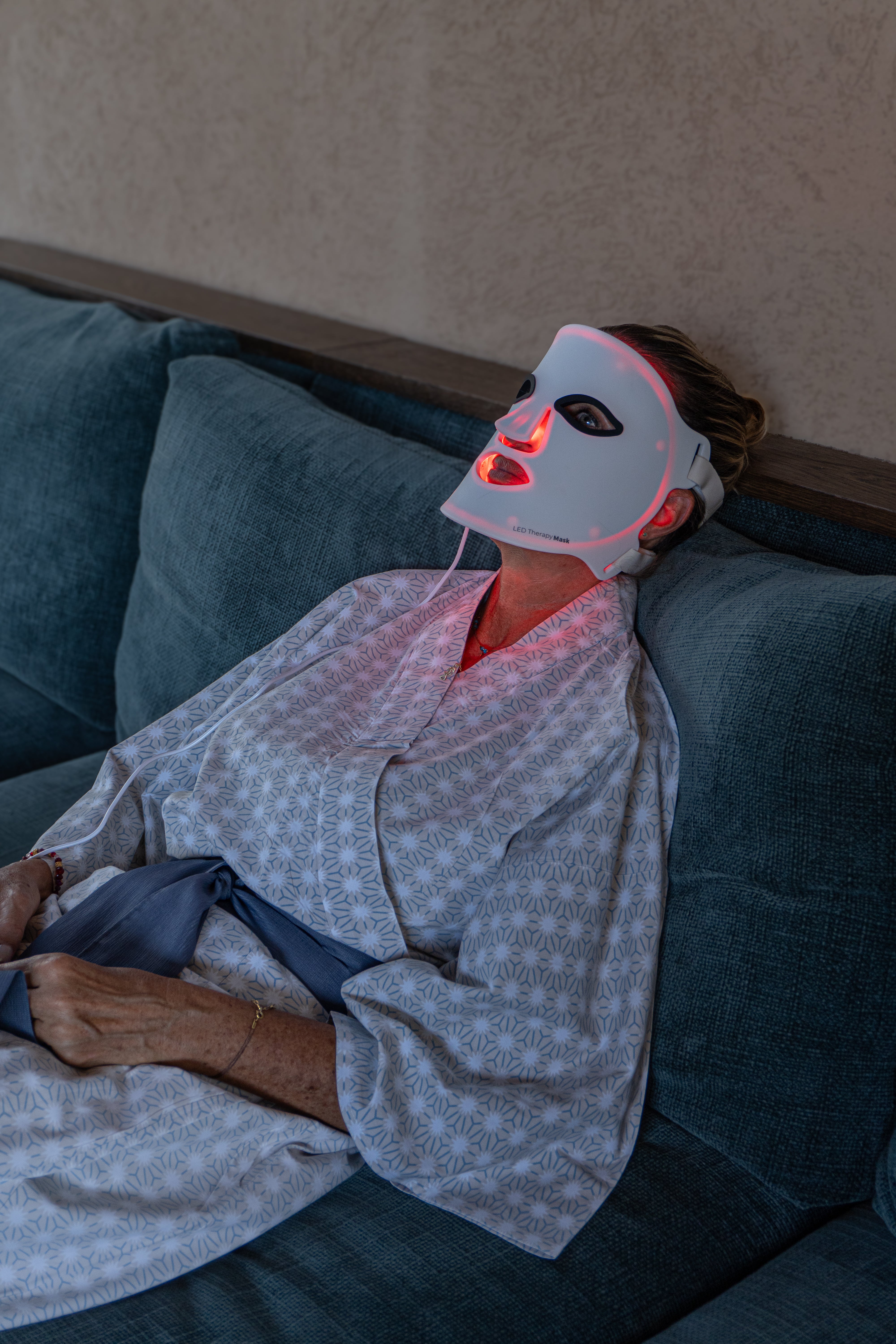
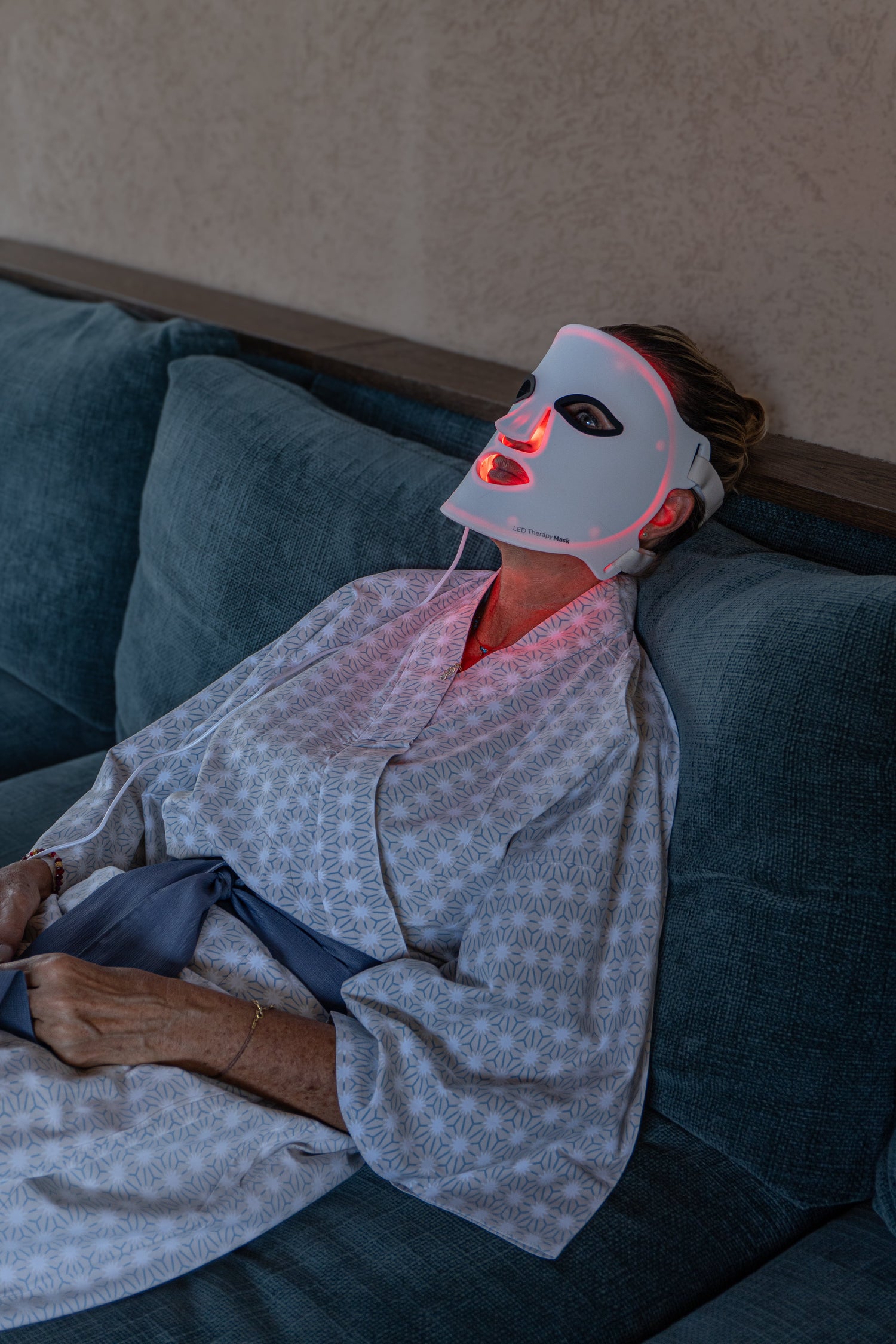
The KumoSkin LED mask helps repair and calm your skin in short sessions at home.
- 250 LEDs in flexible medical silicone
- Red light to boost collagen and glow
- 4 lights: red, infrared, blue and yellow
€299,00€429,00
−10% on your 1st order when you subscribe to the newsletter

What science says about skin impact
Oxidative stress and cellular damage
In an experimental study on live skin, blue light produced detectable oxidative stress; in in vitro human skin models, 6 hours a day for 5 days altered genes for inflammation, oxidative stress, and skin barrier. This does not automatically equate to everyday clinical damage but does show a plausible biological mechanism. Experimental work on oxidative stress in live skin clearly documents this. (pubmed.ncbi.nlm.nih.gov)
In addition, research in human keratinocytes found oxidative DNA lesions and CPDs after exposure to 415 nm blue light. A cautious interpretation is that potential damage exists under experimental conditions, but the dose remains the decisive factor. (pubmed.ncbi.nlm.nih.gov)
Personalized protocol · included with your purchase
Want us to tell you how to use it in your case?
With your purchase, our experts prepare the ideal LED protocol for your skin type and goal (acne, wrinkles, dark spots...).
Message us on WhatsAppOur experts reply · no obligation
Pigmentation, spots, and melasma
The most solid part of the clinical literature focuses on pigmentation: visible light induced melanogenesis in human skin, and in another study with melasma patients, the pigmentary response was dose-dependent. The human study on visible light-induced melanogenesis is one of the bases of this idea, and another work on melasma shows why spots deserve special attention. Clinical research on melasma reinforces that sensitivity to visible light is not the same for all skin types. (pubmed.ncbi.nlm.nih.gov)
The AAD adds an important nuance: visible sunlight can darken the skin, especially in darker tones, which is why for spots and melasma, the approach often goes beyond classic SPF. (aad.org)
Screens vs. sun: which source weighs more
In contrast, a measurement of daily-use screens concluded that the irradiance and dose of visible and blue light are small and unlikely to cause a significant problem on their own. This suggests that most skin concerns are concentrated on accumulated sun exposure, not on a normal afternoon in front of a laptop. (dovepress.com)
on your first order when you join the newsletter
We send you the code instantly. No spam.
What is still unresolved is the effect size under real conditions: long and comparable studies across brands, brightness, distance, and exposure time are lacking. Therefore, scientific caution means recognizing the mechanism without exaggerating the risk. (dovepress.com)
If you want to delve deeper into how sun exposure, photoaging, and spots are related, you can read the guide on blue light, wrinkles, and spots. (pubmed.ncbi.nlm.nih.gov)
Quick table: light source, possible effect, and useful measure
| Source | What the evidence suggests | What to do |
|---|---|---|
| Sun's blue light | It is the most relevant source for pigmentation and photoaging; the AAD notes that visible light can darken the skin, especially in darker tones. (aad.org) | Broad-spectrum SPF 30+ and, if there are spots, tinted with iron oxides. (aad.org) |
| Screens and household LED lights | In the lab, they can activate oxidative stress; in daily use, dosimetry points to small doses and less concern than sun exposure. (pubmed.ncbi.nlm.nih.gov) | Lower brightness, move back a bit, and maintain outdoor photoprotection. (dovepress.com) |
| Skin with melasma or hyperpigmentation | Visible light can trigger and maintain spots; in a clinical study, pigmentation was dose-dependent. (pubmed.ncbi.nlm.nih.gov) | Look for a tinted sunscreen and a consistent routine, not one-off solutions. (aad.org) |
How to protect your skin without obsessing
The practical basis remains simple: protect your skin from the sun with a broad-spectrum sunscreen, and if you are concerned about spots, look for tinted formulas. The AAD guide on sunscreen recommends SPF 30 or higher, broad-spectrum, and reapplication when outdoors; the FDA's explanation of OTC mineral filters also reminds that zinc oxide and titanium dioxide remain reference ingredients in over-the-counter photoprotection. (aad.org)
- Apply SPF 30 or higher broad-spectrum when you go out. It is the basis for UVA and UVB, and you should reapply it if you are going to be outdoors for hours. (aad.org)
- If you have melasma or spots, choose a tinted sunscreen with iron oxides. The AAD notes that tint helps protect against visible light, which can worsen skin darkening. (aad.org)
- Prioritize shade, clothing, and hats. They reduce the total light load received by the face and are especially useful during high radiation hours. (aad.org)
- With screens, adjust brightness and distance and do not let blue light become an obsession. Daily dosimetry points to low levels, so a comfortable setup and reasonable breaks are usually sufficient. (dovepress.com)
- If your skin pigments easily, observe your actual response. Visible risk changes depending on phototype and the presence of melasma, so a sustained strategy is worth more than an isolated gesture. (pubmed.ncbi.nlm.nih.gov)
If you are interested in further exploring the role of light in facial care, you can learn more about what science says about red light therapy and how to incorporate LED light into a skincare routine.
The practical conclusion is clear: blue light from screens exists and deserves attention, but it does not warrant fear. Skin responds primarily to total dose, phototype, and accumulated sun exposure. (dovepress.com)
Frequently asked questions
Can blue light from screens damage skin over time?
It can contribute, but not at the same level as the sun. Studies show that blue light can activate oxidative stress in live skin and, under laboratory conditions, alter genes related to inflammation and skin barrier. Even so, daily-use screen measurements point to small doses. The practical conclusion is simple: there's no need to panic about the monitor, but it is wise to take care of accumulated sun exposure and skin barrier health. (pubmed.ncbi.nlm.nih.gov)
What does science say about skin aging induced by blue light from devices?
The most compelling evidence comes from experimental studies and models with visible light, not from a widespread clinical alarm about screens. In human keratinocytes, oxidative DNA lesions were observed after 415 nm, and in studies with visible light, melanogenesis was described. This indicates that the mechanism exists; what is still debated is how much it weighs in real life compared to the sun and other factors such as phototype, melasma, and exposure time. (pubmed.ncbi.nlm.nih.gov)
How to protect skin from blue light emitted by screens and LED lights?
The most useful approach is to combine two layers. First, classic sun protection when outdoors: SPF 30 or higher, broad-spectrum, and reapplication. Second, if you are prone to spots, use a tinted sunscreen with iron oxides, which the AAD links to better defense against visible light. With screens, lower the brightness, maintain a comfortable distance, and avoid turning every monitor into a bigger problem than it is. (aad.org)
Can blue light affect skin pigmentation and cause spots?
Yes, especially in people with melasma or skin prone to hyperpigmentation. Clinical studies have shown that visible light can induce melanogenesis and that pigmentation can be dose-dependent and more persistent in some cases. The AAD also warns that visible sunlight can darken the skin, especially in darker tones. For this reason, spots usually respond better to a comprehensive strategy than to a single product. (pubmed.ncbi.nlm.nih.gov)
Is it necessary to use sunscreen to protect skin from blue light and oxidative stress?
Yes, if your goal is to protect against photoaging and general sun damage, but with an important clarification: SPF primarily protects against UVA and UVB. For visible light, the added value comes from tints with iron oxides. So sunscreen remains the daily basis when you go out, but it does not replace the logic of reducing sun exposure, nor is it necessary to overprotect yourself just by working in front of a screen. (aad.org)
What now?
If you want to move from theory to a clearer routine, start with the KumoSkin Mask, an LED facial mask, and the advanced home LED light therapy collection. These are two useful starting points for building a more organized care ritual, while keeping daily photoprotection a priority. (aad.org) To delve deeper, consult Kumo.

Facial red light
KumoSkin Mask – LED Facial Mask
★★★★★ 4,8/5 · rated by verified customers
- 250 LEDs in flexible medical silicone
- Red light to boost collagen and glow
- 4 lights: red, infrared, blue and yellow
€299,00€429,00· pay in installments with seQura or Klarna