
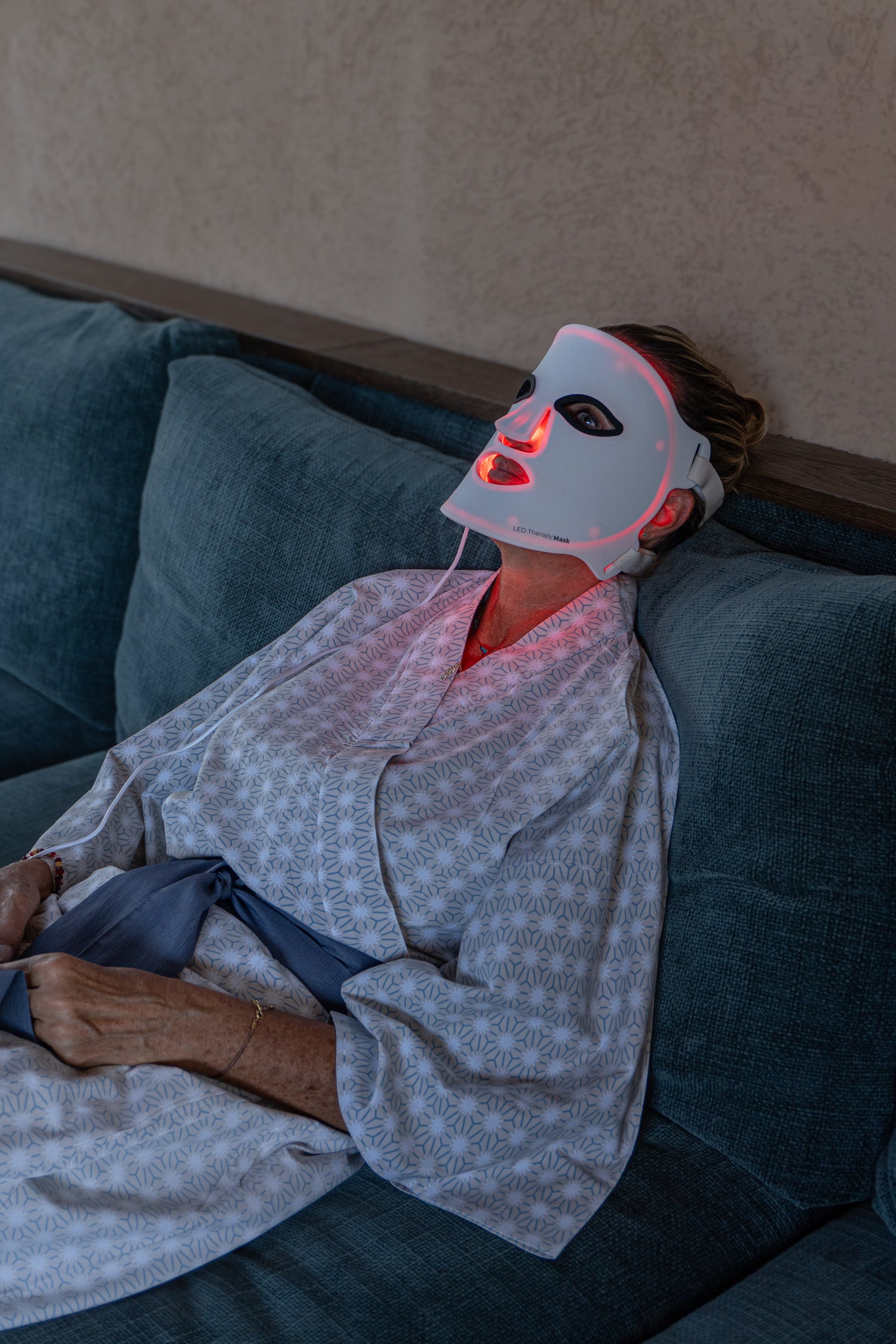
Melasma is best controlled with consistency. At home, the foundation remains daily photoprotection, well-chosen depigmenting actives, and a gentle routine; LED light can help as support, but it does not replace these pillars. (aad.org)
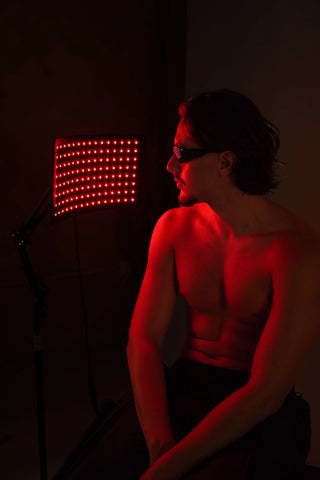
If you're looking for a broader vision of at-home technological wellness, the main website's recovery and wellness proposal fits this consistent care approach.
Facial red light
Bring your skin back to life
★★★★★ 4,8/5 · rated by verified customers
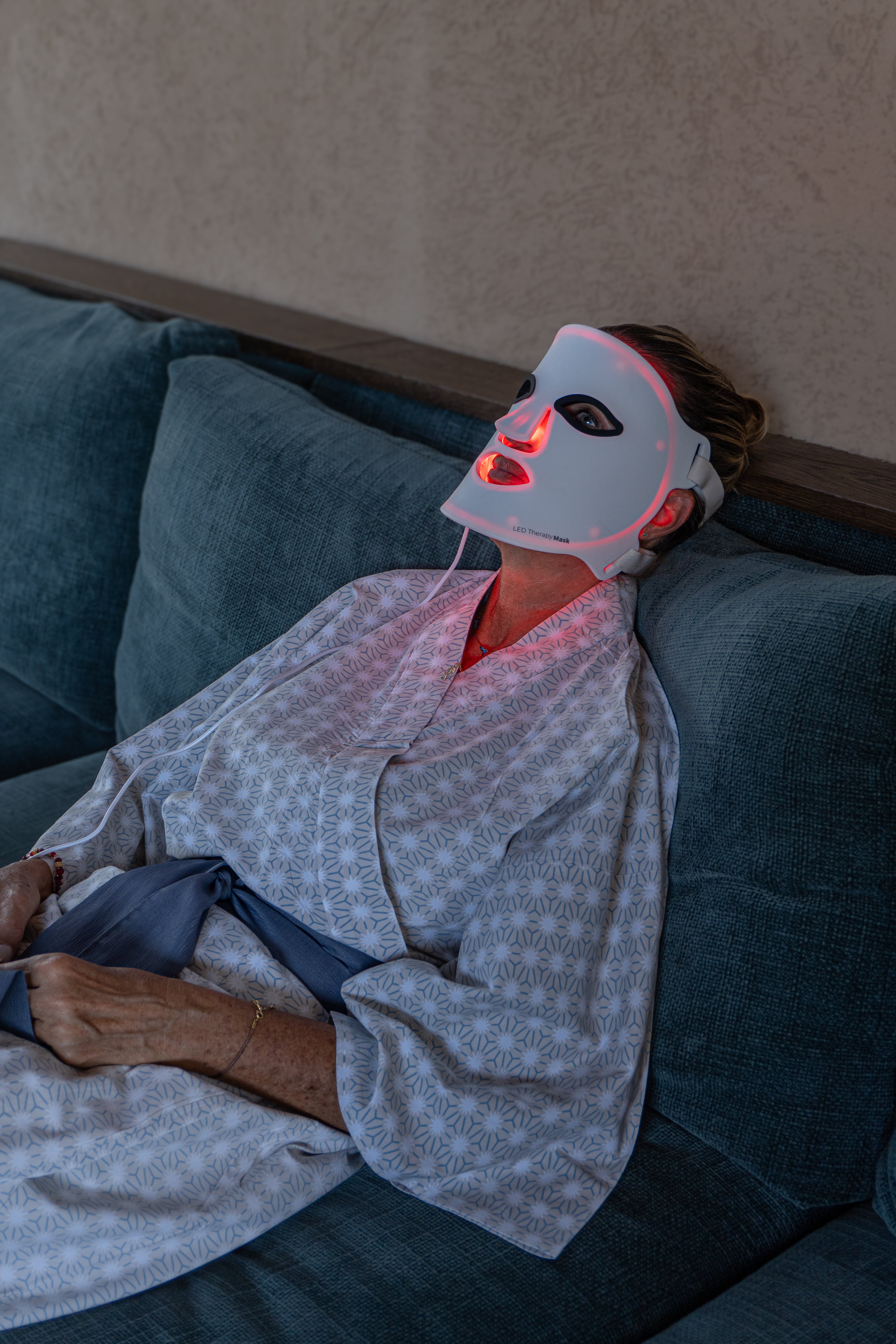
The KumoSkin LED mask helps repair and calm your skin in short sessions at home.
- 250 LEDs in flexible medical silicone
- Red light to boost collagen and glow
- 4 lights: red, infrared, blue and yellow
€299,00€429,00
−10% on your 1st order when you subscribe to the newsletter

What is melasma and why does it easily recur?
Melasma is an acquired facial hyperpigmentation that can persist for years. Sun exposure is a key trigger, but visible light can also worsen it; in addition, pregnancy, stress, and certain oral contraceptives can make it more apparent. (aad.org)
Therefore, treating it "only when it looks darker" usually yields poor results: the real goal is to reduce the stimuli that activate it and keep the skin calm for longer. (aad.org)
Personalized protocol · included with your purchase
Want us to tell you how to use it in your case?
With your purchase, our experts prepare the ideal LED protocol for your skin type and goal (acne, wrinkles, dark spots...).
Message us on WhatsAppOur experts reply · no obligation
At-home melasma treatment: the foundation that truly helps
The most sensible way to approach at-home melasma treatment and how to complement it with LED light is to start with what has the best support: photoprotection, gentle cosmetics, and depigmenting actives that do not irritate the skin. The AAD self-care guide and DermNet information agree that daily protection is crucial, and a PubMed review on photoprotection in melasma and post-inflammatory hyperpigmentation reinforces the adjuvant role of sunscreen against UV and visible light. (aad.org)
Daily photoprotection: the essential step
- Use a broad-spectrum sunscreen with SPF 30 or higher. The AAD recommends applying it every day and reapplying it at least every two hours when exposed. (aad.org)
- Choose a tinted formula if your melasma darkens with visible light. DermNet explains that visible light can trigger or worsen melasma and that tinted filters with iron oxides are more useful in this context. (dermnetnz.org)
- Add physical barriers. A wide-brimmed hat, UV-protective glasses, and shade reduce the cumulative radiation load. (aad.org)
- Avoid artificial tanning. Tanning beds and sunlamps can worsen the condition and make treatment less effective. (aad.org)
Topical actives with the best support
In a systematic review of topical treatments for melasma, hydroquinone and triple combination remain the best-studied options; as alternatives or supports, azelaic acid, vitamin C, niacinamide, kojic acid, salicylic acid, and cysteamine also appear. The decision depends on skin tolerance and whether you need a prescription option or a more cosmetic strategy. (pubmed.ncbi.nlm.nih.gov)
The key is not to use more products, but to use just the right ones that don't irritate. The AAD warns that if a cream stings, burns, or tingles, that irritation can make the spots even darker. (aad.org)
on your first order when you join the newsletter
We send you the code instantly. No spam.
If you want to organize your routine more visually, the combined routine with LED technology can serve as a general framework to avoid mixing too many steps at once.
Habits that prevent relapses
Melasma is a chronic and recurrent condition, so consistency weighs more than intensity. Maintaining gentle, fragrance-free products without excessive exfoliation helps preserve the skin barrier and prevent pigmentation from reactivating. (aad.org)
It's also important to accept that not everything improves at the same rate: some spots respond sooner, and others require maintenance for months. The AAD itself reminds us that melasma can last for years. (aad.org)
How to complement treatment with LED light without worsening it
Photobiomodulation with LED has been explored in dermatology, and there is a small pilot study on melasma with 940 nm light applied once a week for eight weeks after microdermabrasion, with significant pigment reduction compared to control. However, the evidence remains limited, and reviews on laser and light in melasma maintain it as a cautious, non-first-line option. (journals.sagepub.com)
If you want to better understand the spectrum before starting, the guide to facial LED light colors helps distinguish what each wavelength does without unnecessary technical jargon.
What type of light makes the most sense
For melasma, it is most prudent to consider LED within a photobiomodulation approach and not as an aggressive lightening strategy. The literature on PBM works with visible and near-infrared light, but there is no universally validated protocol for at-home melasma yet, and visible light itself can worsen pigmentation. (journals.sagepub.com)
Therefore, if you are going to use a mask, it is advisable to start with a comfortable and easy-to-use option. The guide for choosing a facial LED mask is useful for comparing formats without losing sight of the main thing: your skin's tolerance.
How to use it at home cautiously
Start with conservative sessions according to the manufacturer's instructions, on clean, dry skin, and discontinue if you notice persistent heat, burning, or increased pigmentation. This is a reasonable precaution: heat and some thermal procedures can worsen melasma, and skin irritation can darken spots. (clinique-barolet.com)
If you prefer a more guided home approach, advanced at-home LED light therapy can serve as a starting point for building a stable and non-invasive routine.
Indicative daily routine to start
| Time | What to do | Goal | Comment |
|---|---|---|---|
| Morning | Gentle cleansing, light hydration, and broad-spectrum photoprotection with SPF 30 or higher, ideally tinted if visible light darkens your melasma. | Reduce daily UV and visible light stimulus. | This is the base recommended by the AAD and reinforced by DermNet for melasma. (aad.org) |
| Night | Gentle cleansing and well-tolerated or prescribed depigmenting treatment, followed by moisturizer if needed. | Take advantage of consistency without irritating the skin. | Hydroquinone, triple combination, azelaic acid, niacinamide, vitamin C, and cysteamine are supported options in the literature. (pubmed.ncbi.nlm.nih.gov) |
| LED Sessions | Brief and comfortable application, only if skin is stable and without active redness. | Add complementary support, not replace the basic routine. | Evidence in melasma remains limited, and photostimulation should be used cautiously. (journals.sagepub.com) |
Common mistakes that worsen melasma
- Relying solely on a depigmenting cream. Without photoprotection against UV and visible light, melasma usually darkens again. (aad.org)
- Using products that burn or over-exfoliate. Irritation can make the spot more evident. (aad.org)
- Seeking quick results with at-home laser or IPL. Reviews cautiously reserve them due to the risk of post-inflammatory hyperpigmentation and stimulating melasma itself. (pubmed.ncbi.nlm.nih.gov)
- Continuing even if the skin gets very hot with LED. If the device causes persistent redness or heat, it's not a good sign for your routine. (clinique-barolet.com)
FAQ
How to treat melasma at home safely and effectively with topical products and photoprotection?
The foundation is a very simple and consistent routine: gentle cleansing, well-tolerated depigmenting treatment, and daily photoprotection. The AAD recommends a broad-spectrum sunscreen with SPF 30 or higher, reapplied every two hours when exposed. In terms of topicals, the strongest evidence still points to hydroquinone and triple combination; as alternatives, azelaic acid, niacinamide, vitamin C, or cysteamine are used. The most important thing is to avoid irritation, because reactive skin pigments more easily. (aad.org)
Is it safe to use LED therapy at home for melasma, and what light colors are most suitable for this problem?
It can be used as a supplement, but with realistic expectations. Photobiomodulation with LED has been studied in dermatology, and there is a small pilot study in melasma with 940 nm that showed improvement, although the evidence remains limited and does not define a standard at-home protocol. In practical terms, the prudent approach is to avoid programs that heat or irritate the skin and not to think of LED as a substitute for sunscreen or topical treatment. (journals.sagepub.com)
What daily care guidelines should accompany an at-home melasma treatment with LED to avoid worsening it?
Always use a broad-spectrum sunscreen and, if your melasma is activated by visible light, preferably tinted with iron oxides. Add a hat, UV glasses, and shade whenever possible. Before the LED session, the skin should be calm, without burning or redness; afterward, avoid over-exfoliating or incorporating too many active ingredients at once. The idea is to reduce stimuli, not to "force" the skin. DermNet and the AAD agree that visible protection and cosmetic gentleness are part of the treatment, not an extra. (aad.org)
What risks or side effects can LED phototherapy cause in melasma, and when should a dermatologist be consulted?
The most frequent problems are excessive heat, redness, burning sensation, or worsening of pigmentation if the skin gets irritated. If you notice an area darkening more after using the LED, if the skin becomes reactive, or if you are unsure if it is actually melasma, it is advisable to stop and seek dermatological evaluation. The AAD recommends consultation if melasma does not disappear, and reviews on light and laser insist on using these resources cautiously due to the risk of post-inflammatory pigmentation. (aad.org)
Are there differences between treating melasma at home with LED and with laser or intense pulsed light (IPL) in terms of results and safety?
Yes. Home LED typically seeks a gentle, complementary photobiomodulation effect, while lasers and IPL are medical procedures with more energy and a higher risk of pigment rebound. Meta-analyses and reviews of laser in melasma show that they can improve indices like MASI, but also highlight the possibility of recurrence and post-inflammatory pigmentary changes. Therefore, at home, LED makes sense as a prudent support; however, laser and IPL should be evaluated by a dermatologist. (pubmed.ncbi.nlm.nih.gov)
What now?
If you want to start with a simple foundation, check out the main website and advanced at-home LED light therapy; if you prefer to fine-tune your choice, the guide to choosing a facial LED mask and the guide on what each wavelength does will help you build a prudent and coherent routine. To learn more, consult Kumo.

Facial red light
KumoSkin Mask – LED Facial Mask
★★★★★ 4,8/5 · rated by verified customers
- 250 LEDs in flexible medical silicone
- Red light to boost collagen and glow
- 4 lights: red, infrared, blue and yellow
€299,00€429,00· pay in installments with seQura or Klarna