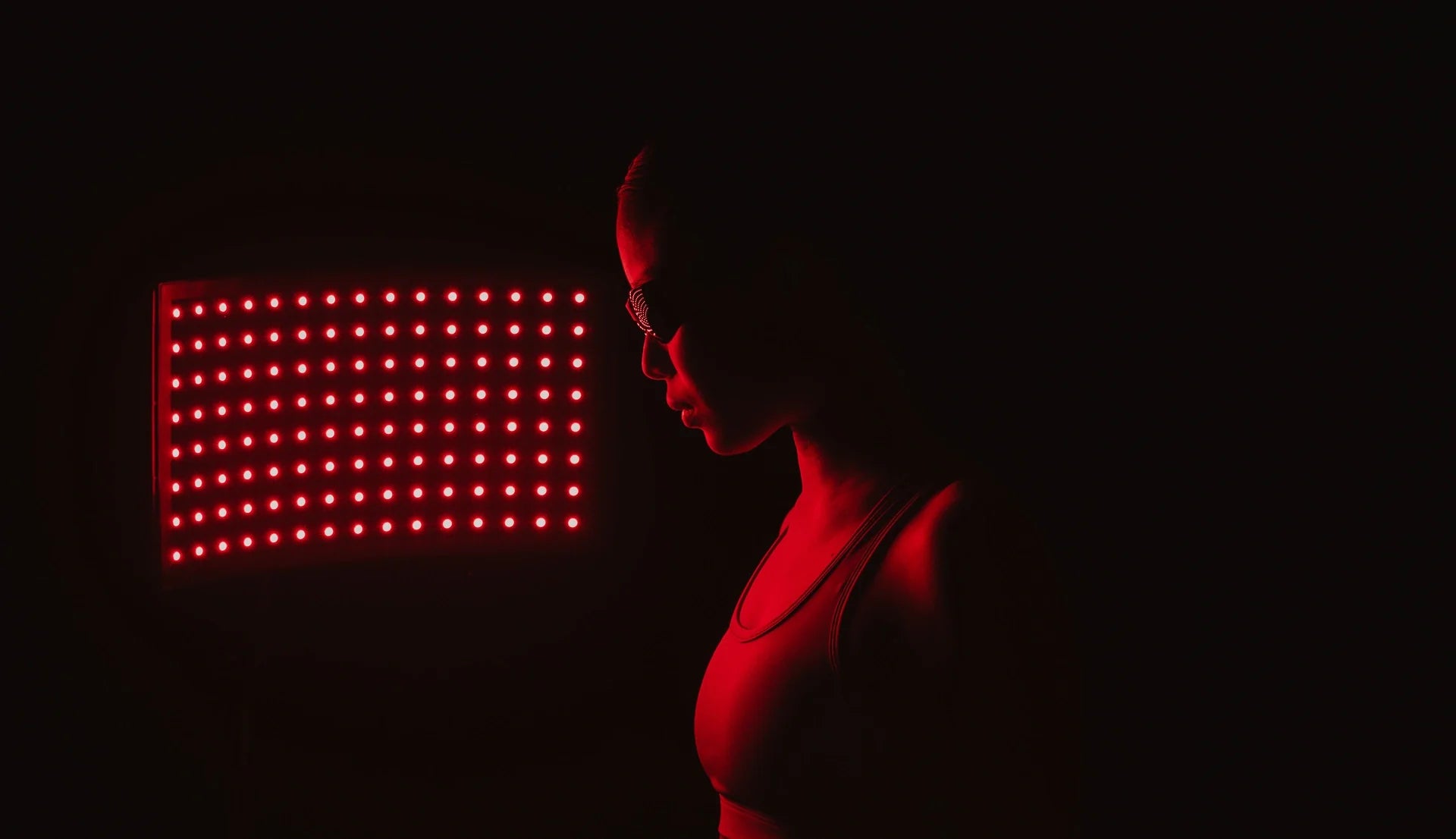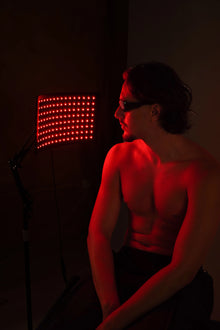

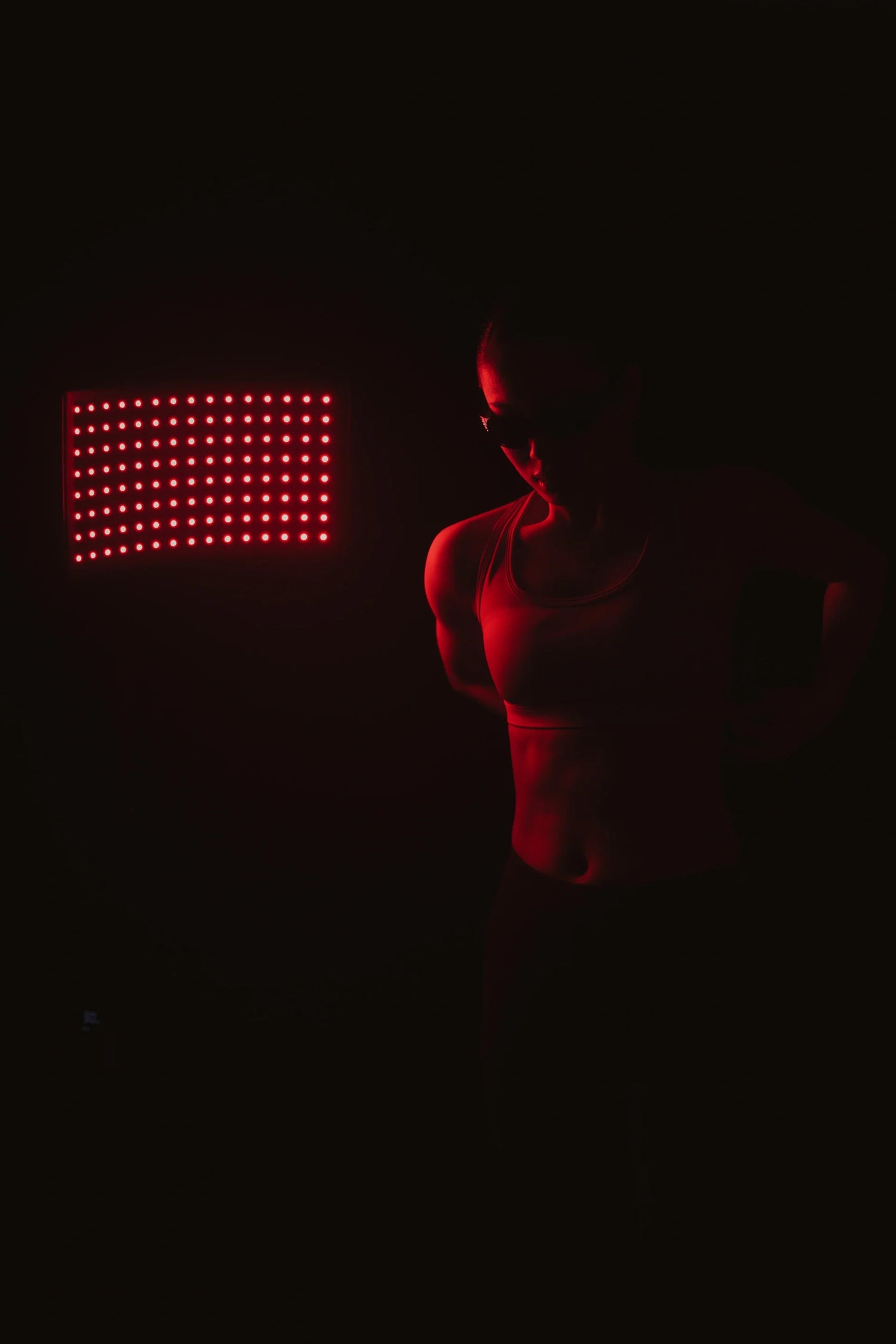

Yes, a red light panel can help with joint pain. The idea is not to "cure everything," but to use photobiomodulation as support for knees and some shoulder conditions; for the lower back, the evidence is more irregular, and it's advisable to be cautious. (academic.oup.com)
Photobiomodulation works with red light and near-infrared light. The most studied ranges generally move between 630-660 nm in red and 780-850 nm in near-infrared, but the actual response depends on the dose, distance, and tissue treated. (pubmed.ncbi.nlm.nih.gov)
Red & infrared light
Recover faster, at home
★★★★★ 4,8/5 · rated by verified customers
The KumoLux panel supports muscle recovery with full-body red and infrared light.
- 660 nm red + 850 nm infrared light
- Full-body muscle recovery
- Clinically validated biohacking protocols
€399,00€499,00
−10% on your 1st order when you subscribe to the newsletter

How to understand the dose before starting
In light therapy, the most common mistake is to copy minutes without looking at the panel's power. Dosimetry shows that the energy reaching the tissue changes with the emitter's position, which is why classic dosing guides talk in joules per point, not "magic minutes." (pubmed.ncbi.nlm.nih.gov)
If you are comparing models, look for a panel that indicates actual wavelengths, irradiance measured at a specific distance, a timer, and sufficient coverage for the area you want to treat. In the domestic use literature, LED devices are predominant, and they are often used within clinical dosage recommendations; therefore, it is worth reviewing the 2026 buying guide first and assessing whether the format of the KumoLux Panel fits your routine. (pubmed.ncbi.nlm.nih.gov)
Personalized protocol · included with your purchase
Want us to tell you how to use it in your case?
With your purchase, our experts set up your red and infrared light sessions for your sport and goal.
Message us on WhatsAppOur experts reply · no obligation
Practical protocol for knees, shoulders, and back
Guideline protocol by area
The table below summarizes a practical and conservative approach. Take it as a working basis and adjust it to the actual irradiance of your panel and the usage distance, because the same session can be equivalent to very different energies depending on the model. (pubmed.ncbi.nlm.nih.gov)
| Area | Objective | How to position it | Guideline frequency | Best combination |
|---|---|---|---|---|
| Knees | To work the joint and its immediate surroundings, not just an isolated point. | Panel facing forward and slightly lateral, with the knee relaxed. | Between 1 and 5 times per week, for several weeks. | Strength exercises, mobility, and load control. |
| Shoulders | To act on the painful area of the rotator cuff or subacromial space. | Direct it to the anterior, lateral, or posterior side depending on the pain. | Programs of 2 to 6 weeks; some trials used 14 sessions in 2 weeks. | Active rehabilitation and mobility work. |
| Back | Focal application on the lumbar or paravertebral region. | On the painful area, with wide coverage if the panel allows it. | Conservative use and re-evaluation after 2 to 4 weeks. | Mobility, core stability, and postural hygiene. |
For knees, the most cited evidence includes a 2024 systematic review and meta-analysis in Physical Therapy with 10 studies and 542 participants: photobiomodulation reduced pain, but with very low certainty. Another 2019 review concluded that the best results appeared with 4-8 J and 785-860 nm, or with 1-3 J at 904 nm per point. For shoulders, improvement is more consistent when light is added to exercise. For non-specific low back pain, the literature does not support isolated use.
Knees
For knees, think about repeated sessions and a well-defined area. In the reviewed trials, 1 to 5 sessions per week were used, with a median of 10 sessions and a median of 525 seconds per session, so the useful pattern is not usually a very long exposure, but consistency over several weeks. If one knee is more loaded than the other, work on that one first and always maintain the same distance.
on your first order when you join the newsletter
We send you the code instantly. No spam.
- Position the knee in a comfortable position so that the joint does not tense during the session.
- Keep the distance fixed so that each application repeats a similar dose.
- Combine light with strength and mobility exercises, because exercise remains the basis for managing painful knees.
Shoulders
For shoulders, the combination with exercise has the best support, especially in subacromial syndrome, tendinopathy, or rotator cuff pathology. A 2024 review and meta-analysis found that PBM plus exercise reduces pain and improves range of motion; in addition, a trial on chronic shoulder pain used 14 sessions in 2 weeks. At home, it is advisable to be very focused: aim at the symptomatic area and avoid turning the session into a "general illumination" without purpose. (pubmed.ncbi.nlm.nih.gov)
- Direct the panel to the main painful area and keep the shoulder relaxed.
- Prioritize gentle mobility and scapular control exercises along with the light.
- If the pain radiates to the neck, separate shoulder work from cervical work to avoid mixing objectives.
Back
For the lower back, the recommendation should be more cautious. A 2020 systematic review concluded that photobiomodulation does not clinically significantly reduce pain or disability in non-specific low back pain. This does not mean it can never help, but it should not be sold as a sole solution. If you try it, use it as a brief, focal, and re-evaluable complement. (sciencedirect.com)
How to use it safely
The therapy is usually well-tolerated in the short term, but safety depends on using the device according to its instructions and protecting the eyes when appropriate. The FDA indicates clear precautions for photobiomodulation —photosensitivity, pregnancy, active implants, cancer or history of cancer in the area, photosensitizing medication, or active infection/wound— and the AAD reminds that one should not improvise with glasses or timings.
- Use the recommended eye protection if required by the manufacturer.
- Do not apply the panel over open wounds, active infections, or areas with known photosensitivity.
- If you are pregnant, have active implants, or are taking photosensitizing medication, seek professional assessment before starting.
- If you are looking for a more practical explanation of this point, save the eye safety guide for red light therapy.
How to calculate the ideal distance
Distance greatly changes the dose. The same panel can be useful, insufficient, or excessive just by moving it a few centimeters away, so do not copy times from another brand or model. If you want to refine this point, review how to calculate the ideal distance to the red light panel and keep that separation fixed for the entire series of sessions.
If you know your equipment's irradiance, the basic calculation is simple: time = target dose / irradiance. For example, a target of 6 J/cm² with 50 mW/cm² is equivalent to about 120 seconds per area. This is just a mathematical example; the actual value depends on the panel, the distance, and the tissue you want to treat.
How to choose a panel for joint pain
For joint pain, the ideal panel is not the one that promises the most, but the one that allows a dose to be repeated stably. Look at the combination of red and near-infrared, the declared irradiance at a specific distance, and the actual coverage of the joint. If you want to compare options with criteria, go back to the 2026 buying guide and, if you already prefer a specific format, look at the KumoLux Panel. A review of home-use devices noted that many pieces of equipment use near-infrared LEDs and dosages consistent with clinical recommendations.
It is also worth remembering that "FDA-cleared" does not mean "guaranteed result." It means that the device is considered low risk within its intended use; efficacy, however, depends on the evidence and the specific protocol.
FAQ about the red light panel for joint pain
Is red light therapy effective for knee pain and how is it applied using a panel on the joint?
Yes, it can reduce knee pain, but as a complement and not a substitute for basic treatment. The 2024 review in Physical Therapy found less pain and possible functional improvement, though with very low certainty. The 2019 review noted better results with 4-8 J and 785-860 nm, or with 1-3 J at 904 nm per point. With a panel, the key is to place the knee in front of the emitter, repeat sessions, and maintain a constant distance.
How to place a red light panel to treat shoulder and back pain focally and safely at home?
For shoulders, aim at the main painful area of the rotator cuff or subacromial space and combine it with exercise, because this combination has the best support. For the back, center it on the lumbar or paravertebral area and do not try to cover the entire back at once if the panel is small. The priority is a stable distance, a comfortable posture, and eye protection if the device requires it. For non-specific low back pain, expectations should be moderate.
How long and how often should I use a red light panel to relieve joint pain in my knees and shoulders?
There is no universal figure, because the time depends on irradiance and distance. For knees, trials used between 1 and 5 sessions per week, with a median of 10 sessions and 525 seconds per session. For shoulders, intensive programs have been used, such as 14 sessions in 2 weeks, usually along with exercise. If your panel requires very long sessions to "feel something," it is likely that the distance or power is not adjusted to your objective.
What wavelengths (630–850 nm) are most suitable for chronic back pain and joint pain when using red light?
The most studied range practically goes from about 630-660 nm in red to 780-850 nm in near-infrared. For knees, a review found better results with 785-860 nm and 4-8 J per point, or with 904 nm and 1-3 J per point. For non-specific chronic back pain, there is no magic wavelength: dose, distance, and type of pain matter as much as color. That is why it is advisable to think about protocol, not just nanometers.
Is it safe to use red light panels at home for joint pain without medical supervision, and what precautions should I take?
In general, yes, it can be safe in the short term if used exactly as indicated by the manufacturer. However, it is not a therapy without precautions: the FDA warns to avoid it in cases of photosensitivity, pregnancy, active implants, cancer or active injury in the area, and with photosensitizing drugs. Also, protect your eyes if the manual asks you to and do not extend the session to "compensate," because the dose does not work that way. If you have clinical doubts, a professional assessment is still the most sensible option.
What now?
If you want to go from theory to a simple routine, start with a single area, set a stable distance, and maintain consistency for several weeks. You can explore the KumoLux Panel, review the 2026 buying guide, and return to the Kumo Balance home page to continue refining your non-invasive recovery strategy.

Red & infrared light
KumoLux Panel – Red and Infrared LED Panel
★★★★★ 4,8/5 · rated by verified customers
- 660 nm red + 850 nm infrared light
- Full-body muscle recovery
- Clinically validated biohacking protocols
€399,00€499,00· pay in installments with seQura or Klarna