Gaming loads the body too.
When a session runs long, fatigue builds up in the neck, the wrists and the legs. A systematic review published in 2026 estimated that 73% of esports players had felt pain in the past year, with the spine, the neck and the wrists among the most affected areas.
Red & infrared light
Recover faster, at home
★★★★★ 4,8/5 · rated by verified customers
The KumoLux panel supports muscle recovery with full-body red and infrared light.
- 660 nm red + 850 nm infrared light
- Full-body muscle recovery
- Clinically validated biohacking protocols
€399,00€499,00
−10% on your 1st order when you subscribe to the newsletter

The good news is that you don't have to turn every match into a gym session. A simple, repeatable routine that fits between maps, scrims or ranked games is enough.
Why the neck, the wrists and the legs suffer
Three things weigh on you at once during long sessions: staying too long in the same posture, repeating the same gesture over and over, and letting the body work without well-adjusted support. That is why the fatigue does not show up in a single area; it usually spreads across the neck, shoulders, forearms and lower body.
Personalized protocol · included with your purchase
Want us to tell you how to use it in your case?
With your purchase, our experts set up your red and infrared light sessions for your sport and goal.
Message us on WhatsAppOur experts reply · no obligation
Quick adjustments to your gaming setup
What to check before you start
| Area | Practical adjustment | Goal | Source |
|---|---|---|---|
| Neck and torso | Place the screen straight in front of you, keep your head aligned with your torso and avoid working with the neck pushed forward. | Reduce sustained tension in the upper back. | (osha.gov) |
| Legs and feet | Adjust the chair so the whole sole rests on the floor, and use a footrest if you need one; that lowers the pressure on the back of the thigh. | Avoid discomfort, tingling and unnecessary compression. | (osha.gov) |
| Playing rhythm | Add short, frequent breaks when the session runs long; the OSHA guidance recommends stopping for five minutes every hour. | Break up stillness before it turns into stiffness. | (osha.gov) |
The idea is not to chase a perfect, motionless posture, but a stable base that lets you shift without extra compensation.
A short routine for long sessions
If you prefer a version that is already organized to spread the load across the neck, back and legs, you can adapt a 20-minute routine for people who work seated to the time you spend in front of the screen.
- Before playing: keep water within reach, check the chair height and make sure the mouse does not force you to stretch your arm.
- During the session: stand up when you switch blocks, shake out your hands and shoulders, and do two or three gentle movements with your neck, torso and ankles.
- When you finish: walk a little, slow your breathing down and avoid sitting back down right away as if your body had not been still.
Wrists and hands: less tension, more variation
If the controller or the mouse makes you grip harder than necessary, ease off the grip strength and bring the peripheral closer to the center of your working area. Changing your gesture during waiting times, switching hands when the game allows it and loosening your fingers between blocks all help keep the load off the same tendon.
on your first order when you join the newsletter
We send you the code instantly. No spam.
- Bring the controller, mouse or keyboard closer to your body so you are not working with your arm extended.
- Relax your grip between matches or during waiting moments.
- If one hand takes more load than the other, switch sides when the game allows it.
Legs and ankles: don't let the chair win
Legs usually complain when the seat is too high, the edge presses behind the knee or the foot dangles. If that happens to you, think about resting, unloading and moving more often.
If you also want complementary support for the end of the day, you may find it useful to try pressotherapy at home for people who work seated, always as a complement to a routine that already includes breaks and movement.
- Rest your feet flat whenever you can.
- Avoid keeping your knee pressed against the edge of the seat.
- Take a short walk around the house or the room between long blocks of play.
Complementary support for heavy legs
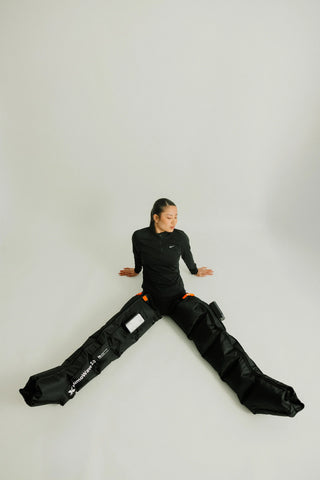
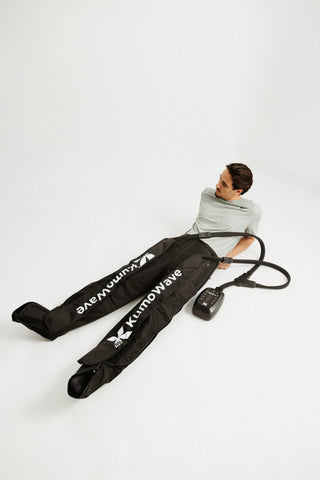
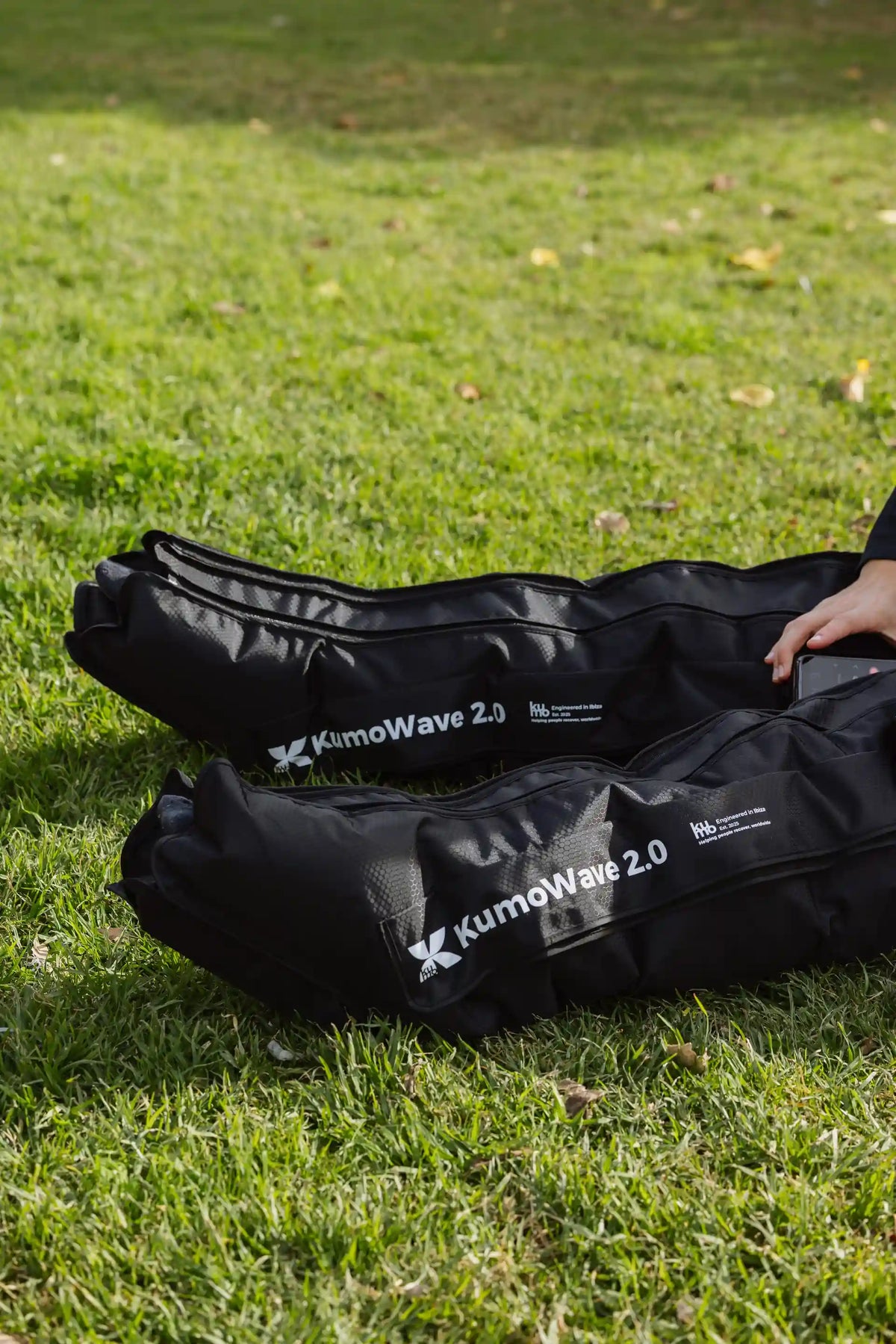
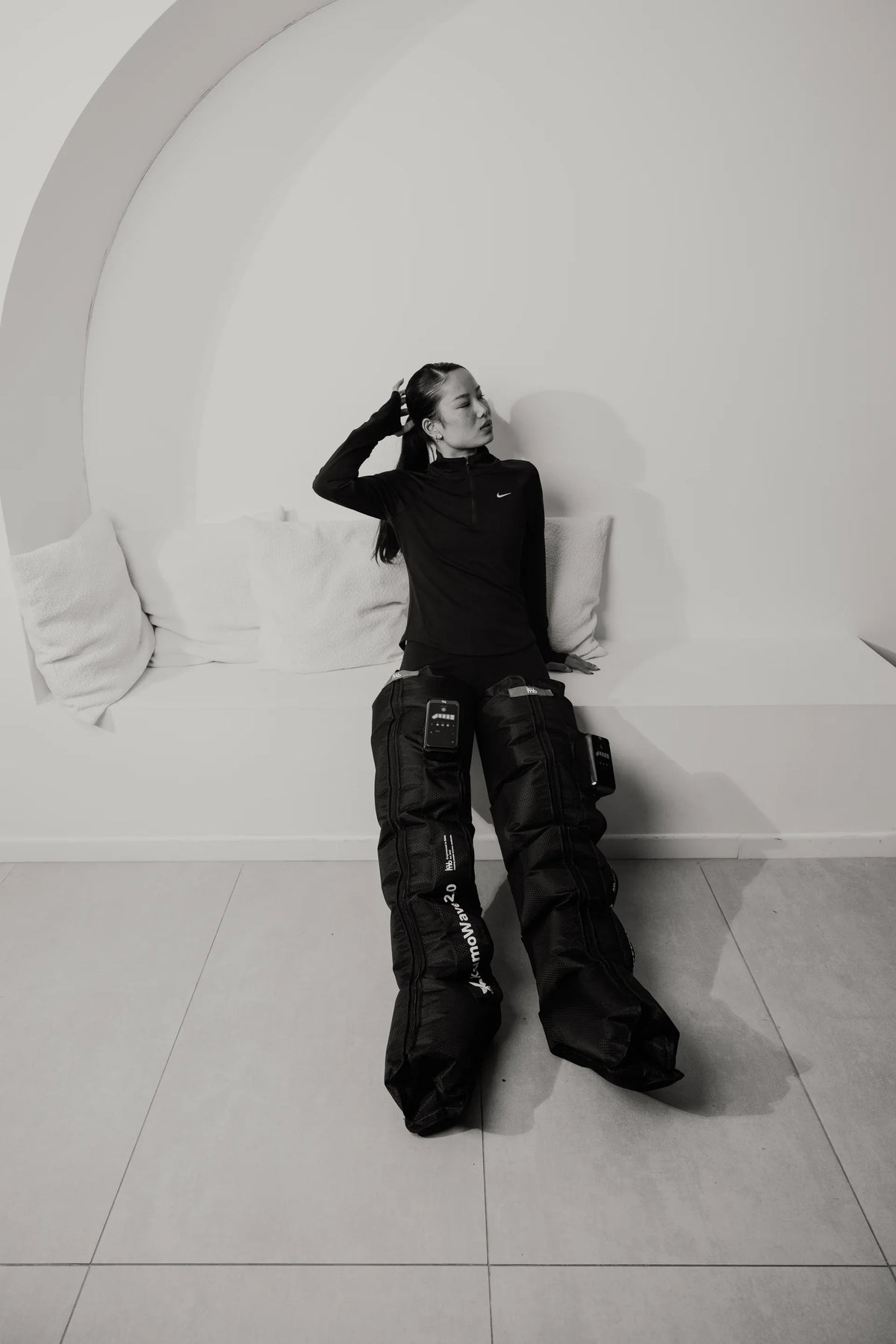
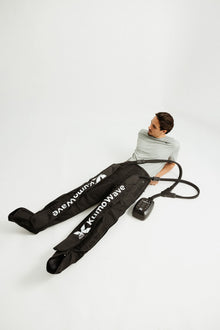
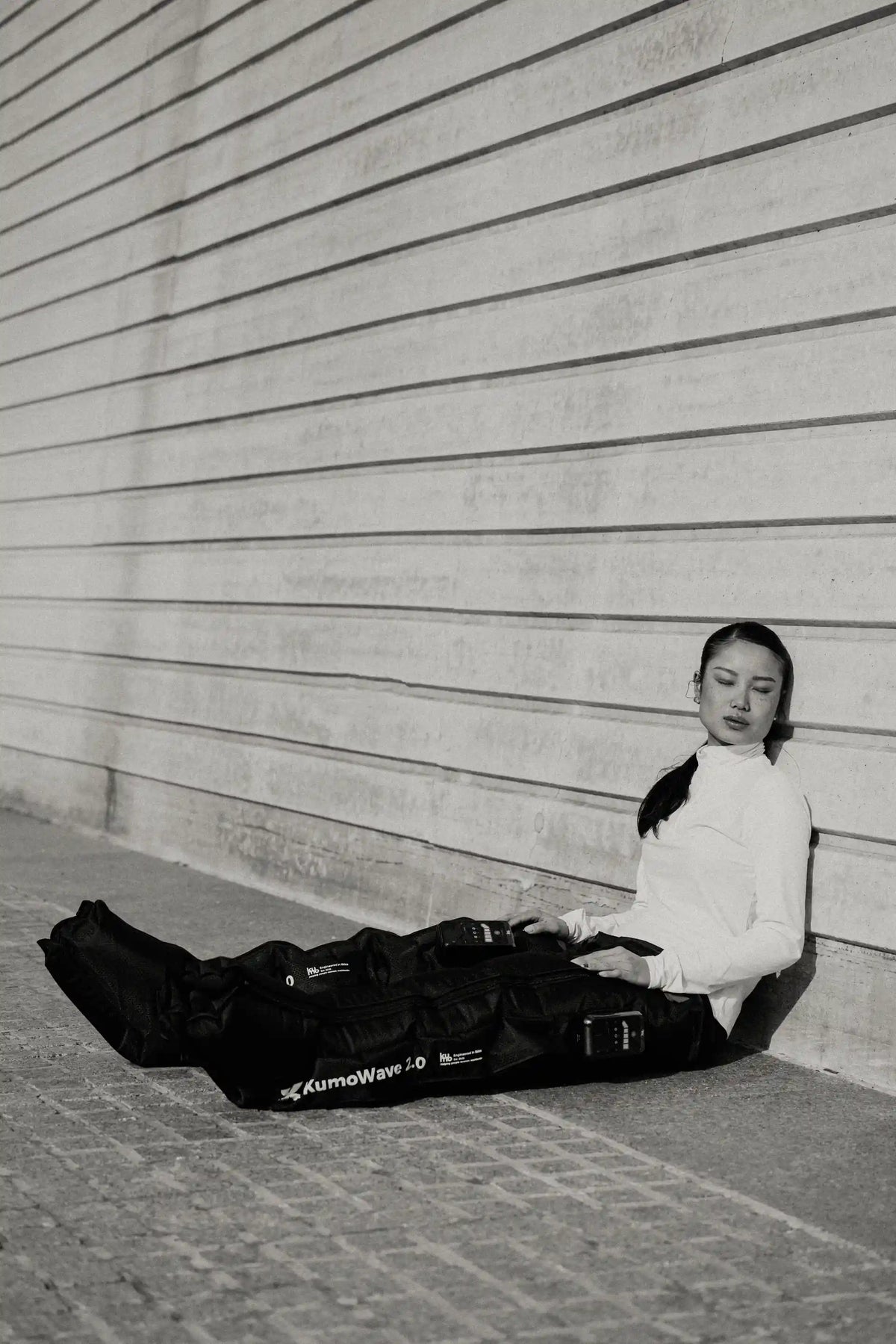
Compression boots can accompany a wellness routine when you want to end the day with less of a loaded feeling in your legs. Even so, medical compression guidance reminds us that there are absolute and relative contraindications, so it is worth reviewing any vascular or cardiac history before adding them.
If having everything ready helps you, it can also be practical to set up a recovery corner at home and reserve a fixed spot for your routine. And if you are looking for a concrete reference for the end of the day, you can go back to relieving tired feet and ankles with pressotherapy at home.
When to see a professional
Don't normalize pain that changes its pattern. If your neck or back started hurting after a blow, or if weakness, balance problems or changes in bladder or bowel appear, get a medical assessment. In the hand and wrist, constant pain, tingling, loss of strength, redness, fever or a change in color also deserve attention. (dynamichealth.nhs.uk)
- Pain after a blow, a fall or a sudden movement.
- Progressive weakness or clumsiness when coordinating movements.
- Balance problems or changes in the way you walk.
- Changes in bladder or bowel.
- Hand or wrist pain with tingling, loss of strength, fever, redness or a change in color.
FAQ about esports and gaming
Which neck and back exercises are best to avoid pain when playing esports for long hours?
The most useful ones are those that pull the body out of a fixed posture: chest opening, gentle torso rotation and pain-free neck mobility. In a seated routine, combine short, controlled movements, for example opening the chest, turning to each side and moving the head within comfortable ranges. A few seconds done well beats forcing range of motion. If an area gets irritated, lower the intensity and come back later with a gentler movement. (nhs.uk)
How can you prevent wrist tendinopathy during long video game sessions?
The idea is to reduce repetition and tension. Keep the wrist as straight as possible, bring the controller or mouse closer to your body and avoid squeezing harder than needed. If your session involves many identical actions, alternate tasks or rest the hand between blocks. If pain, tingling or weakness shows up, don't cover it with more load; cut the volume and get it checked if it does not improve or gets worse. (nhs.uk)
What is the right posture to protect your spine while sitting and gaming at home?
There is no magic posture, but there is a practical reference: screen at eye level, keyboard just below the elbow, relaxed shoulders and feet on the floor. What matters is not staying still, but being able to change posture without losing alignment. If your setup forces you to push your head forward or raise your shoulders, the body ends up paying for that excess after a few hours. (hse.gov.uk)
How often should I take breaks and stretch during intense gaming sessions?
As a practical rule, don't wait until you feel stiff. The evidence in esports insists on breaking up prolonged sedentary time and spreading the load better, so it is worth taking regular breaks and using them to stand up, walk and move your large joints. In very intense sessions, a short, repeated break is usually more useful than leaving everything for the end.
What kind of chair and desk setup prevent leg pain when you spend so much time seated?
Look for a chair that lets you rest your feet and supports your thighs well. If the desk forces you to raise the chair so much that your feet no longer rest on the floor, you will need a footrest or a friendlier setup. It also helps if the seat does not press behind the knee, because that is where discomfort builds up most in the legs. (books.hse.gov.uk)
What now?
Start with a short session, a well-placed break and a routine you can repeat tomorrow. If you want to keep organizing your recovery, go back to the Kumo Balance home page and also save setting up a recovery corner at home to have it ready.

Red & infrared light
KumoLux Panel – Red and Infrared LED Panel
★★★★★ 4,8/5 · rated by verified customers
- 660 nm red + 850 nm infrared light
- Full-body muscle recovery
- Clinically validated biohacking protocols
€399,00€499,00· pay in installments with seQura or Klarna