The Achilles tendon warns you early. In runners, pain at the back of the heel usually shows up after repeated overload, sudden jumps in volume or intensity and unstable shoes; if you ignore it, it can become more persistent, as summarized in the clinical overview from Mayo Clinic.
The key is usually not to stop altogether, but to lower the load, keep gentle movement and recognize whether the pain fits an overuse irritation or a warning sign that calls for medical assessment, something also noted on the NHS page on heel pain.
Pressotherapy at home
End the day with light legs
★★★★★ 4,8/5 · rated by verified customers
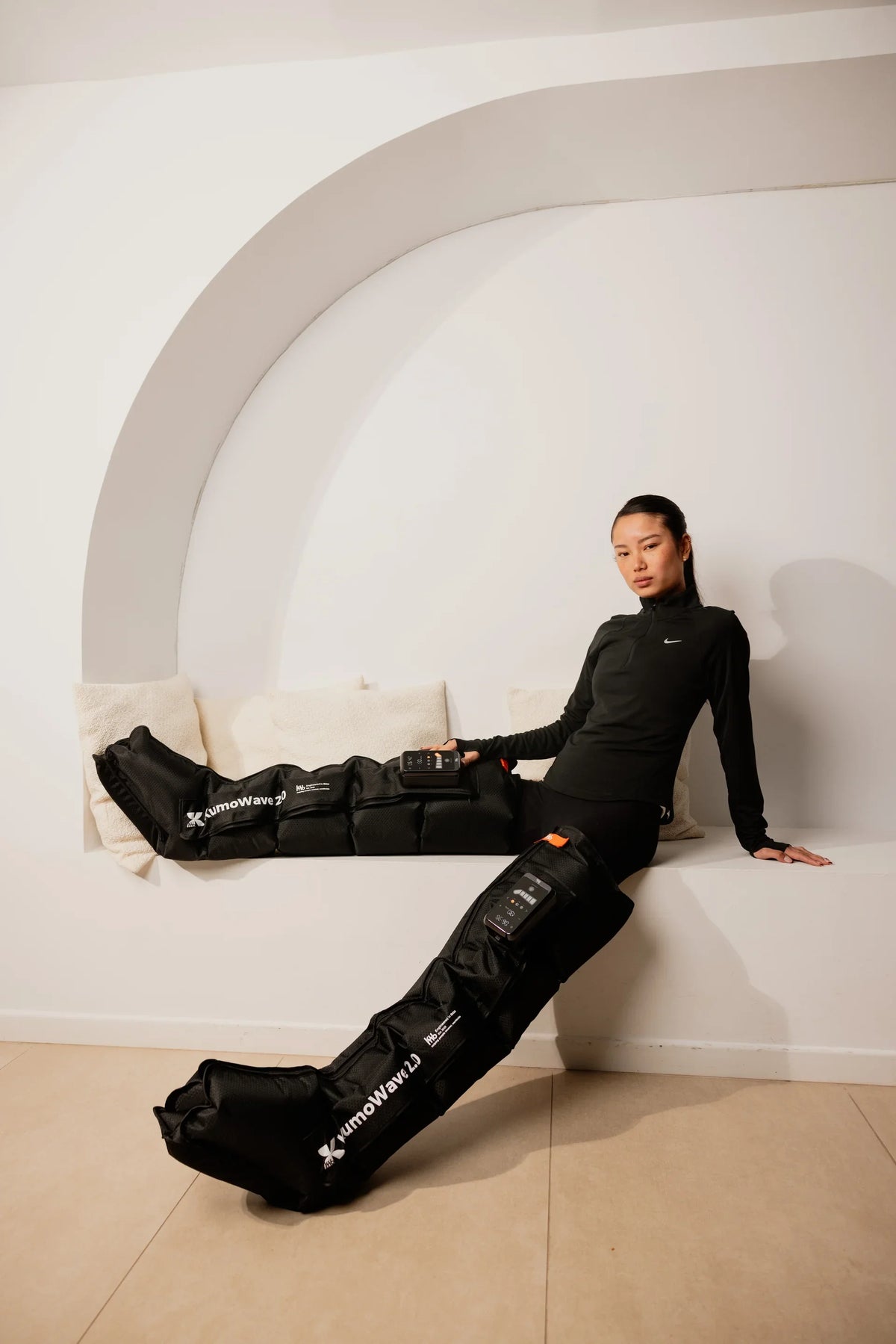
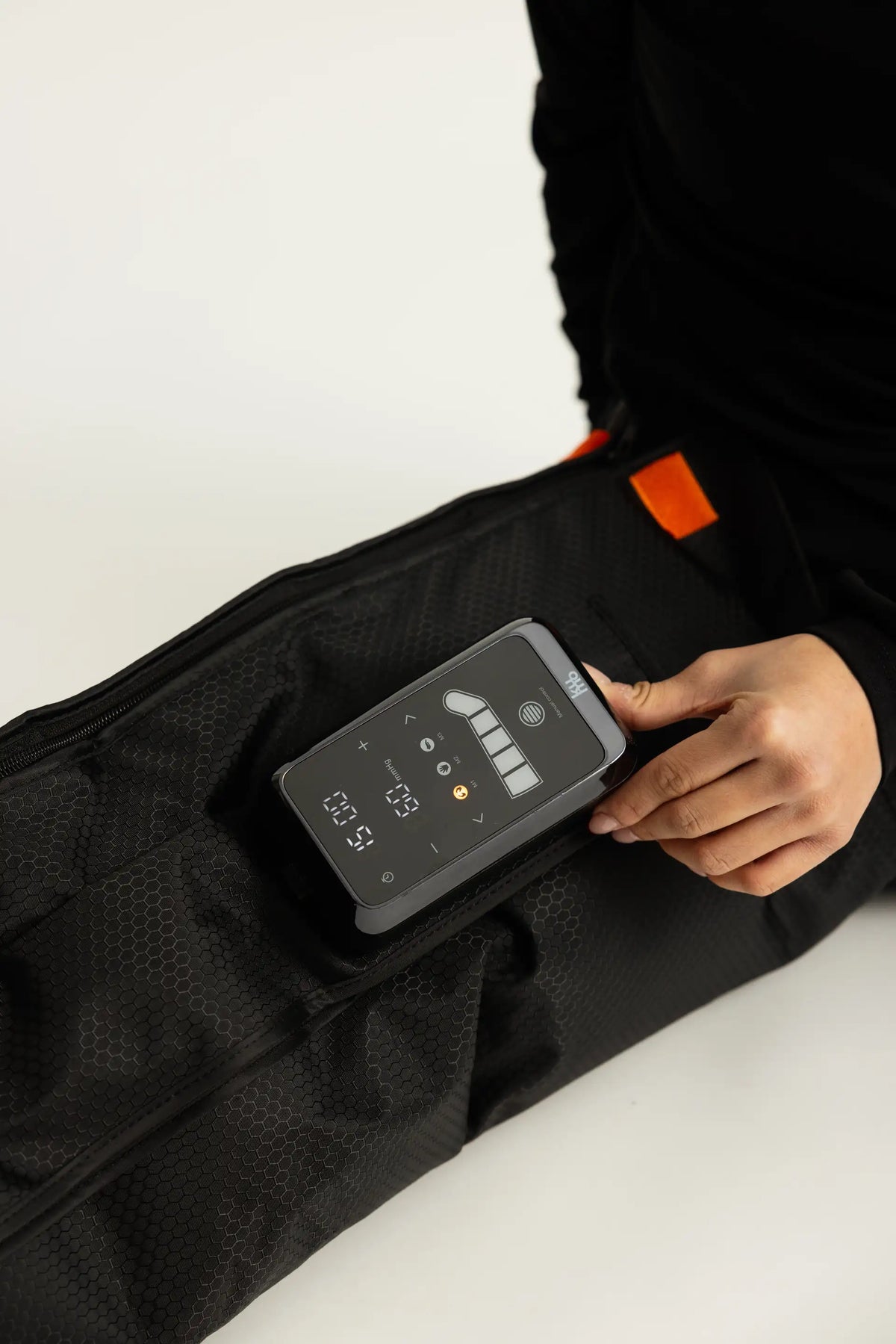
KumoWave pressotherapy boosts circulation and helps drain fluid with sequential compression, in 20-minute sessions at home.
- Boosts circulation and helps drain fluid
- Chamber-based compression, adjustable to you
- Sequential compression that mimics manual drainage
€799,00€999,00
−10% on your 1st order when you subscribe to the newsletter

What is happening in the tendon
The Achilles tendon connects the calf and soleus muscles to the heel bone. When the insertion area on the calcaneus takes more tension than it can tolerate, pain appears right behind the heel, along with stiffness when you start moving and tenderness when you put weight on it. The Guy's and St Thomas' guide to Achilles tendinopathy explains that it can also hurt when walking or running after the activity.
Why it hurts more when you run
In runners, the tendon works like a spring. Every stride asks it to absorb force, return energy and stabilize the ankle. If training ramps up too fast, if you add hills or intervals without enough adaptation, or if you use worn-out or unstable shoes, the heel area can start to complain. The NHS guide to running injuries points to exactly those triggers: more miles all at once, uphill running and shoes with little support.
Personalized protocol · included with your purchase
Want us to tell you how to use it in your case?
With your purchase, our experts prepare a personalized usage protocol for your case: sport, circulation, fluid retention, pregnancy or lipedema.
Message us on WhatsAppOur experts reply · no obligation
- A sudden increase in mileage or intensity.
- Intervals, hills or pace changes without progression.
- Flat, worn-out or unstable shoes.
- Morning stiffness that eases once you move a little and returns after loading the tendon.
If the pain always shows up at the same spot, very close to the heel, it points more toward an insertion problem than to simple muscle fatigue.
What to do in the first few days so it does not get worse
The most useful step is usually a relative reduction in load, not full immobilization. That means pausing intervals, hills and long runs for a few days, while keeping gentle activity that does not trigger the pain. The Guy's and St Thomas' guide recommends relative rest, training for the rest of the body and careful progression, because overloading the tendon makes the picture worse.
If on top of the Achilles discomfort you feel very heavy legs after running, a useful read is runner recovery after a long run, because it helps separate overall fatigue from a problem that is already focused on the tendon.
on your first order when you join the newsletter
We send you the code instantly. No spam.
- Temporarily reduce impact and elevation gain.
- Choose stable shoes and avoid heavily worn models.
- Apply ice wrapped in a towel for a few minutes if the area is very tender.
- Watch whether the pain eases with 48 to 72 hours of gentler load.
If you already limp when walking, if the discomfort clearly increases the next day or if the pain does not ease with relative rest, it is better to stop and ask for an assessment.
How to return to running with less risk
The return should be gradual. In a clinical guide reviewed in October 2024, Guy's and St Thomas' states that many people need 6 to 9 months of rehabilitation before going back to full activity without pain. That does not mean being idle the whole time, but progressing sensibly, because the tendon improves when it gets well-dosed load.
In that transition, calf and soleus strength work, a gradual return to jogging and watching the next-day response usually help. If you want to structure that general wellness side better, the complete recovery routine with pressotherapy, massage and red light therapy explains how to order those tools as support, always without mistaking them for a solution to tendon pain.
How to tell an overload problem from a warning sign
Before looking at tools or routines, it helps to know which pattern fits simple overload and which one already deserves an assessment. The table below sums up the most common situations described by Mayo Clinic, the NHS and Guy's and St Thomas'.
A practical table to guide you
| Situation | What it usually suggests | Sensible response |
|---|---|---|
| Pain at the start that eases once you warm up | Tendon overload | Lower the load and watch how it evolves the next day. |
| Pain very close to the heel on hills or sprints | Sensitive insertion area | Avoid hills, intervals and very soft shoes for a few days. |
| Morning stiffness that eases with gentle movement | A common pattern of Achilles irritation | Warm up gradually and bring running back little by little. |
| A snap, sudden swelling or trouble walking | Possible rupture | Seek medical assessment as soon as possible. |
If the pain changes the way you run, do not wait for it to become chronic. Lower the load and get it checked if it does not improve.
What can support recovery at home
Some wellness tools can help organize general recovery after training, but they are not a shortcut for solving localized tendon pain. Red light therapy for athletes should be used with eye protection, following the manufacturer's instructions and with caution if you take photosensitizing medication or have a history that makes it unadvisable. (my.clevelandclinic.org)
If you want to structure that part more fully, the complete recovery routine with pressotherapy, massage and red light therapy can serve as a framework. And if heavy legs after your runs are also part of the problem, runner recovery after a long run helps separate overall fatigue from a problem that is already focused on the Achilles. (my.clevelandclinic.org)
If you also feel very heavy legs, pressotherapy for runners on heavy-leg days can be useful support within a general recovery routine. Even so, it is better not to use it on the heel problem itself as if it replaced an assessment.
Before using pressotherapy, red light therapy or a massage gun
- Do not use pressotherapy if you have suspected deep vein thrombosis, an active infection, decompensated heart failure, open wounds or damaged skin on the leg.
- With red light therapy or LED, protect your eyes, follow the instructions and check first if you take photosensitizing medication or have a history of eye or skin conditions that make it unadvisable.
- With a massage gun, avoid aggressive use over acute pain, fractures, bruises, thrombosis or areas with loss of sensation. (health.clevelandclinic.org)
When to see a doctor about signs that require medical assessment
Seek medical assessment if the pain does not improve within a few days, if it stops you from walking normally or if it comes on suddenly with swelling, a snap or a feeling of rupture. The NHS page on heel pain and Mayo Clinic agree that the combination of sudden pain, difficulty walking and a popping or snapping sound needs prompt attention.
- Very intense pain that keeps you from putting weight on the foot.
- A snap or whip-like sensation in the heel or lower leg.
- Sudden swelling or a significant bruise.
- Pain that lasts several weeks despite lowering the load.
When in doubt, it is better to stop and get it checked. A tendon that is unloaded in time usually does better than one asked to keep training beyond its tolerance.
Frequently asked questions
Why does my Achilles tendon hurt more in the morning?
Morning stiffness is very common because the tendon has spent several hours without load and feels tighter when you start moving again. It usually eases after a few minutes of gentle walking, but if the pain is stronger every morning, lasts all day or appears when you touch the heel insertion, it is worth lowering the load and reviewing your training plan. Mayo Clinic and Guy's and St Thomas' describe that pattern as a typical sign of Achilles irritation.
Can I keep running if the pain is mild?
Sometimes yes, but with a lot of caution. If the pain is mild and does not change your form, you can keep very easy runs, with no hills and no intervals, and watch how the tendon responds the next day. On the other hand, if you limp, if the pain increases during the session or if you notice more stiffness when you stand up afterward, it is better to stop and lower the load for several days. The key is not to turn a manageable problem into a more serious overload.
How long does a painful Achilles tendon take to improve?
It is usually not measured in days. In the Guy's and St Thomas' guide reviewed in October 2024, full recovery often takes 6 to 9 months in many people. That does not mean complete inactivity, but progressive strength work, symptom control and a gradual return to running. How fast it improves depends on how long you have had the pain, on your weekly load and on how well you tolerate the progression.
Do red light therapy or pressotherapy relieve heel pain?
They can support general recovery, but they are not a shortcut for solving a tendon problem. Red light therapy requires eye protection and following the manufacturer's instructions, and it is worth checking first if you take photosensitizing medication or have relevant eye or skin history. Pressotherapy, for its part, should not be used with thrombosis, an active infection, decompensated heart failure or open wounds. They are wellness support, not substitutes for an assessment.
So what now?
If you want to take better care of your legs while keeping training load under control, start with the practical information from Kumo Balance and also check the guide to pressotherapy for runners on heavy-leg days. Use it as recovery support, not as a substitute for an assessment if the tendon keeps hurting.
KumoWave pressotherapy
Choose your at-home pressotherapy
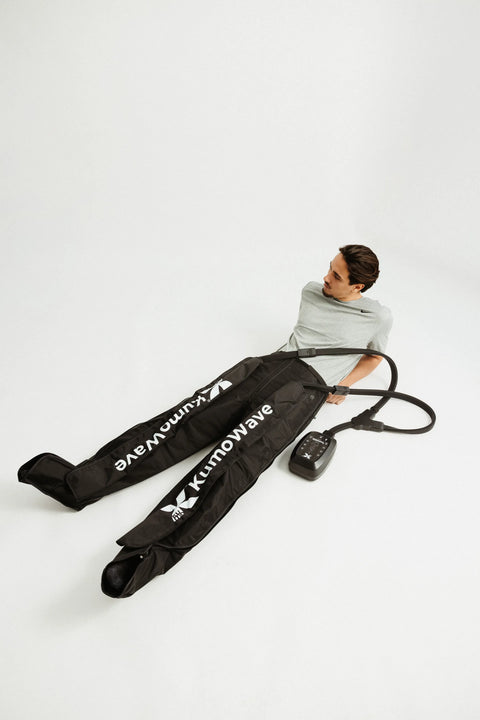
KumoWave Elite – Pressotherapy Pants
Full-coverage trousers. Ideal for lipedema, fluid retention and intensive use.
€799,00 €999,00

KumoWave 2.0 - Wireless Pressotherapy
Wireless, lightweight boots. Perfect for daily use and recovery.
€499,00 €599,00