
Recovering well means training better.
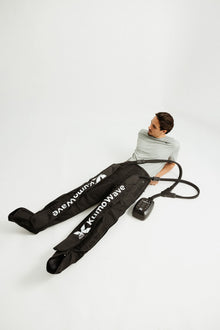
If after running you experience heavy legs , calves as stiff as rocks, or fatigue that lingers until the next day, pressotherapy (intermittent pneumatic compression) can be a very useful tool within a comprehensive recovery plan. In this guide, I explain what it is , what the evidence says , and, above all, a clear and applicable post-run protocol using pressotherapy boots like those from Kumo .
Pressotherapy at home
End the day with light legs
★★★★★ 4,8/5 · rated by verified customers
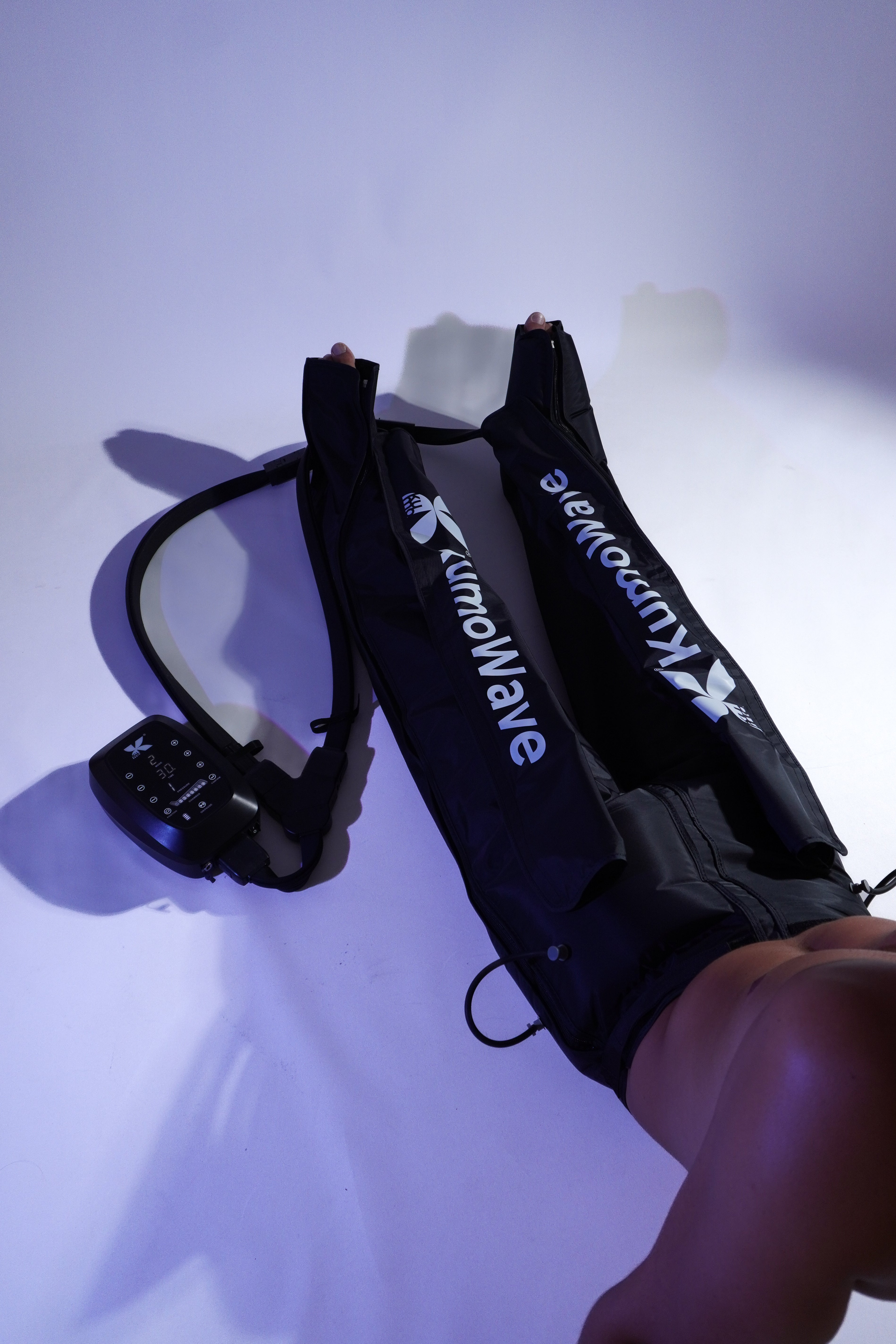
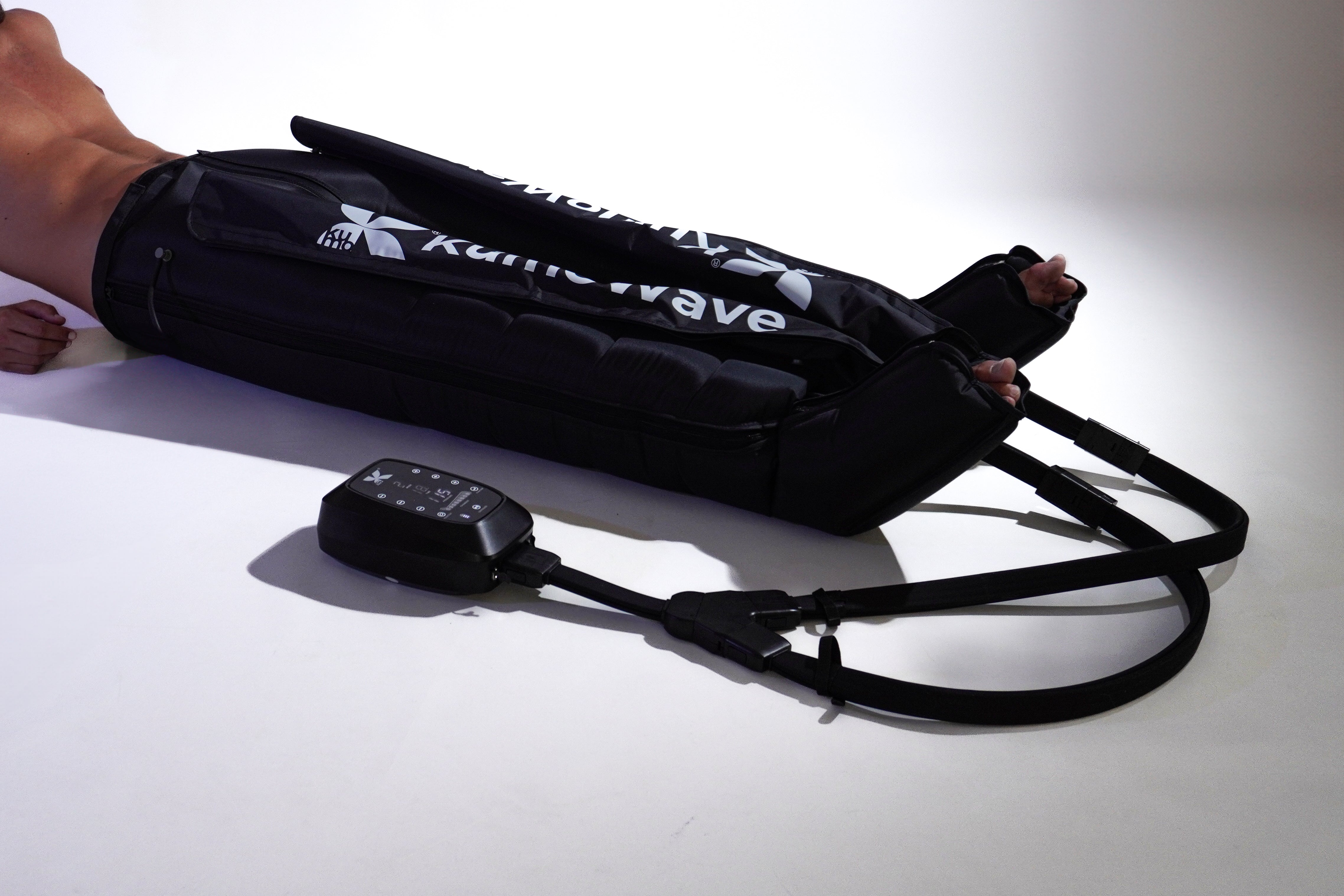
KumoWave pressotherapy boosts circulation and helps drain fluid with sequential compression, in 20-minute sessions at home.
- Boosts circulation and helps drain fluid
- Chamber-based compression, adjustable to you
- Sequential compression that mimics manual drainage
€799,00€999,00
−10% on your 1st order when you subscribe to the newsletter

What is pressotherapy (and what does it do for a runner's body)
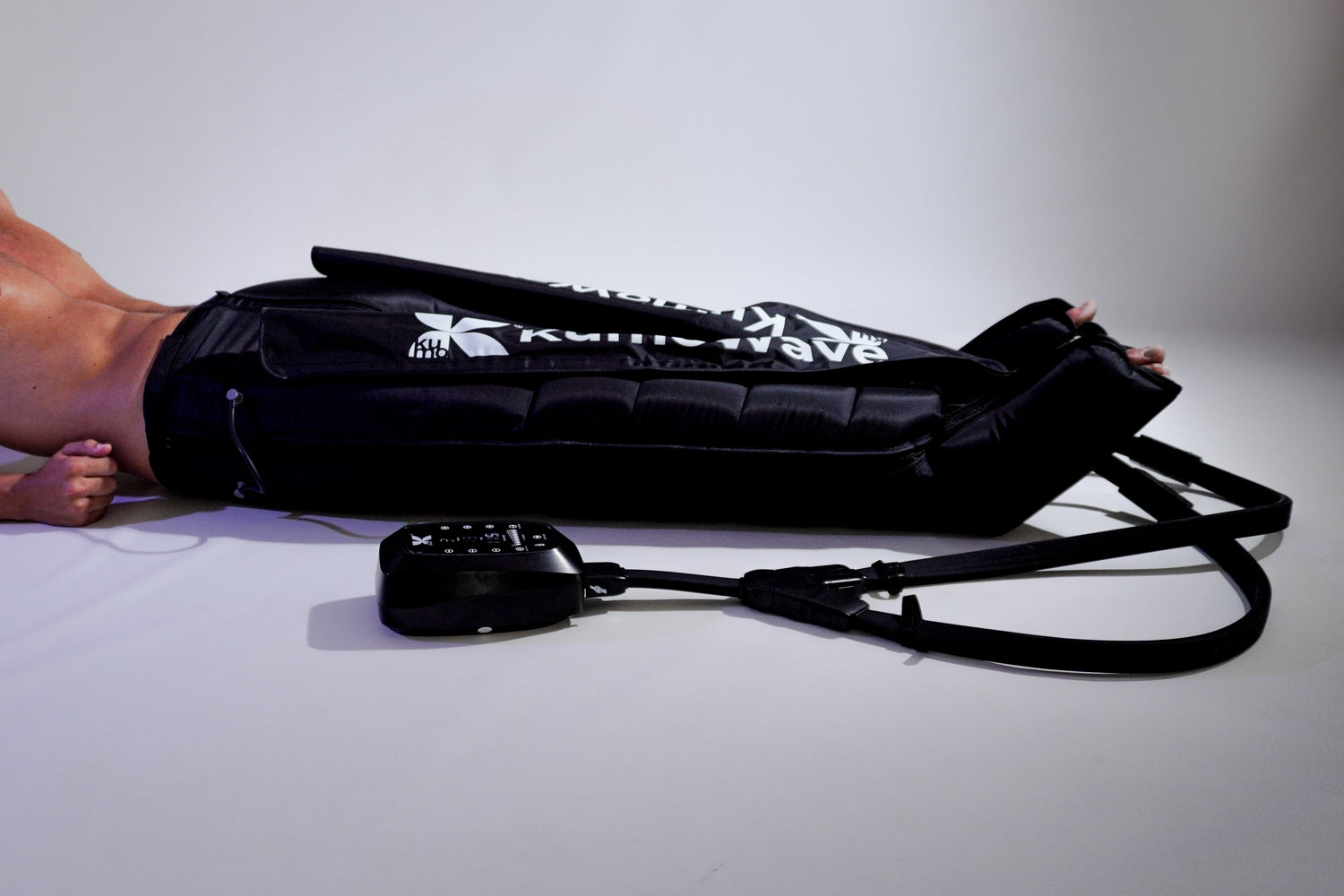
The compression therapy used in recovery boots is based on intermittent pneumatic compression (IPC) : air chambers that inflate and deflate in cycles, usually sequentially (from the foot to the thigh), to promote venous return and fluid movement in the legs. Clinically, these systems have been used for decades, for example, to help prevent venous stasis in people with reduced mobility (more general information at Johns Hopkins Medicine ).
In runners, the practical goal is not to "cure" anything, but to improve sensations after exertion: to lower the perception of heaviness, reduce stiffness and help the legs feel "looser" for the next training session.
Personalized protocol · included with your purchase
Want us to tell you how to use it in your case?
With your purchase, our experts prepare a personalized usage protocol for your case: sport, circulation, fluid retention, pregnancy or lipedema.
Message us on WhatsAppOur experts reply · no obligation
Why do "heavy legs" appear after running
The sensation of heavy legs is usually a combination of factors:
- Muscle micro-damage (especially with descents, changes in pace or strength): can result in DOMS (delayed onset muscle soreness), which typically appears hours later and can last for several days.
- Inflammation and local fluid accumulation (mild edema), more noticeable with heat, long journeys, many hours of standing or high weekly volume.
- Neuromuscular fatigue : the muscle “does not respond” the same even though there is no intense pain.
Regarding DOMS, informative medical resources such as Cleveland Clinic explain that it usually lasts "a few days" and that gentle mobility and relief strategies can help to better tolerate it.
What the evidence says about compression boots in sports recovery (no magic promises)
Pressotherapy in sports has variable results: some people notice a clear improvement in sensation, while others barely perceive any changes. The important thing is to know what it can and cannot offer .
on your first order when you join the newsletter
We send you the code instantly. No spam.
- Systematic review and meta-analysis (2024) : A study in Biology of Sport analyzed research on intermittent pneumatic compression (IPC) in sports recovery and concluded that the effect tends to be trivial to small on muscle function and trivial to moderate on perceived soreness/muscle soreness, with significant variability in markers of muscle damage. It also notes that protocols of approximately 20–30 minutes and pressures around 80 mmHg are among the most commonly used in research. You can consult it here: Effects of lower-limb intermittent pneumatic compression on sports recovery (2024) .
- Randomized controlled trial (2025) : In a study of DOMS induced by plyometric exercise, a 15-minute IPC protocol applied immediately after and repeated at 24/48/72 h showed improvements in perceived pain and measures of muscle condition, with the greatest difference around 48–72 h . Reference: PM&R (2025) – Effects of intermittent pneumatic compression on DOMS .
How to translate this to real life: If you're looking for a tool to improve your physical sensations (lighter legs, less stiffness), pressotherapy might be a good fit. But if you're expecting a "shortcut" that replaces sleep, nutrition, and training planning, it's unrealistic.
Post-running protocol with Kumo pressotherapy (step by step)
This protocol is designed for runners who want to reduce the feeling of heavy legs without complications. Always adjust it to your tolerance, and if you have a medical condition or any doubts, consult a healthcare professional.
Step 1: 5–10 minutes of “landing” before the boots
Before you get busy, take a quick break to log out:
- Walk 3–5 min (cool-down) to normalize heart rate.
- Ankle mobility 60–90 s (flexion-extension and circles), key to calf “pumping”.
- Hydration : drink water and, if it has been long/intense or in hot weather, check your electrolytes.
Step 2: Practical settings (time, pressure and mode)
Based on what is most common in sports research (20–30 min and ~80 mmHg as a frequent reference) and on practical experience of use, here is a simple guide:
- Time : Start with 20 minutes . Increase to 25–30 minutes in busy weeks or after long runs.
- Pressure : Start moderately (for example, 40–60 mmHg if your device allows it) and adjust upwards only if comfortable . For many athletes, an "efficient" zone is between 60–90 mmHg , but tolerance is key.
- Mode : Prioritize a sequential/wave mode (distal to proximal). If your device offers several programs, choose the one that provides a feeling of "relief" without numbness.
- Adjustment signal : The compression should be firm , not painful. If you feel tingling, numbness, or sharp pain, reduce the pressure or stop the session.
To see options for recovery-oriented boots, you can visit Kumo's compression therapy collection.
Quick table: protocol according to your training (post-running)
| Session type | When to use | Duration | Pressure (indicative) | Recommended mode | Main objective |
|---|---|---|---|---|---|
| Smooth rolling (Z1–Z2) | That same day, upon arriving home | 15–20 min | 40–70 mmHg | Sequential | Loosen your legs and unload |
| Series / intervals | Within 2–6 hours post-workout | 20–25 min | 60–90 mmHg | Sequential (wave) | Reduce stiffness and the feeling of "hard leg" |
| Long run | That afternoon/evening | 25–30 min | 60–90 mmHg | Sequential | Reduce heaviness and support recovery |
| Race (10K–marathon) | After rehydrating and eating something | 20–30 min | 50–80 mmHg | Smooth-sequential | Comfort, rest and a return to calm |
Step 3: 3 minutes after the session (to "fix" the sensation)
- Gentle mobility (ankles + knee flexion/extension) 60–90 s.
- Light leg raises for 2–3 min if you feel comfortable (without forcing it).
- Dinner with protein + carbohydrate if needed (recovery is also eaten).
Common mistakes when using pressotherapy after running
- Increasing the pressure "because more is better" : in recovery, excess usually translates into discomfort and worse adherence.
- Endless sessions : 20–30 minutes is usually enough for most people; if you need 60 minutes daily to “feel normal”, check your training load, sleep, and nutrition.
- Use it with unusual pain or atypical inflammation : if there is acute pain, marked local heat or unilateral swelling, do not "cover it up" with boots.
- Forgetting the basics : sleep, hydration, and planning (deload) are still 80/20 of recovery.
Safety: when to avoid pressotherapy or consult beforehand
Pneumatic compression is generally well-tolerated, but it's not for everyone. Medical sources such as Johns Hopkins Medicine and the Cleveland Clinic describe its uses, risks (irritation, discomfort, skin problems), and note that some conditions require caution.
Avoid using pressotherapy and seek professional guidance if:
- There is suspicion of deep vein thrombosis (unilateral swelling, calf pain, warmth, redness) or a recent history without medical follow-up.
- You have significant peripheral arterial disease or unevaluated vascular problems.
- There are wounds , burns, ulcers, skin infections, or significant dermatitis in the application area.
- You experience unexplained acute pain or loss of sensation during the session.
Simple rule: pressotherapy should make you feel better, not just make you "endure." If it hurts, causes numbness, or worsens symptoms, adjust it or stop using it.
How to combine pressotherapy with other Kumo recovery tools
Recovery works best as an ecosystem . If you already use wellness technology, here are some typical combinations (without overcomplicating things):
- Pressotherapy + targeted massage : After using the boots, a targeted massage (plantar, soleus, lateral gastrocnemius, gluteus medius) can enhance the feeling of relief. If you're looking for a device for deep, targeted work, you might consider KumoPulse Air .
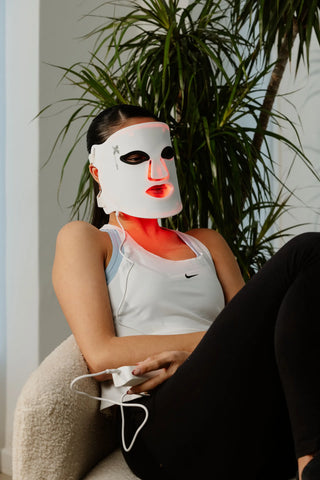
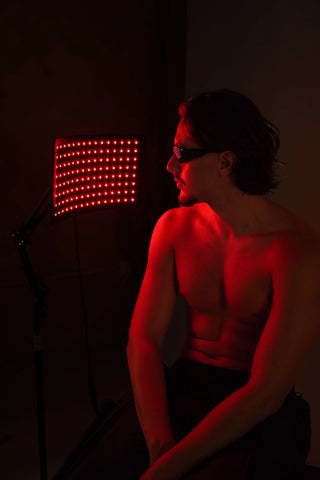
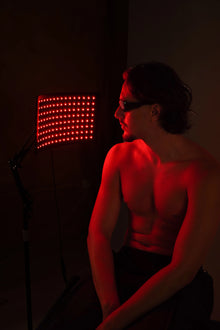
- Pressotherapy + red light (photobiomodulation): many people incorporate it into their nighttime routines for comfort and as a recovery aid. If you're interested in this, we have the LED light therapy collection.
- Pressotherapy + diaphragmatic breathing : 2–3 minutes of slow breathing while wearing the boots improves the post-workout relaxation “feeling” and helps to wind down.
Example of a (realistic) weekly routine for lighter legs
- 2–3 days/week : pressotherapy 20–25 min after the most demanding workouts (sets, hills, long run).
- 1–2 days/week : 10–15 min gentle (moderate pressure) if you have been standing or traveling for a long time that day.
- Daily : 5–10 min ankle/hip mobility + gentle post-workout walk.
- Priority : get enough sleep and eat according to your workload (if this fails, nothing else makes up for it).
Frequently Asked Questions about Pressotherapy for Runners (Kumo)
How long should I wear Kumo compression boots after running?
For most runners, a 20-minute session works very well as a base. If you're coming off a long run or an intense workout, you can increase it to 25–30 minutes , as long as it feels comfortable. Sports evidence often uses 20–30 minute protocols as a common option, but the key is consistency : 20 minutes consistently 2–3 times a week is better than sporadic long sessions. Avoid going over the time limit if you experience tingling, numbness, or discomfort.
What pressure (mmHg) is recommended for runners in pressotherapy?
There is no single "perfect" pressure. As a practical guideline, many athletes use between 60 and 90 mmHg in post-run sessions, starting lower if it's your first week. Sports research frequently shows pressures around 80 mmHg , but the most important thing is how it feels : firm compression without pain or loss of sensation. If you're unsure, use moderate pressure and prioritize a sequential setting; consistency is often more effective than applying maximum pressure.
Does Kumo pressotherapy replace stretching, massage, or foam rolling?
It's best not to consider it a replacement, but rather a complement . Pressotherapy usually provides an overall feeling of relief and comfort, while foam rolling or massage are more effective at working specific areas (for example, the soleus, plantar fascia, or glutes). A very practical combination is: 20 minutes of pressotherapy + 3–5 minutes of mobility exercises and, if needed, a brief localized massage. This way you address both circulation/sensation and specific tension without significantly lengthening your routine.
Can I use Kumo pressotherapy if I have varicose veins or a history of thrombosis?
If you have varicose veins , many people use compression garments without problems, but it's wise to have your case evaluated (especially if there is pain, significant swelling, or skin changes). If you have a history of deep vein thrombosis or currently suspect you might have it (unilateral swelling, warmth, calf pain), don't use compression boots on your own and consult a healthcare professional. Medical guidelines and resources on compression devices emphasize reviewing risks and monitoring skin, discomfort, and associated vascular conditions.
So what now?
If you want to make recovery an easy habit to maintain, explore Kumo compression boots and complement your routine, if it suits you, with wellness tools like LED light therapy or deep tissue massage with KumoPulse Air . If you need guidance on which routine best fits your training week, you can contact us here: contact .
KumoWave pressotherapy
Choose your at-home pressotherapy
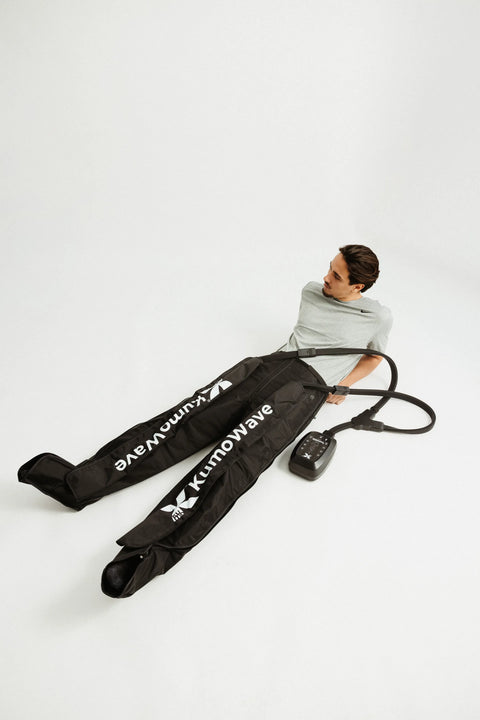
KumoWave Elite – Pressotherapy Pants
Full-coverage trousers. Ideal for lipedema, fluid retention and intensive use.
€799,00 €999,00
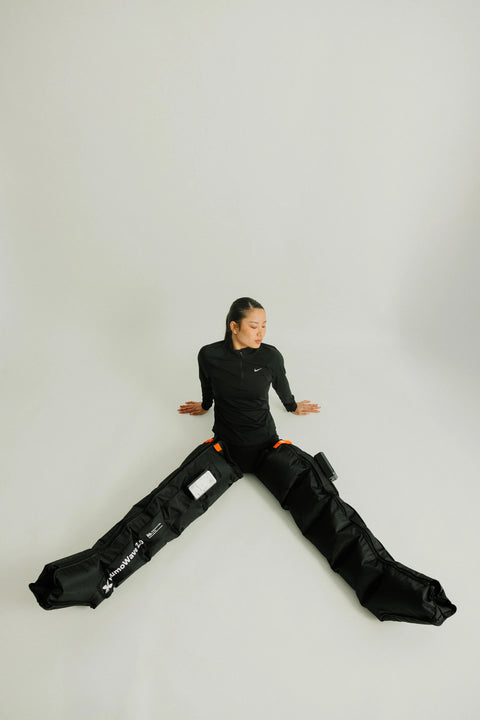
KumoWave 2.0 - Wireless Pressotherapy
Wireless, lightweight boots. Perfect for daily use and recovery.
€499,00 €599,00