
Recovering well means training better.
If your squat and deadlift sessions leave you with heavy legs, stiffness, and DOMS for 48–72 hours, compression therapy (intermittent pneumatic compression) can help improve your recovery and maintain training quality without pushing yourself to the limit week after week. This guide will show you when to use it, how to schedule it, and which protocols make the most sense depending on your goal (strength or hypertrophy), with a realistic, evidence-based approach.
Pressotherapy at home
End the day with light legs
★★★★★ 4,8/5 · rated by verified customers
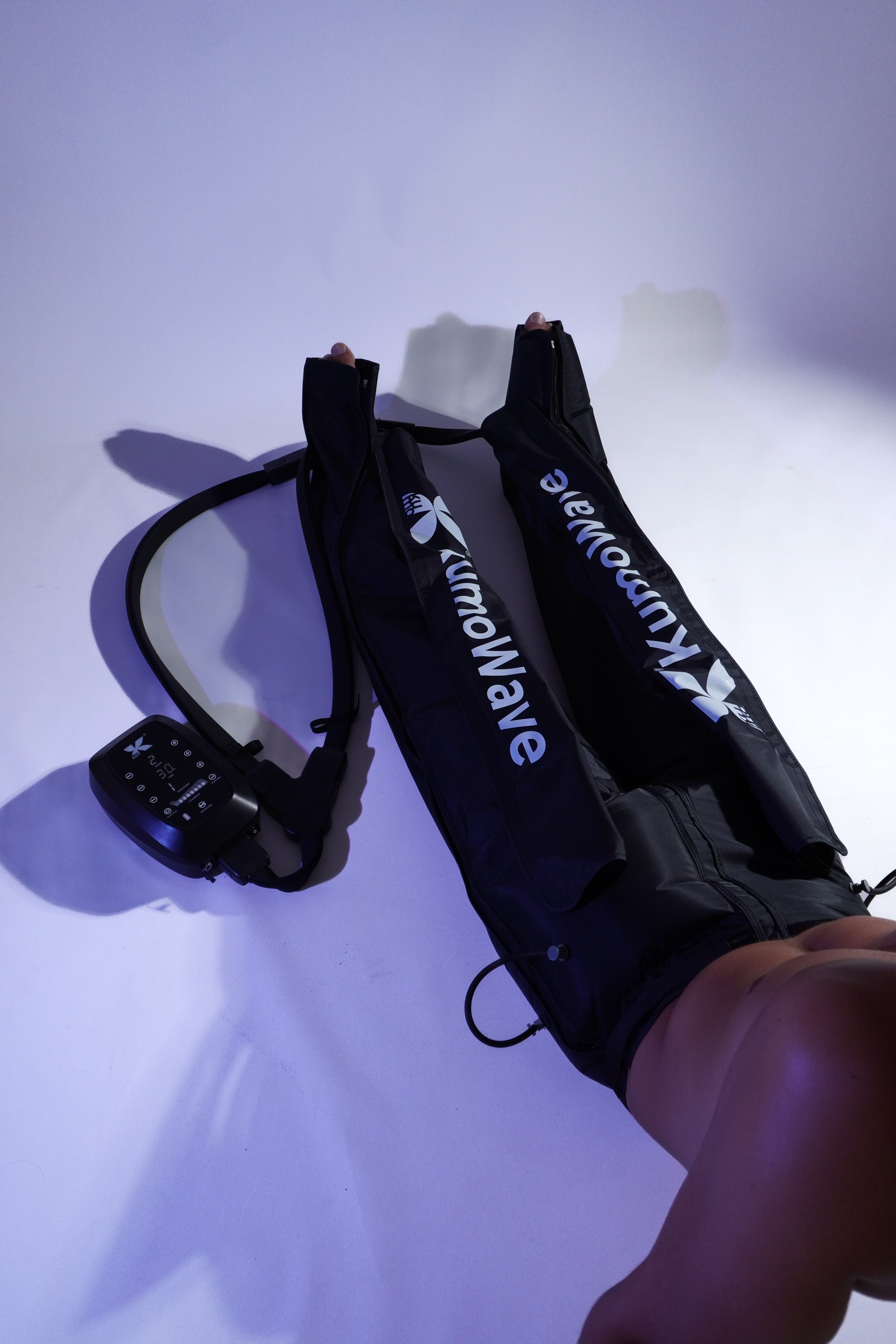
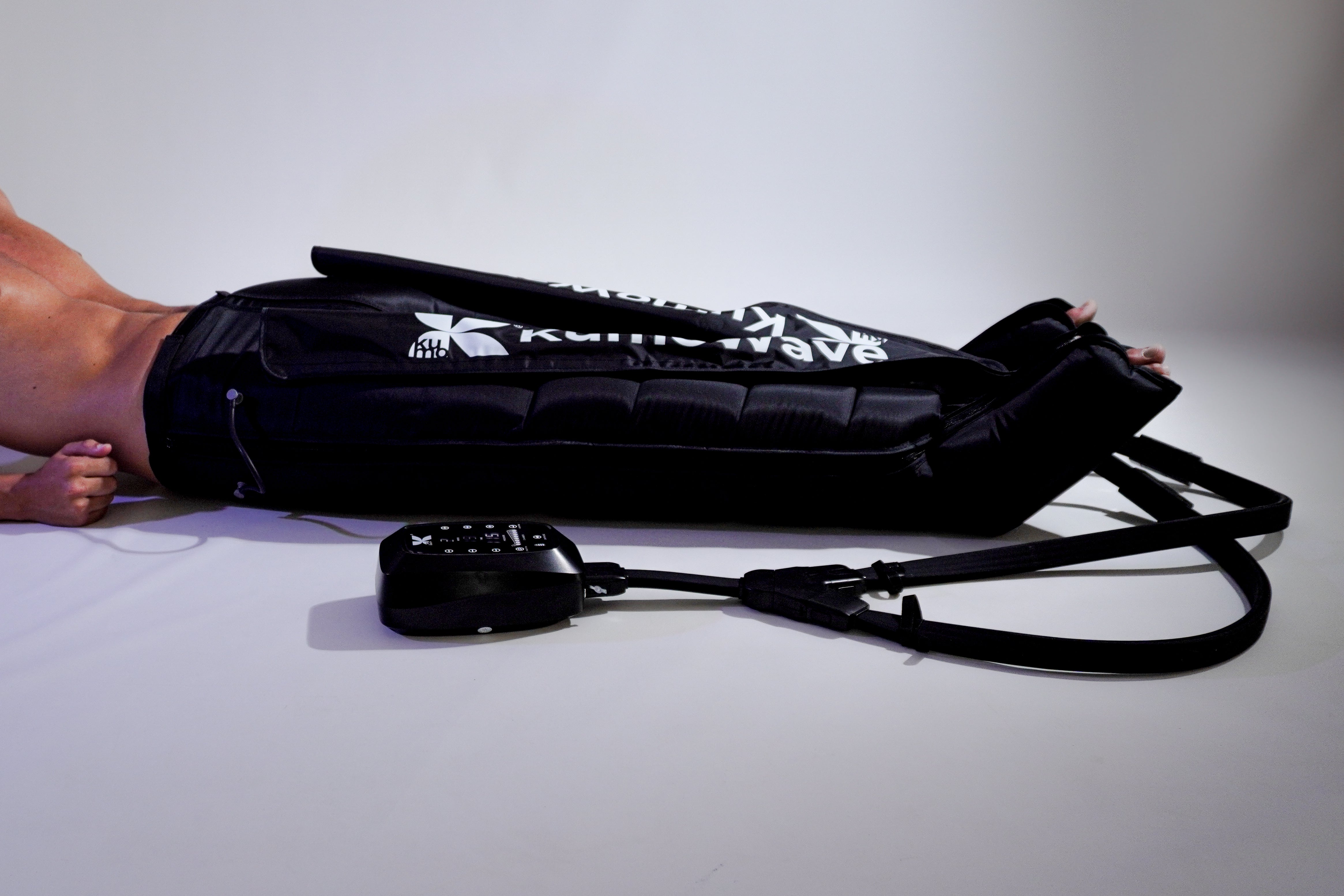
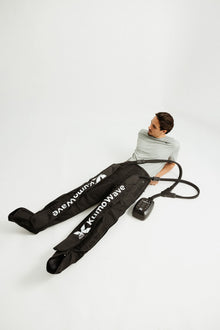
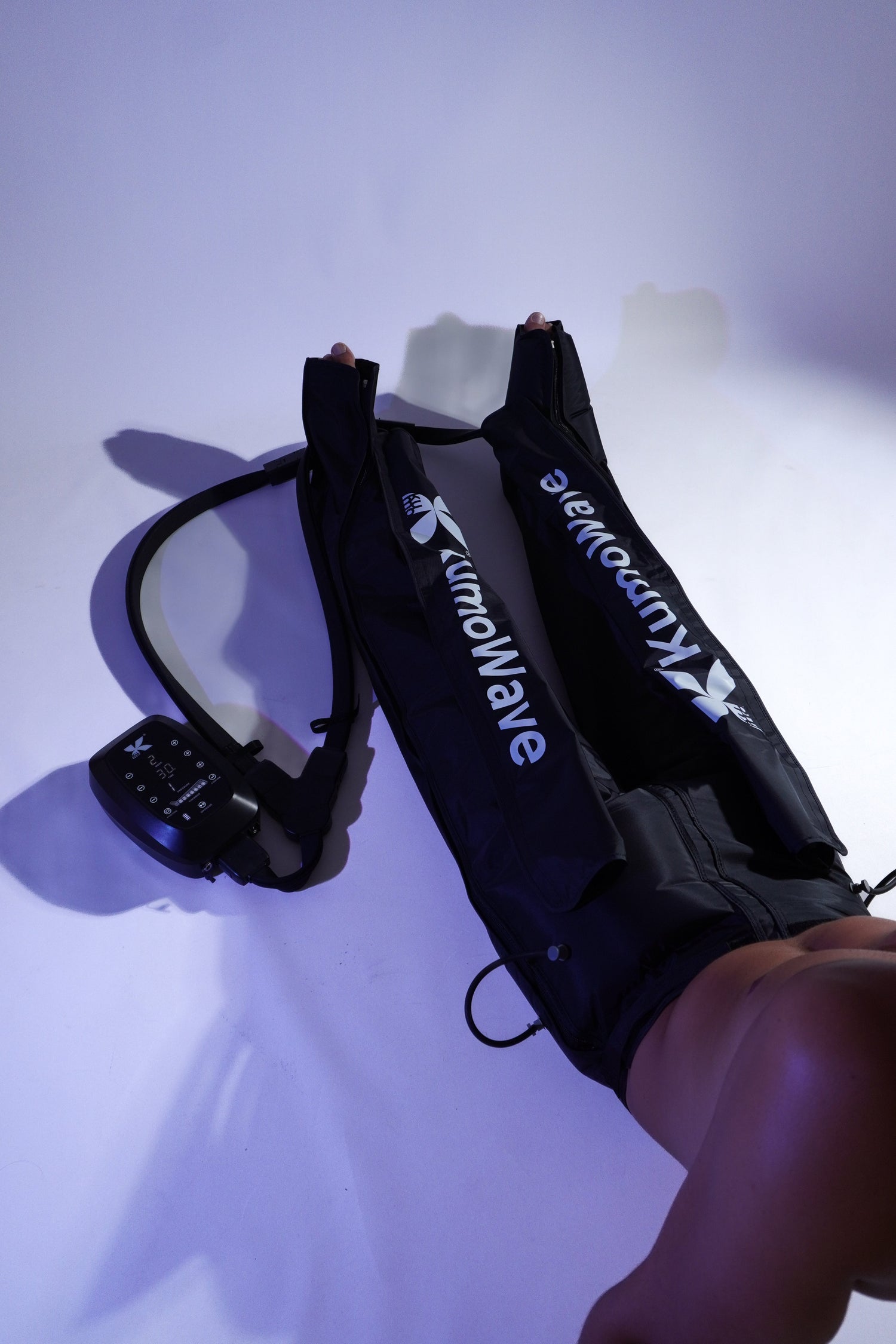
KumoWave pressotherapy boosts circulation and helps drain fluid with sequential compression, in 20-minute sessions at home.
- Boosts circulation and helps drain fluid
- Chamber-based compression, adjustable to you
- Sequential compression that mimics manual drainage
€799,00€999,00
−10% on your 1st order when you subscribe to the newsletter

KUMO is a brand focused on premium recovery technologies: compression boots, LED light therapy, and massage tools, designed to make recovery a sustainable habit. You can explore the Kumo ecosystem on the official Kumo website .
What is pressotherapy (intermittent pneumatic compression) and why does it fit with strength and hypertrophy?
In the sports context, pressotherapy usually refers to intermittent pneumatic compression (IPC) devices: boots or sleeves that inflate and deflate in cycles, applying pressure sequentially to promote venous return and fluid movement in the legs.
Personalized protocol · included with your purchase
Want us to tell you how to use it in your case?
With your purchase, our experts prepare a personalized usage protocol for your case: sport, circulation, fluid retention, pregnancy or lipedema.
Message us on WhatsAppOur experts reply · no obligation
In medicine, CPI has been used for years to help prevent deep vein thrombosis in clinical settings, precisely because it increases venous blood flow in the legs. This helps explain its physiological basis, although the goal in sports is different (recovery after exertion and fatigue). For a clear clinical explanation, you can consult the educational information on CPI from Johns Hopkins Medicine .
In strength and hypertrophy training, the important thing is not "recovery for the sake of recovery", but:
- Arrive at the next heavy session with good feelings (quality of sets, speed, technique).
- Manage peripheral fatigue (heavy legs, tight calves/hamstrings) that often appears after squats and deadlifts.
- Maintain frequency and volume without DOMS or heaviness forcing you to cut back on the plan.
What the evidence says (without magical promises)
The evidence on pressotherapy in sports recovery is mixed : some studies show perceived improvements and some markers, while others show no relevant changes. Part of the problem is that the protocols vary considerably (pressure, duration, timing of application, trained/untrained population).
on your first order when you join the newsletter
We send you the code instantly. No spam.
Findings that support its use (especially in perception and some indicators)
- A randomized controlled trial (2025) observed that CPI applied in several sessions (immediate and at 24/48/72 h) can mitigate DOMS after a plyometric protocol, with clearer differences around 48–72 hours . (PM&R, 2025)
- A randomized controlled trial (RCT) in combat sports athletes (2025) compared intermittent pneumatic compression at 25 mmHg and 100 mmHg , cryo-compression, and rest. It reported improvements in perfusion and muscle elasticity compared to rest, with differences depending on the pressure and time of assessment. (Scientific Reports, 2025, full text)
- There are also studies where sequential compression improves perceptual recovery without necessarily translating into direct performance improvements in the second effort. (Sport Sciences for Health, 2024)
Findings that encourage caution
- In long-distance runners, one study (2020) found no significant differences in pain or CRP between IPC and control in its specific design. (full text in PMC)
- Reviews that compile studies (2000–2021) conclude that CPI is widely used as a recovery method, but with high heterogeneity in protocols and results. (J Bodyw Mov Ther, 2025)
Key idea: Pressotherapy does not "create" strength or muscle on its own; it can be a tool to help you get in better shape for your next workout and maintain consistency.
Why squats and deadlifts "kill" you more than usual
Squats and deadlifts concentrate a lot of systemic and peripheral load:
- High mechanical tension in quadriceps, glutes, adductors and hamstrings (and in the deadlift, also spinal erectors and grip).
- High demand for stabilization and intra-abdominal pressure (bracing), which often leaves a feeling of general stiffness.
- Eccentric component (especially in squats and variations) associated with DOMS and temporary loss of performance.
In this context, pressotherapy is mainly used to address what most "blocks" the next session: heaviness , feeling of congestion , delayed discomfort and worse mobility in ankle/knee/hip due to tissue stiffness.
When to use compression therapy after squats and deadlifts
There is no single “perfect” window. In practice, it usually works well in three situations:
- Right after training (0-2 h): to "slow down" and start to normalize sensations in the legs.
- At the end of the day: if you train in the afternoon or your job leaves you standing/sitting for many hours, it can be a good "reset" before going to sleep.
- 24–48 h later: when DOMS is usually most present; some studies find clearer perceptual effects in this range (e.g., 48–72 h in the 2025 RCT). (PM&R, 2025)
Realistic advice: if you can only choose one time, prioritize when you notice worse mobility or heavier weight (often the day after squats or deadlifts).
How to integrate it step by step (practical and safe protocol)
1) First, what impacts your progress the most
Before thinking about devices, make sure you have the basics covered:
- Gentle cool-down (5–10 min of walking or very light cycling).
- Hydration and a post-workout meal with sufficient protein and carbohydrates according to volume.
- Sleep : if you don't sleep enough, any tool will have a clear ceiling.
2) Pressotherapy session: simple and consistent
As a starting point (especially if you're doing heavy lifting or carrying a lot of weight):
- Duration: 15–30 minutes (15 min is common in research protocols; for example, 15 min in a 2025 RCT). (PM&R, 2025)
- Intensity: Start at soft-medium . It should feel firm, but without pain, tingling, or numbness .
- Posture: lying down or semi-reclined, nasal and relaxed breathing (ideal for lowering sympathetic activation).
If you're putting together your routine with boots, go directly to Kumo's pressotherapy collection to find the type of use (home, consistency, post-workout routine) that fits your week.
3) Weekly frequency: less is more (if you choose well)
- 2-4 times/week is usually enough to notice changes in sensations, especially if you train legs 2 times/week.
- In high-volume weeks (hypertrophy or accumulation blocks), you can increase to 4–6 short sessions, prioritizing squat/deadlift days and the day after.
Guidelines according to objective (strength vs hypertrophy)
Table: Examples of integration after squats and deadlifts
| Aim | When | Duration | Intensity (sensation) | Practical notes |
|---|---|---|---|---|
| Strength (low repetitions, high load) | 0–2 hours post-workout or at night | 15–20 min | Soft-medium | Useful if you want to feel "fresh" before your next neural session. Avoid very high intensities if they leave your legs feeling "strange". |
| Hypertrophy (more volume, more DOMS) | Post-workout + 24 h | 20–30 min | Average | Prioritize the next day if DOMS is limiting. In research, the effects on DOMS may be clearer at 48–72 h. (2025) |
| Deload week (reduce fatigue) | 2–3 alternate days | 15–25 min | Gentle | Use the session as a relaxation and circulation tool; focus on mobility and sleep. |
| Double sessions (or sports + gym) | Between sessions (if there are 4–8 hours) | 15–20 min | Gentle | Objective: Perceptual “reset”. Do not replace the warm-up of the 2nd session. |
Note: Very different pressures have been used in research (e.g., 25 vs. 100 mmHg in a 2025 RCT), with varying results depending on the indicator being evaluated. (Scientific Reports, 2025) At home, the rule is: prioritize tolerance and consistency over “more pressure”.
How to combine pressotherapy with other recovery technologies (Kumo approach)
The best strategy is usually a minimalist "stack": few things, well done and repeatable.
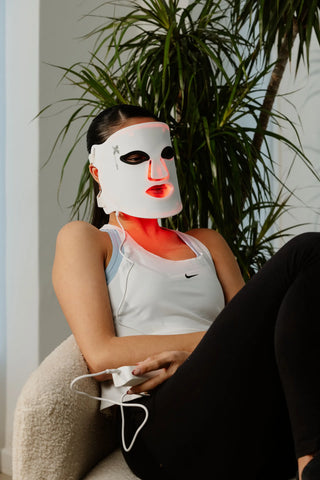
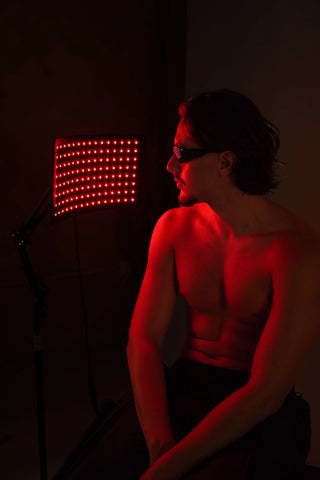
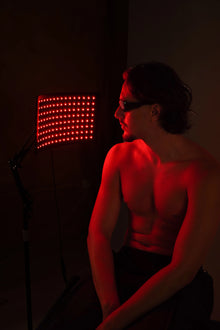
Pressotherapy + red/LED light: light legs and night routine
Light therapy (photobiomodulation) is being investigated for its potential impact on pain, DOMS, and recovery; results are highly dependent on the device, dosage, and treatment area. For example, a systematic review (2025) on whole-body photobiomodulation suggests improvements in sleep quality in some studies, although without clear benefits in performance/recovery biomarkers. (Lasers in Medical Science, 2025)
If you want to explore options in the Kumo ecosystem, here is the LED light therapy section to integrate it as part of a ritual (especially at night) focused on rest and well-being.
Pressotherapy + percussion massage: localized relief
After deadlifts, it's common to notice tight spots in the gluteus medius, piriformis, hamstrings, or calves. In these cases, you can use brief, localized percussion massage before or after compression therapy (without overdoing it).
Within the brand's catalog, you can see the KumoPulse Air massage gun to work on specific areas while letting the boots do the "global" leg work.
Safety: contraindications and common mistakes
Pressotherapy is generally safe when used correctly, but it's not for everyone . There are conditions in which it may be contraindicated or require medical supervision. As a general guideline, clinical institutions advise caution in cases such as ulcers, burns, peripheral vascular disease , or skin problems, and recommend monitoring the skin and tolerance. (Johns Hopkins Medicine)
Avoid using it (or consult a healthcare professional first) if you suspect or have been diagnosed with:
- Deep vein thrombosis (DVT) or unexplained unilateral pain/swelling.
- Significant peripheral arterial disease.
- Active skin infections, relevant open wounds, or severe dermatitis in the area.
- Decompensated heart failure or edema of unclear cause.
Typical mistakes that reduce results
- Raising the pressure "to the max" looking for a quick effect: if you end up worse off, it's not worth it.
- Using it as an excuse not to walk : 10–20 minutes of gentle steps a day are still invaluable for recovery.
- Ignoring sleep : if you're not sleeping enough, the bottleneck isn't in your boots.
- Seeking “more hypertrophy” directly : the real benefit is sustaining the plan (quality and consistency).
FAQ about pressotherapy, strength and hypertrophy (Kumo)
Is it better to use Kumo pressotherapy right after squats or the next day?
It depends on what limits you the most. If you finish with very heavy legs, use it in the 0–2 hour post-workout window to start "normalizing" those sensations. If the worst appears the next day (DOMS and stiffness), it usually makes more sense to schedule it 24 hours later. In studies with IPC applied in several sessions, changes in muscle soreness can be seen especially around 48–72 hours after exertion. The most important thing is to choose a time that you can repeat every week.
How long should I wear Kumo compression therapy boots after deadlifts?
As a practical guideline, 15–20 minutes is a good starting point after heavy deadlifts, especially if you're also working your lower back and hamstrings. If you're coming from a hypertrophy phase (more sets and reps), you can increase to 20–30 minutes, provided it feels comfortable and you don't experience any tingling. Maintain a moderate intensity and prioritize consistency (2–4 times per week) over very long or very intense sessions. If you notice skin irritation, reduce the intensity or frequency.
Does pressotherapy really help reduce delayed onset muscle soreness (DOMS) so you can train your legs more often?
It can help, but it's not magic. The evidence is mixed: some trials show intermittent pneumatic compression is associated with improvements in muscle pain and certain recovery indicators within 48–72 hours, while others show no difference. In practice, the most reliable benefit is improved leg sensation and increased motivation to move, which makes it easier to stick to your training program. If your goal is to increase leg training frequency, combine it with adequate sleep, progressively increasing volume, and consistent nutrition.
Can I combine Kumo pressotherapy with LED light therapy and massage in the same routine?
Yes, and it usually works best as a simple routine: pressotherapy for the entire leg and percussion massage for specific points (calves, hamstrings, gluteus medius). LED light therapy can be especially fitting into a nighttime ritual focused on rest. The key is not to do everything at maximum intensity: aim for a perceived relaxation and recovery effect. If you train late, a gentle combination (light + pressotherapy) can help you unwind; if you train early, prioritize pressotherapy when you'll notice it most (post-workout or 24 hours later).
So what now?
If you want to make recovery a real part of your routine (and not just something you do "when I remember"), explore compression boots to build a post-squat and post-deadlift routine you can maintain year-round. And if you need help choosing how to integrate recovery, sleep, and habits with Kumo technology, you can write directly from the contact page .
KumoWave pressotherapy
Choose your at-home pressotherapy
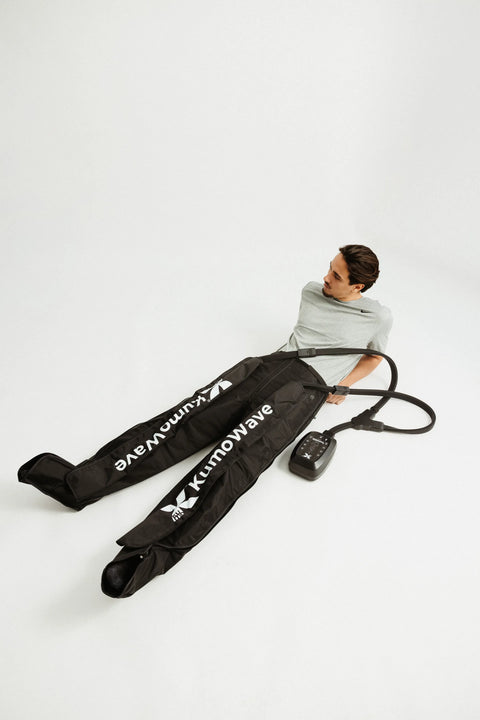
KumoWave Elite – Pressotherapy Pants
Full-coverage trousers. Ideal for lipedema, fluid retention and intensive use.
€799,00 €999,00
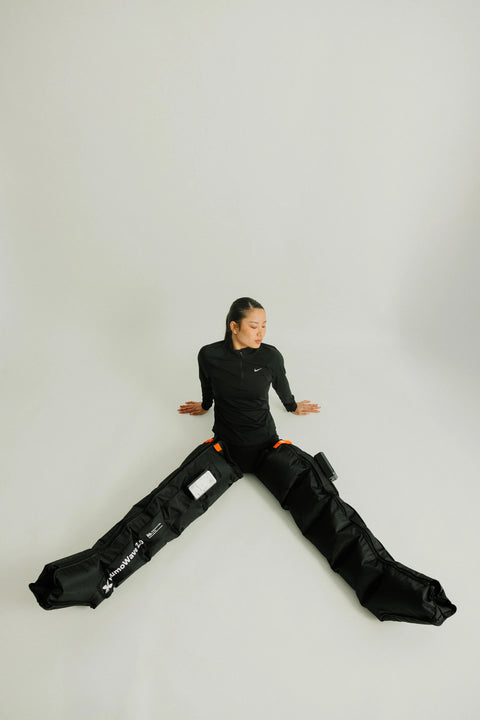
KumoWave 2.0 - Wireless Pressotherapy
Wireless, lightweight boots. Perfect for daily use and recovery.
€499,00 €599,00