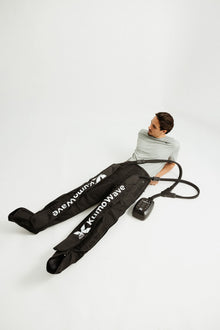

Swollen legs deserve your attention.
When they show up while you are using hormonal birth control, the key is to separate mild water retention from a signal that could point to thrombosis, especially if the method contains estrogen. Combined contraceptives, such as the pill, the patch and the ring, include estrogen and a progestin, which is why they are the ones under closest clinical watch.
Pressotherapy at home
End the day with light legs
★★★★★ 4,8/5 · rated by verified customers
KumoWave pressotherapy boosts circulation and helps drain fluid with sequential compression, in 20-minute sessions at home.
- Boosts circulation and helps drain fluid
- Chamber-based compression, adjustable to you
- Sequential compression that mimics manual drainage
€799,00€999,00
−10% on your 1st order when you subscribe to the newsletter

Not every swollen leg means the same thing. If the discomfort is new, affects only one leg, hurts, feels warm or turns red, it should not simply be blamed on the contraceptive. That pattern matches the signals the CDC and MedlinePlus link to a possible clot in a deep vein. (medlineplus.gov)
What really deserves watching
Combined methods are the ones that demand the most attention
The NHS guide to the combined pill notes that the risk of a clot is small but real, and can affect up to 1 in 1,000 people using combined hormonal contraception. The WHO also points out that clots, stroke and heart attack are rare risks of oral contraceptives. In parallel, the CDC includes in this family the combined pill, the patch and the vaginal ring, all containing estrogen.
Personalized protocol · included with your purchase
Want us to tell you how to use it in your case?
With your purchase, our experts prepare a personalized usage protocol for your case: sport, circulation, fluid retention, pregnancy or lipedema.
Message us on WhatsAppOur experts reply · no obligation
If the symptom started after beginning or restarting a combined method, or after a long break, it deserves a medical review. Bleeding changes, nausea or breast tenderness can appear early on, but they do not on their own explain a swollen, painful leg.
Progestin-only methods usually have a different profile
In the evidence summarized by the CDC, no increase in the likelihood of thrombosis was observed with the progestin-only pill, implants or the levonorgestrel hormonal IUD. Their monitoring profile is therefore different from that of combined methods, although any new or asymmetric symptom still deserves clinical assessment. (stacks.cdc.gov)
Warning signs in the legs
Quick table for reading the swelling
| Situation | What it may mean | What to do |
|---|---|---|
| Mild, fairly symmetrical swelling, with no pain or warmth, appearing at the end of the day. | This can fit water retention or mild edema, although it is not enough to blame the contraceptive. (medlineplus.gov) | Track how it develops and mention it if it happens again. |
| One leg swollen, with pain, warmth or redness. | This is a typical combination in deep vein thrombosis. | Seek medical assessment the same day. (cdc.gov) |
| Swelling with shortness of breath, chest pain or coughing up blood. | This could be a pulmonary embolism. | Go to the emergency room immediately. (nhs.uk) |
| Symptoms appear shortly after switching methods or restarting a combined one. | The timing strengthens the case for reviewing the method and your individual risk. | Do not ignore it if there is also pain or asymmetry. |
Important: a single swollen, painful or warm leg should not be normalized as "water retention" and left there. If there is also difficulty breathing or chest pain, the situation is urgent.
on your first order when you join the newsletter
We send you the code instantly. No spam.
Who should watch even more closely
- People who smoke and use a method with estrogen need to be more careful, because tobacco adds vascular risk.
- Anyone who has already had a thrombosis, an embolism or a condition that favors clotting needs an individual assessment before choosing or continuing a combined method.
- The postpartum period, prolonged immobilization, a long trip, recent surgery or a major injury all call for looking at symptoms more closely.
- Obesity, cancer and a family history of clots also change the risk benefit balance.
Weight, water retention and body perception
The question about gaining weight comes up often. ACOG states that there is no clear causal link between most hormonal contraceptives and weight gain, although the injection may be associated with water retention in some people and with an average weight gain during the first year. The NHS also says there is no evidence that the combined pill makes you gain weight.
This matters because the feeling of "swollen legs" is often not fat, but a mix of edema, heat, sitting still, hormonal shifts or an individual response to the method. If you want to go deeper, it may help to read leg edema and how to relieve it at home and why water retention happens in the legs, because both pieces help put a name to what you are feeling.
What you can do at home while the cause is being cleared up
If the swelling is mild, on both legs and free of warning signs, take note of when it appears, whether it worsens at the end of the day, whether it coincides with starting the contraceptive and whether it affects both legs equally. That information helps your clinician a great deal in separating a functional complaint from a vascular problem.
It can also help to compare what you feel with the 10 symptoms of water retention worth knowing, because heaviness does not always look the same. If a professional has already ruled out a serious cause and you are only looking for a comfort routine, the step by step guide to lymphatic drainage at home can point you toward general wellness habits.
When the symptom is persistent, new or leaves you unsure, do not try to "wait it out and see" for days. A medical review is the right way to confirm whether it is water retention, an expected side effect or something that needs investigating.
FAQ
Can hormonal contraceptives cause edema in the legs?
They can coincide with swelling or a feeling of heaviness, but not all swelling is due to the contraceptive. With combined methods there is more to watch because they contain estrogen and are linked to a small risk of thrombosis. With progestin-only methods the evidence is more reassuring. If the swelling is one sided, painful or appears suddenly, a vascular cause has to be ruled out.
Which warning signs should make me seek care quickly?
Pain or swelling in only one leg, warmth, redness, difficulty breathing, chest pain, coughing up blood, or sudden neurological symptoms such as weakness, changed vision or trouble speaking. Do not wait to see whether it passes, because these can point to deep vein thrombosis, a pulmonary embolism or an acute vascular event.
How do you monitor the risk of venous thrombosis on hormonal birth control?
Before starting, it is worth going through personal and family history, smoking, obesity, immobilization, recent surgery and the postpartum period. If you use a combined method, pay particular attention during the first months or when switching methods. The most useful thing is to know your usual symptoms and ask for a medical review whenever something new or asymmetric appears.
Do some hormonal contraceptives cause weight gain or fluid retention?
The evidence does not show a clear causal relationship with most methods. ACOG notes that the more debated exception is the injection, which may be associated with water retention and an average weight gain in the first year. For the combined pill, the NHS says there is no evidence of weight gain.
What precautions apply if I use a hormonal IUD or the patch?
With the patch, the precautions are similar to those of other combined methods, so you should watch for signs of thrombosis. With the hormonal IUD, the effects are usually different and more local, but a leg that swells suddenly still needs assessment. If you are unsure whether your method is combined or progestin-only, ask for that to be clarified at your appointment.
What now?
If the swelling is new, one sided, painful or comes with shortness of breath or chest pain, seek medical care immediately. If it is mild but persistent, book an appointment with your doctor or gynecologist to review the type of contraceptive and your risk factors. And if you then want to keep reading about wellness and heavy legs, you can go back to the Kumo Balance homepage or revisit water retention: causes, symptoms and real solutions.
KumoWave pressotherapy
Choose your at-home pressotherapy
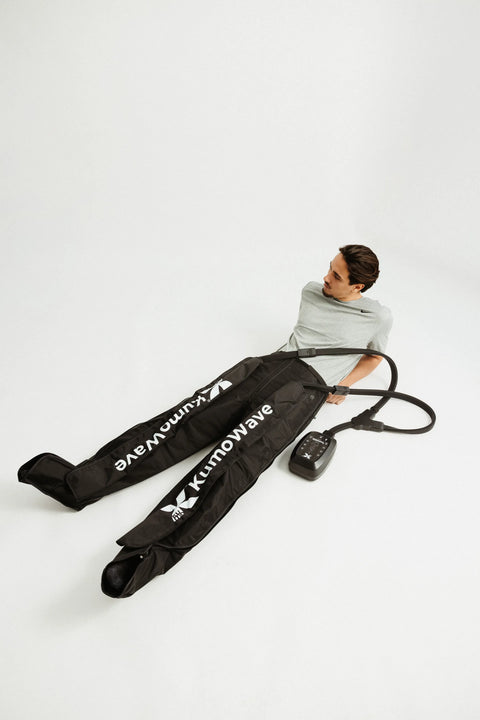
KumoWave Elite – Pressotherapy Pants
Full-coverage trousers. Ideal for lipedema, fluid retention and intensive use.
€799,00 €999,00
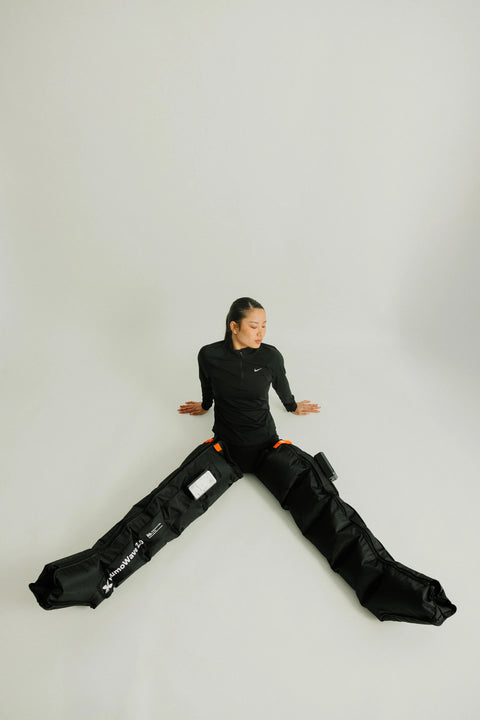
KumoWave 2.0 - Wireless Pressotherapy
Wireless, lightweight boots. Perfect for daily use and recovery.
€499,00 €599,00