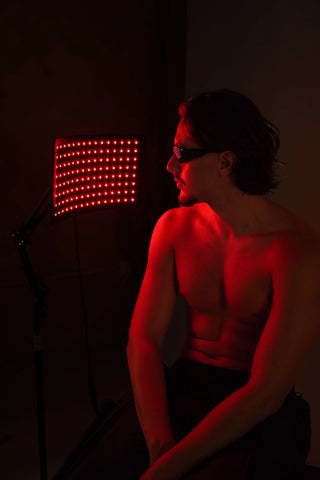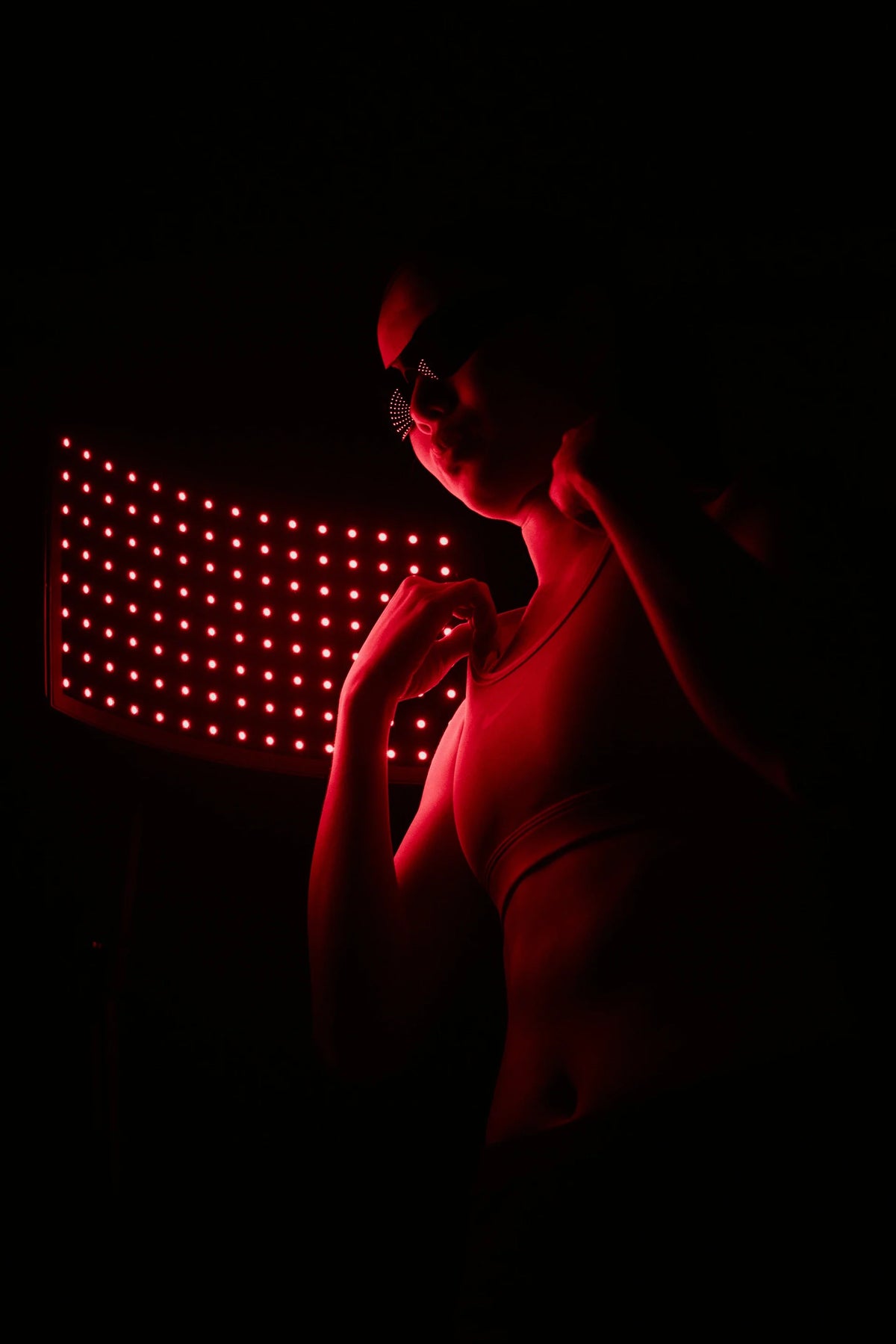
Yes, LED light can also be adapted to darker skin tones. (fda.gov)
The key is to work with low doses, watch tolerance and avoid any routine that adds heat, friction or unnecessary irritation. In photobiomodulation, the literature and the FDA separate LED light from laser hair removal or IPL, because the former uses low-energy visible light that does not heat the skin in the same way; and in skin with more melanin, the response can vary, so it is worth personalizing the protocol.
Facial red light
Bring your skin back to life
★★★★★ 4,8/5 · rated by verified customers
The KumoSkin LED mask helps repair and calm your skin in short sessions at home.
- 250 LEDs in flexible medical silicone
- Red light to boost collagen and glow
- 4 lights: red, infrared, blue and yellow
€299,00€429,00
−10% on your 1st order when you subscribe to the newsletter

What changes in darker skin tones and high phototypes
The Fitzpatrick phototype describes how skin reacts to the sun and does not change because of a temporary tan; even so, types IV, V and VI usually contain more melanin and can respond more easily with hyperpigmentation after irritation. That is why a session that feels comfortable on fair skin calls for more caution and closer observation on darker skin. (dermnetnz.org)
This does not mean LED is off the table. The 2026 review on photobiomodulation and pigmentation notes that melanin can change how light penetrates and that protocols should be individualized. The practical inference is clear: on darker skin, the starting point should be conservative, not aggressive.
Personalized protocol · included with your purchase
Want us to tell you how to use it in your case?
With your purchase, our experts prepare the ideal LED protocol for your skin type and goal (acne, wrinkles, dark spots...).
Message us on WhatsAppOur experts reply · no obligation
How to adapt your LED routine safely
Think of the routine as fine tuning: less push, more consistency and zero signs of irritation. The FDA points out that low-level photobiomodulation uses very low doses of visible light, does not heat the skin the way a laser or an IPL does, and must respect eye protection and the relevant contraindications.
Practical summary for a safer LED routine
The table below sums up the adjustments that help most when darker skin needs an extra margin of caution. The idea is to avoid heat, irritation and improvised use, which are precisely the factors most likely to cause trouble in skin with more melanin.
| Factor | What to do | Why it matters on darker skin |
|---|---|---|
| Intensity | Start at the lowest level your device allows and do not chase a feeling of heat. | The evidence in photobiomodulation points to personalizing the dose according to tolerance and pigmentation. |
| Frequency | Leave room between your first sessions and watch the skin before increasing use. | In skin with more melanin the response can be more variable, and any irritation can leave a mark. (aad.org) |
| Skin | Do not use LED on irritated skin, on wounds, or with an infection or active lesion. | The FDA advises against photobiomodulation in those situations. |
| Eyes | Use eye protection if the design does not build it in, and do not look at the light source. | The FDA warns that light-based procedures can injure the eyes, and home devices usually include eye barriers. |
| Medication | If you take photosensitizing drugs, check before you start. | The FDA lists photosensitizing medication among the cases where it does not recommend this type of procedure. |
To better understand home use, photobiomodulation at home, safe uses, benefits and practical tips and the guide on how an LED face mask works help you set the groundwork.
on your first order when you join the newsletter
We send you the code instantly. No spam.
Start with the most cautious exposure
In home practice, the sensible move is to start with the minimum duration the manufacturer indicates and to go up only if you feel no heat, no itching and no lingering redness. On darker skin, that caution is a reasonable inference from the greater variability linked to melanin and from the good safety profile that well-tuned photobiomodulation aims for.
Do not use LED on irritated skin
If your skin is flaking, very sensitized or recently exposed to exfoliants, retinoids or products that irritate it, it is better to wait. The AAD points out that skin irritation can trigger new dark spots in skin with more melanin, so the priority is to cut off the stimulus keeping the irritation going.
How to tell whether your skin is ready for light therapy works as a pre-check.
Protect your eyes and control the setting
Eye protection is not optional. The FDA warns that light-based procedures can injure the eyes, and the files for home-use LED devices often include covers or eye shields for exactly that reason. If your mask does not include them, use suitable protection and do not look directly at the light source.
Watch the response after the session
What is normal is for the skin to stay calm, with no burning and no color change. If you get more heat, redness that keeps growing, itching or new spots, stop the routine and review the protocol.
Which type of light usually fits best
If your device offers red or near-infrared light, the useful move is to prioritize comfort and tolerance, not intensity. Photobiomodulation is aimed at low doses and at use that does not add heat.
If you want to fine-tune that decision, red or infrared, which one for each skin and goal helps you place each format without overcomplicating things.
When to seek advice and which signals call for medical review
There is a very simple red line: if your skin or your eyes protest, the routine stops. The FDA advises against photobiomodulation in cases such as photosensitivity disorders, pregnancy or trying to conceive, active implants, skin cancer or a lesion in the area, photosensitizing medication, active wounds, and infections or open lesions. The AAD also points out that dark spots on darker skin tend to worsen when irritation persists.
- If intense burning, pain, worsening redness or persistent heat appear, stop the session.
- If you notice blisters, crusting or new spots after the light, get it reviewed before repeating the routine.
- If you have eye discomfort, blurred vision or light sensitivity, do not use the device again until you have checked with a professional.
- If the area has a wound, an infection or an active lesion, do not treat it on your own.
- If you take photosensitizing medication, are pregnant or have a photosensitivity disorder, get professional guidance before starting.
Frequently asked questions
How can you adapt an LED routine for darker skin without risking overheating or hyperpigmentation?
Start with the device's minimum setting, use short sessions only if the manual allows it, and let enough time pass to observe how the skin really responds. On darker skin, watchfulness matters more than intensity, because melanin can change both penetration and response. If you feel heat, lingering redness or itching, cut the time or pause. The key is not to force more light, but to find a pattern your skin tolerates well.
What before and after care should you follow when using LED on darker skin to avoid adverse effects?
Beforehand, the skin should be clean, dry and calm, with no aggressive exfoliation, no active flaking and no wounds. Afterward, keep the routine gentle, with no friction and no irritating actives. The AAD stresses that irritation can set off new dark spots in skin with more melanin, so the goal is to keep the skin barrier as stable as possible. If sensitivity appears, simplify the routine for a few days and try again only once the skin has settled.
Which phototype is considered for laser hair removal on darker and tanned skin?
The Fitzpatrick phototype is a classification based on how skin reacts to the sun, and it does not change because you are more tanned today. Even so, in laser hair removal tanned skin is assessed more cautiously, because at that moment it holds more epidermal melanin and can behave like higher-risk skin. That is a prudent clinical inference, supported by the literature on skin of color and by the fact that more pigmented areas react more easily with color changes.
Laser hair removal on darker skin and high phototypes: how is it done safely?
Safety depends on a combination of factors: prior assessment, conservative parameters, the practitioner's experience and monitoring the skin after each session. Reviews on skin of color insist that phototypes IV to VI carry more risk of pigmentary or scarring changes if the protocol is not well tuned, and that longer wavelengths are part of careful management. It also matters to arrive with calm skin, neither tanned nor irritated, and for the practitioner to check the skin reaction during the process. In short, you do not improvise.
Which laser is safest for high phototypes and darker skin?
There is no laser that is universally perfect for every case. In hair removal on high phototypes, reviews often cite the 1064 nm Nd:YAG and other long wavelengths as reference options in expert hands, but the real outcome depends far more on the protocol, the energy, the cooling and the assessment of the case than on the name of the equipment. If the skin is tanned or sensitive, what matters is still not to rush.
What now?
If you want to keep refining your routine, start with photobiomodulation at home, safe uses, benefits and practical tips, review the sign that your skin barrier is ready for light therapy and go back to the Kumo Balance home page whenever you want to put the whole picture in order. If you prefer a specific facial format, the KumoSkin Mask LED face mask and the LED light therapy collection help you move from theory to a clearer, simpler routine.

Facial red light
KumoSkin Mask – LED Facial Mask
★★★★★ 4,8/5 · rated by verified customers
- 250 LEDs in flexible medical silicone
- Red light to boost collagen and glow
- 4 lights: red, infrared, blue and yellow
€299,00€429,00· pay in installments with seQura or Klarna