
Stretch marks do not disappear by magic. They are a form of scar and, although they can be faded, the evidence does not support a single solution that erases them completely.
The good news is that there is room to improve their appearance, especially when they are recent. The key is adjusting expectations, choosing the right moment and knowing what has scientific backing and what does not.
Red & infrared light
Recover faster, at home
★★★★★ 4,8/5 · rated by verified customers
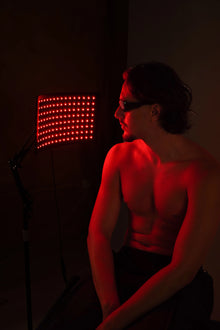
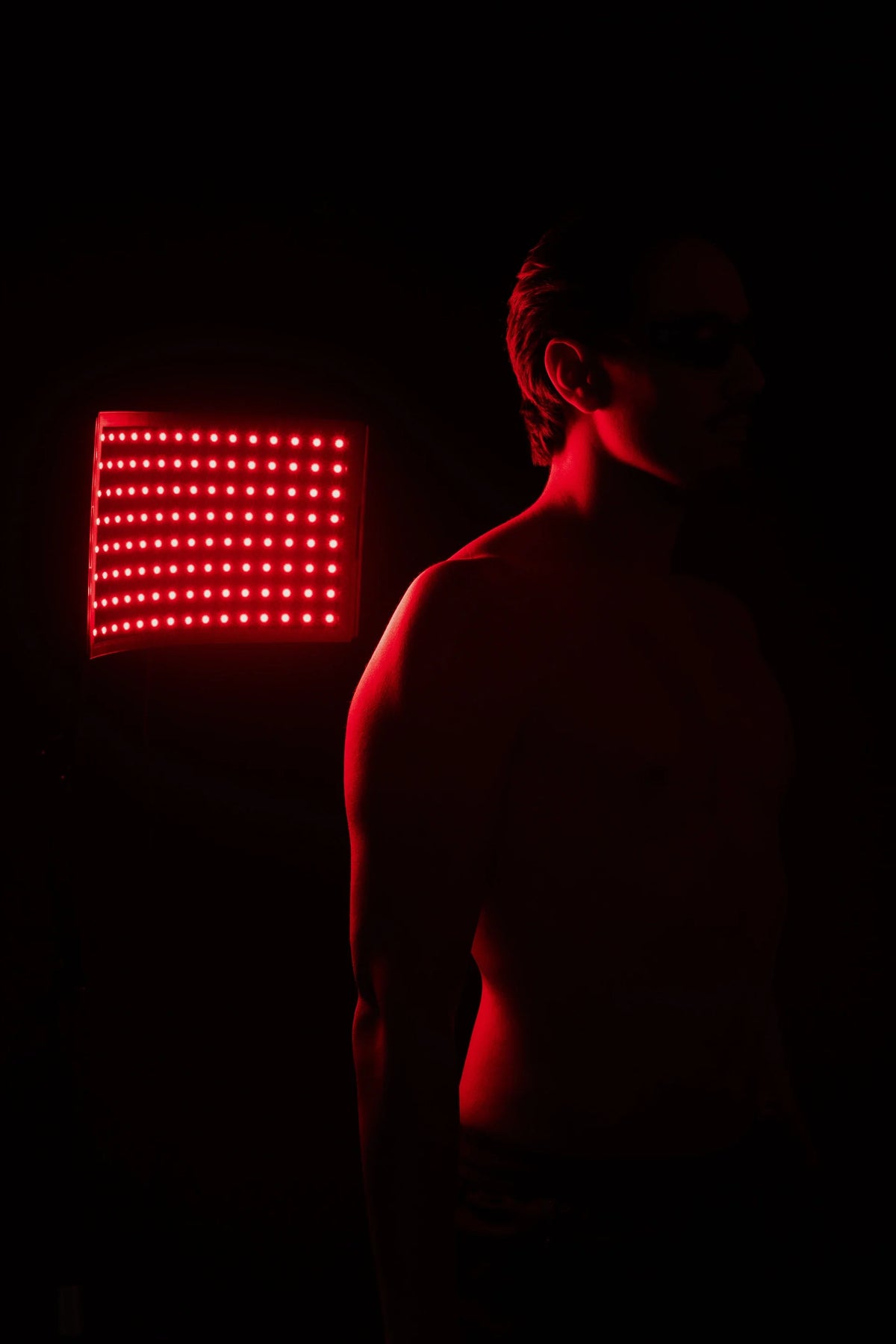
The KumoLux panel supports muscle recovery with full-body red and infrared light.
- 660 nm red + 850 nm infrared light
- Full-body muscle recovery
- Clinically validated biohacking protocols
€399,00€499,00
−10% on your 1st order when you subscribe to the newsletter

What stretch marks really are
The American Academy of Dermatology explains that stretch marks appear when the skin stretches or shrinks quickly and collagen and elastin fibers break. The Mayo Clinic and MedlinePlus agree that they are usually harmless and that, over time, they tend to become less visible.
How they change over time
At first they often look red, pink, purplish, brown or reddish, depending on skin tone. Later they lighten, turn whitish and may stay slightly sunken or have a different texture from the surrounding skin. That progression is normal and helps explain why treatments work better in early stages.
Personalized protocol · included with your purchase
Want us to tell you how to use it in your case?
With your purchase, our experts set up your red and infrared light sessions for your sport and goal.
Message us on WhatsAppOur experts reply · no obligation
When they usually appear
- During puberty, when the body grows quickly.
- During pregnancy, especially when the abdomen and other areas increase in volume.
- With sudden changes in weight or muscle mass, including some periods of intense training.
- With prolonged use of topical corticosteroids or in situations such as Cushing's syndrome.
What the science says about fading them
A systematic review published in 2025 analyzed 69 articles and concluded that current evidence does not allow a single reference treatment to be established. It also stressed that several studies have small samples or limited quality. Even so, there are options that can improve appearance, especially on recent stretch marks.
The best-supported options and their limits
| Option | What it can offer | What not to expect |
|---|---|---|
| Tretinoin and other retinoids | May help recent stretch marks look less noticeable and support collagen remodeling with continued use over weeks or months. (mayoclinic.org) | They do not erase them completely, they can irritate the skin and they are not recommended during pregnancy or breastfeeding without professional assessment. |
| Hyaluronic acid | In some studies, certain formulations have made early stretch marks less visible. | The response is not uniform and not every available product has the same level of evidence. |
| Laser and radiofrequency | Can improve appearance and are sometimes combined to seek better aesthetic results. | There is no clear winning laser for everyone, and results vary with how old the stretch mark is and the skin type. |
| Microneedling | Can stimulate collagen and, on darker skin, usually carries less risk of color changes than some lasers. | It does not eliminate stretch marks either and should be assessed on an individual basis. |
In practice, the more recent the stretch mark, the more room there is to see a visible improvement. Once it is whitish and mature, the realistic goal is usually to reduce contrast, texture and visibility, not to make it disappear completely. That logic matches what the Mayo Clinic and the AAD describe.
If younger skin responds better, that does not mean any cream works. The most recent reviews keep insisting that results depend on many factors and that combining techniques can improve the overall outcome, without there being a universal recipe.
on your first order when you join the newsletter
We send you the code instantly. No spam.
What not to expect from creams
Moisturizing creams can leave the skin more comfortable, but there is no good evidence that they eliminate stretch marks. The AAD notes that very popular oils such as almond, cocoa, olive or vitamin E have not been shown to prevent them, and the Mayo Clinic adds that many commercial products probably help little or not at all.
That does not mean every topical product is useless. Among the actives with somewhat more backing, hyaluronic acid and tretinoin stand out on early stretch marks, but always with realistic expectations. In addition, tretinoin can irritate and should be avoided or carefully reviewed during pregnancy and breastfeeding.
It is also worth remembering that many visible improvements take weeks to appear. In the study the AAD cites, nightly application of tretinoin was assessed at 24 weeks, which gives a fairly clear idea that there are no instant results here.
When to seek advice and the signs that call for medical assessment
Most stretch marks do not need testing, but it is worth seeking advice if they appear without a clear cause or come with other bodily changes. MedlinePlus recommends seeing a professional when they do not fit with pregnancy or rapid weight change, and the Mayo Clinic notes that, if high cortisol is suspected, additional tests may be requested. (medlineplus.gov)
- Seek advice if you notice very thin skin, easy bruising, intense fatigue or muscle weakness, because these can be clues to excess cortisol. (niddk.nih.gov)
- Seek advice if the stretch marks appear alongside high blood pressure, high blood sugar, menstrual changes or increased hair growth, because there may also be a hormonal origin.
- Seek advice if you have used topical or systemic corticosteroids for a long time, since they can encourage their appearance.
- Seek advice before using retinoids if you are pregnant or breastfeeding.
The idea is not to alarm you, but to avoid losing time if the stretch mark is a clue to something else. When the cause is clear and physiological, such as puberty or pregnancy, the approach is usually cosmetic and supportive; when it is not, it deserves assessment.
At-home care technology and realistic expectations
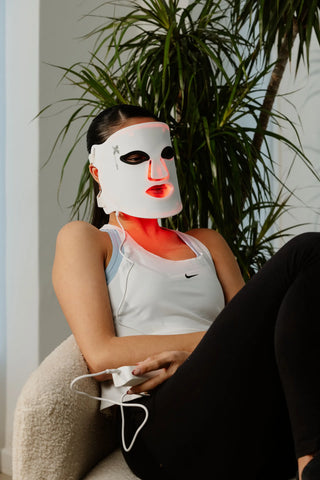
Red light therapy and photobiomodulation are studied mainly for acne, signs of aging or recovery, not for erasing stretch marks. The AAD explains that red light devices at home can be safe in the short term, but they are not for everyone and can worsen photosensitivity conditions or interact with medications that increase sensitivity to light.
If you want to better understand how this technology fits into an aesthetic routine, you can read red light therapy and what the science says, the practical differences between 660 nm and 850 nm and the LED face mask, who it is for and what results it really gives. They help separate reasonable cosmetic use from promises that do not fit stretch marks.
If you have lupus, another photosensitive condition, take drugs that increase sensitivity to light or notice that your skin darkens easily, it is better to seek advice before using an LED face mask or a red light panel at home. The AAD recommends that caution because the skin response can vary quite a lot.
Frequently asked questions
Can stretch marks be faded with topical treatments such as retinoids or laser?
Yes, they can be faded, but not removed completely. Tretinoin and other retinoids can help above all on recent stretch marks, and procedures such as laser, radiofrequency or microneedling can make them less visible. The 2025 review, however, insists that there is no single clearly superior treatment for everyone and that results are variable.
Do moisturizing creams eliminate stretch marks completely or only improve their appearance?
In general, they can only slightly improve the appearance or the feel of the skin, not eliminate stretch marks. The Mayo Clinic and the AAD agree that many popular creams, lotions and oils show no clear effect and that ingredients such as cocoa, vitamin E or almond oil have not been shown to prevent them consistently. If your skin feels softer, that does not mean the stretch mark has gone.
Does tretinoin work on red stretch marks and how long does it take to see an improvement?
Tretinoin may work better on recent stretch marks, which are usually red or purplish. The AAD cites a study in which it was applied every night for 24 weeks and less visible stretch marks were observed. The Mayo Clinic adds that it can help when the stretch marks are less than a few months old, but it can also irritate the skin. That is why it should be used only under professional guidance, especially if you are pregnant or breastfeeding.
Which laser treatments are most effective at fading stretch marks according to current evidence?
Current evidence does not allow a single laser to be named the best for everyone. Recent reviews find results with ablative and non-ablative lasers, and also with radiofrequency combined with microneedling, but the studies are heterogeneous and often small. In practice, the professional chooses according to the age of the stretch mark, the skin phototype and skin tolerance, always aiming to improve appearance, not to promise total disappearance.
Do stretch marks disappear over time if no professional treatments are applied?
They usually fade, but they do not always disappear entirely. The Mayo Clinic and the AAD explain that stretch marks are permanent scars that, over time, become less visible and lighter. MedlinePlus adds that they sometimes diminish when the cause that produced them goes away, such as rapid growth or weight gain. The most common change is seeing them look more discreet, not eliminated.
Can stretch marks require a medical consultation if they appear for no clear reason?
Yes. MedlinePlus recommends seeking advice if they appear without an obvious cause, such as pregnancy or rapid weight change. The Mayo Clinic explains that, in those cases, the professional may ask about medications, corticosteroids and other symptoms, and that tests are sometimes needed to rule out excess cortisol or another medical cause. It is not an emergency in most cases, but it is a clue that deserves review.
So what now?
If you want to keep reading about how wellness technology fits into a realistic routine, start with the Kumo Balance home page and with red light therapy and what the science says. That will give you a clearer view of what can support your daily care and what should not be promised to the skin.

Red & infrared light
KumoLux Panel – Red and Infrared LED Panel
★★★★★ 4,8/5 · rated by verified customers
- 660 nm red + 850 nm infrared light
- Full-body muscle recovery
- Clinically validated biohacking protocols
€399,00€499,00· pay in installments with seQura or Klarna