
The short answer: it depends on the treatment.
An LED mask can be a great fit for some recovery protocols, but it should not be used on open, very irritated, or recently injected skin if the pressure of the mask itself might bother the area. The light, on its own, is usually gentle; the problem arises when it's applied too soon or to skin that is still healing. (my.clevelandclinic.org)
Facial red light
Bring your skin back to life
★★★★★ 4,8/5 · rated by verified customers
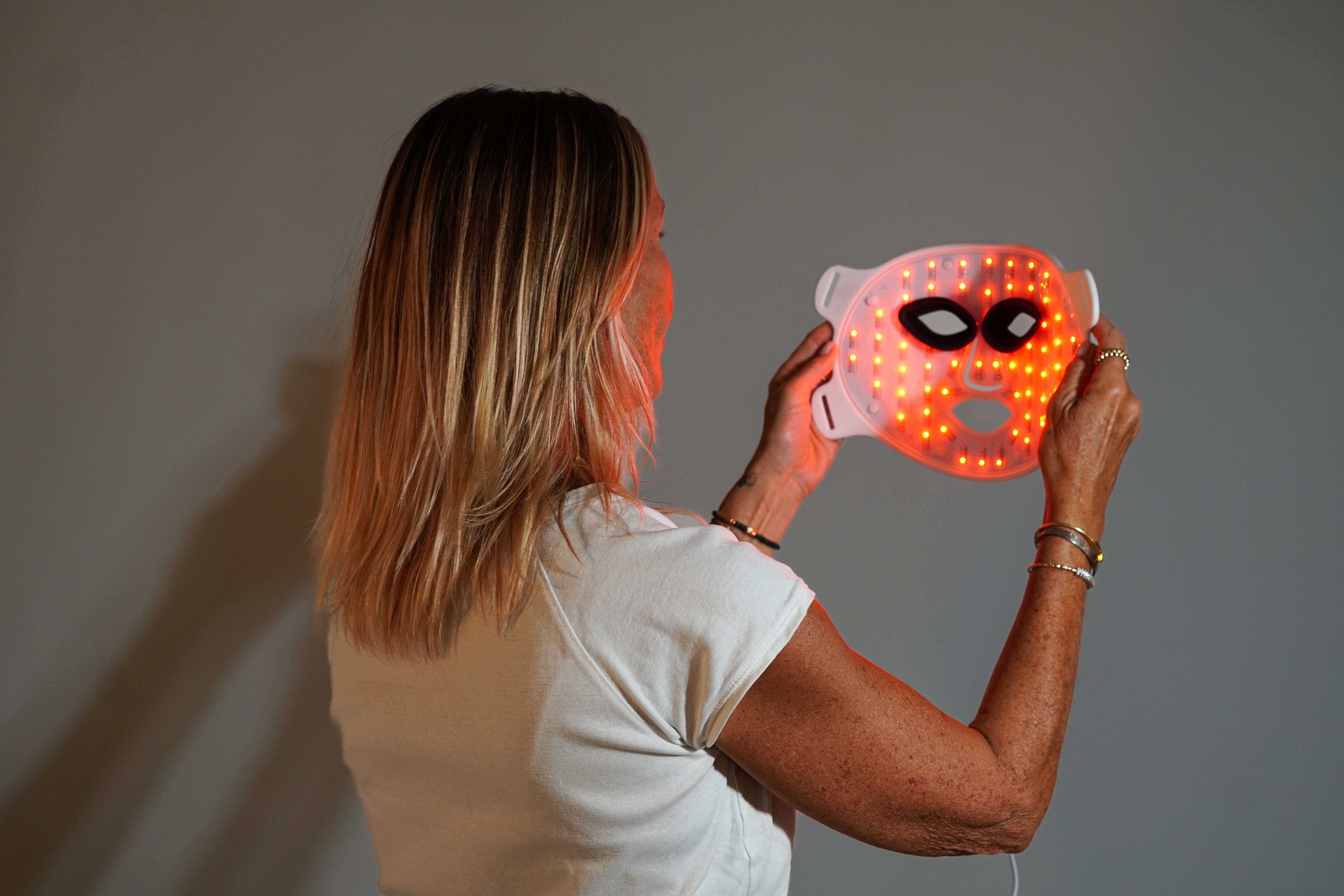
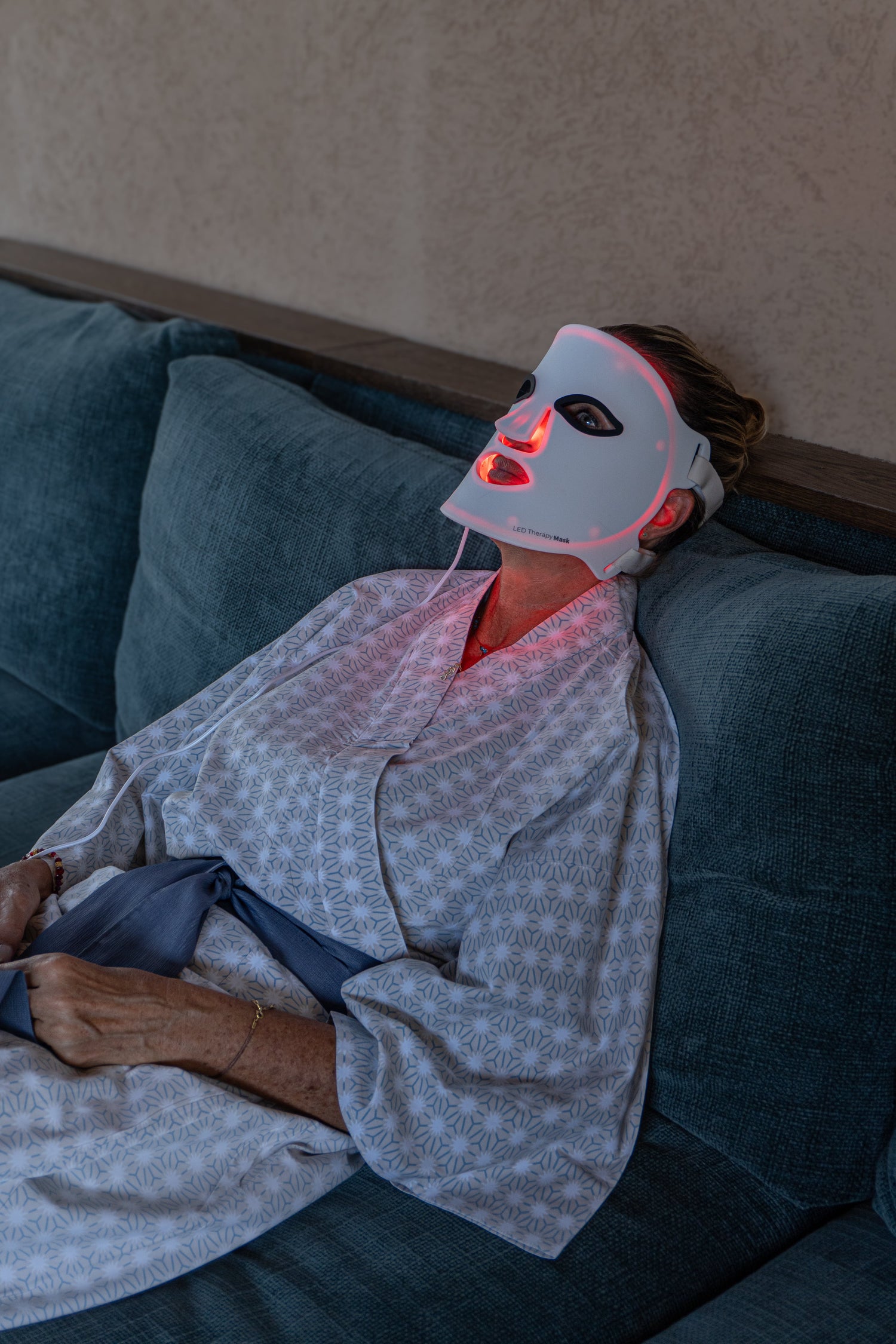
The KumoSkin LED mask helps repair and calm your skin in short sessions at home.
- 250 LEDs in flexible medical silicone
- Red light to boost collagen and glow
- 4 lights: red, infrared, blue and yellow
€299,00€429,00
−10% on your 1st order when you subscribe to the newsletter

Consider three things: what was done to your skin, the condition of your skin barrier, and whether red light is part of a recovery plan or an attempt to "accelerate" skin that is still sensitive. Facial LED therapy does not use UV, requires no downtime, and, when chosen carefully, is usually a gentle tool; precisely for this reason, context matters so much.
The basic rule: look at the skin, not just the calendar
Before deciding, observe if there's burning, weeping scabs, oozing, intense peeling, or a persistent sensation of heat. If these are present, you are still in the repair phase. If you find it difficult to interpret these signs, reviewing how to tell if your skin barrier is ready for light therapy will help.
Personalized protocol · included with your purchase
Want us to tell you how to use it in your case?
With your purchase, our experts prepare the ideal LED protocol for your skin type and goal (acne, wrinkles, dark spots...).
Message us on WhatsAppOur experts reply · no obligation
- Do not use it if you are taking isotretinoin, lithium, or other drugs that increase light sensitivity, or if your specialist has advised against it due to your ocular or dermatological history.
- Do not place it on skin with open wounds, active infections, or an area that is still oozing. (my.clevelandclinic.org)
- Do not make it a substitute for aftercare if the procedure was aggressive and the tissue is still highly reactive.
When it usually fits well
After Botox, the key is to avoid rubbing. Cleveland Clinic recommends not massaging or rubbing the face for 12 hours and waiting at least 24 hours for facials or massages; to be safe, a mask that rests or presses on the face is best used after this period, and later if there is bruising or swelling. (health.clevelandclinic.org)
After a superficial peel, the wait may be short: recovery typically ranges from hours to a few days. If the skin no longer stings, is not open, and your professional has not placed additional restrictions, a gentle LED session can be reasonable. If you also want to combine it with acids or a mixed protocol, see how to combine LED and chemical peels without irritation. (my.clevelandclinic.org)
After laser, the scenario changes. Cleveland Clinic describes that the skin may be red, sensitive, crusted, or even ooze or blister, and that peeling can occur several days later; however, the AAD notes studies in which red light applied in-office immediately after laser reduced discoloration and swelling. This does not mean that a home mask should replicate that timing: at home, wait until the skin is closed and approved by a professional.
on your first order when you join the newsletter
We send you the code instantly. No spam.
LED best accompanies a recovery that is already on track: it soothes, does not rub, and does not use UV. If the treatment still leaves the skin open or highly reactive, address that first, and then consider the mask.
When it's best to wait
There are situations where the safest answer is "not yet." This doesn't mean the mask is bad; it means your skin is prioritizing something else.
- Wait if the treatment was deep and the skin is still red, tight, peeling, or sore.
- Wait if you notice the area is warm, with wet scabs, or small fissures that haven't closed yet.
- Wait if you've just received Botox and the mask will press firmly on the injected areas.
- Wait if you are using medication or a treatment that makes your skin more light-sensitive.
Quick guide by treatment type
| Treatment | When to use | When not to use | Practical key |
|---|---|---|---|
| Botox | At least 24 hours after, if the mask does not exert strong pressure and the area is calm. | Before 24 hours or if there is sensitivity, swelling, or bothersome bruising. | The goal is to avoid rubbing and pressure on areas that may still shift slightly. |
| Superficial peel | When the burning has subsided and the skin has no open areas or wet scabs. | If it still stings, is peeling intensely, or has wounds. | Light peels usually have a recovery of hours to a few days. |
| Medium or deep peel | Only when the specialist confirms that the downtime phase is over. | While the skin is still in the repair phase or visible inflammation exists. | Recovery can last a week or more, and for deep peels, it is even longer. |
| Laser resurfacing | In a clinic, some protocols use LED right after the laser as part of the treatment. | At home, on raw skin with oozing, blisters, or active peeling. | Evidence supports post-laser LED under professional protocol; at home, wait until the skin is closed. (aad.org) |
| Very sensitized or photosensitized skin | Only when approved by a doctor and the skin is stable. | If you are taking photosensitizing drugs or notice unusual reactivity. | LED is not ideal for everyone and should be personalized. |
If you are interested in incorporating LED light into an organized nighttime sequence, a protocol like this step-by-step nighttime facial routine with an LED mask can help, especially if you usually combine it with serums or exfoliants.
How to use it without irritating
If you already have the green light, how you use it is as important as when. And if you want to go a step further, what real results a facial LED mask usually offers will help you adjust expectations before starting.
- Wash your face with a gentle cleanser and completely remove all makeup before the session.
- Dry it without friction, because recently treated skin tolerates rubbing worse than light.
- Start with short sessions and always follow the device's instructions, as the duration varies by model.
- Wear eye protection or the manufacturer's recommended glasses, even if the session is at home.
- Discontinue use if you notice increased redness, itching, pain, or an unusual reaction, and consult a professional if it persists.
What results to actually expect
Don't expect a miracle in a single session. The AAD summarizes that some studies observe subtle to notable improvements in fine wrinkles, texture, spots, redness, and laxity, and cites a study with 90 patients in which over 90% noticed some improvement after 8 sessions in 4 weeks; it also notes that, after a laser, red light in-office reduced discoloration and swelling. Even so, not all home devices are equal, so consistency weighs more than intensity.
In other words: LED can be a great complement, but it does not replace a well-done treatment, a healthy skin barrier, or a consistent routine. If you want to further refine the context, this criterion on the skin barrier will be useful, and to go further, how to combine LED technology in a rejuvenation routine.
FAQ about LED masks after aesthetic treatments
Can I use an LED mask after applying Botox?
Yes, but not immediately. Cleveland Clinic recommends not massaging or rubbing the face for 12 hours and waiting at least 24 hours for facials or massages; therefore, if your mask rests on your face, it is safest to wait that period and longer if there is swelling or bruising. The light itself is usually not the main problem: the rubbing or pressure on recently treated areas is.
When can an LED mask be used after an aesthetic treatment such as laser or exfoliation?
After a superficial peel, it's sometimes enough to wait until the stinging subsides and there are no open areas, as recovery usually lasts from hours to a few days. In contrast, after laser resurfacing or a medium or deep peel, the wait should be longer: the skin may be red, raw, crusted, or even ooze and blister. The useful rule is simple: first closed skin, then LED. In a clinic, some protocols do use red light immediately after the laser, but that is not the same as a home session.
Is an LED mask safe after aesthetic treatments and what precautions should I take?
Generally, facial LED is considered a non-invasive and relatively safe option because it does not use UV and does not require its own "recovery" time. However, it is not for everyone: Cleveland Clinic warns of caution with medications such as isotretinoin or lithium, and also with specific histories that increase the risk of sensitivity. Best practice is to use it on clean skin, with protected eyes, and following the device's instructions. If the skin reacts with pain, rash, or increased inflammation, it is advisable to stop.
Does LED light therapy work better if used in combination with other aesthetic treatments and what results can be expected?
It usually works better as a complement than as the main treatment. The AAD notes improvements in redness, texture, and fine lines, and also describes better recovery after laser in-office, but changes from home devices are often modest and depend heavily on consistency. In practice, LED fits well when the skin is already stable and the goal is to support recovery or maintain results, not to replace a medical procedure. If you are looking for realistic expectations, think "better skin over time," not a radical change in 24 hours.
What now?
If you want to use LED light as part of a well-thought-out recovery, start with the KumoSkin Mask and return to the Kumo Balance homepage to see how it fits into a more complete facial routine. The key is not to force the skin, but to support it when it is truly ready.

Facial red light
KumoSkin Mask – LED Facial Mask
★★★★★ 4,8/5 · rated by verified customers
- 250 LEDs in flexible medical silicone
- Red light to boost collagen and glow
- 4 lights: red, infrared, blue and yellow
€299,00€429,00· pay in installments with seQura or Klarna