
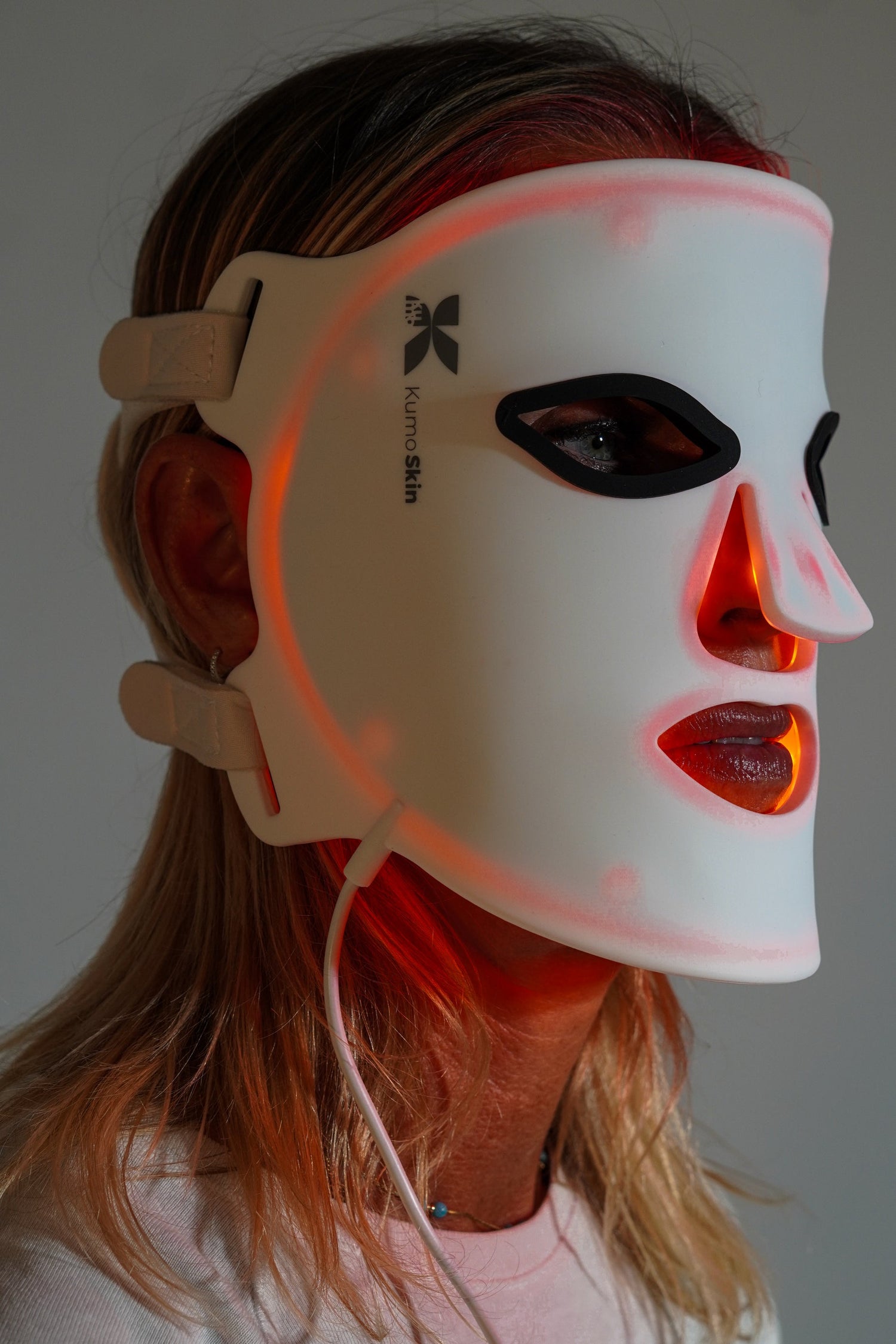

An LED mask can help. But it doesn't replace a well-planned moisturizing routine.
If your skin is dry or dehydrated, the real goal is to combine light, gentle cleansing, well-chosen hydration, and consistency. Photobiomodulation has been studied for its relationship with tissue repair, inflammation, and rejuvenation, while the skin barrier remains key to retaining water.
Red & infrared light
Recover faster, at home
★★★★★ 4,8/5 · rated by verified customers
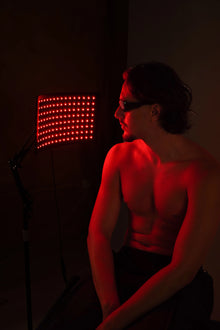
The KumoLux panel supports muscle recovery with full-body red and infrared light.
- 660 nm red + 850 nm infrared light
- Full-body muscle recovery
- Clinically validated biohacking protocols
€399,00€499,00
−10% on your 1st order when you subscribe to the newsletter

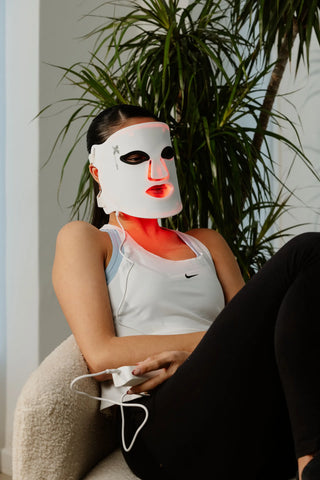
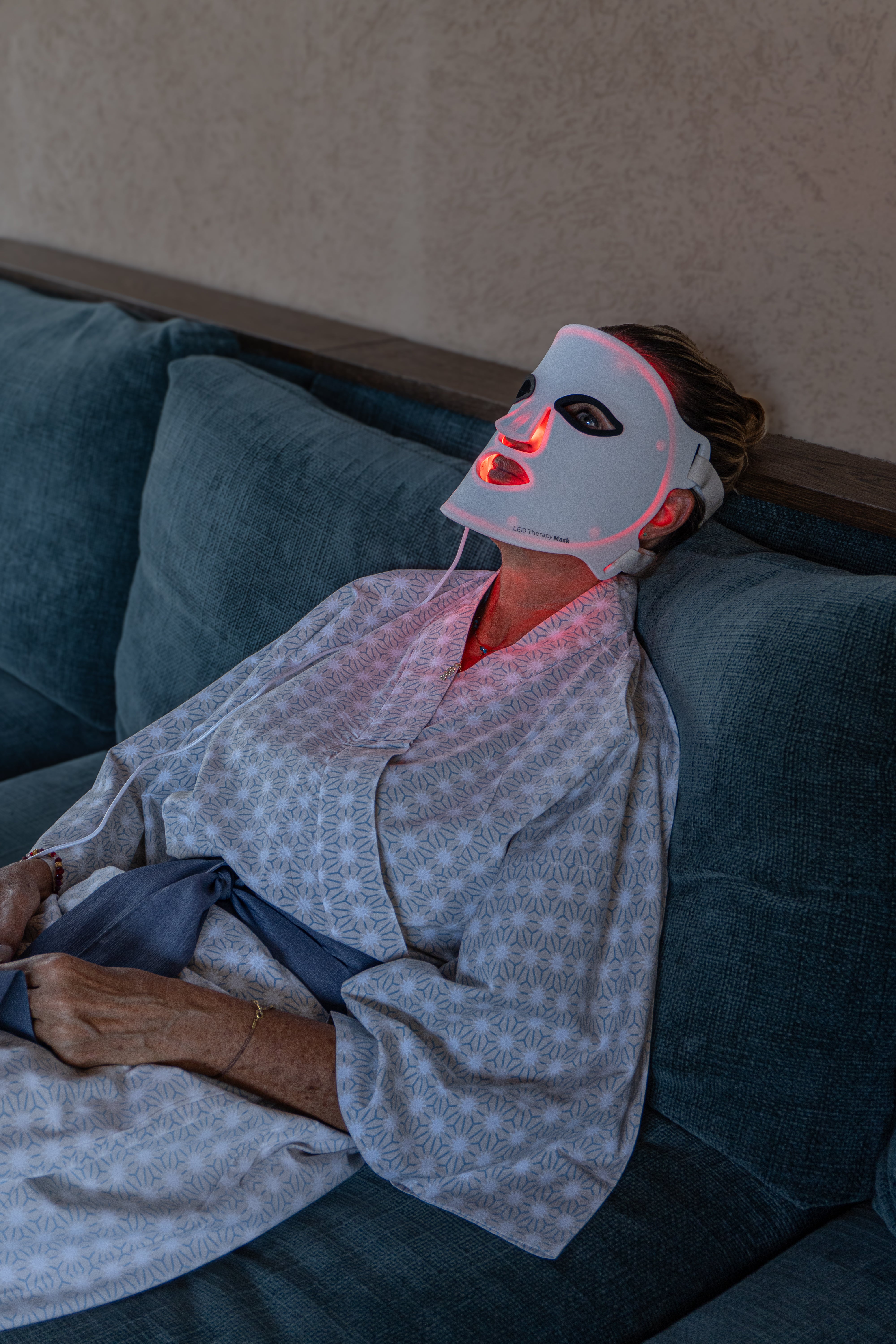
What an LED mask can contribute in this context
Before thinking about visible results, it is worth understanding that LED acts as a complement. The AAD guide to soothing dry skin emphasizes lukewarm water, gentle cleansers, and creams or ointments; this context is what best allows an LED session not to irritate already fragile skin. (aad.org)
In photobiomodulation, an overview of PBM and its wavelengths places red light in the 620-700 nm range and near-infrared in 700-1440 nm, and other reviews relate it to anti-inflammatory signals, tissue repair, and extracellular matrix regeneration. In a 2007 randomized trial with 76 patients, 633 and 830 nm wavelengths improved wrinkles and elasticity with good tolerance.
Personalized protocol · included with your purchase
Want us to tell you how to use it in your case?
With your purchase, our experts set up your red and infrared light sessions for your sport and goal.
Message us on WhatsAppOur experts reply · no obligation
If you want to delve deeper into the device's logic, it may help to read what a facial LED mask is and how it works and then what each facial LED mask color does to understand why it is important to choose a protocol and not improvise.
Dry skin vs. dehydrated skin: quick read before using LED
The practical difference matters because it changes the type of support the skin needs. The following table summarizes what is usually felt, what to prioritize, and how LED fits in each case.
Practical comparison
| Aspect | Dry skin | Dehydrated skin | How to adapt the LED session |
|---|---|---|---|
| How it feels | Often feels tight, rough, and flaky. | Often looks dull with more pronounced fine lines. | In both cases, light adds more when the skin is already calm and well-hydrated. |
| What to prioritize | Unscented cream or ointment. | Water-based serum + sealing cream. | The AAD and Mayo Clinic consider that creams and ointments generally perform better than lotions on very dry skin. |
| What to avoid | Hot water, friction, and foaming cleansers. | Irritating active ingredients if the barrier is sensitized. | If the skin burns or stings, it is advisable to reduce the frequency and prioritize barrier repair. (aad.org) |
The conclusion is simple: light can help, but the barrier decides. If daily care does not retain water, the LED mask will have less ground to gain. (pmc.ncbi.nlm.nih.gov)
on your first order when you join the newsletter
We send you the code instantly. No spam.
If you are looking for a more organized routine, check out the step-by-step guide to using the facial LED mask and, on specific nights, the nighttime facial protocol with an LED mask.
How to enhance results without irritation
The best way to enhance results is not to add more products, but to reduce friction and add effective hydration. Mayo Clinic reminds us of the "3-minute window" after bathing to seal in water with cream or ointment, and the AAD insists that dry skin often improves when a gentle cleanser is used and moisturizer is applied while the skin is still damp. (newsnetwork.mayoclinic.org)
1. Cleanse gently
Choose a non-foaming, alcohol-free cleanser and use it only where needed. Avoid long showers or washes with very hot water; the AAD recommends 5 to 10 minutes and lukewarm water, and Mayo Clinic notes that long baths remove natural oils.
2. Follow the session protocol
Use the LED mask on prepared skin as instructed by the manufacturer, without thinking that more time or more sessions equate to more benefit. The literature on photobiomodulation still lacks universal consensus on the ideal dose, so consistency and your skin's tolerance outweigh improvisation.
3. Hydrate immediately afterwards
After finishing, apply a light hydrating serum and then a cream or ointment to seal in moisture. Mayo Clinic mentions ceramides, glycerin, hyaluronic acid, and urea as useful ingredients; the AAD, for its part, considers that creams and ointments generally work better than lotions on very dry skin. (mayoclinic.org)
4. Protect the result during the day
Without SPF, the effort is diluted. The AAD recommends broad-spectrum SPF 30 or higher sunscreen, and also suggests a humidifier when indoor air is dry. This context helps the skin be less reactive for the next session.
If you are also interested in refining safety and tolerance, the article on benefits and risks of the facial LED mask serves as a practical complement.
Ingredients and habits that help the most
- Creams and ointments: for dry skin, they often perform better than lotions because they seal in more water and protect the skin barrier better.
- Glycerin, ceramides, hyaluronic acid, and urea: these are key ingredients for attracting and retaining water, especially after an LED session.
- Fragrance-free and alcohol-free formulas: reduce the risk of stinging on already sensitized skin.
- Lukewarm water and short cleansing sessions: limit the loss of natural lipids and prevent worsening tightness.
- SPF 30+ and humidifier: help the improvement be more stable throughout the day and in dry environments.
Common mistakes that reduce effectiveness
- Thinking that LED hydrates on its own: light can support appearance and comfort, but hydration primarily depends on the skin barrier and emollients.
- Overdoing the frequency: the literature has not established a universal dose, and dry skin can react with irritation if pushed too hard.
- Using aggressive cleansers before the session: excessive foam, alcohol, and very hot water make it difficult for the barrier to regain comfort.
- Forgetting sun protection: if you don't finish your routine with SPF, any aesthetic improvement will be more fragile.
- Ignoring individual sensitivity: the AAD warns that mild irritation may occur and that, for darker skin tones, it's advisable to discuss home use with a dermatologist due to the risk of hyperpigmentation.
Frequently Asked Questions
How to enhance the results of an LED mask for dry and dehydrated skin?
The most effective way is to combine consistency and a healthy skin barrier. Cleanse gently, use the LED without overloading the skin, hydrate immediately afterward with a cream or ointment, and protect your face with SPF in the morning. Reviews on photobiomodulation point to a complementary effect in rejuvenation and inflammation, but water sealing still depends on emollients and daily care. In short: less aggression, more hydration, and a repeatable routine.
What complementary routine is suitable to maximize the effects of the LED mask on dehydrated skin?
The most useful is usually a simple nightly routine: gentle cleanser, LED session, light hydrating serum, and a sealing cream. If your skin is very dry, choose fragrance-free formulas with humectant ingredients like glycerin or hyaluronic acid. During the day, add sunscreen and, if the environment is dry, a humidifier. This combination reduces water loss and creates a more favorable environment for the light to provide comfort and a better appearance.
How often should I use an LED mask if I have dry skin to see visible improvements?
There is no universal frequency that works for everyone. As a practical reference, many routines involve several sessions per week, and a clinical trial with 20 women used two weekly sessions for 3 months. The key is not to force it: if you notice stinging, persistent redness, or tightness, reduce the frequency and prioritize hydration and barrier repair. More important than "a lot" is "well-tolerated and consistent." (pubmed.ncbi.nlm.nih.gov)
Is it better to apply a hydrating serum before or after using the LED mask on dry skin?
As a practical rule, it is usually better to apply it afterward, unless the device manufacturer indicates a different sequence. This way, you avoid dense layers before the session and make better use of immediate hydration upon completion. If you have just washed your face, Mayo Clinic reminds us of the "3-minute window" to seal in water with cream or ointment, and the AAD recommends applying moisturizer while the skin is still damp. For dry skin, this order is usually the most prudent.
Which LED wavelengths are most effective for dry and dehydrated skin and why?
The most studied in skin rejuvenation are red light, approximately between 630 and 660 nm, and near-infrared, especially around 830 and 850 nm. Red light is more associated with inflammatory modulation, while NIR penetrates deeper and is associated with tissue repair. For dry or dehydrated skin, the priority is not "more intensity," but a stable and tolerable combination that does not irritate the barrier. (pubmed.ncbi.nlm.nih.gov)
What now?
If you want to turn all this into a simple routine, start by choosing a facial LED mask designed for home use and review Kumo Balance's proposal to integrate technology consistently into your daily care. If you prefer to refine the order of use before buying, go back to the step-by-step article and adapt the sequence to what your skin tolerates best.

Red & infrared light
KumoLux Panel – Red and Infrared LED Panel
★★★★★ 4,8/5 · rated by verified customers
- 660 nm red + 850 nm infrared light
- Full-body muscle recovery
- Clinically validated biohacking protocols
€399,00€499,00· pay in installments with seQura or Klarna