
Yes, but with a method.
An LED mask can help oily skin look more stable and make pores less noticeable. The key is not to "close" them as such, but to reduce what makes them more visible: excess sebum, inflammation, and irregular texture.
Facial red light
Bring your skin back to life
★★★★★ 4,8/5 · rated by verified customers
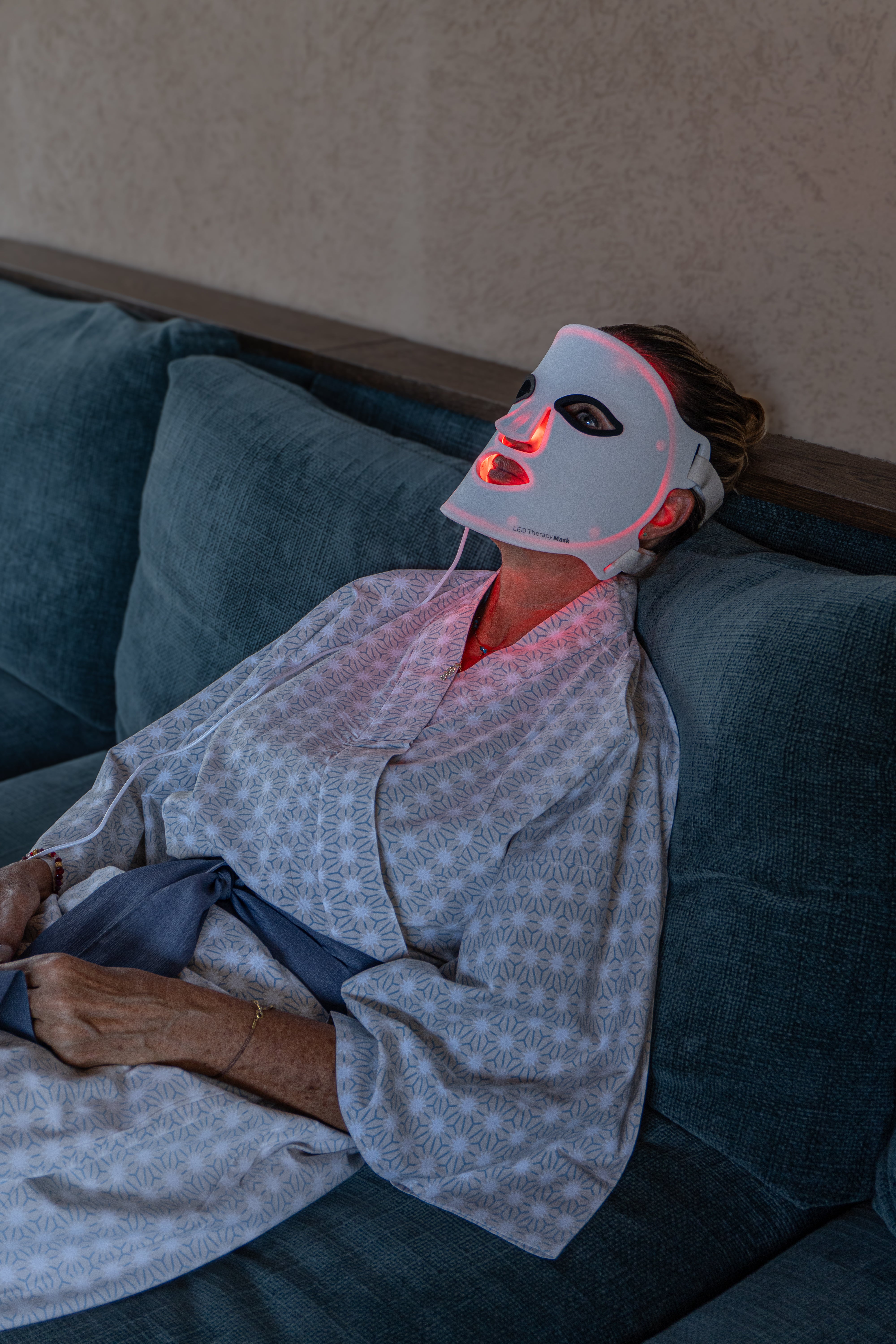
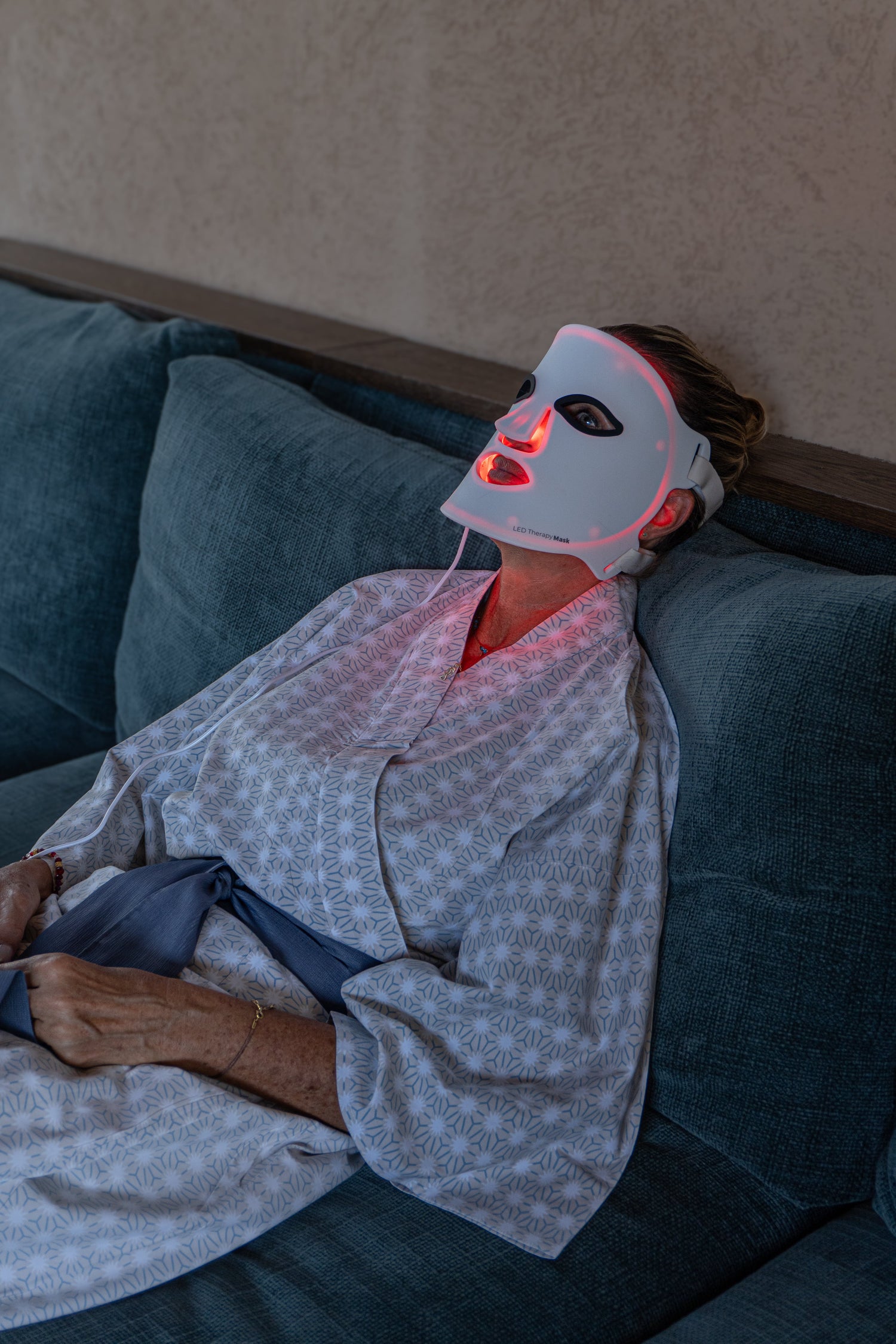
The KumoSkin LED mask helps repair and calm your skin in short sessions at home.
- 250 LEDs in flexible medical silicone
- Red light to boost collagen and glow
- 4 lights: red, infrared, blue and yellow
€299,00€429,00
−10% on your 1st order when you subscribe to the newsletter

What an LED mask can really do
Visible light is mainly used for acne: blue is most associated with breakout control, and red usually acts as support against inflammation and redness. Harvard Health summarizes this approach and reminds us that the evidence is not yet perfect; furthermore, the AAD indicates that visible blue, red, and combined lights primarily help with pimples, not with blackheads, whiteheads, cysts, or nodules. Harvard Health summary of LED and skin and AAD guide to lights and lasers for acne.
At home, the evidence is promising but uneven: a systematic review and meta-analysis of home LED devices analyzed 6 studies and observed improvement in acne lesions. This does not mean that all masks perform equally, but it does mean that consistent use over several weeks makes practical sense. 2025 review of home LED devices.
Personalized protocol · included with your purchase
Want us to tell you how to use it in your case?
With your purchase, our experts prepare the ideal LED protocol for your skin type and goal (acne, wrinkles, dark spots...).
Message us on WhatsAppOur experts reply · no obligation
When it comes to enlarged pores, the starting point is also quite clear: dermatological literature primarily links them to increased sebum excretion, reduced elasticity around the pore, and increased hair follicle volume. The AAD adds that when the pore becomes clogged, it expands and becomes more visible. Therefore, the realistic strategy is to control the environment that enlarges its appearance. PubMed review on the causes of facial pores and AAD guide to making pores less visible.
Effective step-by-step protocol
If you want to fit an LED mask into a realistic routine, the best starting point is to simplify. If you need a more complete visual reference of the process, this step-by-step guide to using the facial LED mask will be helpful.
As a practical synthesis of what has been studied at home, a regimen of 2 to 4 weekly sessions for 6 to 8 weeks usually aligns best with published protocols; however, this is a general guideline, not a universal rule. The AAD insists that home devices should be used repeatedly and according to their instructions, and trials have varied between 2 sessions per week for 4 weeks, 4 sessions per week for 7 weeks, and other more intensive regimens. (aad.org)
on your first order when you join the newsletter
We send you the code instantly. No spam.
8-week guideline protocol
| Phase | What to do | Practical basis |
|---|---|---|
| 1. Preparation | Gently cleanse your face and ensure your skin is dry before the session. | The AAD recommends gentle cleansing and avoiding rubbing, as irritation can make pores more noticeable. (aad.org) |
| 2. LED Sessions | Have consistent sessions several times a week and follow your device's exact guidelines. | Home studies use different frequencies, and the AAD reminds that home devices must follow specific instructions. |
| 3. Post-care | If needed, apply a light, non-comedogenic moisturizer. | When skin is irritated, the AAD even suggests applying moisturizer before retinoids to reduce discomfort. |
| 4. Re-evaluation | Assess real changes after several weeks, not after 2 or 3 uses. | The AAD reminds that it is not a "one-time" treatment and results take time. |
Regarding duration, published trials have used sessions of 8, 15, and even 20 minutes depending on the protocol and type of light. Therefore, if your device specifies a different time, that guideline should take precedence over any generic figure. (journals.sagepub.com)
If you want to see how this sequence fits into your evening routine and avoid improvising each day, you can refer to this nighttime facial routine with an LED mask.
Which color to choose for oily skin and visible pores
The most useful logic is simple: blue if your priority is active breakouts and very oily skin; red if you also want to calm redness and inflammation; and blue-red if your skin has a mix of shine, breakouts, and irregular texture. Harvard Health explains that blue light is often used for acne because it can reduce sebaceous activity and act on C. acnes, while red light is more associated with inflammation and redness. Harvard Health summary of LED and skin.
The AAD, for its part, reminds us that visible blue, red, and combined lights primarily help with pimples, and that the actual benefit depends on the type of lesion and the specific device. If you want to fine-tune your wavelength choice, also review the colors of the facial LED mask and their uses. (aad.org)
How to complement it with the rest of your routine
The LED mask works best when it's not fighting against an overly aggressive routine. For oily skin and visible pores, the AAD recommends gentle cleansers, non-comedogenic products, salicylic acid to unclog pores, retinoids to keep them clear, and non-comedogenic sunscreen with SPF 30 or higher. AAD acne treatments.
The AAD also explains that if you use a retinoid, it's sometimes advisable to reduce the frequency or apply moisturizer first to reduce irritation; this fits very well with a nightly LED that doesn't add more friction to the skin. If you want an ordered sequence from start to finish, this step-by-step usage guide will help you set up a clean and simple protocol.
And if your skin tends to be very shiny, remember that pores look more noticeable when there is obstruction, accumulated oil, or irritation from rubbing. The AAD insists that gentle washing, using oil-free and non-comedogenic products, and not manipulating the skin makes more difference than it seems.
Common mistakes that worsen shine and pores
- Using the mask more often "just in case," because the AAD recommends following the device's guidelines and not assuming that more sessions equal better results.
- Combining it with harsh exfoliants or rubbing your face, as irritation makes pores more noticeable.
- Expecting LED light alone to resolve blackheads or whiteheads, when the AAD clarifies that visible light primarily treats pimples.
- Forgetting sunscreen or using heavy cosmetics that clog the skin, because that goes in the exact opposite direction of what you need.
If you have doubts about safety, photosensitivity, or compatibility with treatments, it's advisable to review contraindications and safety in facial LED masks first.
Frequently asked questions
How to use an LED mask for oily skin with enlarged pores safely and effectively?
Start with a clean, dry face, free of irritating products. Use the light according to the device's instructions and maintain consistency for several weeks; don't expect results in 2 or 3 sessions. If you notice stinging, dryness, or redness, reduce the frequency and use a light moisturizer. The AAD also recommends protecting your eyes when indicated by the manufacturer and not combining the session with practices that irritate the skin.
What LED light colors are best for treating oily skin and enlarged pores?
For oily skin with breakouts, blue light is usually the most useful because it is primarily used for acne. Red works better as support when there is inflammation or redness, and the blue-red combination is usually the most balanced option if you have both shine and pimples. However, LED light does not replace classic treatment if you have many comedones; for that, salicylic acid and retinoids are still important.
How often should I use an LED mask to avoid worsening oiliness or irritating the skin?
The best answer is: the frequency indicated by your device, but regularly. As a practical synthesis, many home routines fit between 2 and 4 sessions per week for several weeks, and studies have used from 2 weekly sessions to 4 per week, or even more intensive regimens. If your skin becomes dry or sensitive, reduce the frequency instead of insisting. The AAD reminds us that it is not a "one-time" treatment.
What other skincare steps accompany the LED mask to reduce enlarged pores?
What helps most is a simple routine: gentle cleanser, non-comedogenic products, light moisturizer, and daily SPF 30 or higher sunscreen. If your skin tolerates active ingredients, salicylic acid and retinoids help unclog pores and make them less visible. The AAD also insists that it's not advisable to rub or manipulate the skin, as irritation makes pores more noticeable.
Is the LED mask suitable for acne-prone skin and visible pores in humid climates?
Yes, as long as you keep your routine light and non-comedogenic. On skin that already tends to be shiny, excess heavy layers usually worsen the feeling of visible pores; therefore, it's advisable to cleanse gently, dry your face thoroughly before the session, and not overload it afterwards with occlusive products. LED can be a good complement, but the real support is still controlling sebum, breakouts, and irritation.
What now?
If you want to move from theory to a simple protocol, start by checking out the KumoSkin Mask facial LED mask and return to the Kumo Balance homepage to guide your routine with a broader view of home care and recovery.

Facial red light
KumoSkin Mask – LED Facial Mask
★★★★★ 4,8/5 · rated by verified customers
- 250 LEDs in flexible medical silicone
- Red light to boost collagen and glow
- 4 lights: red, infrared, blue and yellow
€299,00€429,00· pay in installments with seQura or Klarna