

Yes, but with a method.
An LED mask can help improve texture, radiance, and in some cases, the appearance of dark circles when the problem is mild and related to pigmentation or superficial skin changes; but it will not, by itself, correct a bag caused by fat herniation or a shadow caused by volume loss. Dark circles and under-eye bags are multifactorial and depend on anatomy, soft tissue, and skin, so LED should be understood as a complementary tool, not a universal solution. (pmc.ncbi.nlm.nih.gov)
Red & infrared light
Recover faster, at home
★★★★★ 4,8/5 · rated by verified customers
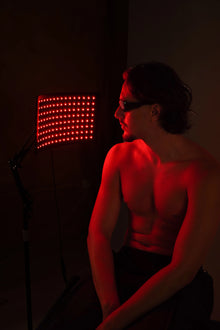
The KumoLux panel supports muscle recovery with full-body red and infrared light.
- 660 nm red + 850 nm infrared light
- Full-body muscle recovery
- Clinically validated biohacking protocols
€399,00€499,00
−10% on your 1st order when you subscribe to the newsletter

Therefore, the best results usually come from two decisions: choosing the right wavelength and applying a conservative, consistent, and safe protocol. In practice, the most studied wavelengths in facial photobiomodulation are red light and near-infrared; the literature also includes periocular studies with red LED and red-amber combinations for wrinkles around the eyes.
What it can really do for dark circles and under-eye bags
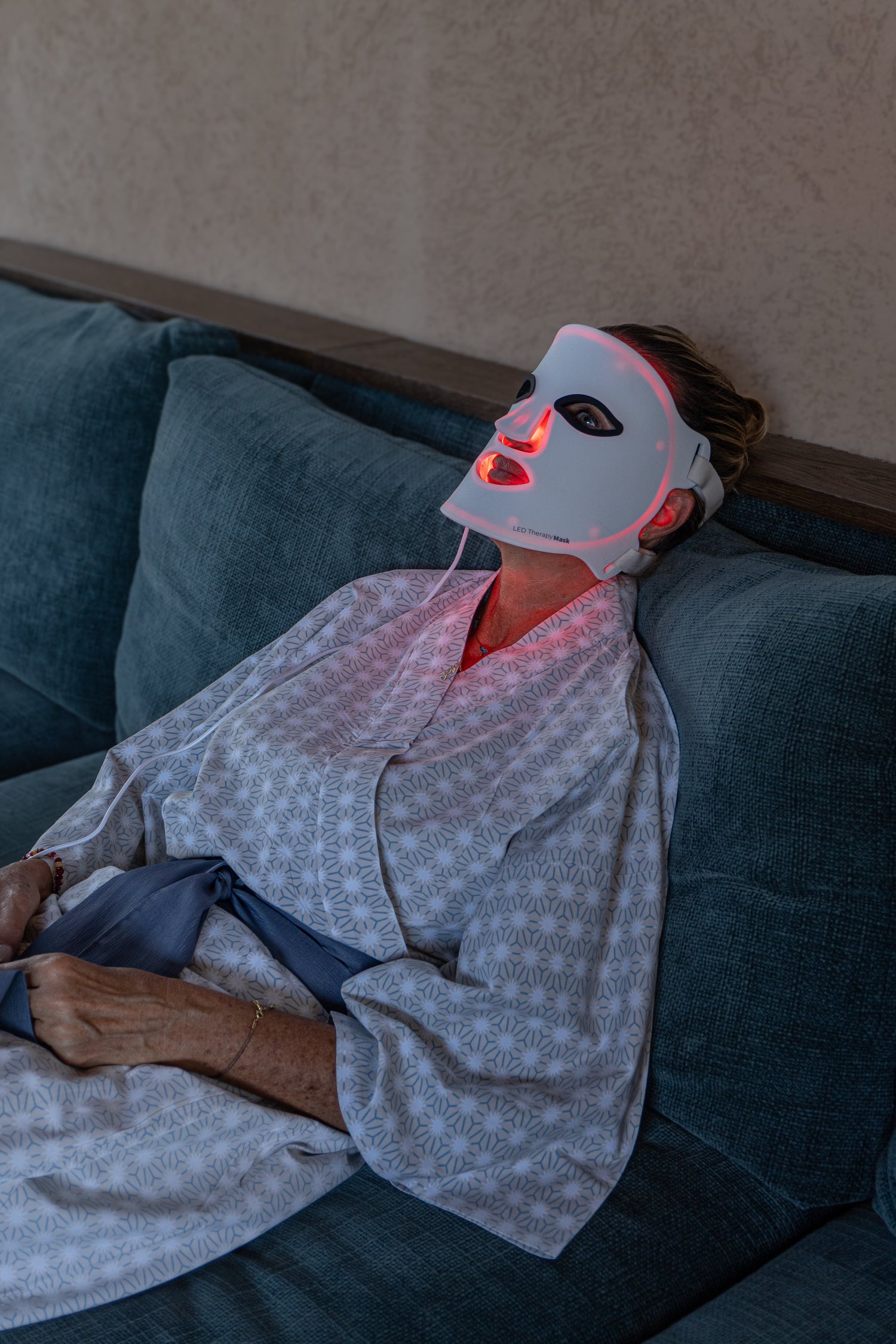
Most home LED masks use light-emitting diodes, and the AAD guide to red light generally considers them safe for home use when instructions are followed; however, the optimal dose and actual efficacy vary between devices and are still not fully defined.
Personalized protocol · included with your purchase
Want us to tell you how to use it in your case?
With your purchase, our experts set up your red and infrared light sessions for your sport and goal.
Message us on WhatsAppOur experts reply · no obligation
- It is a good candidate if dark circles are mild, pigmented, or have a dull texture.
- It is less useful if the main problem is a voluminous bag, a deep furrow, or persistent edema. (pubmed.ncbi.nlm.nih.gov)
- Its goal is to improve skin quality and soften contrast, not to erase anatomy.
If you want to understand the mechanism simply, you might find the article on what a facial LED mask is and how it works useful.
What the evidence says about the eye contour
In periocular photobiomodulation, the most interesting evidence continues to focus on wrinkles and skin quality, not on volumetric bags. A trial published in 2023, the 2023 periocular study, used 10 sessions over 4 weeks with red light at 660 nm and amber at 590 nm at 3.8 J/cm², and reported a 30% reduction in wrinkle volume around the eyes.
Another review, the study on LEDs for periocular wrinkles, found significant improvement in periocular wrinkles with 660 nm and with a 411 to 777 nm device evaluated up to week 12. This does not prove that every LED mask reduces dark circles and under-eye bags in the same way, but it does reinforce that the eye contour can respond when the indication is correct.
on your first order when you join the newsletter
We send you the code instantly. No spam.
In contrast, the systematic review on light devices for periorbital hyperpigmentation shows that, if the goal is to treat pigmented dark circles with light energy, the best published results still come from other laser procedures. Therefore, the LED mask should be presented as a cosmetic and maintenance support, not as a substitute for medical treatment when the cause is profound.
Specific protocol for the eye area
The practical basis is simple: less improvisation, more consistency, and zero excess. The 2024 review on photobiomodulation describes PBM as a non-invasive therapy using red light (620-700 nm) and near-infrared (700-1440 nm), and the FDA reminds us that light-based procedures can injure the eyes and that protective eyewear should be used when the protocol calls for it.
Additionally, some FDA-approved home devices work with protocols of 2 to 5 times per week and sessions of about 9 minutes, while facial trials usually range from 8 to 10 sessions spread over 4 weeks or a bit more. Therefore, if you don't have a personalized medical guideline, a conservative progression is the most sensible option. (accessdata.fda.gov)
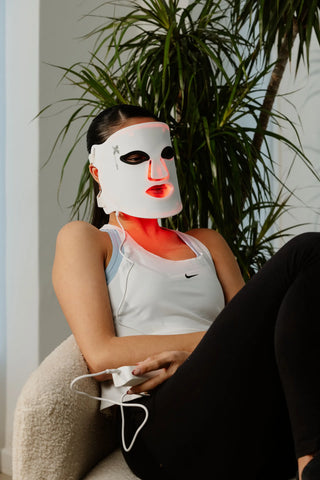
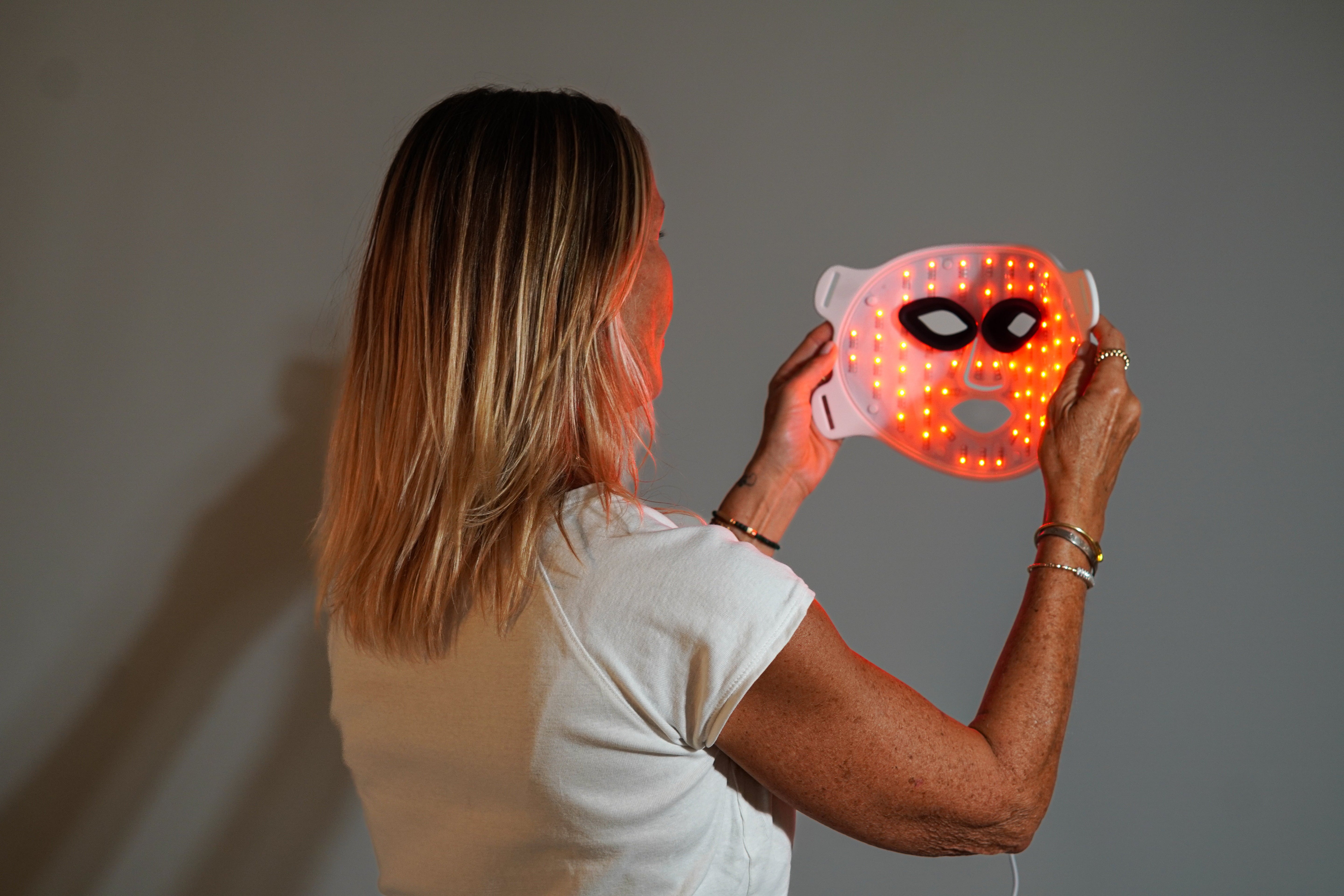
In a mask, "distance" is not calculated as in a panel: the piece should rest with a gentle fit, without pressing on the eyelid or deforming the contour. If the manufacturer includes pads or eye protection, these must be used; if it indicates use on clean skin, it is not advisable to add products beforehand.
If you want to see the general structure of home use, the complete guide to home use will help you organize the routine before adapting it to the eye area.
Which wavelengths to prioritize
For the eye contour, it is most reasonable to prioritize red and near-infrared; amber also appears in periocular rejuvenation trials. This selection aligns with most reviews of photobiomodulation in skin.
- Red 630-660 nm: this is the most studied base for texture, fine wrinkles, and facial rejuvenation.
- Near-infrared 810-850 nm: works as a complement when the device incorporates it. (pubmed.ncbi.nlm.nih.gov)
- Amber 590 nm: appears in some periocular protocols with good aesthetic results.
Step-by-step session guide
- Clean and dry your face before starting; the eye contour should be free of cream, oil, or makeup unless the manual states otherwise. (accessdata.fda.gov)
- Place the mask with a gentle fit, keep your eyes closed, and if the device comes with protectors, always use them.
- Choose red mode or red + near-infrared if your device offers it for the eye contour.
- Start with short, regular sessions; in facial photobiomodulation, consistency usually yields more benefits than improvising long sessions.
- After finishing, apply your eye contour serum or cream, provided it is non-irritating, and observe the skin for 24 to 48 hours. (accessdata.fda.gov)
Conservative protocol for 4 to 8 weeks
The following guideline is a practical synthesis based on the ranges seen in facial studies and home-use devices; it does not replace manufacturer instructions or individual dermatological advice.
| Phase | Time | Frequency | Objective |
|---|---|---|---|
| Week 1-2 | 3-5 min | 3 times per week | Check tolerance and avoid overstimulation. |
| Week 3-4 | 5 min | 3-4 times per week | Consolidate routine without irritating the delicate skin around the eyes. |
| Week 5-8 | 5-10 min | 4-5 times per week | Seek consistency and evaluate changes in texture and fine lines. |
| Maintenance | 5-10 min | 2-4 times per week | Maintain results with the minimum effective dose. |
The key is to respect the device's manual and not assume that more minutes equal more benefit; the available literature emphasizes that effective protocols depend on the device, the light mode, and the aesthetic goal.
Eye safety, contraindications, and warning signs
Safety is not a minor detail: it is the core of the protocol. The AAD insists on using the eye protection recommended by the manufacturer and not substituting sunglasses for protective eyewear; the FDA adds that light-based treatments can harm the eyes and that professionals must provide adequate protection.
If you want more context on best practices, you can review the page on eye safety in red light therapy.
- Do not use the mask if you have a photosensitivity disorder, unless advised by a professional.
- Avoid it if you are pregnant or trying to conceive, if you have active implants such as a pacemaker or defibrillator, or if you are taking photosensitizing medication.
- Do not use it on an active infection, a wound, or a lesion in the treated area.
- If your skin is more reactive or you tend to hyperpigmentation, start with fewer sessions and observe the area for 48 hours. The AAD warns that visible light can promote more intense and long-lasting spots in darker skin tones.
Discontinue use if eye pain, blurred vision, persistent irritation, or a worsening discoloration appears. This is no longer part of a prudent cosmetic routine.
Can it be combined with serums or creams?
The short answer is yes, but in order. The most prudent approach is to use the mask on clean, dry skin and apply the eye contour serum or cream afterward, unless the manufacturer specifies otherwise. The FDA and AAD insist on following device instructions; additionally, certain home-use protocols study combinations of serum, LED, and massage, but this does not mean that any active ingredient is a good idea in such a delicate area. If your eye contour products contain retinoids or acids, it's best to keep them out of the session. (accessdata.fda.gov)
This does not mean that the combination is forbidden: there are studied home-use devices that integrate serum, LED, and massage, but this does not authorize improvisation with any formula or skipping the manufacturer's instructions. (pubmed.ncbi.nlm.nih.gov)
In such a delicate area, the main risk is usually irritation rather than the sum of benefits, so a simple routine usually works better than a "loaded" one.
What results to expect and in how long
If the mask is well-chosen and the cause is compatible, the first thing that usually improves is texture: the skin looks somewhat smoother, with less redness and a less dull appearance. The AAD cites studies with 8 treatments in 4 weeks and facial aesthetic improvements in over 90% of patients, while the 2023 periocular trial observed a reduction in wrinkle volume of about 30%.
For the eye contour, a realistic expectation is to think in weeks, not minutes. Between the fourth and eighth week, you may notice moderate improvement in fine lines and skin quality; between the eighth and twelfth, changes usually stabilize. For mild pigmented dark circles, there may be a discrete improvement, but for bags due to volume or chronic edema, the effect is usually small.
If you need a more focused read on real results, the piece on evidence and real results summarizes well what can be expected from this type of technology.
Frequently Asked Questions
Is it safe to use an LED mask in the eye area for dark circles and under-eye bags?
Generally, yes, if the mask is designed for facial use, is used according to the manual, and the indicated eye protection is respected. The AAD considers that home LED devices are generally safe in the short term, although they can cause temporary irritation or discomfort, and the FDA warns that light-based procedures can injure the eyes. If you have photosensitivity, are taking photosensitizing medication, or notice blurred vision, it is advisable to stop and consult a professional.
What usage protocol is recommended for the eye area with an LED mask (time, frequency, and distance)?
As a cautious approach, start with 3-5 minutes, 3 times per week for 2 weeks; then move to 5 minutes, 3-4 times per week; and only if the skin tolerates it, increase to 5-10 minutes and 4-5 times per week. With a mask, you don't work at a distance: it should rest without pressing on the eyelid, and if the device comes with protectors, they must always be used. Some protocols and commercial devices fall within this range of frequency and duration.
Which LED light colors are most effective for reducing dark circles and under-eye bags around the eyes?
For the eye area, it is most reasonable to prioritize red (630-660 nm) and, if the device includes it, near-infrared (810-850 nm), because these are the most studied wavelengths in facial PBM. Amber 590 nm also appears in periocular trials with rejuvenating results. The review on periorbital hyperpigmentation suggests that, when the goal is deep pigmentation, the strongest evidence is still in other more powerful light procedures, so it is important to maintain realistic expectations.
Can the LED mask for dark circles be combined with serums or creams around the eyes?
Yes, but in order. The most prudent approach is to use the mask on clean, dry skin and apply the eye contour serum or cream afterward, unless the manufacturer specifies otherwise. The FDA and AAD insist on following device instructions; additionally, certain home-use protocols study combinations of serum, LED, and massage, but this does not mean that any active ingredient is a good idea in such a delicate area. If your eye contour products contain retinoids or acids, it's best to keep them out of the session. (accessdata.fda.gov)
What results can be expected and how long might it take to notice them when using an LED mask in the eye area?
The first things that usually improve are texture and tired appearance; changes in wrinkles and firmness are typically seen between 4 and 12 weeks. The AAD cites studies with 8 sessions in 4 weeks and aesthetic improvements in over 90% of patients, and a 2023 periocular trial found a reduction in wrinkle volume of about 30%. However, if the bag is due to volume, the response will be limited; in this situation, LED can complement but not replace other solutions.
What now?
If you want to incorporate this protocol into a real routine, explore Kumo Balance and consider KumoSkin Mask as a reference for a home facial LED mask.

Red & infrared light
KumoLux Panel – Red and Infrared LED Panel
★★★★★ 4,8/5 · rated by verified customers
- 660 nm red + 850 nm infrared light
- Full-body muscle recovery
- Clinically validated biohacking protocols
€399,00€499,00· pay in installments with seQura or Klarna