The LED face mask is no longer just a trendy gadget.
Today, it's one of the most talked-about at-home skincare tools… but also one of the least understood. In this guide, you'll discover what an LED face mask actually does, what benefits it can offer according to science, how to use it safely step by step, and how to integrate it into a complete wellness routine.
What is an LED face mask and how does it work?
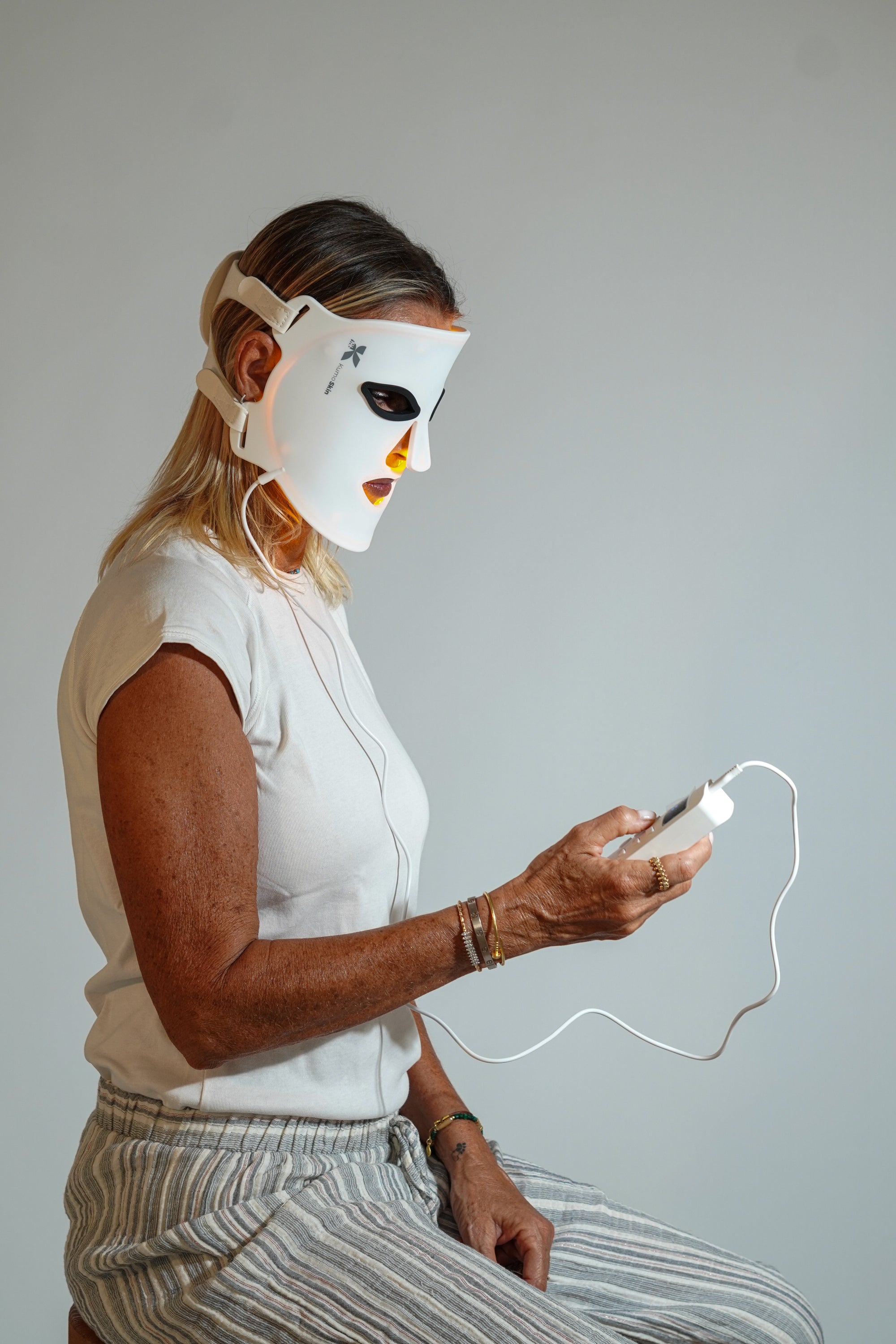
An LED facial mask is a device that emits light of different colors (usually red, blue, amber, and sometimes near-infrared) onto the skin of the face. It does not heat or burn: it works at low intensity and without UV radiation, so it does not produce a tan or direct sun damage. ( my.clevelandclinic.org )
Facial red light
Bring your skin back to life
★★★★★ 4,8/5 · rated by verified customers
The KumoSkin LED mask helps repair and calm your skin in short sessions at home.
- 250 LEDs in flexible medical silicone
- Red light to boost collagen and glow
- 4 lights: red, infrared, blue and yellow
€299,00€429,00
−10% on your 1st order when you subscribe to the newsletter

This technology is called photobiomodulation or LED light therapy . The light penetrates to different depths depending on the color and is absorbed by cellular structures such as mitochondria. This can modulate processes such as inflammation, collagen production, or the activity of certain bacteria involved in acne. ( pubmed.ncbi.nlm.nih.gov )
Unlike medical lasers, LED masks use lower intensities and less concentrated beams of light. This makes them safer for home use, but it also means that the effects are usually gradual and subtle , not dramatic overnight changes. ( aad.org )
Personalized protocol · included with your purchase
Want us to tell you how to use it in your case?
With your purchase, our experts prepare the ideal LED protocol for your skin type and goal (acne, wrinkles, dark spots...).
Message us on WhatsAppOur experts reply · no obligation
Potential benefits of the LED facial mask (according to science)
Mild to moderate acne
Devices that combine blue and red light are very popular for acne-prone skin.
- Blue light acts on the outermost layers of the skin and may help reduce the amount of acne-associated bacteria (such as Cutibacterium acnes ). ( my.clevelandclinic.org )
- Red light penetrates deeper and helps to modulate inflammation and promote tissue repair.
Clinical trials have shown improvements in mild to moderate acne after several weeks of regular treatment, both in the clinic and with home devices, although the intensity of professional treatments is usually greater. ( my.clevelandclinic.org )
It's important to understand that light therapy is not a substitute for medical treatment when there is severe acne, cystic acne, or deep scarring. In those cases, light therapy can be a complement, not the primary treatment.
on your first order when you join the newsletter
We send you the code instantly. No spam.
Signs of aging and skin texture
Red light and near-infrared light are the most studied for skin rejuvenation. Several studies have found: ( pubmed.ncbi.nlm.nih.gov )
- Subtle improvement of fine lines and wrinkles .
- More uniform texture and a softer skin feel.
- Increased markers associated with collagen synthesis in the dermis.
For example, clinical studies published in cosmetic surgery and dermatology journals have shown visible improvements after several weekly sessions for 4–8 weeks, with good tolerance and few adverse effects. ( aad.org )
However, dermatological societies themselves warn that the results of at-home devices are usually moderate : they help, but do not replace other medical or cosmetic treatments when very marked changes are sought. ( aad.org )
Inflammation, redness, and skin recovery
Photobiomodulation is also being investigated for: ( pubmed.ncbi.nlm.nih.gov )
- Promote the healing of superficial wounds.
- Reduce inflammation after dermatological procedures.
- Support tissue recovery in combination with other treatments.
In clinical practice, many dermatologists use red or infrared light as a post-laser or post-peel adjunct to reduce redness and accelerate recovery, and some recommend LED masks for home use to maintain results. Even so, the evidence continues to evolve, and not all potential effects are fully established.
Safety, risks and contraindications of the LED face mask
Is facial light therapy safe?
Most dermatological guidelines agree that, within appropriate parameters , LED facial masks are safe in the short term for most people:
- They do not use UV radiation.
- They do not produce significant thermal damage.
- The described side effects are usually mild (transient redness, slight tightness, temporary stinging). ( my.clevelandclinic.org )
A 2023 systematic review on the oncological safety of photobiomodulation in skin rejuvenation found no evidence that this type of light, when applied correctly, increases the risk of developing skin cancer or reactivating previous tumors. ( pmc.ncbi.nlm.nih.gov )
Even so, there is a lack of very long-term data for devices used at home for years, so the prudent recommendation is: use only quality equipment, respect the maximum times and consult if you have pre-existing conditions.
People who should take extra precautions (or avoid them)
Before starting with an LED facial mask, it is crucial to speak with a healthcare professional if: ( my.clevelandclinic.org )
- You take photosensitizing medications (certain antibiotics, isotretinoin, some psychotropic drugs, etc.).
- You use cosmetics that increase sensitivity to light: retinoids, acids (AHA/BHA), benzoyl peroxide, etc.
- You have a history of melasma or marked hyperpigmentation: heat and some types of light can worsen these spots in predisposed skin.
- Have you had skin cancer , precancerous lesions, or serious eye diseases?
- You suffer from active inflammatory skin diseases (highly reactive rosacea, severe dermatitis, flare-ups of psoriasis, etc.).
In many of these cases, the LED mask is not totally contraindicated, but it may require different parameters, greater distances, lower frequency, or simply a recommendation not to use it.
Eye protection and responsible use
- Always protect your eyes with opaque glasses or those included with the device. Direct and repeated exposure to bright lights can be uncomfortable and potentially harmful to the retina. ( my.clevelandclinic.org )
- Do not exceed the times or frequency recommended by the manufacturer "because it will be more effective that way." With photobiomodulation, more is not always better .
- Stop use and consult a doctor if symptoms such as a sudden worsening of spots, eye pain, severe headaches, persistent irritation, or outbreaks of very inflammatory acne appear.
How to use an LED face mask at home step by step
Before you begin: choose wisely and prepare your skin
-
Choose a reliable device
- Verify that it comes from a reputable manufacturer and complies with regulations (CE marking, safety references, clear manual).
- Whenever possible, prioritize devices with health certifications (e.g., “FDA cleared” for specific uses such as wrinkles or acne). ( my.clevelandclinic.org ) -
Do a small tolerance test
- Shorter first session (for example, half the recommended time).
- Observe your skin in the following 24–48 hours to rule out severe irritation or breakouts. -
Prepare your face
- Remove makeup and cleanse with a gentle cleanser.
- Avoid applying highly irritating products beforehand (retinoids, strong chemical exfoliants).
- It dries the skin completely.
Basic usage routine
Although you should always follow the specific instructions for your mask, a typical routine might be:
- Position the mask and eye protection comfortably, whether lying down or sitting up.
- Select the program (for example, red light for signs of aging, red/blue combination for mild acne).
- Suggested duration: Many home devices recommend sessions of between 10 and 20 minutes, 3 to 5 times per week. ( my.clevelandclinic.org )
- When finished, apply your skincare routine : hydrating or soothing serum, barrier-friendly cream and sunscreen if it's daytime.
- Consistency: results usually begin to be seen after several weeks of regular use, not in 2-3 days.
Common mistakes to avoid
- Use the mask over makeup or on dirty skin.
- Do not use protective eyewear when the manufacturer indicates it is required.
- Combining it on the same day with aggressive peels or irritating treatments without professional supervision.
- Falling asleep with the mask on or greatly exceeding the maximum time.
- Expecting it to solve complex problems on its own (severe acne, intense melasma, marked sagging).
Integrate the LED facial mask into a comprehensive wellness routine
The skin does not exist in isolation from the rest of the body. A facial light therapy routine works best when integrated into a comprehensive approach to recovery and wellness .
At KUMO , LED light therapy is complemented by muscle and circulatory recovery solutions to care for both performance and appearance:
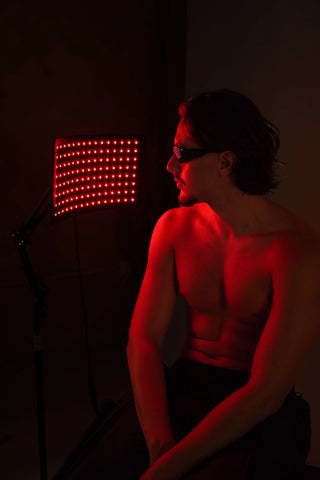
- Red light therapy technologies for the body and face may help modulate inflammation and support recovery after exercise. ( pubmed.ncbi.nlm.nih.gov )
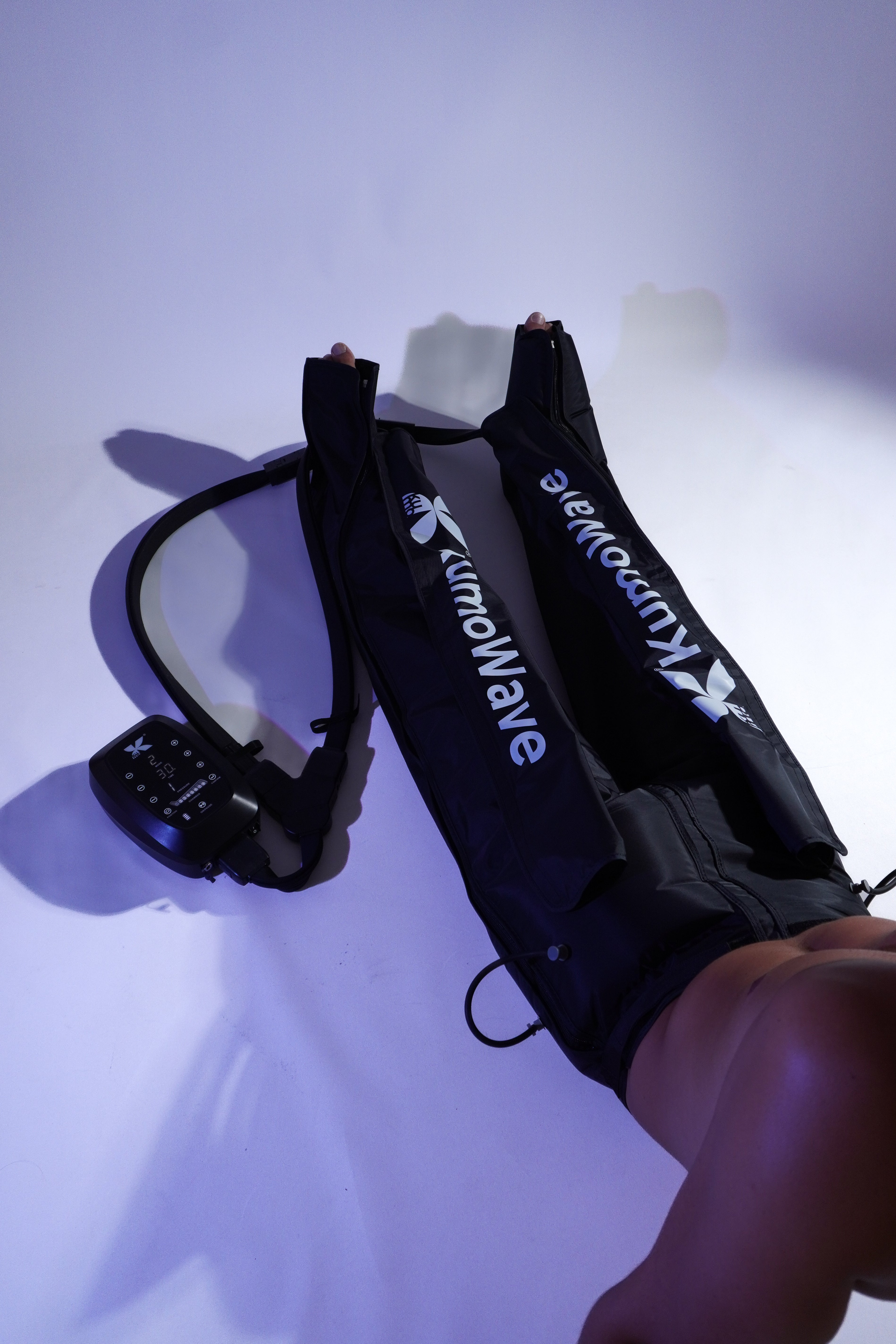
- Compression therapy boots promote venous return and a feeling of lightness in the legs after intense workouts or long days on your feet. You can discover them in the compression therapy collection .
- A device like the KUMOPULSE Air massage gun helps release deep muscle tension, which has a positive impact on rest, posture, and ultimately, skin health.
If you combine an LED facial mask (to work from the outside) with good rest, adequate hydration, antioxidant-rich nutrition, and muscle recovery tools, you will be addressing your well-being from several angles at once.
Table: LED light colors and common uses in facial care
Colors of light and their main purposes
| Light color | Approximate wavelength* | Relative penetration | Main objectives | Typical reported benefits | Key precautions |
|---|---|---|---|---|---|
| Blue | 405–470 nm | Superficial | Mild acne, bacterial control | Reduction of mild inflammatory flare-ups, less visible oiliness | May dry out sensitive skin; possible theoretical risk of long-term oxidative stress, use sparingly. ( my.clevelandclinic.org ) |
| Red | 620–700 nm | Average | Signs of aging, inflammation | Subtle improvement of fine lines and texture, for brighter skin | May generate mild heat; caution on skin with melasma or heat hypersensitivity. ( aad.org ) |
| Amber / Yellow | 570–600 nm | Superficial-medium | Redness, dull complexion | Skin appears more even and calm (limited evidence) | It is not usually irritating, but follow the recommended times. |
| Near infrared | 800–900+ nm | Deep | Tissue recovery, support for collagen synthesis | Potential support for regeneration and recovery, especially when combined with red light | Avoid use in cases of cancer history without medical supervision; always wear glasses. ( pubmed.ncbi.nlm.nih.gov ) |
*Approximate ranges, may vary depending on the device.
How to choose a quality LED face mask
When investing in an LED mask for home use, consider these points:
- Safety first
- Visible certifications (CE marking, electrical regulations, detailed manual).
- Clarity regarding contraindications and the use of glasses.
- Technical transparency
- Indication of wavelengths (in nanometers) and recommended mode of use.
- Specific programs (anti-aging, acne, calming, etc.) with predefined times.
- Comfortable and practical design
- Reasonable weight, stable grip, homogeneous distribution of LEDs.
- Automatic timer and safety shut-off.
- Support and warranty
- Possibility of contacting the manufacturer or distributor if any questions arise.
- Clear warranty policy.
- Consistency with your goals
- If your priority is mild acne, prioritize settings with blue + red light.
- If you're primarily looking for improved texture and brightness, combinations of red, amber, and infrared light might be more interesting.
Frequently asked questions about the LED face mask
How long does it take to see results with an LED facial mask?
Most studies and clinical recommendations agree that the results of light therapy are progressive . It is not a "before and after" treatment in a single session. Clinical protocols typically recommend 1–2 sessions per week for 4–8 weeks before clear improvements in skin texture or mild acne can be assessed. ( my.clevelandclinic.org )
With less powerful home devices, it's common to need several weeks of consistent use , for example, 3–5 times a week. Skin may appear somewhat brighter in a few days, but fine lines, redness, or breakouts take longer to show results.
Is the LED facial mask safe for all skin types?
In principle, LED phototherapy is considered safe for all skin types because it does not use UV rays and operates at low energy levels. ( my.clevelandclinic.org ) However, this does not mean it is suitable in all situations. Highly reactive skin, with rosacea, active dermatitis, or melasma, may respond unpredictably, especially to red and infrared light, which generate some heat.
Furthermore, if you take medication or use photosensitizing cosmetics, the risk of irritation increases. In these cases, it's advisable to consult a dermatologist and, if authorized, start with shorter sessions, less frequently, and closely monitor for any changes.
Can I use the LED face mask every day?
It depends on the device and your skin. Some at-home protocols recommend short daily sessions for a few weeks; others, 3–5 times per week. ( my.clevelandclinic.org ) Using the mask for longer or more often than directed does not accelerate results and may increase the risk of irritation, dryness, or worsening of certain blemishes.
The general rule is: follow the manufacturer's instructions , observe how your skin reacts, and reduce frequency if you notice persistent redness, itching, or excessive sensitivity. If in doubt, prioritize caution and seek professional advice.
What skincare products should be combined with an LED mask?
Ideally, you should opt for a simple, non-irritating routine around your LED sessions. Before use, cleanse your face with a gentle gel and avoid applying retinoids, harsh exfoliating acids, or very drying treatments to minimize sensitivity. After the session, your skin usually responds very well to hydrating, soothing, and repairing products (for example, with hyaluronic acid, ceramides, panthenol, or niacinamide in low concentrations).
If you use strong depigmenting or anti-acne treatments, it is best to introduce the LED mask gradually and, if possible, under the supervision of a dermatologist to adjust times and frequencies.
Does an LED face mask work for blemishes or melasma?
This is where caution is especially important. Some people notice a more even skin tone with regular use of red or amber light, but in the specific case of melasma , the situation is complex: heat and certain wavelengths can further activate melanocytes and worsen the spots in predisposed skin, according to various dermatologists. ( harpersbazaar.com )
If you have melasma, marked hyperpigmentation, or a tendency to develop dark spots easily, it's best not to use an LED facial mask without prior evaluation . The treatment of choice remains strict sun protection and, if necessary, depigmenting agents and highly controlled procedures performed in a clinical setting.
So what now?
If you want to integrate light therapy into your recovery and wellness routine, you can explore KUMO's LED light therapy collection , designed to combine aesthetics, technology, and performance. Complementing your care with tools like pressotherapy or the KUMOPULSE Air massage gun will allow you to address skin, muscles, and circulation.
And if you have any questions about which device best suits your goals or how to integrate it into your current routine, you can contact the team through the contact page at kumobalance.com . It's always advisable to discuss any specific skin conditions with your dermatologist before starting.

Facial red light
KumoSkin Mask – LED Facial Mask
★★★★★ 4,8/5 · rated by verified customers
- 250 LEDs in flexible medical silicone
- Red light to boost collagen and glow
- 4 lights: red, infrared, blue and yellow
€299,00€429,00· pay in installments with seQura or Klarna