
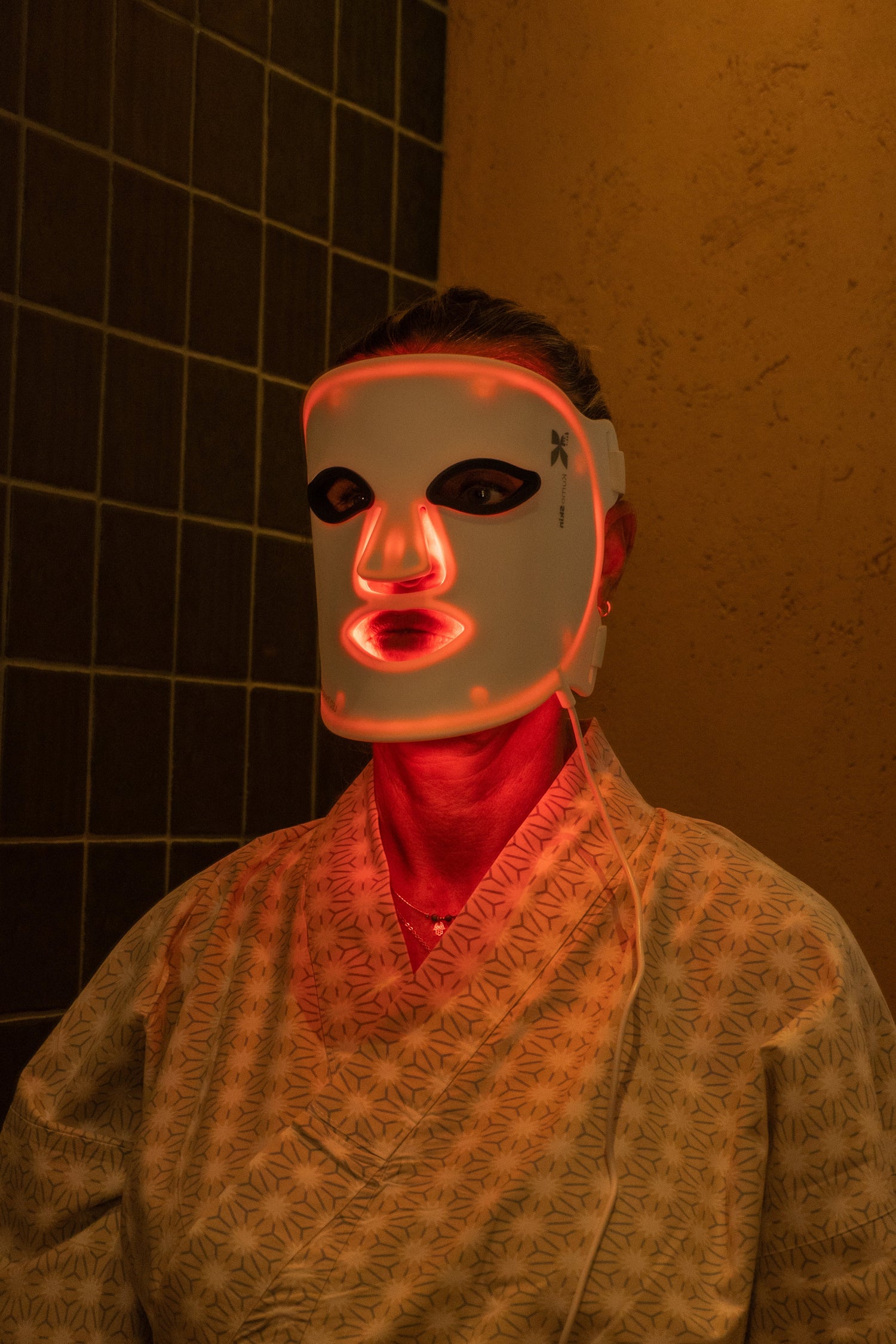
LED facial mask: what it is, how it works, and when you'll see results. If you're looking for a clear guide on how to use an LED mask for skincare, here you'll find its mechanism, benefits, safety, and a practical routine to take advantage of it at home.
Coming soon
- It emits visible and/or infrared light to activate cellular processes (photobiomodulation) without heat or pain.
- Colors and targets: red/NIR (collagen, repair), blue (acne), amber (tone and brightness).
- Typical routine: 10–20 minutes, 3–5 times per week, for 4–8 weeks to see visible changes.
- Safe for most; avoid if you use photosensitizing medications or have photosensitivity. Eye protection is mandatory.
- Boost your recovery by combining it with habits and tools such as pressure therapy or massage.
| Light color | Approx. wavelength | Main objective | Typical results |
|---|---|---|---|
| Red | 620–660 nm | Stimulate collagen and elastin | Firmness, fine wrinkles, brightness |
| Near Infrared (NIR) | 800–880 nm | Deep repair and anti-inflammation | Tissue recovery, comfort |
| Blue | 405–470 nm | Antibacterial action (Cutibacterium acnes) | Fewer breakouts, cleaner pores |
| Amber | 580–600 nm | Tone and luminosity | Even complexion, calm |
What is an LED facial mask and how does it work?
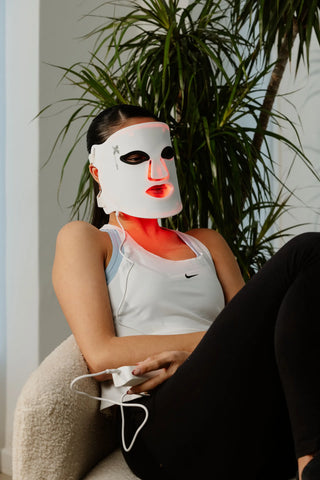
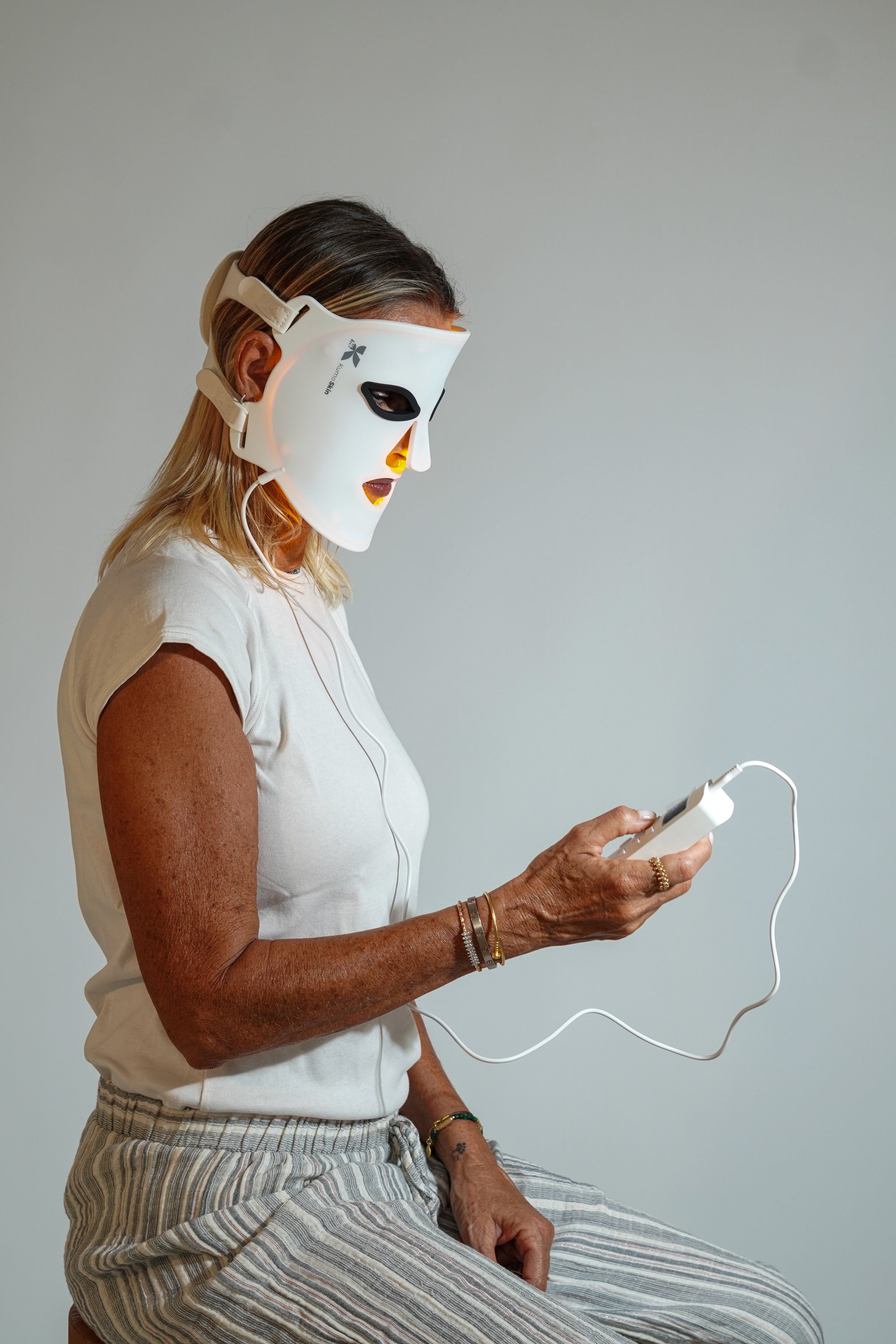
An LED facial mask is a phototherapy device that applies specific wavelengths to the skin to trigger beneficial biological responses. Unlike lasers, it does not ablate or heat tissue; it works with low-power light to modulate cellular activity.
Red & infrared light
Recover faster, at home
★★★★★ 4,8/5 · rated by verified customers
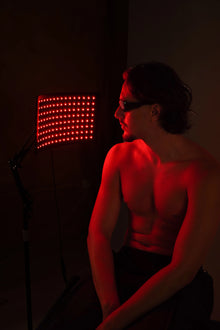
The KumoLux panel supports muscle recovery with full-body red and infrared light.
- 660 nm red + 850 nm infrared light
- Full-body muscle recovery
- Clinically validated biohacking protocols
€399,00€499,00
−10% on your 1st order when you subscribe to the newsletter

In photobiomodulation, the right light in the right dose “instructs” the cell to produce more energy and regulate inflammation.
Photobiomodulation: from LED to cell
- Photons are absorbed by chromophores such as cytochrome c oxidase in mitochondria.
- This can increase ATP, modulate reactive oxygen species, and signal pathways that promote repair and anti-inflammation.
- A 2014 scientific review details these mechanisms and their application in skin and soft tissue. NCBI/PMC .
Colors and targets: red, NIR, blue and amber
- Red (620–660 nm): Stimulates fibroblasts; useful for fine lines, texture, and radiance.
- Near-infrared (800–880 nm): Penetrates deeper; supports tissue recovery and soothes.
- Blue (405–470 nm): Reduces acne-associated bacteria; helps control breakouts.
- Amber (580–600 nm): Improves tone and dull appearance.
If you're interested in making the leap to a home light routine, explore our selection of equipment at LED light therapy .
Personalized protocol · included with your purchase
Want us to tell you how to use it in your case?
With your purchase, our experts set up your red and infrared light sessions for your sport and goal.
Message us on WhatsAppOur experts reply · no obligation
Expected benefits and deadlines
Firmer and brighter skin
- By promoting collagen and elastin, the skin can look smoother and have better texture.
- Gradual improvement: Many people notice more “glow” in 2–3 weeks and changes in firmness starting in 6–8 weeks, with consistency.
Acne and inflammation
- Blue light helps reduce bacterial load in the pore, while red light calms inflammation.
- The American Academy of Dermatology describes light therapy as a useful adjunct in mild to moderate acne AAD protocols.
Recovery and rest
- Red light in the evening can contribute to relaxation without interfering with sleep, unlike blue light.
- At KUMO, we are committed to integrating phototherapy with daily recovery habits; learn about our philosophy at KUMO .
How to use it correctly at home
Frequency, time and routine
- Cleanse and dry your face; if you use serums, use simple, non-photosensitizing formulas.
- Put on the mask and select the program (red/NIR for anti-aging; blue for acne).
- 10–20 minutes per session, 3–5 times per week. Maintain the plan for 4–8 weeks.
- Finish with moisturizer and sunscreen in the morning.
Tip: Integrate short sessions after your workout and accompany them with an active recovery session. pressotherapy can complement circulation and overall comfort.
Safety: eyes, photosensitivity and contraindications
- Always wear eye protection, especially in blue light.
- Avoid it if you take photosensitizing drugs (e.g., certain antibiotics), have photosensitive disorders, photosensitive migraines, or photosensitive epilepsy. Consult your doctor.
- If you are undergoing dermatological treatments (oral retinoids, intensive peels), wait for professional advice.
- Cleveland Clinic explains the benefits and risks of red light and emphasizes the importance of proper dosimetry Cleveland Clinic.
Who should benefit from it and who should avoid it?
- Recommended for skin with a dull texture, fine lines, mild redness, or maintenance between professional treatments.
- Useful for skin with mild-moderate acne as support for a complete regimen.
- Caution or avoid: pregnancy under medical advice, photosensitivity disorders, photosensitizing medication, active eye diseases without protection.
If you have specific questions about your case, write to us from the page contact .
Home use vs. professional treatments
- At home: lower irradiance and more frequent sessions; cumulative approach and maintenance.
- Clinical: Higher-performance equipment and supervised protocols; faster results, but with higher costs and schedules.
- In both cases, consistency and well-cared for skin (cleansing, moisturizing, sun protection) make the difference.
Integrating light with other KUMO recovery tools
Synergies with pressotherapy
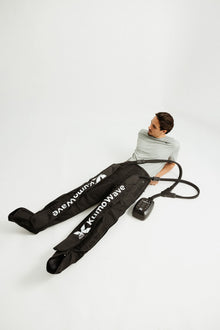
- After a training session, combine 15 minutes of red/NIR light with 20–30 minutes of pressure therapy to promote circulation and leg comfort.
- Find out how to activate your recovery with our pressotherapy .
Massage gun and light
- Alternate myofascial release with the gun to relieve tension, then apply LED to soothe and support repair.
- Try the KumoPulse Air massage gun as a complement to your routine.
How to choose a good LED mask
Key parameters: what matters
- Clear wavelengths (e.g., 630–660 nm and 810–850 nm).
- Reasonable and safe irradiance for home use; look for transparent specifications.
- Homogeneous coverage, good fit and comfort to promote adherence.
- Differentiated modes (red, NIR, blue) and timer.
Marketing signals to avoid
- “Miracle” promises in a few days or without the need for proof.
- Lack of technical data (wavelengths) or basic certifications for consumption.
- Excessive intensities without eye safety information.
Maintenance and cleaning
- Clean after each use with a soft cloth and non-abrasive solution; avoid strong alcohols.
- Store in a dry place protected from dust.
- Check straps and charging ports periodically.
- Keeping your device in good condition ensures long-term performance and safety.
Sources and scientific endorsement
- Review on photobiomodulation and skin: NCBI/PMC
- Red Light Therapy: Benefits and Risks: Cleveland Clinic
- Light therapy for acne: scope and expectations: American Academy of Dermatology
FAQ
How long does it take to see results with an LED mask?
With consistency, many people notice more radiance in 2–3 weeks and improvements in texture/firmness starting in 6–8 weeks. Acne response varies; some see fewer breakouts in 2–4 weeks with blue and red light. The key is adherence (3–5 times/week, 10–20 minutes) and following with gentle cleansing, moisturizing, and sun protection. If you don't see changes after 8–12 weeks, review your technique and consistency, or consult a dermatologist to adjust your routine.
on your first order when you join the newsletter
We send you the code instantly. No spam.
Does the LED mask replace creams or other treatments?
No, it's a complement. Photobiomodulation can enhance the effectiveness of topical active ingredients (such as niacinamide or hyaluronic acid) and help with maintenance between professional treatments. Even so, the foundation remains a simple, consistent routine: cleansing, moisturizing, sunscreen, and, if appropriate, active ingredients specific to your needs. Think of the mask as an additional "layer" that optimizes skin response and recovery.
Is it safe for sensitive skin or rosacea?
In general, red and NIR light are well tolerated and have a calming effect, but highly reactive skin should start with shorter, less frequent sessions and observe the response. Avoid blue light if it irritates you or if you can't wear adequate eye protection. For rosacea, introduce stimuli gradually and consult a doctor if you are experiencing an active flare. If any flare worsens, discontinue and seek professional advice.
Can I use the LED mask every day?
It depends on the device and your tolerance. Many users achieve good results with 3–5 weekly sessions. Daily use at low doses may be acceptable, but it's not necessarily superior. Prioritize following the recommended dosage, keeping your skin hydrated, and not exceeding the session time. If persistent redness or eye discomfort occurs, reduce the frequency and improve protection.
Can it be combined with exercise and muscle recovery?
Yes. Red/NIR light can be used after training to promote relaxation and comfort. Combining it with pressure therapy or percussive massage helps create a complete recovery routine, in line with the approach of KUMO to integrate aesthetics, technology and performance into everyday life.
To take into account
- The LED mask works by photobiomodulation: it doesn't hurt, it doesn't heat up, and it requires consistency.
- Red/NIR for firmness and calmness; blue for acne; amber for tone and radiance.
- Guideline routine: 10–20 minutes, 3–5 times per week, 4–8 weeks.
- Safety first: eye protection and caution with photosensitizing drugs.
- Integrate light into your recovery ecosystem with tools like LED light therapy , pressotherapy either KumoPulse Air . Take the first step towards a smart skincare and recovery routine with KUMO .

Red & infrared light
KumoLux Panel – Red and Infrared LED Panel
★★★★★ 4,8/5 · rated by verified customers
- 660 nm red + 850 nm infrared light
- Full-body muscle recovery
- Clinically validated biohacking protocols
€399,00€499,00· pay in installments with seQura or Klarna