
Yes, they can be combined.
The key is not to do everything on the same day, but to respect the skin's actual condition: after a chemical peel, the area may remain red, sensitive, and flaky for several days, while red LED therapy is usually well-tolerated, but it can irritate if the skin barrier is still reactive or if you are taking photosensitizing drugs. (aad.org)
Red & infrared light
Recover faster, at home
★★★★★ 4,8/5 · rated by verified customers
The KumoLux panel supports muscle recovery with full-body red and infrared light.
- 660 nm red + 850 nm infrared light
- Full-body muscle recovery
- Clinically validated biohacking protocols
€399,00€499,00
−10% on your 1st order when you subscribe to the newsletter

In practice, the most prudent combination is usually: peel, short recovery, and then LED once the skin is comfortable again. If the peel was medium or deep, the waiting period ceases to be an aesthetic concern and becomes a matter of safety.
What happens to the skin after a chemical peel
A chemical peel removes superficial layers of the skin to improve texture, blemishes, or imperfections, but post-treatment is not neutral: the skin may become more fragile, with redness, tightness, scabs, or flaking. The American Academy of Dermatology and the Mayo Clinic describe that superficial peels typically heal in a few days, while medium and deep peels require more time and specific care, including hydration and photoprotection.
Personalized protocol · included with your purchase
Want us to tell you how to use it in your case?
With your purchase, our experts set up your red and infrared light sessions for your sport and goal.
Message us on WhatsAppOur experts reply · no obligation
Practical table according to peel depth
| Peel type | What the skin usually experiences | Prudent window to resume LED | What to avoid |
|---|---|---|---|
| Superficial | Redness and flaking for 3 to 7 days; sometimes makeup can be reapplied sooner. | When there is no stinging or active flaking; in practice, several days and always according to your skin's tolerance. | Friction, acids, exfoliants, and intense heat while the skin is still reactive. |
| Medium | Redness, swelling, tightness, and scabs with approximate healing of 7 to 14 days. | Only when the skin is closed and without significant discomfort; it is most prudent to seek professional approval. | Sun exposure, friction, and any session that increases heat or redness. |
| Deep | Recovery of several weeks, with particularly vulnerable skin and intensive care. | This is not a combination for home use; the reintroduction of light should be left to the professional who performed the procedure. | Using an LED mask on your own on freshly treated or still open skin. |
These windows are a prudent guide, not a universal rule. The useful idea is simple: if the skin is still burning, open, oozing, or actively flaking, it is not yet time to add LED.
How to combine them without irritating
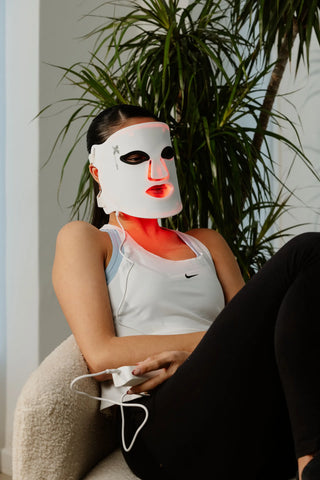
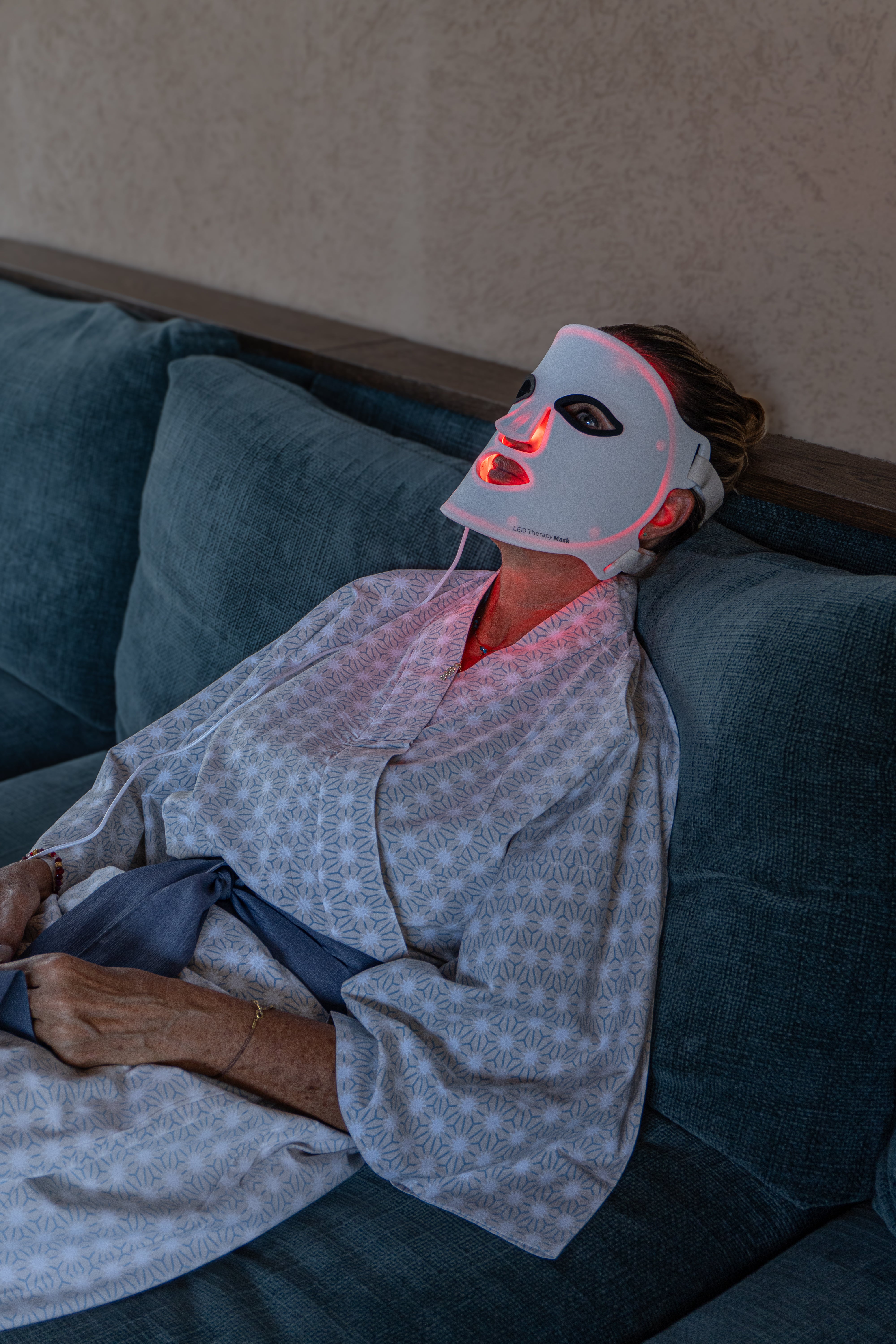
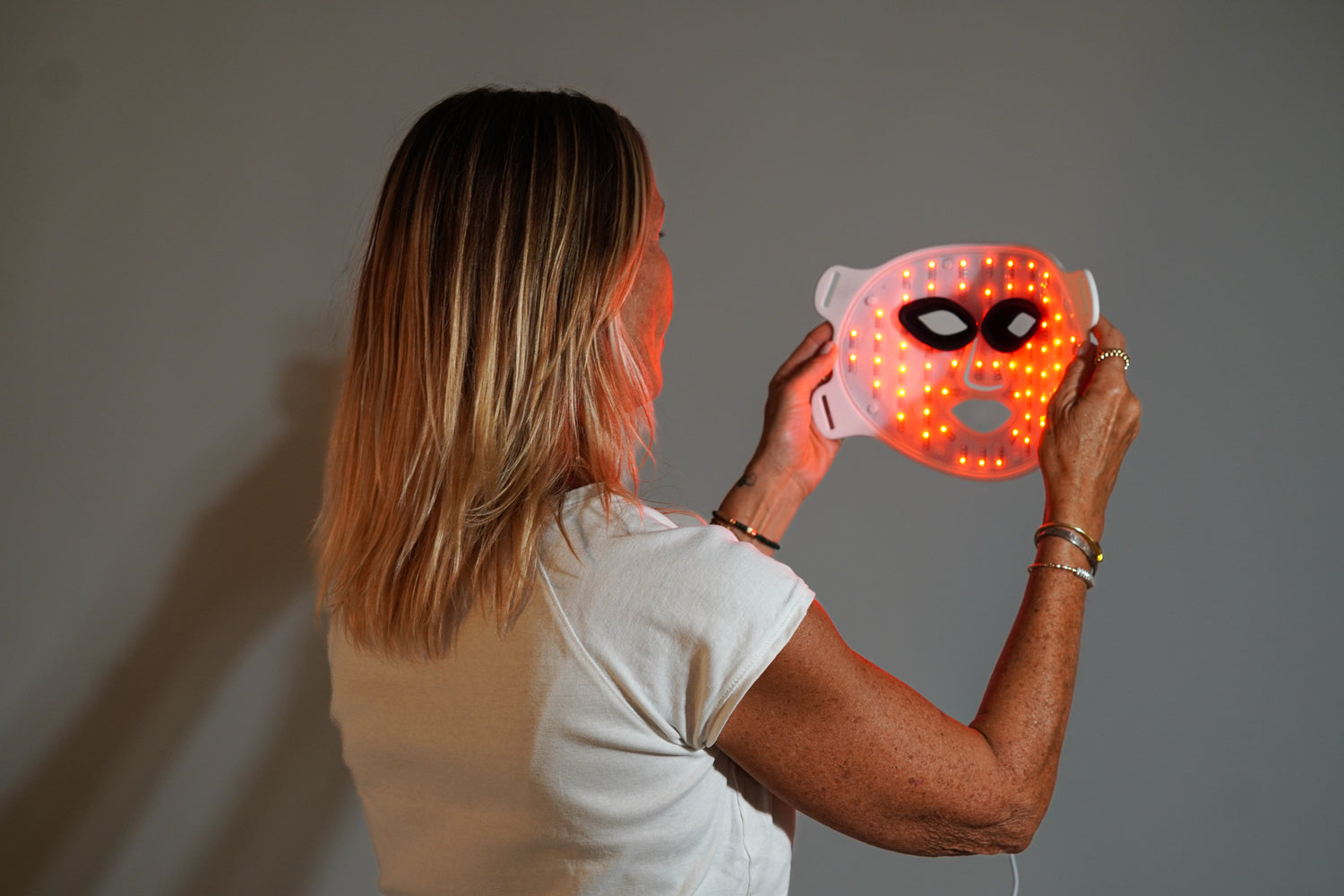
If you're using an LED mask at home, red light is usually the most sensible starting point because the American Academy of Dermatology describes it as a non-invasive therapy with usually mild side effects; even so, it can cause temporary irritation and is not advisable if your treatment or medication increases light sensitivity. (aad.org)
- Wait until burning, intense redness, and active flaking disappear before turning on the LED.
- If choosing between modes, start with the gentlest and prioritize a short, comfortable session, not a long session to "accelerate" results.
- Do not combine peels, retinoids, AHA/BHA, or exfoliants on the same day if your skin is already sensitized.
- When the skin is closed, return to a simple moisturizer and daily photoprotection, because post-peel increases the risk of dark spots if the skin is not well protected.
If you want a more organized sequence for normal facial care nights, the step-by-step LED mask routine helps you fit the session without improvising. And, if your skin tends to react easily, the guide on contraindications and safety in facial LED masks serves as a preliminary filter before reintroducing any device at home.
on your first order when you join the newsletter
We send you the code instantly. No spam.
If you also use retinoids at night, alternating them is usually gentler on freshly exfoliated skin than adding two stimuli at once; to organize that schedule, it's worth reviewing how to alternate LED masks and retinoids.
Who should exercise extreme caution
There are two groups that warrant extra caution. The first are people taking medications that increase photosensitivity or who have diseases that worsen with light, as the AAD warns. The second are those with darker skin or a tendency to hyperpigmentation, because visible light can favor more intense and lasting dark spots in some people; in these cases, the dermatologist's experience matters much more than any generic protocol. If you want to review warning signs before deciding, the safety and contraindications guide will serve as a reference.
When LED therapy can make sense
Photobiomodulation is not a theoretical idea: in a 2024 study with 25 volunteers, a three-wavelength LED device (465, 640, and 880 nm) was applied after superficial ablative resurfacing, starting on the same day of the procedure. Evaluators found no statistically significant differences in pain, discomfort, or itching, although some subjects appeared to heal sooner. This does not prove that a home LED mask should be used over any peel, but it does suggest that LED integrates better when the skin is clean, closed, and under a controlled context. (link.springer.com)
Translated into a real routine: LED can be a good recovery companion, not an excuse to accelerate exfoliation. First, the skin barrier is respected; then, it is decided if light adds value.
Common mistakes that increase irritation
- Using the LED mask just when the skin is still stinging or open.
- Reintroducing exfoliants, retinoids, or acids too soon after the peel.
- Trying to compensate with longer or more intense sessions, thinking that this will lead to better results.
- Scratching, picking at scabs, or rubbing the treated area, as this increases the risk of infection.
- Forgetting photoprotection once the skin has closed, which increases the risk of post-inflammatory hyperpigmentation.
FAQ about LED mask and chemical peels
Can an LED mask be used right after a chemical peel?
It's not the most prudent approach for home use. After a superficial peel, the skin can remain red and flaky for several days, and medium or deep peels require more recovery time. Additionally, red LED is generally well-tolerated, but it can cause temporary irritation if the skin barrier is still reactive. If your skin feels hot, tight, or is open, wait.
Is it safe to combine chemical peels with LED therapy in the same session?
At home, I would not recommend it as a general rule. In clinical settings, combinations of light and resurfacing procedures are studied: in 2024, a trial with 25 volunteers evaluated a 465, 640, and 880 nm LED after superficial ablative resurfacing, with good general tolerance and no significant differences in pain, discomfort, or itching. This suggests there may be a place for LED in controlled protocols, but it does not make every home session a good idea.
How long should I wait after a chemical peel to use LED?
As a practical rule, wait until stinging and active flaking disappear. This usually means 3 to 7 days after a superficial peel, 7 to 14 days after a medium peel, and more than 14 days after a deep peel; with medium or deep peels, it is safest to seek professional approval before resuming LED. Depth matters more than trends.
What types of peels are compatible with red or blue LED light in a facial routine?
Superficial peels are the easiest to combine with a light routine, as recovery is usually short. If you have to choose, red light is the most conservative option when reintroducing LED, while I would reserve blue light for an anti-acne goal and only when the skin is no longer sensitive. If you also have a tendency to hyperpigmentation or take photosensitizing medication, you need to refine the decision much more.
Can LED light irritate the skin after a chemical peel and how can this be prevented?
Yes, it can irritate if the skin is still reactive. The best prevention is simple: wait until the stinging and flaking phase ends, use a gentle mode, avoid combining it with acids or retinoids on the same day, and return to basic hydration with photoprotection once the barrier is closed. If itching, swelling, or burning occurs, stop the session and consult a professional.
What now?
If you want to integrate facial LED light into a more complete routine, start with a clear reference and proceed calmly: explore the KumoSkin Mask facial LED mask and review the Kumo Balance homepage to see how it fits into a home wellness protocol.

Red & infrared light
KumoLux Panel – Red and Infrared LED Panel
★★★★★ 4,8/5 · rated by verified customers
- 660 nm red + 850 nm infrared light
- Full-body muscle recovery
- Clinically validated biohacking protocols
€399,00€499,00· pay in installments with seQura or Klarna