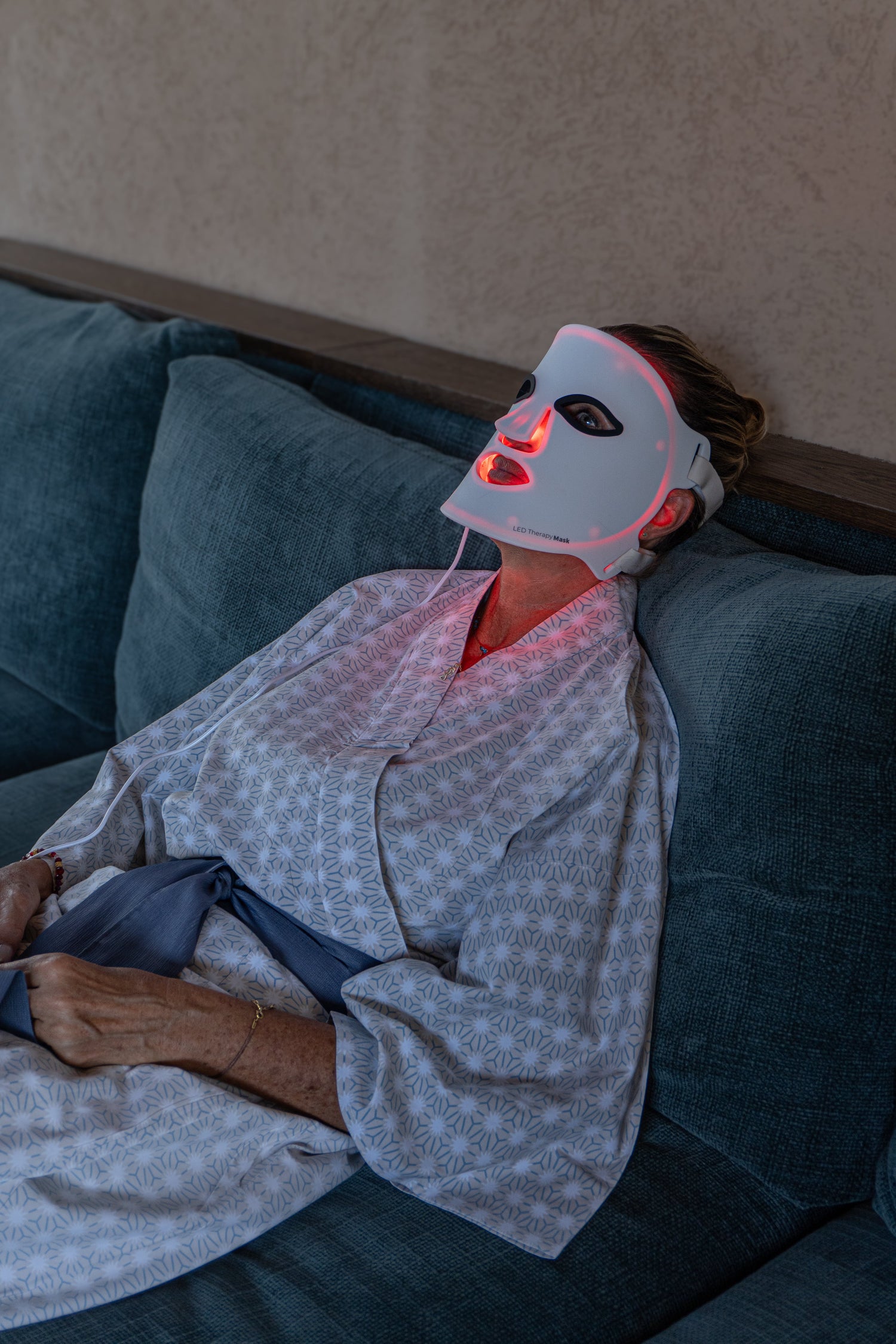

Not all LED masks feel the same.
The difference between a rigid and a flexible one is not limited to the casing: it affects the fit, the actual proximity of the LEDs, and how easy it will be to use regularly. In photobiomodulation, the result depends much more on wavelength, irradiance, dose, and frequency than on the outer shape alone. (pubmed.ncbi.nlm.nih.gov)
Red & infrared light
Recover faster, at home
★★★★★ 4,8/5 · rated by verified customers
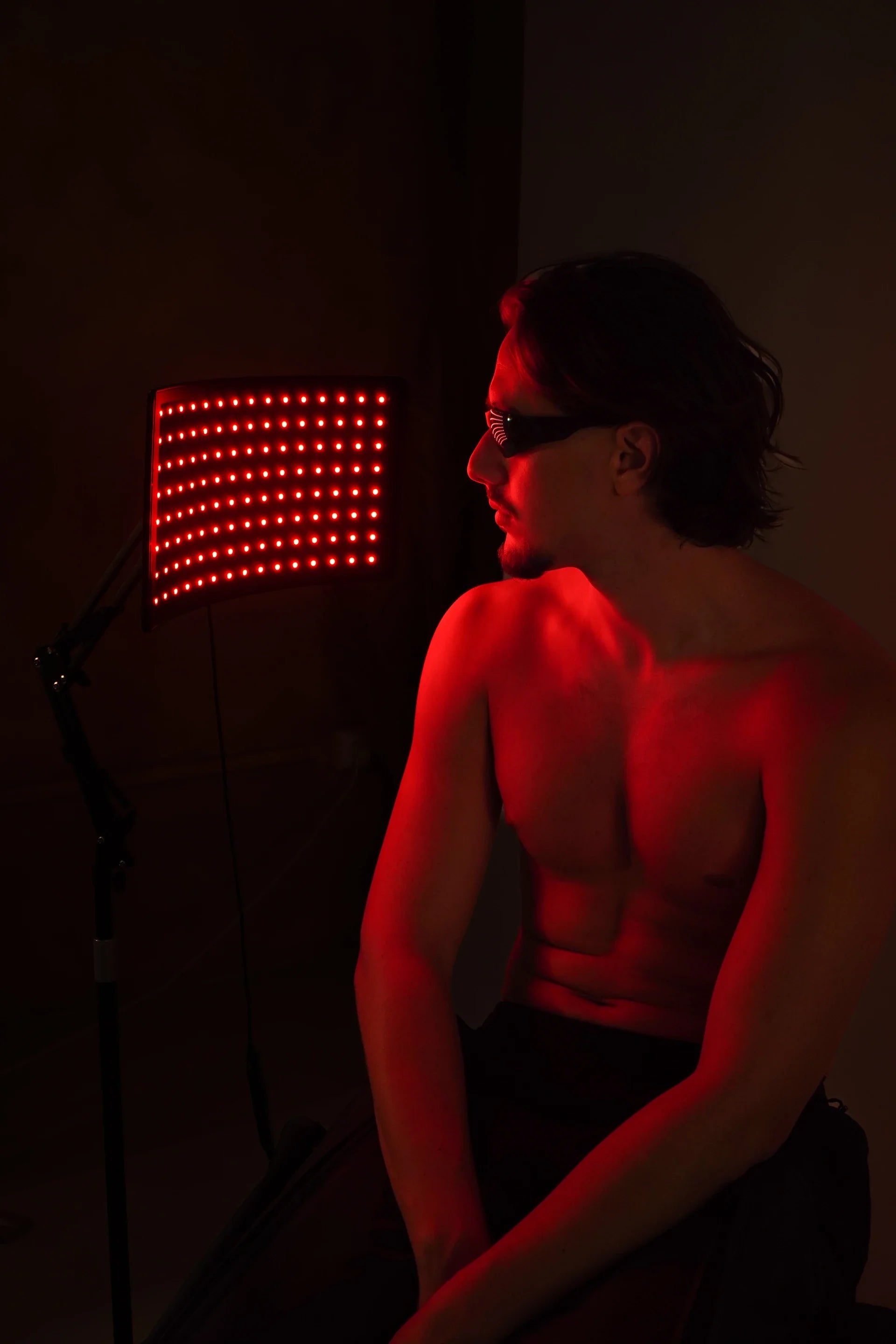
The KumoLux panel supports muscle recovery with full-body red and infrared light.
- 660 nm red + 850 nm infrared light
- Full-body muscle recovery
- Clinically validated biohacking protocols
€399,00€499,00
−10% on your 1st order when you subscribe to the newsletter

Therefore, choosing wisely is not about finding "the best" in abstract, but the one that fits your face, your contact tolerance, and your cosmetic or wellness goal.
What really changes between a rigid and a flexible mask?
In a flexible model, the mask is usually made of medical silicone and adapts better to the facial contour; the FDA describes, for example, home-use devices with flexible silicone masks, integrated LEDs, and adjustable straps. OTC devices also feature combinations of red, blue, and near-infrared light designed for wrinkles, acne, or topical heat. (accessdata.fda.gov)
Personalized protocol · included with your purchase
Want us to tell you how to use it in your case?
With your purchase, our experts set up your red and infrared light sessions for your sport and goal.
Message us on WhatsAppOur experts reply · no obligation
A rigid version, on the other hand, maintains a fixed geometry. This can be useful if you like quick placement and a stable structure, but the fit depends more on your face size. This difference in adaptation does not change the biology of the LED, but it can change the uniformity with which you perceive the session.
Practical comparison: fit, comfort, and hygiene
The following table summarizes differences in user experience commonly noticed at home. Think of it as a practical guide: the important thing is that the device fits well, the protocol is clear, and you can repeat it smoothly. (pubmed.ncbi.nlm.nih.gov)
Quick comparison table
| Criterion | Rigid LED mask | Flexible LED mask | Practical reading |
|---|---|---|---|
| Fit | Fixed shape and more dependent on face size. | Adapts better to the facial contour. | A better fit usually translates into a more comfortable experience. |
| Skin contact | May leave small areas less supported. | Tends to distribute contact better. | The feeling of support influences how "enclosed" you perceive the session. |
| Comfort | Gives a more structured impression. | Usually more pleasant for frequent sessions. | Comfort is key to maintaining consistency. |
| Cleaning | Normally easy to wipe down. | Requires more attention to folds, straps, and contact areas. | Hygiene depends on both the material and the maintenance routine. |
| Portability | More bulky and less malleable. | Easier to accommodate in daily life. | If you use it often, practicality weighs heavily. |
If a format forces you to constantly correct it, adjust straps every two minutes, or interrupt the session due to discomfort, you will lose consistency. And without consistency, any light routine loses practical value.
on your first order when you join the newsletter
We send you the code instantly. No spam.
Pros and cons of the rigid LED mask
The rigid mask can work well when you prioritize a stable structure and quick placement. It's not a bad option; it simply requires the fit to match your face shape and how you use it.
Advantages
- Offers a stable structure that maintains the device's position.
- Can be simple to place if it already fits your face well.
- Gives a more technical or "enclosed" treatment sensation.
- Can be practical if you prefer a short and very repeatable routine.
Limitations
- More dependent on the size and shape of your face.
- May leave gaps on cheekbones, chin, or forehead if the fit is not good.
- If you find it heavy or cumbersome, it will be difficult to sustain the habit.
- Cleaning is simple, but ergonomics do not always accompany it.
Pros and cons of the flexible LED mask
The flexible mask, especially when made of medical silicone, usually gains points for ergonomics and ease of integration into the routine. Clinical evidence on home use and photobiomodulation reviews agree that user experience matters because it conditions adherence.
Advantages
- Adapts better to the facial contour and usually alleviates the sensation of pressure.
- Tends to be more comfortable for frequent sessions.
- LEDs integrated into a medical silicone base allow for gentler contact with the skin.
- You can better integrate it into a daily 10-20 minute routine.
Limitations
- Straps, folds, or joint areas require more attention when cleaning and drying.
- If it doesn't fit well, it can also shift during the session.
- Comfort can make you relax too much and neglect the protocol.
- It does not improve the biological effect on its own if the light program is poor.
What clinical evidence says
The most solid evidence today is not a "rigid vs. flexible" comparison, but rather that facial photobiomodulation can provide benefits when specific parameters are followed. A 2024 review describes it as a non-invasive option with minimal potential for adverse effects and mechanisms linked to chromophores and intracellular signaling, but also insists that more standardized protocols are needed. A previous review already warned that clinical response depends on parameters such as wavelength, energy, irradiance, time, and repetition.
In clinic, a randomized, double-blind, sham-controlled trial published in 2025 included 95 women aged 45 to 60 and worked with a red mask of 660 ± 10 nm for 21 minutes per session. This type of data does not show that the rigid casing beats the flexible one; it shows that the protocol matters. (pubmed.ncbi.nlm.nih.gov)
To move from theory to practice, you can also rely on the guide to the benefits and use of a facial LED mask.
How to choose according to your skin and your goals
The shape is important, but the final selection usually depends on three things: how it feels on your face, what wavelength it offers, and whether it fits your actual routine. The FDA registers OTC devices with red, blue, and NIR light for different indications, and clinical studies show that efficacy depends on dose, time, and repetition. (accessdata.fda.gov)
- If you prioritize comfort and frequent use, a flexible one is usually easier to maintain over time.
- If you prefer a fixed and quick-to-place structure, a rigid one may be more intuitive for you.
- If your goal is acne or oily skin, check if it includes a blue mode and if the protocol is designed for that skin type.
- If you are looking for wrinkles, firmness, or tone, make sure you know the wavelength, dose, and duration of each session.
- If you have just gone through a period of very reactive skin, it is advisable to first check if its use suits you.
If your priority is adherence, a nighttime facial routine with an LED mask usually helps you maintain consistent schedules and duration.
If your focus is acne or oily skin, check if the device incorporates blue light and if the protocol is designed for pores and sebum; in that case, the protocol for oily skin and enlarged pores may be useful for you.
As with any facial light device, it is advisable to follow the manufacturer's instructions and avoid improvised use if you have doubts about tolerance, very sensitive skin, or a particular situation; the 2024 review reminds us that standardized protocols are still lacking. If you want to review the cases in which it is not advisable to force use, see the contraindications of the facial LED mask.
To put daily use into practice without complications, you can also delve into whether the facial LED mask works according to evidence.
FAQ about rigid and flexible LED masks
What are the key differences between a rigid LED mask and a flexible silicone mask in terms of fit, LED proximity, and light delivery?
The key difference lies in facial contact. The flexible medical silicone mask adapts better to the facial contour and usually maintains more homogeneous support; the rigid mask retains a fixed shape, so it depends more on whether your face fits that mold well. In photobiomodulation, light delivery primarily depends on wavelength, irradiance, and dose, so the casing does not replace the protocol.
What are the pros and cons of using a rigid LED mask versus a flexible LED mask for at-home facial treatments?
The rigid mask is usually stable, quick to place, and easy to understand, but it can be less adaptable and less comfortable if your face doesn't fit well. The flexible mask, on the other hand, usually improves the sensation of fit and facilitates consistency, although it requires more care when cleaning and drying its straps or folds. At a real home-use level, the best option is the one that allows you to repeat the protocol without interruptions.
Is a flexible LED mask more effective for sensitive skin than a rigid mask, and why?
It is not necessarily more effective simply because it is flexible, but it can be more tolerable if your skin reacts to friction or pressure. Medical silicone adapts better and reduces uncomfortable contact points, which helps many people use it more regularly. The 2024 review also reminds us that photobiomodulation is non-invasive and has few side effects, although fully standardized protocols are still lacking.
How do comfort, maintenance, and hygiene influence the effectiveness of rigid versus flexible LED masks?
They influence much more than it seems because they determine whether you will continue using the device week after week. If cleaning is simple, the time fits into your routine, and the session is comfortable, the chances of consistency increase. The rigid mask is usually quicker to wipe down, while the flexible mask requires more attention in joint areas and on the silicone. When the format facilitates the habit, practical effectiveness increases.
What specific factors should I consider when choosing between a rigid or flexible LED mask?
Think about your skin type, your goal, and the actual frequency of use. If you are looking for wrinkles and firmness, check for red and NIR; if your priority is acne, check for blue mode; if you prefer a friction-free routine, prioritize comfort and fit. Budget also matters, but understood as use value: a device you will actually use is usually a better investment than one that will end up stored in a drawer.
What now?
If you want a flexible medical silicone option for home use, discover KumoSkin Mask, a flexible facial LED mask, and if you are interested in continuing to explore the brand's technological wellness approach, visit Kumo Balance's website. The best choice is not the most striking: it's the one that fits your routine and allows you to be consistent.

Red & infrared light
KumoLux Panel – Red and Infrared LED Panel
★★★★★ 4,8/5 · rated by verified customers
- 660 nm red + 850 nm infrared light
- Full-body muscle recovery
- Clinically validated biohacking protocols
€399,00€499,00· pay in installments with seQura or Klarna