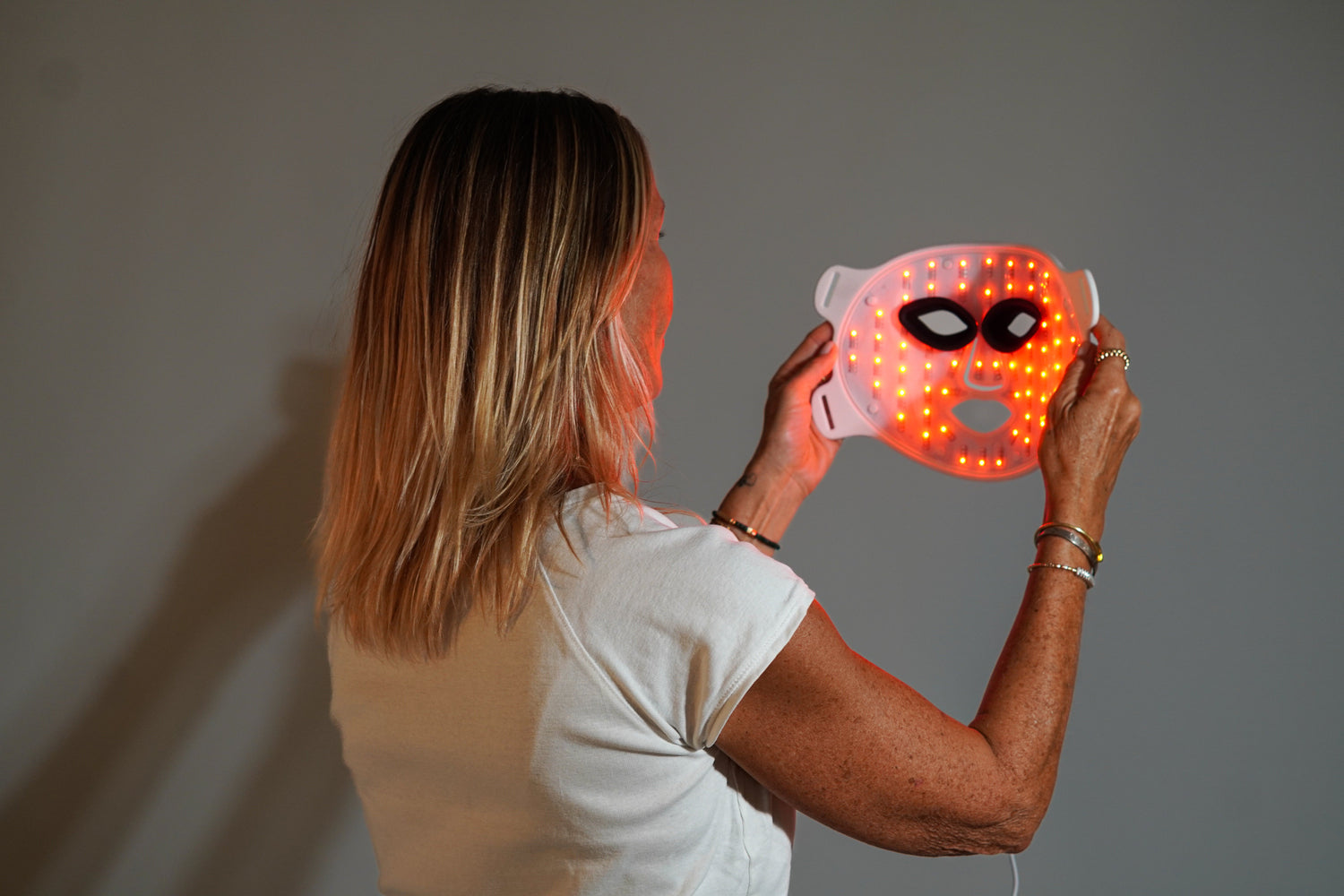
LED facial mask: discover what it is, its benefits and how to use it in 2025.
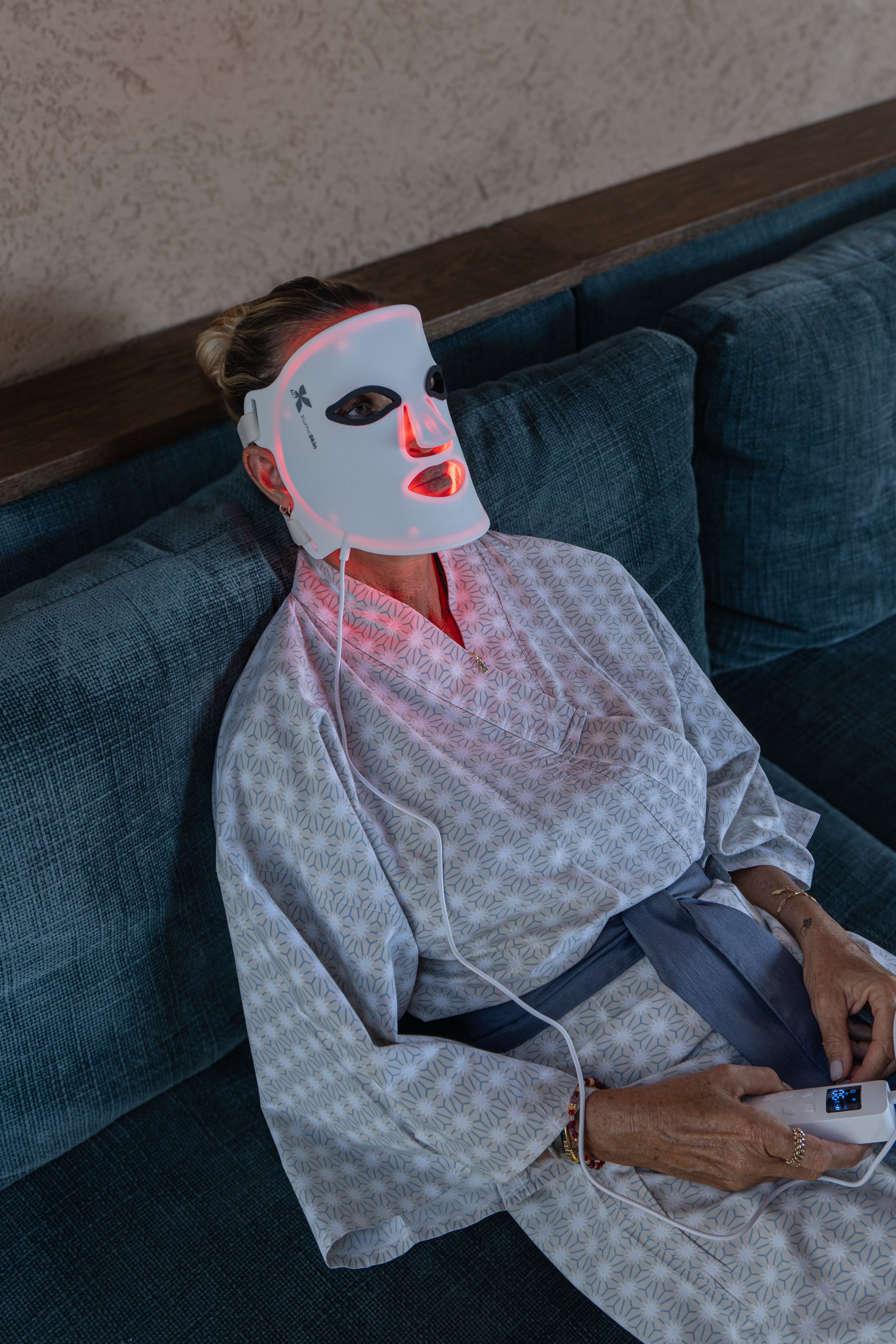
The LED facial mask has become a go-to skincare tool for treating acne, improving texture, and supporting regeneration. Here's what it actually does, what the evidence says, and how to integrate it into your routine for safe and consistent results.
Red & infrared light
Recover faster, at home
★★★★★ 4,8/5 · rated by verified customers
The KumoLux panel supports muscle recovery with full-body red and infrared light.
- 660 nm red + 850 nm infrared light
- Full-body muscle recovery
- Clinically validated biohacking protocols
€399,00€499,00
−10% on your 1st order when you subscribe to the newsletter

In a little while
- It emits specific wavelengths (blue, red, near infrared) that stimulate cellular processes without heat or UV.
- Common benefits: fewer acne breakouts, improved radiance and firmness, and a reduction in mild redness.
- Recommended use at home: 10–20 minutes, 3–5 times per week for 8–12 weeks; maintenance 1–2 times/week.
- Safety: Suitable for most skin types; use eye protection and avoid if you are taking photosensitizing drugs without consulting a doctor.
- Realistic results: progressive and cumulative; they do not replace medical treatments for severe acne.
What is an LED facial mask and how does it work?
An LED light mask is a photobiomodulation device that emits visible and near-infrared light at low power levels. These wavelengths interact with cellular chromophores (such as cytochrome c oxidase) and modulate processes like energy (ATP) production and inflammatory signaling. Unlike lasers, it is non-ablative and does not heat the tissue. This physiological basis is well described in the NCBI's 2017 mechanistic review of photobiomodulation in medicine.
In facial aesthetics, three main ranges are used:
Personalized protocol · included with your purchase
Want us to tell you how to use it in your case?
With your purchase, our experts set up your red and infrared light sessions for your sport and goal.
Message us on WhatsAppOur experts reply · no obligation
- Blue light (~415 nm): helps reduce Cutibacterium acnes and superficial inflammation.
- Red light (~630–660 nm): promotes collagen synthesis and repair.
- Near infrared (~830–850 nm): reaches deeper layers, useful in recovery and calming minor irritation.
Evidence-supported benefits (2025)
Mild to moderate acne
The combination of blue and red may decrease bacterial load and inflammation, improving breakouts and papules after several weeks of consistent use. Systematic reviews indicate modest to moderate benefits, especially as an adjunct in mild to moderate acne, with a favorable safety profile (Cochrane, 2016 ). For context on acne and other treatment options, see MedlinePlus (NIH): Acne .
Rejuvenation: texture, firmness and luminosity
Red and near-infrared light is associated with increased type I/III collagen and improved fine lines and elasticity with sustained use. Photobiomodulation modulates pro-repair pathways and reduces inflammatory markers; these mechanisms have been described in peer-reviewed literature (2017) and mechanistic synthesis in NCBI . Visible results typically require 8–12 weeks of consistent use.
Redness and sensitivity
There are indications that red light may help soothe mild post-treatment redness and improve barrier function. However, in cases of vascular conditions or moderate-to-severe rosacea, management should be individualized with a dermatologist, and LED light therapy should be used as a supportive measure, not a substitute for other treatments.
on your first order when you join the newsletter
We send you the code instantly. No spam.
Expert advice: “LED light does not replace medical treatment when there is an active pathology; it is an adjunctive tool that stands out for its safety and adherence at home.”
Skin wellness and recovery
On the face, red/near-infrared light can support repair after stimuli such as gentle peels or exercise, always respecting the timeframes indicated by the professional. In terms of healthy habits, daily sun protection is non-negotiable, according to the AAD's recommendations on sunscreen.
How to use an LED facial mask correctly (2025 guide)
Frequency, times and distance
- Initial frequency: 3–5 sessions/week for 8–12 weeks.
- Duration per session: 10–20 minutes (according to the manual).
- Maintenance: 1–2 sessions/week.
- Distance adjustment: mask properly seated or at the distance indicated by the manufacturer.
For safety and reasonable expectations about home phototherapy, also review neutral clinical guidelines such as NICE (acne, 2021) .
Recommended steps
- Cleanse your face and dry it completely.
- Place the mask and adjust the mode (blue, red, NIR or combinations).
- Use eye protection if the device requires it.
- Complete the programmed time without looking directly at the LEDs.
- Apply a gentle moisturizing serum afterwards and, in the morning, sunscreen.
Compatibility with your routine
- Before the session: use gentle cleansers; avoid harsh exfoliants right before if you have reactive skin.
- Afterward: prioritize hydration (e.g., niacinamide, panthenol). Retinoids/acids: it's best to alternate days initially to assess tolerance.
- Day: broad spectrum photoprotection SPF 30+ AAD guideline.
Safety, contraindications and good practices
Most LED masks are well-tolerated by all skin types because they do not emit UV light or significant heat. Even so:
- Always wear the included safety glasses if indicated by the manufacturer; avoid direct eye exposure and LLLT — DermNet.
- Consult before use if you are pregnant, have photosensitive epilepsy, light-triggered migraines, facial implants/metals, or are taking photosensitizing drugs (e.g., certain tetracyclines).
- In nodulocystic acne or severe scarring, LED is complementary; follow your dermatologist's NICE treatment recommendations .
For an overview of the benefits and limitations of red light, you can read this clinical summary from the Cleveland Clinic (2023) Red Light Therapy: Uses and Safety.
Guide table: wavelengths and targets
| Color/Mode | Typical wavelength | Main objective | Usual indications | Usage notes |
|---|---|---|---|---|
| Blue | ~415 nm | Reduces C. acnes and superficial inflammatory lesions | Mild to moderate acne | Use it for 10–20 min; it can be combined with red. |
| Red | ~630–660 nm | Stimulates collagen and repair | Fine lines, tone/adding luminosity | Results after 8–12 weeks |
| Near infrared | ~830–850 nm | Reduces deep inflammation, tissue comfort | Reactive skin, post-workout/treatment support | It is not visible; it complements red. |
| Combined | Multispectrum | Anti-acne and anti-aging synergy | Mixed routines | Useful for complete sessions at home |
Mechanistic and general safety references: NCBI review on photobiomodulation , DermNet — LLLT.
How to choose a good LED mask in 2025
- Clear specifications: transparent wavelengths and power density (mW/cm²).
- Useful modes: blue, red and near infrared, with timer and automatic shut-off.
- Ergonomics and safety: comfortable fit, ventilation, eye protection included.
- Certifications/regulation: compliance with applicable regulations and detailed safe use manual.
- Support and warranty: instructions, routine recommendations and after-sales service.
KUMO integrates aesthetics, technology, and performance to make recovery a habit. Discover our philosophy and the latest innovations at KUMO .
How to combine it with your skincare routine
- Morning: gentle cleansing → LED (if your device allows daytime use) → hydrating serum → SPF.
- Night: cleansing → LED → repairing moisturizer →, on alternate days, active ingredients (retinoids or acids) according to tolerance.
- After sports or gentle treatments: wait until the skin is calm; consult a professional if you have undergone medical procedures.
To understand limitations and realistic expectations of light-based acne treatment, review MedlinePlus (NIH) and NICE clinical recommendations.
Frequently Asked Questions
How long does it take to see results with an LED facial mask?
Most people notice subtle changes starting at 4–6 weeks, with more noticeable improvements after 8–12 weeks of consistent use (10–20 minutes, 3–5 times per week). For acne, inflammation and breakout size are usually reduced first; for anti-aging, you'll notice more radiance and, over time, improved texture. Results are cumulative and require maintenance 1–2 times per week. Keep in mind that the timeframe varies depending on consistency, skin type, and skin condition. For realistic expectations about acne and its treatments, consult MedlinePlus (NIH) .
Is LED light the same as a laser or sunbathing?
No. LED masks emit low-power light at specific wavelengths without significant UV radiation or heat; they do not tan or damage like the sun. They are also not lasers: lasers concentrate high energy at a specific point and can be ablative or non-ablative. LED light gently modulates cellular processes (photobiomodulation), with a high safety profile when used according to DermNet — LLLT guidelines.
Can I use it if I'm using retinoids or exfoliating acids?
Yes, but adjust your routine. Many skin types tolerate LED light therapy well alongside retinoids/acids by alternating days or applying the active ingredients after the session, prioritizing hydration and skin barrier function. If you notice irritation, reduce the frequency of the active ingredients and continue with the LED light therapy due to its calming properties. During the day, always finish with a suitable sunscreen (see AAD sunscreen guide).
What power do I need for it to work?
More important than "maximum power" are the wavelength and effective power density (mW/cm²) on the skin, as well as the exposure time. Photobiomodulation operates within a "therapeutic range": too much energy provides no benefit, and too little may be insufficient. Look for devices that indicate validated irradiance ranges and exposure times, and follow the instructions. For an overview of benefits and limitations, review this clinical summary from the Cleveland Clinic.
Is it effective for severe acne or deep scars?
As a supportive measure, it can help soothe, but it doesn't replace medical treatments for severe acne or prominent scarring. In those cases, the foundation of treatment usually includes medications, medical peels, lasers, or other targeted therapies. LED therapy can be added to improve tolerance and recovery, always in coordination with your dermatologist. Review comprehensive clinical recommendations (2021) from NICE and consider a personalized assessment.
The essentials
- Use it for 10–20 minutes, 3–5 times per week; maintenance 1–2 times/week.
- Combine blue for acne with red/NIR for repair and firmness.
- Prioritize safety: eye protection, manufacturer's instructions, and daily sun protection.
- Gradual results: consistency for 8–12 weeks is key.
- It complements, but does not replace, dermatological advice in moderate-to-severe cases.
Ready to make recovery a smart habit? Get inspired and discover more about our vision of tech-driven wellness at KUMO .

Red & infrared light
KumoLux Panel – Red and Infrared LED Panel
★★★★★ 4,8/5 · rated by verified customers
- 660 nm red + 850 nm infrared light
- Full-body muscle recovery
- Clinically validated biohacking protocols
€399,00€499,00· pay in installments with seQura or Klarna