

Your breathing can change how you feel in minutes. The vagus nerve is part of the parasympathetic nervous system and takes part in automatic functions such as heart rate, breathing and digestion.
Put simply, activating parasympathetic mode at home means giving your body safety signals so it can leave the alert state. Slow breathing and relaxation techniques can help as everyday support, but they do not replace medical care. (nccih.nih.gov)
Red & infrared light
Recover faster, at home
★★★★★ 4,8/5 · rated by verified customers
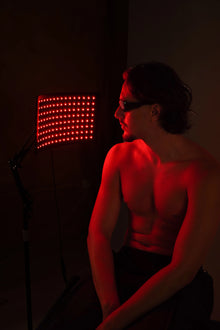
The KumoLux panel supports muscle recovery with full-body red and infrared light.
- 660 nm red + 850 nm infrared light
- Full-body muscle recovery
- Clinically validated biohacking protocols
€399,00€499,00
−10% on your 1st order when you subscribe to the newsletter

What the vagus nerve does and why it matters for recovery
The vagus nerve is a key pathway between the brain and the internal organs. The review in Comprehensive Physiology describes it as a very extensive cranial nerve, with influence over the cardiovascular, respiratory and digestive systems.
When stress spikes, sympathetic activation rises. The parasympathetic response does the opposite, and the relaxation response, according to NCCIH, is associated with slower breathing, lower blood pressure and fewer stress hormones.
Personalized protocol · included with your purchase
Want us to tell you how to use it in your case?
With your purchase, our experts set up your red and infrared light sessions for your sport and goal.
Message us on WhatsAppOur experts reply · no obligation
In practice, that means you are not trying to “force” the body down, but to make a steadier internal environment possible. That is the basis of any simple at-home recovery routine. (nccih.nih.gov)
How to activate parasympathetic mode at home
1. Diaphragmatic breathing with a longer exhale
Start with gentle diaphragmatic breathing. Breathe in through your nose without overfilling your chest and lengthen the exhale comfortably; in practice, some reviews place this slow breathing at around six breaths per minute as a rough reference. (pmc.ncbi.nlm.nih.gov)
If you want a step-by-step version to turn it into a habit, the practical guide to breathing and recovery sums up a simple sequence for home.
on your first order when you join the newsletter
We send you the code instantly. No spam.
2. Relax the muscles in blocks
Progressive muscle relaxation means tensing and releasing different muscle groups, for example the jaw, shoulders, hands and legs. NCCIH lists it among the most common relaxation techniques and notes that it may help with stress, anxiety and, in some cases, blood pressure.
The idea is not to relax by force, but to take layers of tension off the body so that breathing becomes more natural.
3. Turn down the stimulation for a few minutes
Dim the lights, silence notifications and stop switching between tasks for a few minutes. NCCIH describes the relaxation response as a state of slower breathing, lower blood pressure and lower consumption of oxygen and stress hormones.
If you also want to organize a broader wellness routine, the clinical technology of Kumo Balance shows how different at-home recovery solutions fit together without confusing them with medical treatments.
Short 10-minute routine
| Minutes | What you do | Goal |
|---|---|---|
| 2 | Breathe gently, with the exhale a little longer than the inhale. | Settle into a slower, steadier rhythm. |
| 4 | Practice diaphragmatic breathing without forcing the air. | Encourage the relaxation response. |
| 3 | Tense and release shoulders, hands, jaw and legs. | Reduce built-up muscle tension. |
| 1 | Return to natural breathing and check how you feel. | Close the session calmly. |
This outline combines slow breathing and muscle relaxation, two practices NCCIH considers self-applicable and that the literature on slow breathing links to interesting physiological changes, although the research is still evolving.
If you want to turn it into a weekly habit, the article on how to build an at-home recovery protocol can give you a framework.
What you can realistically expect
There is no need to look for a spectacular sensation. The evidence on slow breathing and other relaxation techniques is promising but not uniform, and NCCIH insists that their role is supportive, not a substitute for conventional care.
Consistency matters more than perfection. NCCIH itself explains that these techniques tend to work better when they are practiced regularly.
If you want to fold calm into a broader recovery routine, the clinical technology of Kumo Balance can help you picture how different wellness habits fit together at home.
Common mistakes when you try to relax fast
- Forcing breathing that is too intense or too fast. If the session becomes uncomfortable, stop and go back to normal breathing.
- Practicing once and expecting a lasting change. NCCIH notes that these techniques tend to be more useful with regular practice.
- Using them to push a real medical problem into the background. They should not replace conventional care or serve to postpone an appointment.
When to see a health professional
Mind and body practices are usually safe for healthy people, but NCCIH points out that medical conditions and special circumstances, such as pregnancy, may require adapting or avoiding them. Rare cases have also been described in which certain relaxation techniques can worsen symptoms in people with epilepsy, some psychiatric disorders or a history of trauma. If your case is particular, it is worth discussing it with a health professional. (nccih.nih.gov)
- Chest pain, shortness of breath or irregular palpitations. (nhs.uk)
- Fainting, difficulty waking up, speech or movement problems.
- Symptoms that do not improve or that get worse over time. (medlineplus.gov)
In those cases, do not keep testing the technique on your own and get a medical assessment.
Frequently asked questions
How long does it take to notice something?
A short pause is often enough for activation to come down a little, but the value of the technique should not be judged by a single session. NCCIH indicates that slow breathing and other relaxation techniques tend to be more useful when they are practiced regularly and built into a realistic routine. Think of them as a maintenance habit, not a magic button.
What do I do if slow breathing feels strange or uncomfortable?
Shorten the duration, go back to normal breathing and try again later with a shorter session. NCCIH notes that relaxation techniques are generally safe for healthy people, although they can occasionally produce unpleasant experiences such as anxiety or fear of losing control. If that feeling comes back, it is worth talking to a health professional before continuing.
Can breathing and muscle relaxation be combined?
Yes. In fact, NCCIH includes both deep breathing and progressive relaxation among the most common relaxation techniques. Many people start with slow breathing to bring the pace down and then release tension in the jaw, neck and shoulders. That combination is usually easier to sustain than a long session of a single technique.
Can I practice it if I am pregnant or have a medical condition?
During pregnancy or with a specific medical condition, it is not safe to assume everything applies equally. NCCIH points out that special circumstances can change how safe a mind and body practice is, and that adapting or avoiding it may be necessary. The most sensible move is to ask your health professional for guidance, especially if you have symptoms or doubts about your case.
What now?
Start with a short session today and repeat it over several days so your body recognizes it as a signal of calm. If you want to keep building an at-home recovery routine, you can explore the recovery range from Kumo Balance and review its clinical technology to see how it fits into a fuller wellness approach.
To go further: Home pressotherapy for postpartum recovery, Home pressotherapy for athletes: recovery and Home pressotherapy and muscle recovery 2025.

Red & infrared light
KumoLux Panel – Red and Infrared LED Panel
★★★★★ 4,8/5 · rated by verified customers
- 660 nm red + 850 nm infrared light
- Full-body muscle recovery
- Clinically validated biohacking protocols
€399,00€499,00· pay in installments with seQura or Klarna