
Enlarged pores can indeed appear smaller. They don’t close completely, but their appearance improves when you consistently unclog, soothe, and protect the skin. (aad.org)
The right strategy isn’t to further irritate the skin, but to reduce sebum buildup, inflammation, and loss of firmness over time. That’s what really refines the skin’s texture.
Facial red light
Bring your skin back to life
★★★★★ 4,8/5 · rated by verified customers
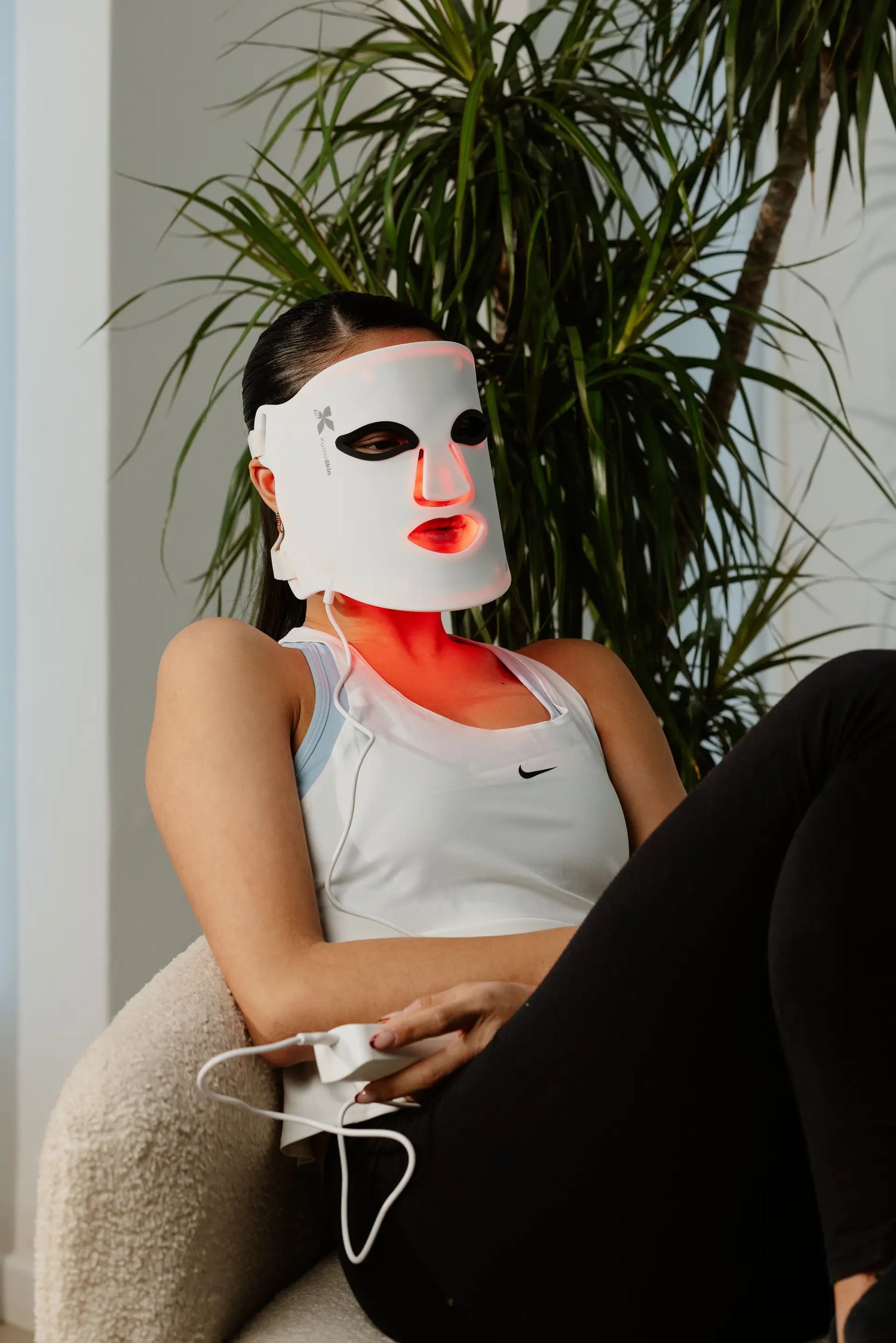
The KumoSkin LED mask helps repair and calm your skin in short sessions at home.
- 250 LEDs in flexible medical silicone
- Red light to boost collagen and glow
- 4 lights: red, infrared, blue and yellow
€299,00€429,00
−10% on your 1st order when you subscribe to the newsletter

What makes pores look larger
A dermatological review on facial pores already summarized in 2016 that the main causes are excess sebum, reduced elasticity around the pore, and increased follicle volume. Cleveland Clinic adds genetics, age, sun exposure, and hormones as factors that make them more noticeable.
- Genetics play a major role in your starting point: if your family has more visible pores, you’re more likely to notice them too. (health.clevelandclinic.org)
- Oily skin makes them stand out because sebum and blockages visually expand the opening.
- Sun exposure and aging reduce collagen and elasticity, so the pore loses support and appears larger.
- Acne, blackheads, and inflammation leave the texture more uneven and the pore more evident. (aad.org)
- Rubbing too much or squeezing worsens inflammation and makes the surface look even rougher.
The goal is not to erase the pore, but to keep it clean, less inflamed, and better supported by the dermis.
Personalized protocol · included with your purchase
Want us to tell you how to use it in your case?
With your purchase, our experts prepare the ideal LED protocol for your skin type and goal (acne, wrinkles, dark spots...).
Message us on WhatsAppOur experts reply · no obligation
How to refine the skin’s texture without irritating it
The foundation is simple: a gentle cleanser twice a day, non-comedogenic products, a single active treatment at first, and broad-spectrum sunscreen every morning. If your skin becomes irritated, the texture usually worsens before it improves.
If your routine currently has too many steps, a well-organized daily facial routine helps you incorporate cleansing, treatment, and hydration without adding unnecessary friction. (aad.org)
And if you usually use devices at home, it’s worth reviewing the most common mistakes of at-home facial phototherapy before adding another step to your routine.
on your first order when you join the newsletter
We send you the code instantly. No spam.
Actives that help the most
The most useful chemical exfoliants are usually salicylic acid and, depending on tolerance, AHAs. The difference is practical: BHAs work better on clogged pores and oily skin, while AHAs are used more to smooth the surface. The FDA reminds us that AHAs can increase sun sensitivity.
Among routine supports, niacinamide can help regulate sebum, and topical vitamin C provides antioxidant action; neither replaces a thorough cleansing, but they can improve the overall appearance of the skin.
Retinoids and retinol also help improve texture and keep pores clear, but it’s best to start slowly. The AAD points out that if they cause dryness or irritation, it’s usually better to reduce the frequency, use a smaller amount, and rely on hydration. If there is significant redness or a tendency toward rosacea, it’s preferable to consult a dermatologist. (aad.org)
To incorporate them without mixing too much, a structured nighttime routine can help, especially if you want to reserve the most potent actives for the evening.
Table: what each active provides
This summary helps you choose more thoughtfully according to your skin and your goals.
| Active or technique | What it provides for the skin’s texture | When it usually fits best | Main precaution |
|---|---|---|---|
| Salicylic / BHA | Unclogs pores and exfoliates; helps with blackheads and shine. | When there are clogged pores and congested texture. | If it dries out the skin, alternate with a gentle cleanser and reduce friction. |
| Retinoid / retinol | Improves texture and helps keep pores clean. | When there is uneven texture, comedones, or post-acne marks. | Introduce gradually; it can irritate and is not the best option if there is significant redness. |
| Niacinamide / vitamin C | Supports sebum control and antioxidant defense. | When you are looking for a more stable and less reactive routine. | They do not exfoliate: they work best as daily support alongside moisturizer and SPF. |
| AHA / chemical peel | Smooths the surface and improves the appearance of texture. | When surface roughness predominates. | The FDA warns that they can increase sun sensitivity; sunscreen is mandatory. |
When to consider in-office treatments
If the routine is consistent for several weeks and the pores remain very noticeable, or if there are also acne scars, persistent inflammation, or very uneven texture, in-office treatments may be the next step. The literature on facial pores summarizes three useful groups: topical, superficial procedures, and energy technologies.
Superficial chemical peels may require 3 to 5 sessions, repeated every 2 to 5 weeks, and the recovery time is usually short; in medium and deep peels, downtime increases significantly. The AAD also reminds us that their results are not permanent because the skin continues to age.
Microneedling can help with large pores, uneven texture, and mild scars because it stimulates collagen. The AAD itself warns that at-home versions are gentler, less effective, and can also be risky if they penetrate the skin or are used excessively.
As for lasers, the PubMed review on facial pores and several clinical trials have evaluated non-ablative fractional laser, Nd:YAG, and CO2 to reduce the apparent size of pores and improve texture. The useful takeaway here is cautious: there may be improvement, but the response depends on the skin type, the degree of sebum, and the acne history. (pubmed.ncbi.nlm.nih.gov)
For skin with very visible pores, the best result usually comes from combining gentle cleansing, a well-chosen active, and, if necessary, an in-office procedure. Not from punishing the skin.
Mistakes that worsen texture
There are habits that do exactly the opposite of what you want: they increase inflammation and make texture more visible.
- Rubbing with aggressive scrubs or brushes.
- Squeezing blackheads or “emptying” pores with at-home tools.
- Using too many acids or retinoids at the same time.
- Forgetting sunscreen, which worsens photoaging and loss of firmness. (aad.org)
- Trying at-home devices as if they were medical treatments.
If you use technology at home, you can also review the most common mistakes of at-home facial phototherapy to maintain a safer and more predictable routine.
Frequently Asked Questions
What exfoliating and antioxidant products help refine texture without drying out the skin?
If your skin is oily or you have blackheads, salicylic acid/BHA is usually the most useful exfoliant because it unclogs pores. If you want to smooth the surface, AHAs can help, but the FDA reminds us that they can increase sun sensitivity, so they need daily sunscreen. As antioxidants, niacinamide can help regulate sebum, and vitamin C provides antioxidant defense. None replace a gentle cleansing, but they can improve the overall appearance of the skin.
How to exfoliate enlarged pores without irritating the skin?
The key is to introduce a single active, observe the response, and not overdo the friction. The AAD insists that rubbing the skin or changing treatments too often can irritate it and make the problem look worse. For congested pores, salicylic acid or BHA is usually the initial option; for rougher texture, a gentle AHA may fit better. If you notice persistent redness, flaking, or burning, it’s best to reduce the intensity and consult before continuing.
Is it possible to close enlarged pores with lasers, chemical peels, or microneedling?
Close them completely? No. Improve their appearance? Yes. Superficial chemical peels may require several sessions, and their results are not permanent. Microneedling is used for large pores, uneven texture, and mild scars because it stimulates collagen. In addition, dermatological literature includes studies with non-ablative fractional laser and other technologies to reduce the apparent size of the pore. The best option depends on your skin, previous acne, and tolerance for recovery.
Enlarged pores vs. blackheads: what is the main cause and what daily routine helps?
Pores are the opening; blackheads appear when that pore becomes clogged with sebum and dead cells and remains open. That’s why the daily routine should prioritize a gentle cleanser, non-comedogenic products, an active like salicylic acid or a retinoid if you tolerate it, and broad-spectrum sunscreen. The AAD also reminds us that consistency matters: real changes are usually seen after several weeks, not overnight.
So, what now?
If you want to start today, simplify the routine, choose a single main active, and give it enough time to work. The AAD usually asks for several weeks before assessing real changes.To organize daily care, return to the step-by-step daily facial routine; if you are interested in incorporating facial technology at home, you can look at the LED mask protocol for oily skin and visible pores. And if you want to continue exploring the Kumo Balance approach, start with its homepage.
In addition to cleansing and the right actives, LED light is used as support to improve the overall appearance of the skin: you can see how it is applied with the KumoSkin Mask facial LED mask.

Facial red light
KumoSkin Mask – LED Facial Mask
★★★★★ 4,8/5 · rated by verified customers
- 250 LEDs in flexible medical silicone
- Red light to boost collagen and glow
- 4 lights: red, infrared, blue and yellow
€299,00€429,00· pay in installments with seQura or Klarna